




Cabral Gold to Open at Grades Well Above the Life-of-Mine Average


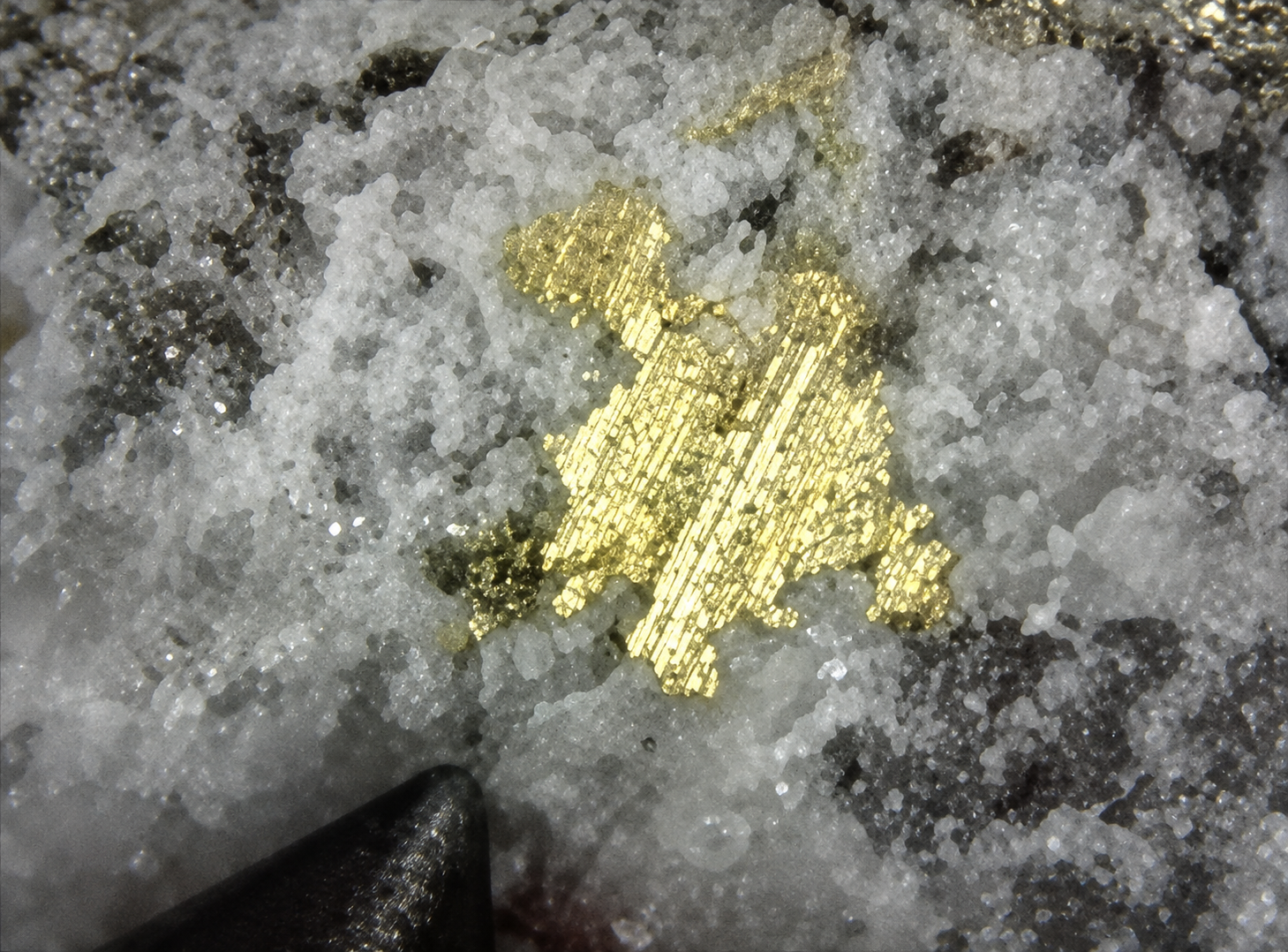
Cabral Gold targets first gold ahead of schedule, with MG grades at 1.5 g/t, permits secured, US$50M annual cash flow expected, and new upside at Jerimum Cima.
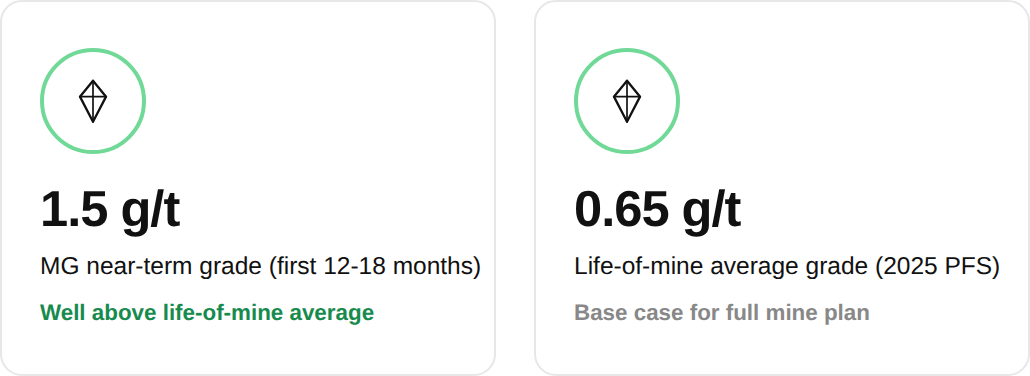
- Management expects ore mined during the first 12 to 18 months of production at the MG deposit to grade approximately 1.5 grams per tonne (g/t) gold, well above the 0.65 g/t life-of-mine average underpinning the 2025 Pre-Feasibility Study (PFS).
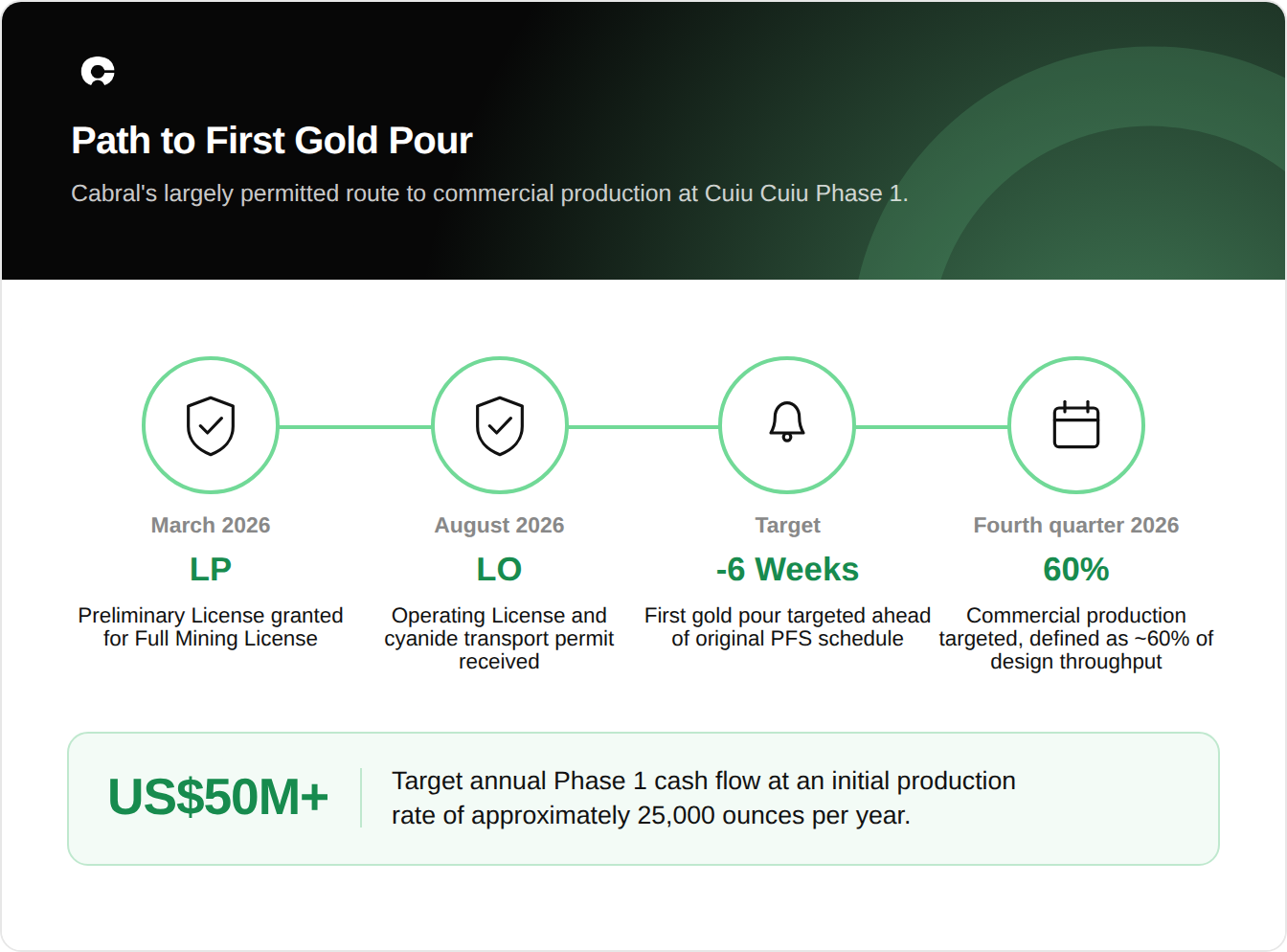
- First gold pour is targeted 6 weeks ahead of the original PFS schedule, with commercial production, generally defined as around 60% of design throughput, expected during the fourth quarter of 2026.
- Cabral Gold Inc. now holds its Operating License (LO) and a military-issued cyanide transport permit, clearing the final regulatory steps needed for gold leaching at the Cuiú Cuiú Phase 1 heap leach operation.
- Phase 1 cash flow, expected to exceed US$50 million annually, is set against scheduled repayment of a US$45 million gold loan and, alongside a C$45 million Alpayana equity placement, is intended to fund exploration across a district with 6 known deposits and roughly 50 peripheral targets.
- A drill hole at the Jerimum Cima target returned 8.9 meters (m) of 5.8 g/t gold, including 1.8 m at 28.4 g/t gold, in a newly identified mineralized zone located approximately 200 m south of the target's main high-grade zone and open to the east, west, and at depth.
New Mineralized Zone at Jerimum Cima Widens the District's Near-Term Upside
Cabral Gold Inc. (TSXV: CBR | OTCQX: CBGZF) reported results on August 27, 2026, from 10 additional diamond drill holes at the Jerimum Cima target, intersecting 8.9 meters (m) of 5.8 grams per tonne (g/t) gold from 208.1 m depth, including a higher-grade interval of 1.8 m at 28.4 g/t gold. The company interprets the intercept as a newly identified mineralized zone located approximately 200 m south of Jerimum Cima's main high-grade zone, trending east to west, running parallel to the main zone, and open to the east, west, and at depth. Jerimum Cima is held by Cabral in Pará state, 3 kilometers (km) east-northeast of Central and 3.5 km northwest of MG.
A second hole, drilled to test the down-dip extension of the target's northernmost mineralized zone, returned 9.3 m of 2.78 g/t gold, including a higher-grade interval of 1.7 m at 7.2 g/t gold, along with a separate interval of 10.2 m grading 1.00 g/t gold.
President and Chief Executive Officer of Cabral Gold, Alan Carter, tied the discovery to Jerimum Cima's track record:
"The identification of a new mineralized zone at Jerimum Cima, located approximately 200 m south of and running parallel to the main centrally located high-grade zone, is highly encouraging. This opens up the possibility of additional high-grade gold mineralization at the Jerimum Cima target, which has already returned some spectacular drill results."
Further drilling will be needed to establish the new zone's extent and strike continuity. Jerimum Cima sits within a gold-in-soil anomaly exceeding 100 parts per billion (ppb) gold across an area measuring 900 m by 1000 m, comparable in scale to the anomalies that preceded confirmation of the MG and Central deposits. Cabral's stated objective at the target is to generate maiden resources covering both the near-surface gold-in-oxide blanket and the underlying primary mineralization, with diamond drilling continuing toward the target's eastern extension.
Permitting Package Now Complete Ahead of First Pour
Cabral recently confirmed it had received its Operating License (LO), together with approval from Brazil's military authorities to purchase and transport the approximately 20 tons of sodium cyanide required for heap leaching. Together, the two approvals clear the last regulatory requirement for cyanide-based gold recovery under Cabral's current trial mining license.
The LO follows the Preliminary License (LP) for the project's Full Mining License, granted in March 2026. The trial mining license caps mined and stacked ore at 500,000 tons per year, compared with the 1,000,000 tons per year contemplated in the Pre-Feasibility Study (PFS). Management said it expects to obtain an upgraded operating license covering the Full Mining License within the next couple of months, a step it described as faster once an operation is already constructed and running under the trial license.
First 12 to 18 Months of Production Set to Run Well Above the Life-of-Mine Grade
Cabral completed infill drilling across approximately 165 holes at the MG deposit, the first of Cuiú Cuiú's gold-in-oxide deposits scheduled to enter production. Management expects ore mined during the first 12 to 18 months of operation to grade approximately 1.5 g/t gold, above the 0.65 g/t life-of-mine average set out in the July 2025 PFS, before grades step down as mining advances into lower-grade material later in the plan.
Carter tied the near-term grade profile to the infill results:
"We're done on the infill drilling program for MG, which is the first deposit that we've just started mining. We drilled about 165 holes and some of them were quite a bit higher than anticipated. So the beauty of the first year or 18 months of production at MG is there's quite a bit of higher-grade material at surface."
Cabral plans further infill drilling later this year at Machichie, the second gold-in-oxide deposit scheduled to enter the mine plan, located approximately 500 m north of MG. Results, along with an updated global resource estimate, are expected toward year-end 2026, with higher-grade material already identified at the target.
Cash Flow Mechanics & the Gold Loan Repayment Clock
Phase 1 construction was financed through a US$45 million gold loan that closed November 26, 2025, with Precious Metals Yield Fund, an affiliate of Cabral's largest institutional shareholder. The loan carries a 39-month term with 10% interest paid quarterly and principal repayments of 39 kilograms of gold per quarter; the first interest-only payment is due at the end of 2026, with the first payment combining interest and principal due at the end of March 2027. Separately, Cabral closed a C$45 million strategic private placement with Alpayana S.A.C. on August 24, 2026. Alpayana took a 9.99% undiluted stake (14.27% partially diluted) with board nomination or observer rights, with proceeds earmarked for Phase 1 expansion and Phase 2 work alongside the gold loan.
First gold pour is targeted roughly 6 weeks ahead of the original PFS schedule, with commercial production, generally defined as around 60% of design throughput, expected during the fourth quarter of 2026. Management is not issuing 2026 production guidance given the number of variables inherent in a ramp-up period, but expects to provide guidance for 2027.
Management expects Phase 1 to generate at least US$50 million in annual cash flow at an initial production rate of approximately 25,000 ounces per year, a figure it called conservative; cash flow is directed first toward loan service and then toward funding the district exploration program.
Stage Two: Sizing the District Before the Next Capital Decision
Cuiú Cuiú comprises 6 known gold deposits, 5 of which are confirmed to have weathered gold-in-oxide caps, alongside approximately 50 peripheral exploration targets. Management believes the district could ultimately host 6 to 10 additional deposits and is running 6 drill rigs concurrently across the property.
Approximately three-quarters of the gold in Cabral's current resource base is contained in unweathered hard rock beneath those oxide caps, the target of the larger second-stage development option. Cabral intends to update its district-wide resource base by year-end 2026 and, depending on the outcome, launch a preliminary economic assessment (PEA) on the hard rock development option, targeted for the first half of 2027, funded from Phase 1 operating cash flow and the recent Alpayana placement.
The Investment Thesis for Cabral Gold
- Cabral Gold's Phase 1 gold-in-oxide operation is positioned to front-load cash relative to the 2025 Pre-Feasibility Study base case, with near-term ore grades at MG tracking well above the life-of-mine average used in that study.
- First gold is targeted roughly 6 weeks ahead of the original schedule, at a fully permitted, largely constructed heap-leach operation financed through a gold loan, removing near-term equity financing risk for construction.
- A newly identified mineralized zone at the Jerimum Cima target contributes to a district-scale exploration program spanning 6 known gold deposits, approximately 50 peripheral targets, and 6 active drill rigs, with ongoing high-grade intercepts outside the current mine plan.
- Approximately three-quarters of the company's existing gold resource base is in unweathered hard rock, positioning a planned preliminary economic assessment of the hard rock development option as the next major catalyst toward a substantially larger second-stage development.
- Management intends to fund both the expanded exploration program and eventual second-stage development from Phase 1 operating cash flow, alongside the recent Alpayana equity placement.
Cabral Gold's transition into production marks the start of a cash flow window weighted toward the high-grade end of its resource base in the critical first 12 to 18 months. Phase 1 cash flow is set to service the gold loan while funding the drill-out of the larger hard rock opportunity beneath it.
TL;DR
Cabral Gold is opening MG at about 1.5 g/t gold for the first 12 to 18 months, well above the 0.65 g/t life-of-mine average in the 2025 PFS, with first pour targeted 6 weeks ahead of schedule, commercial production expected in the fourth quarter of 2026, a fully permitted heap leach, a new open high-grade zone at Jerimum Cima, and Phase 1 cash flow of at least US$50 million a year set against scheduled repayment of a US$45 million gold loan, and a C$45 million Alpayana strategic equity placement backing Phase 1 expansion and Phase 2 work.
FAQs (AI-Generated)
Analyst's Notes





Subscribe to Our Channel





.jpg)
Stay Informed






















