




Copper: Reshaping Development Economics with Strategic Partnerships & High-Grade Near-Surface Discoveries



Copper supply deficits intensify as partnerships reshape development economics. High-grade discoveries, district strategies drive 2026 catalysts amid $12,000/t prices.
- Global copper markets face a structural supply-demand imbalance as Chile maintains production near 5.4 million tonnes annually through 2033 despite $83 billion in projected investment, while aging infrastructure, declining ore grades, and limited discovery pipelines constrain growth precisely as electrification, artificial intelligence infrastructure, renewable energy deployment, and grid modernization drive accelerating demand that exceeds historical consumption trends.
- Strategic partnership models are fundamentally reshaping copper development economics by eliminating standalone facility construction through infrastructure access agreements, providing full development funding in exchange for minority ownership positions, and enabling exploration-stage collaborations that deliver cash flow neutrality while advancing systematic targeting programs without shareholder dilution, representing a structural evolution beyond traditional equity-dependent junior mining models.
- High-grade near-surface discoveries are commanding premium valuations as shallow mineralization reduces stripping ratios, drilling costs, and development capital requirements while supporting open-pit mining scenarios with conventional processing technologies that eliminate metallurgical innovation risk, enabling rapid resource definition and favorable development economics in established mining jurisdictions with existing infrastructure and proven regulatory frameworks.
- District-scale development strategies are extending mine life and improving capital efficiency through hub-and-spoke models that share processing infrastructure and reduce per-tonne capital intensity for satellite deposits, while multi-commodity systems providing molybdenum, gold, and silver by-product credits enhance project economics and reduce copper price sensitivity by creating revenue streams independent of base metal price movements.
- The 2026 catalyst calendar provides sequential rerating opportunities as companies progress toward maiden resource estimates, economic study completions, and potential Final Investment Decisions across diversified jurisdictions spanning Chile, Kazakhstan, Australia, and Canada, while technology integration including artificial intelligence analysis of geological databases and digitized historical exploration data improves target generation efficiency and capital deployment effectiveness.
The global copper market faces a fundamental recalibration as electrification accelerates, legacy mines deplete, and discovery rates fail to replace declining production. This structural imbalance has elevated copper prices to historically high levels while reshaping how exploration and development companies advance projects toward production. As of December 2025, LME Copper prices has reached $12,162.50 per tonne.
Across diverse jurisdictions from Chile's Atacama Desert to Kazakhstan's reformed mining districts and Australia's established copper provinces, a new development paradigm is emerging: strategic partnerships that reduce capital intensity, district-scale thinking that extends mine life beyond single deposits, and technical innovation that maximizes value from multi-commodity systems.
Supply Constraint Reality: New Discoveries Matter More Than Ever
Chile's position as the world's dominant copper producer exemplifies the challenges facing global supply growth. According to Chile's national copper commission COCHILCO, Chile will maintain production near 5.4 million tonnes annually through 2033 despite US$83 billion in projected investment, with its share of global production rising to 27% simply because other jurisdictions face similar headwinds. As Fitzroy Minerals President and CEO Merlin Marr-Johnson noted, Chile produced 5.33 million tonnes of refined copper in 2024, representing 24% of global mine supply, yet aging infrastructure, declining grades, and capital intensity pressures threaten to constrain output growth.
This supply-side constraint occurs precisely as demand accelerates. Electric vehicle penetration, artificial intelligence-driven power infrastructure expansion, renewable energy deployment, and aging electrical grid replacement collectively drive multi-year growth projections exceeding historical consumption trends. Coda Minerals CEO Chris Stevens articulated the magnitude of this challenge, noting that 80% of copper production comes from just 20 companies, with major mines like Escondida producing over a million tonnes annually in a 23-million-tonne global market. These large mines face grade depletion, and Stevens emphasized the replacement challenge:
"You need 30 Codas to replace an Escondida. Where are they coming from? Because there are not 30 Coda's in Australia. There's five or six development projects, of which only two or three are credible."
Against this backdrop, the value proposition of new copper discoveries in established mining districts has intensified. Projects demonstrating high grades, near-surface mineralization, favorable metallurgy, and access to existing infrastructure command increasing strategic attention from major producers seeking to replace depleting reserves.
Chile's Copper Province
Chile remains the epicenter of global copper exploration and development, with multiple companies advancing projects across different metallogenic belts. The diversity of deposit types—from sedimentary-hosted mantos to iron oxide copper-gold systems to porphyry deposits—creates distinct technical profiles, yet strategic approaches show remarkable convergence around near-term oxide development and deeper sulphide exploration.
Sedimentary-Hosted Manto Systems: The Marimaca Model
Marimaca Copper's drilling results from Pampa Medina validate the strategic advantages of sedimentary-hosted copper manto systems for developers seeking efficient resource definition and favorable mining geometries. The 10,000-meter Phase I program confirmed stratiform mineralization hosted in coherent sedimentary sequences with identifiable stratigraphic controls, reducing geological risk for future resource conversion.
High-grade results including 48 meters at 2.05% copper, 16 meters at 2.29% copper, and 6 meters at 3.17% copper demonstrate both grade continuity and scale potential. CEO Hayden Locke emphasized the expanding opportunity:
"The more we explore at Buen Retiro the more copper we find. It is a remarkable system. What is particularly interesting is the sheer variety of mineralizing styles that we're seeing."
Marimaca's district-scale hub-and-spoke strategy centered on the MOD deposit, which demonstrated robust economics in the August 2025 Definitive Feasibility Study with US$709 million NPV at 8% discount rate, 31% internal rate of return, and all-in sustaining costs of US$2.09 per pound. As the company noted,
"The MOD deposit serves as the central processing hub within Marimaca's district strategy, with the Definitive Feasibility Study completed August 25, 2025 for a 50,000 tonnes per annum design case. Pampa Medina represents a potential future sulphide and oxide spoke that could extend mine life, increase throughput, reduce operating redundancy, and elevate long-term copper output beyond the initial MOD production profile."
With five rigs now deployed on a 30,000-meter Phase II program, Marimaca is systematically expanding the resource footprint while advancing MOD toward a target Final Investment Decision in the second half of 2026. The combination of proven economics at the hub asset with expanding satellite potential demonstrates how district-scale thinking extends value beyond single-deposit development scenarios.
Interview with Hayden Locke, President & CEO of Marimaca Copper
Iron Oxide Copper-Gold Systems
Tribeca Resources' focus on Chile's coastal IOCG belt exemplifies how geological targeting can reduce technical and financial barriers to resource definition. CEO Paul Gow, a geologist with extensive Xstrata Copper and Glencore experience specializing in IOCG deposits, emphasized the advantages:
"One of the beauties of that area is that it is relatively shallow. The mineralization basically starts at the base of that gravel."
At the flagship La Higuera project, approximately 10,000 meters of drilling across 29 holes at the Gaby target has demonstrated 1.4 kilometers of strike length with consistent mineralization averaging 260-meter drill intersections, implying approximately 130-meter true width for a vertical body. Drilling costs average US$300 per meter all-in, substantially below costs in high-altitude porphyry environments. Gow described the geological model:
"What we're trying to do at La Higuera is not just have one system but we would like to get a poly deposit terrain or district."
The 4,000 meters of drilling planned over the next 12 months will focus on expanding known zones before moving to formal resource drilling, while also testing a third target, Chirsposo Sur, within six months. This systematic approach balances resource definition at known targets with exploration of new prospects, maintaining optionality while controlling capital deployment.
Dual-Track Exploration: Oxide Development and Sulphide Discovery at Buen Retiro
Fitzroy Minerals is executing a dual-track exploration strategy at Buen Retiro that exemplifies how companies balance near-term production optionality with larger-scale discovery potential. The company exploration update reported completion of 12,250 meters of drilling, with near-surface oxide results include 85.4 meters grading 0.22% copper from 58.6 meters depth, with a higher-grade interval of 13.0 meters at 0.33% copper, confirming 360-meter-wide mineralized zones amenable to heap leach processing.
President and CEO Merlin Marr-Johnson stated:
"The more we explore at Buen Retiro the more copper we find. It is a remarkable system. What is particularly interesting is the sheer variety of mineralizing styles that we're seeing."
Fitzroy has allocated approximately C$5.5 million to Buen Retiro activities over the next 12 months, encompassing infill drilling, metallurgical test work, environmental baseline studies, and preliminary economic assessment work. Environmental baseline surveys commenced in September 2025, representing the first formal step toward permitting and production. The company targets PEA completion in 2026, providing a clear catalyst for defining heap leach economics while ongoing drilling tests deeper sulphide potential.
Strategic Partnerships: The New Development Paradigm
Traditional junior exploration models—characterized by equity-funded drilling campaigns leading to resource definition, then seeking project-level financing or acquisition—face challenges in the current capital environment. Rising development costs, extended permitting timelines, and investor fatigue with perpetual dilution have driven companies toward partnership structures that share both capital requirements and technical risk.
Development Partnerships
Fitzroy Minerals' option agreement with Pucobre S.A. exemplifies how infrastructure partnerships can fundamentally alter development economics. Pucobre operates Planta Biocobre, an 800-tonne-per-month copper solvent extraction-electrowinning plant located near Copiapó that has processed oxide ore continuously since 1992, with grandfathered environmental permits that would be difficult to replicate under current Chilean regulatory frameworks.
For Fitzroy's Buen Retiro project, this partnership provides potential access to existing processing infrastructure without requiring construction of standalone facilities. As the company noted in its update:
"For a heap leach operation, partnership with Pucobre could eliminate or significantly reduce capital expenditure for crushing, agglomeration, and electrowinning facilities."
Pucobre retains a 30% clawback right exercisable at three times Fitzroy's eligible exploration expenses, creating alignment between the parties while reducing Fitzroy's immediate capital burden.
East Star Resources has taken infrastructure partnership to its logical conclusion through its agreement with Hong Kong Xinhai Mining Services, described by CEO Alex Walker as a huge Chinese EPCM contractor that has built over 500 processing plants globally. Under this structure, Xinhai will fully fund development of the Verkhuba copper deposit through to production, while East Star retains 30% ownership while contributing minimal capital.
Endeavour Mining's multi-faceted investment in East Star comprised of two components: a joint venture agreement and a direct equity investment that made Endeavour the company's largest shareholder. Walker explained the joint venture structure:
"The first deal was $5 million over two years and then $20 million to do the maiden JORC resource and then they'll carry us through to PFS on however many projects we manage to find that reach that hurdle."
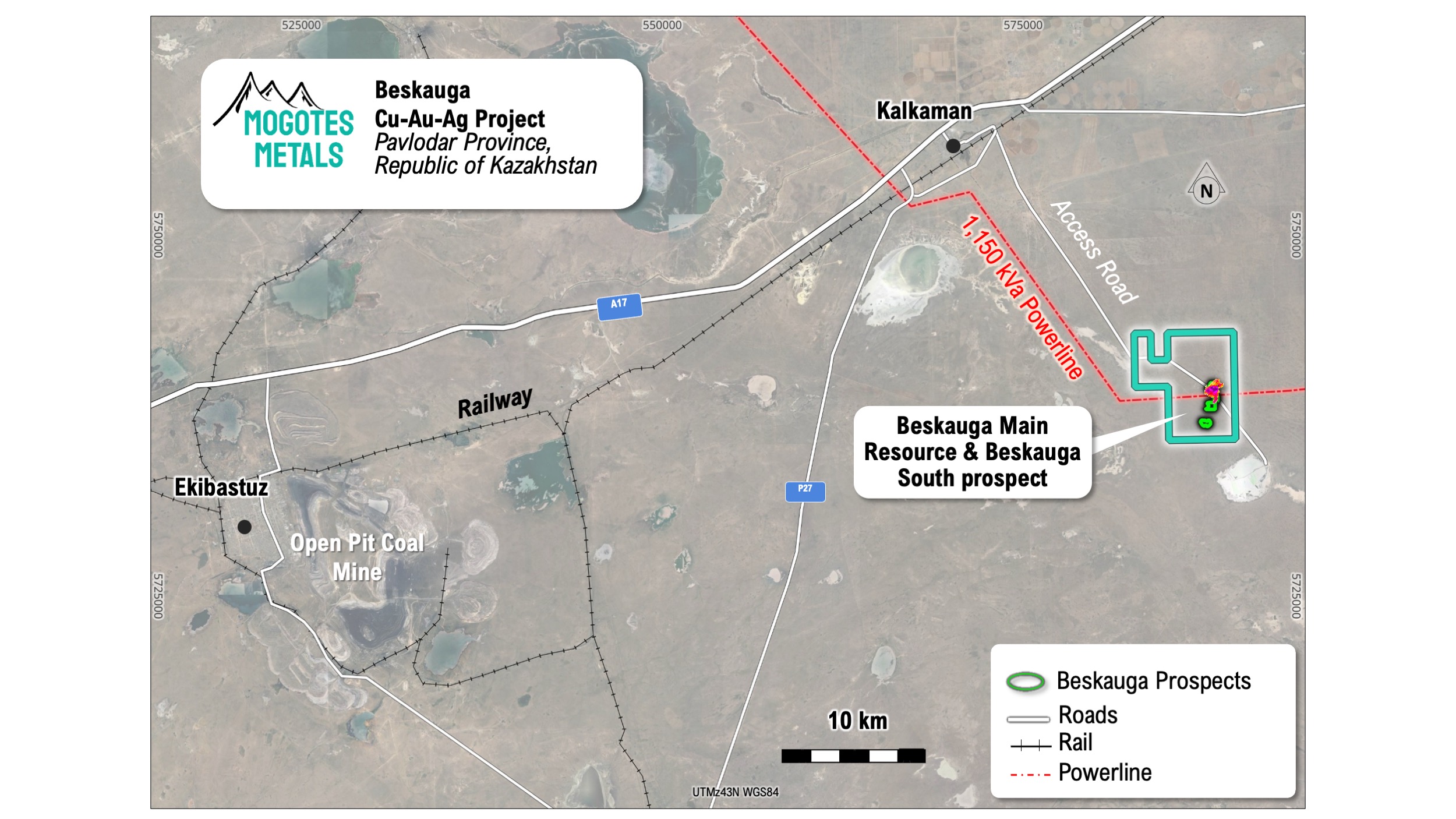
The Verkhuba deposit hosts a JORC resource of 20 million tons at about 1.2% copper in Kazakhstan's VMS belt. The development timeline targets production by 2027-2028, providing East Star with production revenue to fund future development equity without external capital raises.
Interview with Alex Walker, CEO of East Star Resources
Australia's Copper Development
While Chile dominates global copper supply, Australia's established mining infrastructure and skilled workforce support copper development despite not featuring on the country's critical minerals list. Coda Minerals' Elizabeth Creek project in South Australia demonstrates how technical innovation can transform project economics and accelerate development timelines.
The new approach focuses exclusively on copper and silver production using proven leaching technology. Stevens emphasized the strategic wisdom:
"If you can base the project fundamentally off two commodities with deep liquid markets, you're in a much better shape."
Stevens noted that approximately 20% of global copper production employs leaching methods, positioning Elizabeth Creek within established technological parameters rather than requiring metallurgical innovation. In addition, Stevens acknowledged the valuation disconnect:
"With Coda's current market capitalization around $40 million, comparable copper development stories command significantly higher valuations [...] I will work my absolute tail off to get this done. I don't care what it takes. We'll hire the right people. We're going to work long hours."
The gap between current market capitalization and project NPV represents potential rerating opportunity as the company advances through prefeasibility and definitive feasibility studies with its capital raise expansion from $8.3 million to $12.3 million proved pivotal, enabling funding of critical path hydrogeology drilling.
Interview with Chris Stevens, CEO of Coda Minerals
Kazakhtan's Jurisdictional Reform Creates Opportunities
East Star Resources' Kazakhstan focus exemplifies how jurisdictional reform can unlock exploration opportunities in historically underexplored but geologically prospective terrain. CEO Alex Walker described the fundamental opportunity: Kazakhstan offering tier one copper porphyry deposits like Aktogay with 10-12 plus million tons of contained copper and geological prospectivity comparable to being in Western Australia and having just about anywhere to peg in the 1970s.
Walker emphasized infrastructure advantages:
"The mine nearest us was discovered in 1749. So it's been producing for hundreds of years and has railways and international airports, assay labs, smelters 70 kilometers away and underfed concentrators."
The existing infrastructure dramatically reduces capital intensity for new projects, particularly in the VMS belt where East Star is focused. The company's early positioning is being validated by major industry players.
Walker noted, "We've seen Endeavour Mining come in through us most recently. Ivanhoe have come in recently. We were part of the BHP Explore program in 2024. Rio Tinto were there. First Quantum have come in since we started."
This influx of major miners confirms the jurisdiction's emerging status as a tier-one exploration destination.
Multiple Target Strategies: Resource Optionality
Tribeca Resouces' five-target approach at La Higuera and Gladiator Metals' broader Whitehorse Copper Belt positioning demonstrate how multiple prospects create optionality for developers. Gladiator CEO Jason Bontempo emphasized the expanding potential:
"Hole CPG-104D3 proves that we have not yet reached the boundaries of resource potential of Cowley which has with this round of drilling been [extended] 250m to the east with higher gold grades."
Gladiator's drilling results from Cowley extended high-grade copper skarn mineralization by more than 250 meters along strike, with results including 119 meters at 0.84% copper and 562 ppm molybdenum from 48 meters depth. Within this broad envelope, higher-grade zones include 63 meters at 1.06% copper and 741 ppm molybdenum. Bontempo stated:
"Drilling at the Cowley 'Southern Limb' is proving up high-grade copper mineralization further along strike to the east and to near surface with improving gold grades and high-grade molybdenum over broad widths."
The company completed over 50,000 meters of drilling across the Whitehorse Copper Project during 2025, with maiden resource estimate scheduled for 2026. This aggressive drilling program demonstrates operational capability while systematically defining resource potential across multiple prospects.
Technology Integration: AI & Data Systems in Modern Exploration
Modern exploration increasingly leverages technological tools to improve targeting precision and reduce drilling risk. Tribeca's partnership with Toronto-based WovenAI to analyze Chile's SIGEX database exemplifies this trend.
Tribeca compiled a database of approximately 1,100 Chilean projects and applied machine learning to identify optimal targets. Gow explained the approach:
"We trained the AI on some of the known deposits and some of the known academic seminal papers and then said look through that database and choose what you think are the best targets."
Interview with Paul Gow, CEO of Tribeca Resources
The company is currently evaluating the top 50 targets identified by this process, potentially seeking fourth or fifth project additions. The focus remains on areas that may have been overlooked—gravel-covered valleys in the IOCG belt or regions obscured by younger volcanics—rather than competing for well-known, heavily explored ground.
East Star similarly leverages extensive Soviet-era geological data that has been digitized, providing systematic coverage of Kazakhstan's mineral belts at scales comparable to government surveys in Western jurisdictions. This data density reduces early-stage exploration costs while improving target generation quality compared to jurisdictions requiring greenfield reconnaissance work.
The Investment Thesis for Copper
- Structural supply deficits are creating premium valuations for development-stage copper assets as Chile maintains 5.4 million tonnes of annual production through 2033 despite $83 billion in projected investment, while major mines face grade depletion and a limited discovery pipeline fails to replace declining output.
- Strategic partnership models are fundamentally altering development economics across the copper sector, with infrastructure access agreements eliminating standalone facility construction requirements, full development partnerships providing pathways to production with minority ownership positions, and exploration-stage collaborations funding systematic targeting with major company balance sheets. Companies achieving cash flow neutrality through management fees from partners—while simultaneously advancing exploration programs without shareholder dilution—represent a structural evolution beyond traditional junior mining models characterized by perpetual equity raises.
- Near-surface, high-grade discoveries are commanding investor attention as they support rapid resource definition and favorable development economics, with recent drilling results. Shallow mineralization reduces stripping ratios, drilling costs, and development capital requirements compared to deeper deposits, while favorable geometries support open-pit mining scenarios using conventional processing technologies that eliminate metallurgical innovation risk.
- District-scale development strategies are extending mine life and improving capital efficiency through hub-and-spoke models that share processing infrastructure, reducing per-tonne capital intensity for satellite deposits while creating visible exploration pipelines that sustain investor attention across multi-year development periods.
- Multi-commodity copper systems are reducing price sensitivity and enhancing project economics through meaningful by-product credits, with molybdenum mineralization ranging from 200-1,200 ppm providing revenue streams independent of copper price movements, while precious metal exposure including gold grades to 0.60 g/t and silver exceeding 19 g/t adds leverage during periods when copper moderates but gold strengthens. Metallurgical optionality for producing separate concentrates allows operators to optimize revenue based on relative commodity prices and smelter terms, improving net smelter returns compared to copper-only scenarios.
- Advanced-stage projects are demonstrating robust economics at current commodity prices. The economic profiles provide financial backbones for district expansion while positioning projects for financing discussions and potential acquisition interest from major producers seeking to replace depleting reserves.
- The 2026 catalyst calendar provides sequential rerating opportunities as multiple companies progress toward maiden resource estimates, economic study completions, and potential Final Investment Decisions, with ongoing drilling programs delivering consistent news flow while jurisdictional diversification across Chile, Kazakhstan, Australia, and Canada balances political and regulatory risks.
- Technology integration including AI analysis of geological databases and digitized Soviet exploration data is improving target generation efficiency, while cash flow trajectories supporting development without perpetual dilution representing fundamental improvements in junior mining business models.
TL;DR
The global copper development landscape is undergoing fundamental transformation as structural supply deficits create premium valuations for new discoveries, with Chile requiring $83 billion in investment merely to maintain current production levels through 2033 while major mines deplete and limited discovery pipelines fail to replace declining output. Strategic partnership models are fundamentally altering development economics through infrastructure access agreements, full development funding structures, and exploration-stage collaborations that enable companies to achieve cash flow neutrality while advancing projects without perpetual shareholder dilution. High-grade near-surface discoveries across Chile, Kazakhstan, Australia, and Canada are demonstrating rapid resource definition potential with favorable mining geometries supporting open-pit scenarios using conventional processing technologies, while district-scale hub-and-spoke strategies extend mine life through shared infrastructure and multi-commodity systems enhance economics through molybdenum, gold, and silver by-product credits.
With copper prices reaching above $12,100 per tonne on the London Metal Exchange as of December 2025 and a robust 2026 catalyst calendar featuring maiden resource estimates, economic study completions, and potential Final Investment Decisions across multiple jurisdictions, the copper development pipeline offers diversified entry points spanning risk-reward profiles from early-stage exploration through near-term production, all benefiting from partnership models that fundamentally improve traditional junior mining economics while addressing the industry's recognition that approximately 30 new development projects are required to replace output from a single depleting major mine.
Frequently Asked Questions (FAQs) AI-Generated
Copper supply faces multiple structural constraints that elevated prices alone cannot quickly resolve. Chile, the world's dominant producer at 5.4 million tonnes annually (24% of global supply), requires $83 billion in investment through 2033 merely to maintain current production levels as aging infrastructure and declining ore grades offset new capacity additions. Major mines like Escondida face grade depletion, while the discovery pipeline has failed to replace declining output—industry participants note that "you need 30 Codas to replace an Escondida," yet only a handful of credible development projects exist globally. Extended development timelines ranging from discovery through permitting to construction typically span 10-15 years, meaning today's supply constraints cannot be addressed through near-term project acceleration. Additionally, increasingly complex permitting requirements, community consultation processes, and environmental standards add further timeline uncertainty despite mining-favorable regulatory frameworks in established jurisdictions.
Strategic partnerships reshape capital requirements and dilution profiles through three distinct models. Infrastructure access partnerships provide developers with existing processing facilities, eliminating standalone plant construction capital that can represent 40-60% of total project costs—for example, partnerships providing access to solvent extraction-electrowinning plants processing 800 tonnes per month eliminate crushing, agglomeration, and electrowinning facility requirements. Full development partnerships involve engineering contractors or mining companies funding complete project development from resource drilling through construction in exchange for minority ownership (typically 30-40%), allowing junior companies to reach production while contributing minimal capital. Exploration-stage partnerships with major mining companies provide systematic funding ($5-25 million tranches) for target generation and resource definition, often including direct equity investments that validate company strategy, while management fee revenues can achieve cash flow neutrality at the corporate level—meaning exploration spending occurs without shareholder dilution. These models represent structural evolution beyond traditional equity-dependent approaches characterized by perpetual capital raises that dilute existing shareholders while funding programs with uncertain outcomes.
Near-surface high-grade deposits offer multiple advantages that accelerate development timelines and improve project economics. Shallow mineralization starting from less than 50-100 meters depth reduces waste stripping ratios in open-pit scenarios, lowering operating costs while enabling bulk tonnage mining of lower-grade material that would be uneconomic at depth. Drilling costs average $300-500 per meter for near-surface targets versus $1,000+ per meter for deep porphyry drilling, accelerating resource definition while consuming less capital. Favorable geometries support conventional open-pit mining and processing technologies—approximately 20% of global copper production uses heap leaching methods—eliminating metallurgical innovation risk and enabling developers to base feasibility studies on proven processing flowsheets with established cost parameters and recovery assumptions. Near-surface oxide zones also provide optionality for near-term cash flow generation through heap leach processing while deeper drilling tests larger-scale sulphide potential, creating dual-track strategies that balance production optionality with discovery upside. In jurisdictions facing grade depletion at existing operations, high-grade near-surface discoveries command strategic value for major producers seeking reserve replacement without the capital intensity and timeline uncertainty of deeper, lower-grade deposits requiring complex processing.
District-scale strategies aggregate multiple deposits around centralized processing infrastructure in hub-and-spoke configurations, fundamentally altering mine life and capital efficiency compared to single-deposit developments. Hub deposits with proven economics and permitted processing facilities serve as central processing plants, while satellite deposits within trucking distance (typically 20-50 kilometers) feed ore to existing facilities without requiring standalone plant construction—reducing per-tonne capital intensity for satellites by 50-70% versus standalone development. Sequential satellite development extends mine life from typical single-deposit timelines of 10-15 years to district-scale production spanning 30+ years, while processing flexibility enables ore blending that optimizes grade profiles and metallurgical performance based on relative commodity prices and smelter terms. For investors, district-scale models provide visible exploration pipelines with multiple drill targets that create consistent news flow and catalyst opportunities across multi-year periods, while reducing sensitivity to resource depletion at individual deposits that can trigger valuation compression for single-asset developers. Companies demonstrating district potential through multiple mineralized trends, geophysical anomalies, or geological models supporting repeated mineralization often command valuation premiums of 20-40% versus peers with comparable resources concentrated in single deposits, reflecting lower technical risk and superior growth optionality.
The 2026 catalyst calendar features multiple sequential derisking events that historically trigger valuation rerating as technical uncertainty declines and projects advance through defined milestones. Maiden resource estimates represent critical inflection points where exploration results transition to quantified tonnage and grade inventories using standardized NI 43-101 or JORC reporting frameworks, enabling investors to benchmark projects against peer groups using metrics like contained copper, strip ratios, and grade profiles—companies typically experience 30-60% valuation appreciation upon maiden resource delivery if results meet or exceed market expectations based on drilling intercepts. Economic study completions including Preliminary Economic Assessments (PEAs), Prefeasibility Studies (PFS), and Definitive Feasibility Studies (DFS) establish net present value, internal rate of return, capital intensity, and operating cost metrics that form the basis for project financing discussions and acquisition valuations, with successful study delivery often catalyzing 40-100% rerating as projects transition from geological potential to quantified economic value. Final Investment Decisions validate construction readiness and near-term production timelines, typically triggering financing announcements, offtake agreements, or acquisition interest from major producers. Ongoing drilling programs across the calendar year provide consistent news flow maintaining investor engagement, with high-grade intercepts, lateral extensions, or new discovery announcements generating 10-30% near-term appreciation depending on result quality and market conditions. Jurisdictional diversity across Chile, Kazakhstan, Australia, and Canada allows investors to balance political and regulatory risks while capturing exposure to multiple catalyst timelines rather than concentrated single-event risk.
Analyst's Notes





Subscribe to Our Channel














Stay Informed


