




Copper’s 2027 Surplus Forecast Highlights the Case for Advancing Mines



Drilling, engineering, and funding milestones clarify copper project costs, production schedules, and potential returns across price cycles.
- The International Copper Study Group (ICSG), in its October 14, 2026 forecast, projects a 368,000-metric-ton refined copper surplus in 2027, with production growth of 3.4% outpacing usage growth of 2.5%.
- Developers can clarify the cost and timing of reaching production by completing engineering studies, securing permits, and defining construction funding requirements.
- Drilling and recovery tests help explorers define a deposit’s size, grade, and processing requirements, providing inputs for resource estimates and economic studies.
- Existing processing facilities can reduce new construction needs when studies establish refurbishment costs and confirm that the plant can process the ore in the proposed mine plan.
- Funding that covers planned drilling, studies, and an allowance for cost overruns helps companies complete their next project milestone when input costs or financing costs rise.
Faster Refined Supply Growth Expands Copper’s Forecast Surplus
The ICSG’s projected 2027 surplus concerns refined copper supply next year, while new mines need funding before they can generate cash flow. Engineering studies, permits, and financing plans help establish the cost and timing of reaching production, providing a basis for assessing potential returns on development spending.
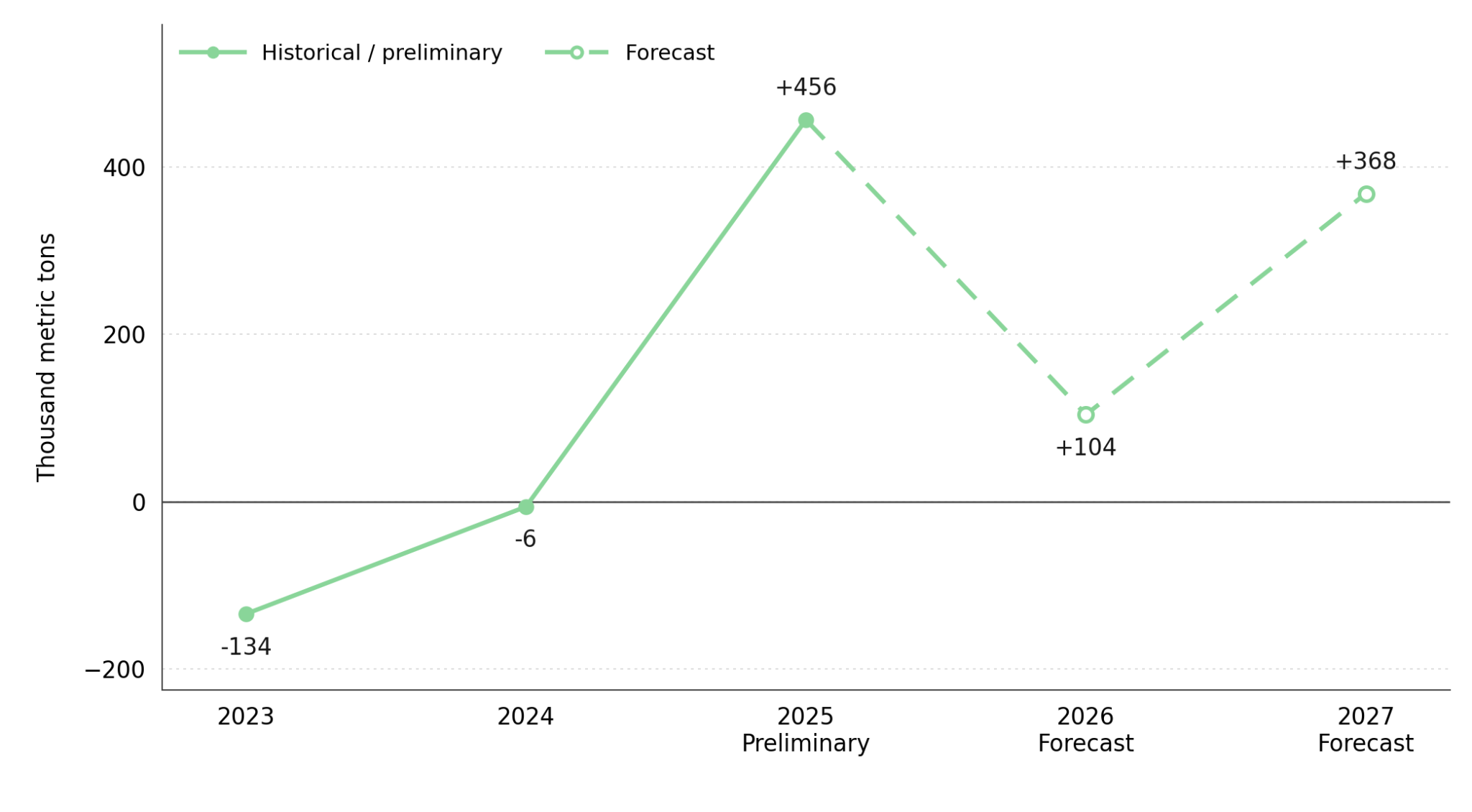
The ICSG’s Copper Market Forecast 2026/2027, released on October 14, 2026, projects refined copper surpluses of approximately 104,000 metric tons in 2026 and 368,000 metric tons in 2027, with the 2027 estimate unchanged from April.
Refined Output Growth Expands Copper’s Forecast Supply Buffer
The ICSG forecasts refined copper production growth of 3.4% in 2027, supported by capacity ramp-ups and higher operating rates, compared with apparent usage growth of 2.5%. The projected surplus equals approximately 1.3% of forecast usage, so production shortfalls or demand above the forecast could reduce the excess supply.
Refined copper supply includes metal recovered from scrap, so a refined surplus can coexist with limited availability of concentrates, the processed ore supplied to smelters. The ICSG identifies restricted concentrate availability in 2026, which can constrain smelter output even when total refined production exceeds usage.
Unreported Inventories Limit Copper Balance Precision
The ICSG estimates China’s apparent copper usage from production, net trade, and changes in reported stocks, excluding changes in unreported inventories. Unreported stockbuilding or drawdowns can make estimated usage differ from actual consumption and could change the projected global surplus if included.
The surplus forecast provides no copper price target, so project cash flows should be assessed at several metal prices. Comparing the resulting project values with remaining financing needs and the company’s market value helps assess how much the share valuation depends on higher copper prices.
Tight Concentrate Supply Supports the Case for Copper Restarts
Drilling that better defines grade and continuity provides inputs for mine planning and economic studies, helping determine where further development spending is justified.
Selkirk Copper reported 44.7 meters grading 2.12% copper at Minto North on October 15, strengthening confidence in mineralization targeted for its planned restart. The drilling supports a resource update expected in the first quarter of 2027 and feasibility work to refine mining plans, including the potential to supply higher-grade material to the existing processing plant.
M. Colin Joudrie, President and Chief Executive Officer, describes copper shortages and limited quality concentrate supply:
“This market is short copper, and it's particularly short of the quality of copper concentrates that we will produce: 38% copper, which is very rare in the marketplace. We're doing it on a timeline that allows them to envision the prices we're seeing today for that production. That's pretty rare.”
Long Mine Lead Times Require Earlier Copper Project Preparation
S&P Global’s October 5, 2026 research identifies 165 major copper discoveries that have not entered production, including 135 without completed feasibility studies. The dataset covers deposits containing at least 500,000 metric tons of copper across reserves, resources, and past production. Feasibility studies provide estimates of construction costs, operating costs, and production timing, helping assess funding needs and potential cash flow.
Resource Conversion Shifts Copper Drilling Toward Expansion
Long copper development timelines make improvements in resource confidence valuable beyond the projected near-term surplus. Drilling that better defines grade and continuity can provide a firmer foundation for mine planning and economic studies, helping exploration projects advance toward future production.
Abitibi Metals Corp reported 60.2 meters grading 1.08% copper at B26 on September 17, supporting confidence in the deposit’s continuity. With up to three drill rigs planned for the remainder of 2026, the company is working to expand the known deposit and improve resource confidence ahead of a future resource update.
Jonathon Deluce, Chief Executive Officer, explains how resource conversion guides subsequent drilling priorities:
“So I think we're trying to balance all buckets like our goal resource is 25 million today our goal for our next update is 30 to 35 million… So we felt that internally we've met our conversion target. So now it's drilling for scale.”
Expansion Drilling Tests the Scale of Future Copper Resources
Cobra Resources reported 23 meters grading 0.63% copper at Blue Rose, where drilling has traced mineralization beyond 300 meters and left it open at depth. A follow-up program of up to 6,000 meters is testing extensions and additional targets at Manna Hill, aiming to establish the scale of a potentially larger copper system.
Mogotes Metals has started drilling at Beskauga in Kazakhstan, with up to 50,000 meters planned and first results expected in the fourth quarter of 2026. Its September 22 update targets a preliminary economic assessment (PEA) within 12 months, setting a defined milestone for evaluating the project’s economic potential.
Higher Energy Prices Increase the Need to Test Copper Project Costs
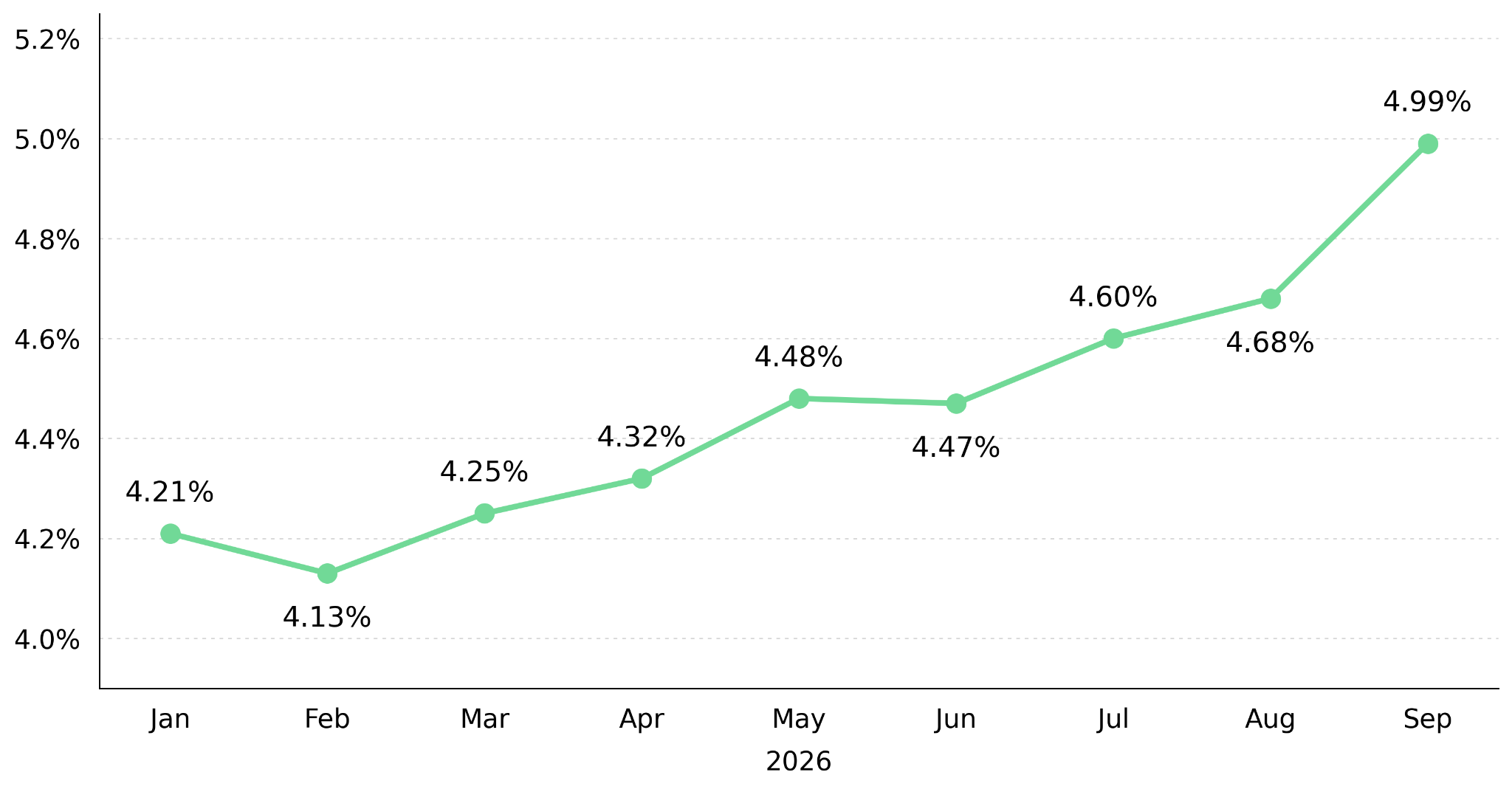
The World Bank’s Commodities Price Data (The Pink Sheet), published on October 2, 2026, records copper averaging US$14,114 per metric ton in the third quarter, up 5.7% from the second quarter. Its energy price index rose approximately 25.7% between August and September. The index does not measure mine-level cost inflation, so project studies need their own power, fuel, and processing assumptions.
Processing Requirements Determine Copper Recovery Costs
For proposed heap-leach operations, which recover copper by passing a chemical solution through prepared ore, recovery rates, reagent consumption, and processing time help establish how much copper can be produced and at what cost. Testwork and economic studies provide the basis for assessing margins under different input costs and copper prices.
Fitzroy Minerals targets a maiden resource estimate and preliminary economic assessment (PEA) for Buen Retiro in the fourth quarter of 2026, followed by a prefeasibility study in the second quarter of 2027. Drilling that returned 30.5 meters grading 2.48% copper from surface supports work to define the project’s scale and assess the economics of its proposed heap-leach operation.
Merlin Marr-Johnson, President and Chief Executive Officer, links rising mining costs to higher copper prices:
“Brownfield has got more and more expensive and that is a function of increased complexity, increased volumes as grades decline and increased depths as the big projects are being mined deeper and deeper and deeper. So all of this goes to show that copper prices have to materially rerate.”
Detailed Engineering Clarifies Copper Construction Funding Needs
For advanced copper projects, equipment specifications, procurement schedules, and construction sequencing help define capital costs and development schedules. These estimates establish the funding needed before production can begin.
Marimaca Copper described detailed engineering, preferred contractor selection, and lender due diligence for its permitted oxide project in an interview. Management linked this work to preparations for a construction decision, while seeking competitive financing costs and a conservative balance of debt and equity.
Higher Market Rates Can Increase Copper Funding Needs Before Production
S&P Global’s Global Economic Outlook, published on October 19, 2026, reports that 10-year US Treasury yields had risen more than 1 percentage point since the start of 2026. If higher market rates feed into project loans, interest accrued during construction increases the funding needed before a copper mine generates cash flow.
A developer’s funding plan should distinguish cash for studies and permitting from the capital required for construction. Debt capacity should be tested against cash flow at lower copper prices, repayment obligations, and conditions lenders require before releasing funds. For a fixed funding requirement, additional equity reduces borrowing needs, while issuing new shares can dilute existing shareholders who do not participate.
Funding should cover drilling, sample analysis, technical interpretation, and overhead through a defined milestone, such as an updated resource estimate. Reserving cash for follow-up drilling and testing can reduce the need for an additional fundraising round to evaluate new results.
Long Mine Lead Times Require Funding Before Copper Supply Arrives
The International Energy Agency (IEA), in its Global Critical Minerals Outlook 2026, published on July 16, 2026, projects a mine supply shortfall of approximately 25% against primary copper requirements in 2035. The estimate compares base case supply from existing and announced projects with requirements under the Stated Policies Scenario (STEPS). Primary requirements account for recycled supply and refining losses.
This longer-term assessment concerns mine supply, while the ICSG’s projected 2027 surplus concerns refined metal. The different stages and timeframes explain why a near-term refined surplus does not remove the need to prepare future mines.
The Investment Thesis for Copper
- Developers can define construction funding needs and the timing of potential cash flow through detailed engineering, permit approvals, and financing plans.
- Explorers can advance toward economic assessment when drilling defines resource size, grade, and continuity, while recovery tests establish how much copper the proposed process can extract.
- Existing processing plants can reduce construction capital when adapting them for the planned ore costs less than building equivalent new facilities.
- Documented permit requirements, infrastructure access, and community agreements help establish construction schedules and the cash required before production begins.
- Funding through defined technical milestones can reduce near-term fundraising needs, while valuations should reflect remaining development spending and cash flow tested across several copper prices.
Copper investment decisions extend beyond a single supply forecast because mines require years of spending before generating cash flow. Funded drilling, engineering, and permitting can turn resource potential into cost production plans, providing a clearer basis for assessing future returns. The opportunity is to match that progress with a valuation that accounts for remaining funding needs and potential cash flow across several copper prices.
TL;DR
The ICSG forecasts a 368,000-metric-ton refined copper surplus in 2027, while future mines still require years of preparation. Developers can define construction costs and funding needs through engineering, while explorers can improve resource confidence and test how much copper can be recovered. Existing infrastructure can reduce construction requirements when studies confirm its suitability. The investment case rests on funded technical progress, realistic cost assumptions, and valuations tested across different copper prices. Advancing these milestones can prepare future supply even when the near-term refined market shows a surplus.
FAQs (AI-Generated)
Analyst's Notes





Subscribe to Our Channel













Stay Informed


