IsoEnergy Ltd. & DISA Uranium: Technology-Led De-Risking of Utah Uranium Assets


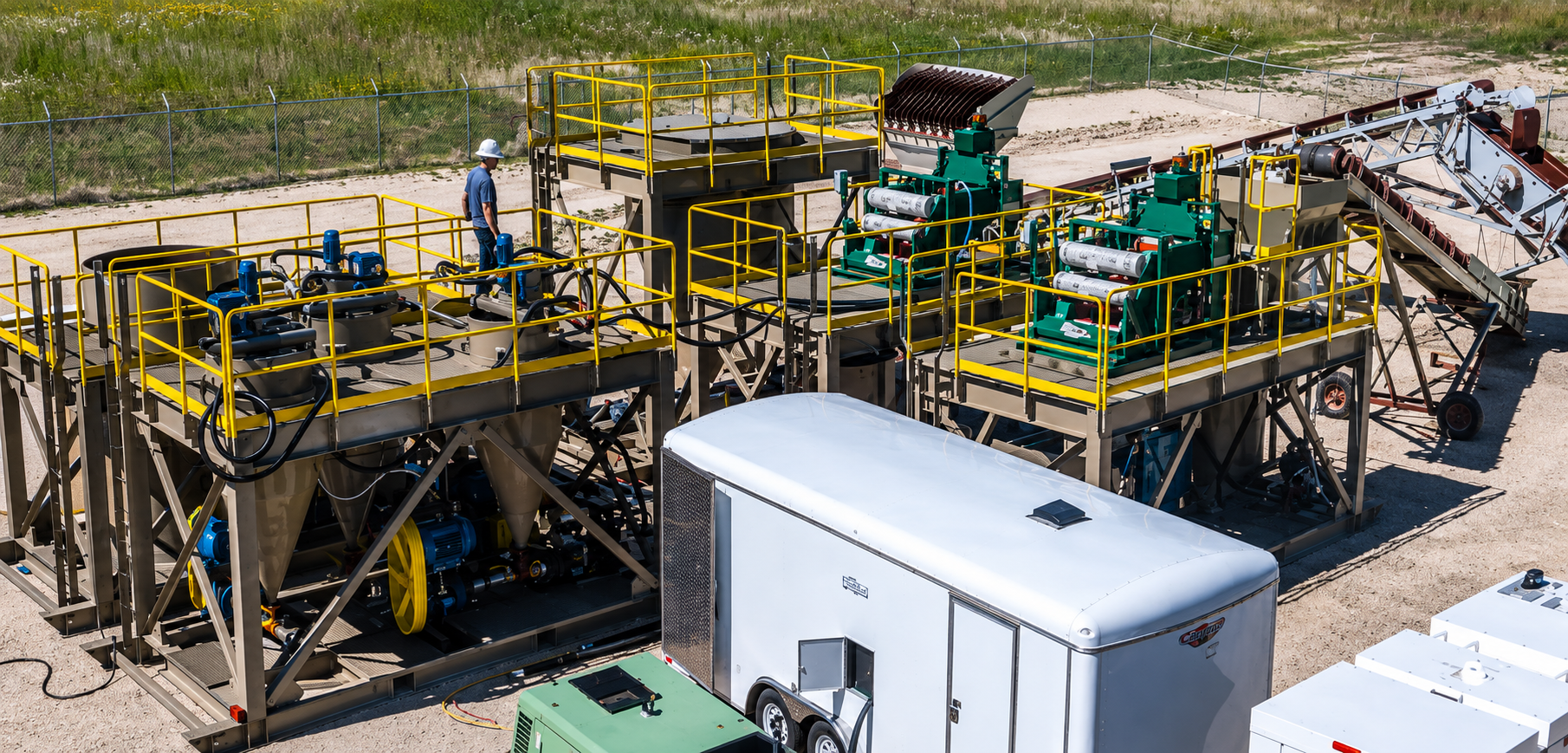
IsoEnergy & DISA Uranium form a US$505 million uranium platform, combining Utah assets, HPSA processing, and remediation to support lower-cost US uranium supply.
- IsoEnergy Ltd. is contributing its permitted, past-producing Utah uranium portfolio to DISA Uranium to combine conventional production assets with High-Pressure Slurry Ablation (HPSA) processing and uranium remediation.
- DISA Uranium has secured commitments for a US$105 million concurrent private placement, including US$33 million from IsoEnergy, which will give IsoEnergy approximately 33% ownership and the position of single largest shareholder.
- The company assigns DISA Uranium an implied pro forma fully diluted equity value of approximately US$505 million, while Tony M testing delivered approximately 88% uranium recovery and reduced feedstock to approximately 22% of original mass.
- HPSA produced a 4x increase in uranium grade from 3,500 parts per million to 14,087 parts per million and reduced post-process leach time to 2 hours, compared with more than 20 hours for conventional methods.
- DISA Uranium combines conventional mine development with access to more than 15,000 sites associated with abandoned uranium mine waste and more than 4,200 defence-related uranium mines, supported by a United States Nuclear Regulatory Commission (NRC) Source Materials License.
Transaction Structure & Strategic Capital Allocation
IsoEnergy Ltd. (TSX: ISO | NYSE American: ISOU) is contributing its permitted, past-producing Utah Portfolio to DISA Uranium, along with DISA Technologies' High-Pressure Slurry Ablation technology. The Utah Portfolio comprises the Tony M, Daneros, and Rim mines, and the Sage Plain and Flatiron projects, while DISA Uranium has secured commitments for a US$105 million concurrent private placement led by Tembo Capital, BHP Ventures, Galvanise Climate Solutions, Valour Equity Partners, Evok Innovations, Halliburton Labs, and Veriten.
IsoEnergy has committed US$33 million to the financing, resulting in approximately 33% ownership of DISA Uranium on a fully diluted basis and making it the single largest shareholder. The company assigns the resulting platform an implied pro forma fully diluted equity value of approximately US$505 million, while the financing is allocated toward conventional mine development, remediation and recovery programs, domestic uranium milling infrastructure, and longer-term growth. The structure changes the funding mechanism for the Utah assets by placing their development inside a separately capitalised platform while preserving IsoEnergy's equity exposure.
Chief Executive Officer of IsoEnergy Ltd., Philip Williams, described the capital-allocation rationale:
“They're not licensing the technology; that's not really the business plan within the other. For the uranium space, they want to grow their own business and own the assets, quite frankly. So I think it's we're able to watch the assets advance funded off of our balance sheet and operated by a team of experts to do that. I think the growth potential of this business is tremendous.”
IsoEnergy will have two board seats and the ability to participate in future financing, although the amount and timing of additional capital requirements remain subject to future development decisions.
High-Pressure Slurry Ablation & Tony M Economics
High-Pressure Slurry Ablation (HPSA) is designed to concentrate uranium by exploiting the difference in hardness between the target mineral and its surrounding rock. At Tony M, the company identifies carnotite, the uranium-bearing mineral, as significantly softer than quartz, the dominant host mineral. High-velocity slurry jets generate particle-to-particle collisions that preferentially break down the softer carnotite and liberate it from the harder host rock.
Tony M testing provides the quantitative basis for the processing thesis. An increase in uranium grade from 3,500 parts per million to 14,087 parts per million, representing a 4x uplift, while reducing feedstock mass to approximately 22% of the original material and recovering approximately 88% of the uranium. Post-HPSA leaching required 2 hours compared with more than 20 hours for conventional methods, while the presentation states that HPSA can improve mill feedstock grades by 3 to 5 times and reduce haulage costs by more than 70%.
The economic validation remains tied to Tony M because the test results are being incorporated into the next mine-level study rather than treated as a completed commercial operating case. The company has completed an approximately 2,100-tonne bulk sampling program at Tony M, while an updated preliminary economic assessment (PEA) incorporating HPSA efficiencies is targeted by year-end 2026.
Williams described the technology diligence process:
“The technology is actually commercialised, so on top of working for uranium, it does work for other minerals, and there are units deployed of this machine at mines in the United States for nickel and copper, for phosphate and other metals, so we were able to diligence the technology from its being in application in mines operating today and thousands of tonnes of material being run through the machines. Of course, we sent an army of technical experts, including internal personnel and consultants we brought in for these facilities, to review the machines and see how they were operating.”
Tony M HPSA Testing Results
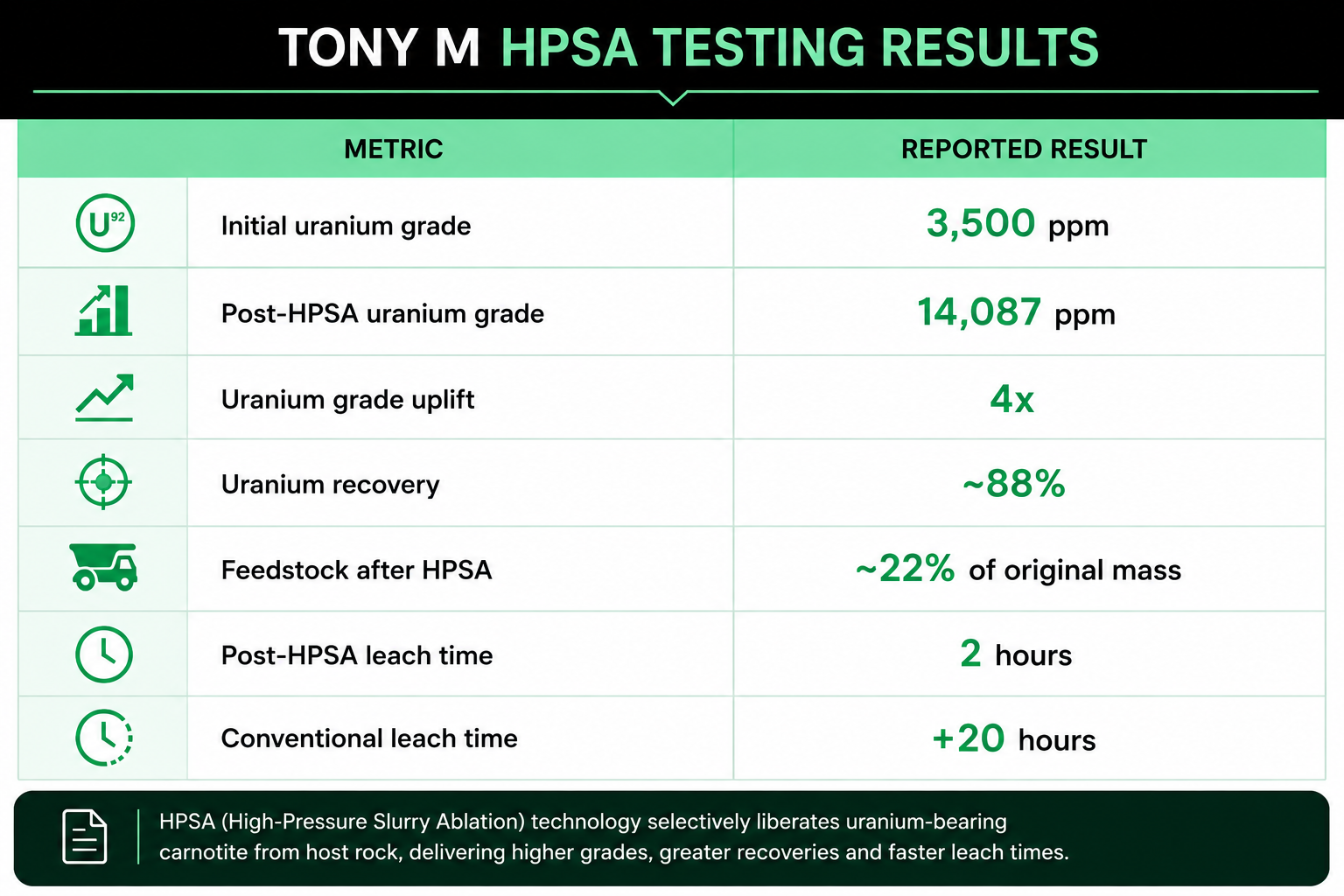
The Tony M results provide a measurable basis for assessing whether HPSA can improve the economics of conventional uranium processing. The reported 4x grade uplift from 3,500 parts per million to 14,087 parts per million, combined with approximately 88% uranium recovery and approximately 22% remaining feedstock mass, indicates that the process can materially concentrate the uranium-bearing material before leaching. The reduction in leach time from more than 20 hours to 2 hours provides an additional processing metric, although the commercial implications of these results remain contingent on the updated PEA targeted for year-end 2026.
Remediation Pipeline & Regulatory Position
DISA Uranium's second operating pathway is uranium recovery from abandoned mine waste rather than newly mined material. The August 2026 corporate presentation identifies more than 15,000 sites associated with abandoned uranium mine waste and more than 4,200 defence-related uranium mines, creating a potential feedstock base for mobile HPSA processing units.
The regulatory mechanism supporting this model is a United States Nuclear Regulatory Commission (NRC) Source Materials License for uranium recovery from legacy waste across multiple sites. The presentation states that the license supports recovery from legacy waste, while mobile HPSA units can be transported to individual sites for on-site processing and recovery.
The remediation model therefore creates a second feedstock pathway alongside conventional mining. The investment implications depend on whether site access, processing performance, and recovery economics can be demonstrated at individual remediation locations rather than only through laboratory or bulk-sample testing.
Processing Infrastructure & Execution Risk
The combined platform is designed to aggregate feedstock from conventional mines and remediation sites into a centralised processing strategy. The platform is targeting the first new conventional uranium mill constructed in the United States in more than 4 decades, creating a longer-term infrastructure requirement beyond the initial mine and remediation programs.
The next validation stage includes a first pilot program at an NRC-licensed site and a maiden cleanup at a Navajo Nation remediation site, while the updated PEA for Tony M is targeted for year-end 2026. These milestones will provide operating and economic evidence for the two feedstock pathways before larger-scale processing infrastructure is advanced.
Execution risk, therefore, centres on converting HPSA test results into repeatable commercial performance, securing and processing remediation feedstock, advancing permitting and addressing community requirements, and funding future processing infrastructure. The proposed management team includes Chief Executive Officer Greyson Buckingham, Chief Operating Officer John Lee, Chief Regulatory Affairs Officer Stephen Cohen, Chief Commercial Officer Jay Shopsowitz, and Vice President of Engineering Brett Bart, while the board includes former United States Nuclear Regulatory Commission Commissioner Jeffrey Merrifield, IsoEnergy designees Richard Patricio and Philip Williams, and Tembo Capital designee George Pyper.
Investment Thesis for IsoEnergy
- The transaction creates a separately capitalised platform for IsoEnergy's Utah assets, allowing the company to retain approximately 33% ownership while shifting development funding into DISA Uranium.
- The US$105 million private placement provides committed capital for conventional mine development, remediation, recovery programs, and domestic processing infrastructure, while IsoEnergy's US$33 million contribution preserves its exposure to the resulting platform.
- Tony M testing provides measurable technical evidence for High-Pressure Slurry Ablation, with approximately 88% uranium recovery, approximately 22% remaining in the feedstock mass, a 4x uplift in uranium grade, and a 2-hour post-process leach time.
- The remediation business adds a separate uranium feedstock pathway through more than 15,000 abandoned uranium mine waste sites and more than 4,200 defence-related uranium mines, supported by a United States Nuclear Regulatory Commission Source Materials License.
- The principal remaining valuation question is whether High-Pressure Slurry Ablation test results and the remediation pipeline can translate into repeatable commercial economics, with the updated preliminary economic assessment, pilot programs, and future processing work providing the next evidence points.
- The transaction shifts the Utah investment case toward a platform that combines conventional production, High-Pressure Slurry Ablation processing, and remediation. The immediate investment question is whether the quantified Tony M results and planned remediation programs can translate into scalable operating economics before larger processing infrastructure requires additional capital.
DISA Uranium gives IsoEnergy exposure to a broader uranium platform while reducing the funding burden of developing its Utah assets independently. The investment case rests on the ability to validate HPSA at mine scale, demonstrate economic recovery from remediation feedstock, and advance the required processing infrastructure. The upcoming PEA, pilot programs, and remediation work should provide the next key evidence points for determining whether the platform can convert its technical advantages and asset base into scalable, commercial returns.
TL;DR
IsoEnergy is forming DISA Uranium by combining its permitted, past-producing Utah Portfolio with DISA Technologies' HPSA technology and remediation platform. The transaction includes a US$105 million private placement, with IsoEnergy committing US$33 million for approximately 33% ownership, while the company assigns the platform an implied pro forma fully diluted equity value of approximately US$505 million. Tony M testing produced approximately 88% uranium recovery, reduced feedstock mass to approximately 22% of the original material, and delivered a 4x uranium grade uplift. The next investment checkpoints are transaction closing, the updated PEA, the first remediation pilot, the maiden Navajo Nation cleanup, and progress toward centralised processing infrastructure.
FAQs (AI-Generated)
Analyst's Notes





Subscribe to Our Channel




Stay Informed