




Florida Canyon's Record Second Quarter: The First Read on Integra's 8-Year Plan


Florida Canyon's gold output rose 30% in the second quarter of 2026 on record mining and stacking, the first operating read on Integra's 8-year plan.
- Florida Canyon produced 16,379 ounces of gold in the second quarter of 2026, a 30% increase over the first quarter.
- Record total material movement averaged 87,867 tonnes per day (tpd), with ore placed on the heap leach pads up 45% quarter-over-quarter.
- Full-year 2026 production guidance is maintained at 70,000 to 75,000 ounces, weighted to the second half.
- The quarter is the first operating test of the June 2026 technical report, which targets an 8-year mine life and average annual production of 82,000 ounces.
- 2026 site-level all-in sustaining cost (AISC) guidance of US$3,300 to US$3,500 per ounce sits above the life-of-mine figure of US$2,331 per ounce, reflecting a front-loaded stripping campaign.
What Has Happened
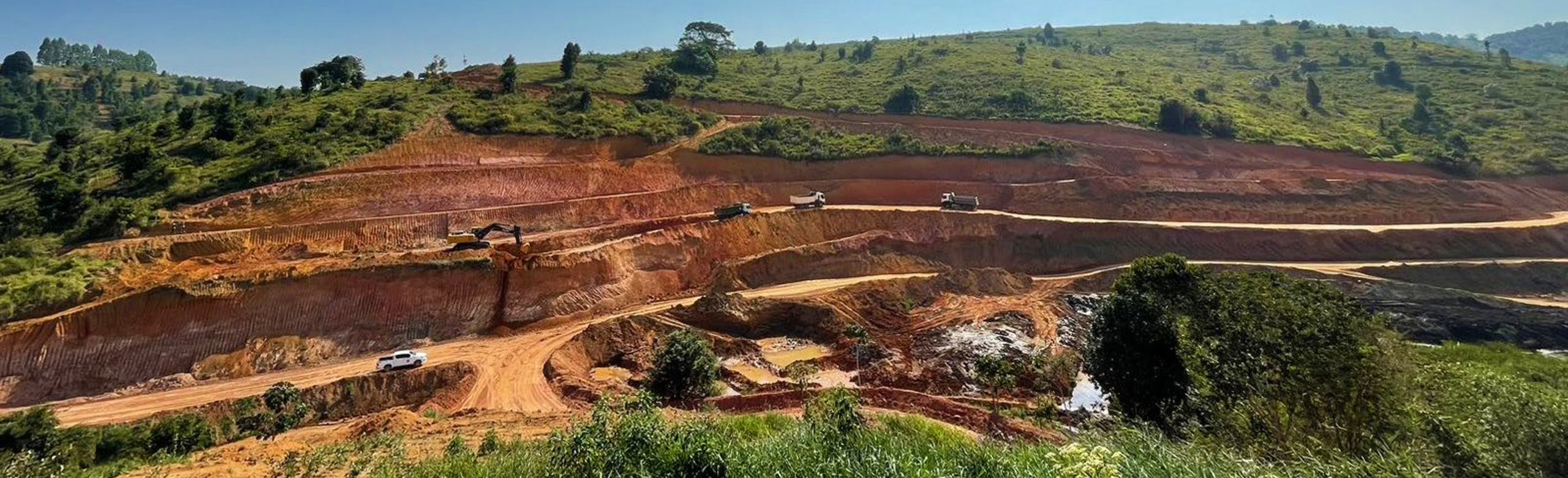
Integra Resources (TSXV: ITR | NYSE American: ITRG) produced 16,379 ounces of gold at its Florida Canyon mine in Nevada in the second quarter of 2026, a 30% increase over the first quarter. The gain came on record total material movement, with mining rates averaging 87,867 tonnes per day (tpd), a record for the operation. The company sold 15,794 ounces in the quarter and produced 29,014 ounces over the first half of the year.
Full-year 2026 production guidance holds at 70,000 to 75,000 ounces, weighted toward the third and fourth quarters as stacked ore continues to leach. The quarter is the first operating read on the 8-year plan set out in the June 2026 technical report, which reset the mine to a longer life and a higher production profile.
The Second-Quarter Operating Results
Ore mined rose 47% to 4.417 million tonnes from 3.008 million tonnes in the first quarter, ore placed on the heap leach pads rose 45% to 4.156 million tonnes, and total tonnes mined rose 16%. Processed grade rose 21% to 0.23 grams per tonne (g/t) from 0.19 g/t, while the strip ratio fell 38% to 0.81 from 1.30, and waste mined fell 8%.
The improvement traces to the integration of new mining equipment into the fleet over the past two quarters and shorter haul distances, which together lifted material movement to its record rate. The ore blending strategy developed in the first quarter continues to leach as expected, and management counts it among the factors supporting higher production through the second half.
Because heap leaching recovers gold gradually after ore is stacked, the 45% increase in ore placed on the pads builds an inventory of recoverable ounces that reports as production in later quarters.
How the Quarter Maps to the Technical Report
Production still sits below the run rate the plan targets from 2027. The report set an 8-year active mine life to 2033, followed by two years of residual leaching, and lifted proven and probable reserves 74% to 1.19 million ounces of gold. Average annual production rises 17% to 82,000 ounces, and the plan carries an after-tax net present value at a 5% discount rate (NPV5%) of US$601 million on base-case gold prices, rising to US$723 million at spot prices.
Against a 2027 and 2028 production target of 80,000 to 85,000 ounces, the 16,379 ounces of the second quarter reflect a mine still working through its heaviest stripping. Part of the plan's uplift comes from routing more ore through the crushing circuit, which recovers gold more effectively than material fed straight onto the pads. President,
Chief Executive Officer and Director of Integra Resources, George Salamis, is precise on the recovery gain the plan leans on:
"The crusher actually recovers gold in a far better manner, low to mid 60s of recovery versus high 40s, low 50s from a run-of-mine perspective. Why not push more tons to that crusher, because it can handle it and recover more gold?"
The life-of-mine average recovery of 56.7% is a blend of that higher crushed-ore rate and lower run-of-mine recoveries, which leaves room to lift recovered ounces by crushing a larger share over time.
The Cost & Stripping Trade-Off
Costs are elevated in 2026 by design. The 2026 site-level all-in sustaining cost (AISC) guidance of US$3,300 to US$3,500 per ounce sits above the life-of-mine figure of US$2,331 per ounce. The gap reflects a heavy, front-loaded waste-stripping campaign to reach the better grades in the main pits.
Management treats the elevated spend as a setup for the lower-cost years, not a permanent cost base, and Salamis says the deposit's grade profile means Florida Canyon will never be a sub-US$2,000 per ounce AISC producer.
Salamis is direct about the operating learning behind the updated plan:
"We've learned a lot from this orebody over the last two years: what to do, what not to do, where the efficiencies are. Open-pit heap leaching is all about the efficient movement of dirt around a mine site, and we've certainly learned that."
Broader Context
Florida Canyon's delivery is the first link in a self-funding model that carries the rest of Integra's portfolio. The June 2026 technical report describes a mine that funds its own reinvestment with no upfront capital, generating after-tax free cash flow of US$770 million over the mine life, or about US$90 million a year on base-case gold prices. Cash and cash equivalents stood at US$111.1 million at June 30, 2026, on a preliminary basis.
That cash flow is earmarked for two other assets, DeLamar in Idaho and Nevada North in Nevada. Florida Canyon is intended to build a treasury toward construction at the DeLamar project, where the Environmental Impact Statement and Record of Decision are targeted for the second half of 2027, with a debt component to follow. The Nevada North project, about 30 miles west of the mine, is next in line, with a pre-feasibility study targeted for 2027, and management sees Florida Canyon and Nevada North in production in parallel at some stage.
Funding the pipeline from operating cash flow rather than repeated equity raises is the mechanism management has set out to reduce shareholder dilution as it advances toward a multi-asset United States producer.
What to Watch Next
Integra is targeting increased production through the third and fourth quarters of 2026 as the stacked inventory leaches, and ore stacking exceeded expectations after quarter-end in July. Delivery against full-year guidance of 70,000 to 75,000 ounces is the first checkpoint, followed by the step to 80,000 to 85,000 ounces guided for 2027 and 2028.
The company has put a date on the wider test, identifying 2027, 2028, and 2029 as the window to demonstrate lower costs and higher production together. Alongside the mine plan, a 42,500-metre (m) drill programme is underway at Florida Canyon targeting near-mine oxide growth, part of a 50,000-m programme across the company's projects. Whether the second half of 2026 delivers the guided increase is the first measure of how the ramp is tracking against the plan.
FAQs (AI-Generated)
Analyst's Notes





Subscribe to Our Channel





Stay Informed






















