Cobra Defines 150 Million Tonne Maiden Rare Earth Resource at Wudinna, Targets Bottom-Quartile Costs



Cobra Resources defines a 150 million tonne maiden rare earth resource at Wudinna, assessed for ISR and open pit, targeting bottom-quartile costs.
- Cobra Resources has defined a maiden resource of 150 million tonnes grading 470 parts per million total rare earth oxides (TREO), for 70,400 tonnes of contained TREO at the Wudinna Rare Earth Project in South Australia.
- The Indicated category totals 60 million tonnes at 572 parts per million TREO, 40% of the inventory, defined by sonic core drilling at the Boland and Head prospects.
- The estimate was assessed for both in-situ recovery (ISR) and open pit mining, with an economic ISR cut-off of US$5.27 per tonne and an open pit cut-off of 200 parts per million TREO excluding cerium.
- The company has assigned an exploration target of 665-1,447 million tonnes at 376-478 parts per million TREO across Boland and Head, subject to further drilling.
- A 5-pillar development strategy targets bottom-quartile production costs and aims to support an investment decision in 2029, subject to feasibility, approvals and funding.
Company Overview
Cobra Resources (LSE: COBR) is developing 2 South Australian critical minerals projects: the Wudinna ionic rare earth project and the Manna Hill copper project. At Wudinna, the company is advancing a rare earth discovery amenable to low-disturbance, controlled-aquifer in-situ recovery (ISR), with the potential to become the Western World's first rare earths ISR operation.
The Manna Hill copper project in the Nackara Arc hosts multiple underexplored prospects with potential for shallow skarn and deeper porphyry copper-gold mineralization. Cobra also holds a significant shareholding in Barton Gold (ASX: BDG), following the 2025 sale of its non-core gold assets for A$15 million in cash and shares.
Resource Defined Across Boland & Head
On October 26, 2026, Cobra reported a maiden JORC Mineral Resource Estimate (MRE) for Wudinna of 150 million tonnes grading 470 parts per million total rare earth oxides (TREO) for 70,400 tonnes of contained TREO. ERM Australia Consultants prepared the MRE. It draws on assay, metallurgy, permeability and total organic carbon data from 91 sonic core holes drilled at Boland and Head from 2024 through 2026. The most recent resource definition program, completed in 2026, comprised 74 drill holes for approximately 3,200 meters.
Indicated material totals 60 million tonnes at 572 parts per million TREO. This includes 42 million tonnes at 575 parts per million in the Garford formation and 18 million tonnes at 564 parts per million in the Pidinga formation. The Inferred category adds 37 million tonnes at 472 parts per million in the Garford and 54 million tonnes at 354 parts per million in the Pidinga. Across the full inventory, the neodymium-praseodymium oxide grade is 101 parts per million, the dysprosium-terbium oxide grade is 10 parts per million, and the magnet rare earth oxide grade is 112 parts per million.
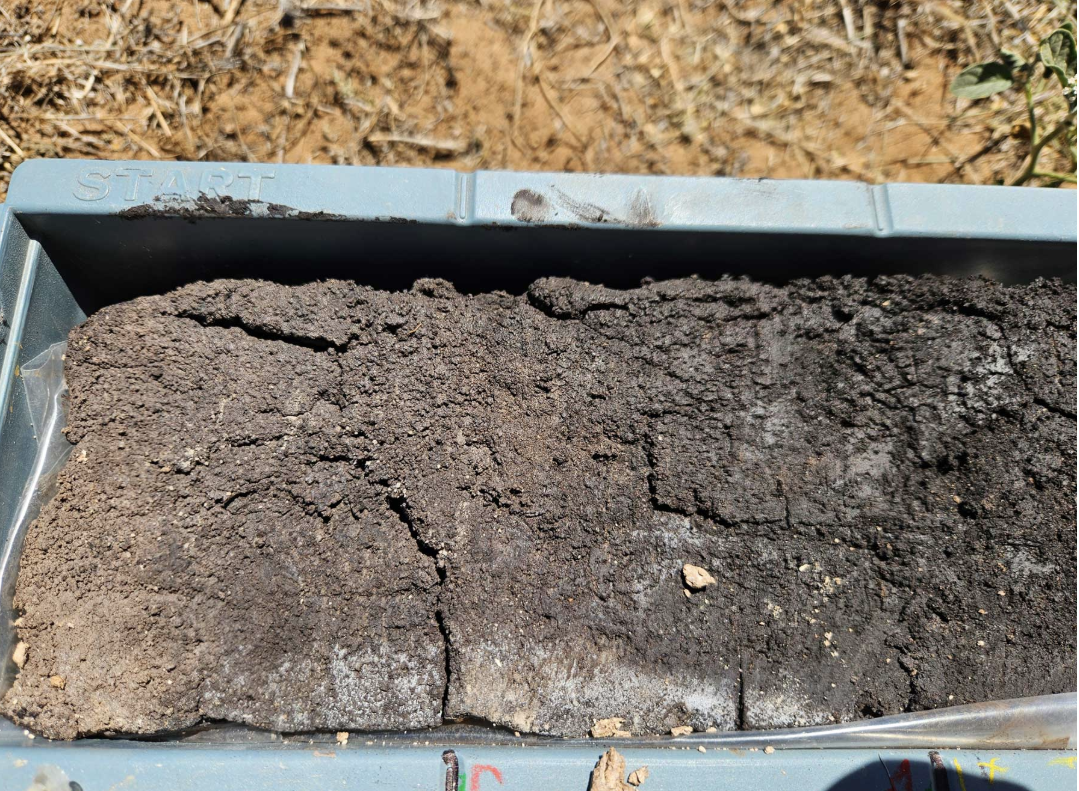
Mineralization is hosted in Tertiary paleochannels over rare earth-enriched Hiltaba Suite granites. The permeable Pidinga formation is the primary ISR target. The overlying Garford formation is generally more than 10 meters thick and acts as the confining layer. Higher grades occur along the incised channel margins at both prospects.
Two Extraction Routes Shape the Cut-Off
Pidinga material amenable to ISR was reported at an economic cut-off of US$5.27 per tonne of treated ore, equivalent to approximately 180 parts per million TREO excluding cerium (TREO-Ce) and based on processing costs derived from Cobra's testwork. The material with poor permeability was assessed for open-pit mining and heap leaching at a 200 parts per million TREO-Ce cut-off, using a mining cost of US$2.3 per tonne. The same processing flowsheet and facility can treat pregnant solutions from both routes.
Within the Pidinga formation, 61% of ore tonnes and 57% of contained TREO are currently evaluated as ISR recoverable. The company is planning further permeability and recovery work to bring more Pidinga material into that category. Cobra describes the MRE as the first in the Western World developed with confined-aquifer ISR parameters.
2 years of testwork, including programs with the Australian Nuclear Science and Technology Organisation, have demonstrated rare earth recovery using ammonium sulfate lixiviants under mildly acidic conditions. Selected lower-grade zones returned recoveries above 80% with very low sulfuric acid additions. Organic matter and pyrite in the Pidinga formation can also generate acidity naturally during ISR.
Exploration Target Points to Scale
An Exploration Target (ET) of 665-1,447 million tonnes at 376-478 parts per million TREO across Boland and Head, based on re-analysis of air core and rotary mud drilling. Combined with the MRE, the ET covers less than 12% of Cobra's approximately 3,200-square-kilometer prospective paleochannel landholding.
The ET is conceptual in nature. Insufficient exploration exists to estimate a Mineral Resource over that ground, and conversion is uncertain. At Head, Cobra has defined a permeable, high-grade channel for extension and infill drilling, and it proposes hydrogeological testing there.
5-Pillar Strategy Targets Bottom-Quartile Costs
The MRE provides the resource base for the Wudinna Scoping Study, and Cobra has adopted a 5-pillar strategy to guide development alongside it. The first pillar targets bottom-quartile production costs through efficient ISR. The second aims for a higher-value product by maximizing heavy rare earth content. The remaining 3 cover commercial partnerships and offtake, disciplined financing and permitting, and demonstrated scale with staged capital spending.
Under the staged approach, Cobra plans to define modular ISR cell designs and confirm modeled operating parameters through field trials, with additional scale funded through positive cash flow. Cobra states that bottom-quartile costs remain a strategic objective, not a demonstrated cost position, and that no Ore Reserve has been estimated.
Chief Executive Officer and Managing Director of Cobra, Rupert Verco, tied the resource to the next study phase and the cost objective:
"This MRE will underpin the Scoping Study and provides the foundation for our five-pillar development strategy. Our objective is to establish a pathway to bottom-quartile production costs by optimising recovery, producing a higher-value product and reducing downstream separation costs."
Next Steps
Work in 2027 centers on definition and testing. The company plans to build the cost model, optimize ISR chemistry and product recovery, and demonstrate the process through small-scale production. Over the same period, it will engage partners and customers and define the approvals pathway and baseline studies.
Validation and preparation follow across 2027-2028. The 2027-2028 phase covers modeling wellfield output, demonstrating field performance, validating product quality and separation cost benefits, negotiating commercial terms, and advancing approvals and funding.
For 2029, Cobra is targeting progress toward an investment decision. The investment decision remains subject to feasibility, bankable commercial arrangements, approvals and funding.
FAQs (AI-Generated)
Analyst's Notes





Subscribe to Our Channel










Stay Informed