IsoEnergy's Sequential Uranium Strategy Positions the Company for Value-Maximising Production


IsoEnergy CEO Phil Williams explains how a staged development model, funded Tony M, restart, and Hurricane drilling are built to maximise value per pound.
- IsoEnergy Ltd. is sequencing uranium development across Canada, the US, and Australia, with the Tony M mine in Utah's Henry Mountains as the near-term production lead and the Hurricane deposit in Saskatchewan as the primary medium-term resource.
- A 2026 capital raise that drew over $300 million in demand against a $50 million offering left approximately C$130 million on the balance sheet, fully funding a potential Tony M restart decision without requiring debt or pre-production contracts.
- IsoEnergy's low-capex restart model - restarting past-producing, permitted mines with existing infrastructure - means the company does not need to sign long-term uranium supply contracts at below-spot prices, avoiding the margin destruction Williams attributed to producers in the prior cycle who delivered into $90 per pound agreements while spot reached $150.
- The Hurricane deposit at Larocque East holds an indicated resource of 48.6 million pounds of uranium oxide at 34.5% grade, effective July 8, 2022, per the National Instrument 43-101 (NI 43-101) technical report by SLR Consulting - the highest-grade indicated uranium resource published globally - with 2026 winter drilling returning 4.21% U3O8 over 3.5 metres on the South Trend.
- US government agencies, including the Department of Energy, the Export-Import Bank of the United States (EXIM), and the Development Finance Corporation (DFC), directly solicited uranium developers for capital deployment discussions at a 2026 BMO conference, with IsoEnergy holding assets in Utah and Virginia that qualify under domestic critical mineral supply criteria.
Why Timing Matters More Than Being First
IsoEnergy Ltd. (TSX: ISO | NYSE American: ISOU) opened its discussion with a lesson from the previous uranium cycle. Producers that locked in long-term supply contracts when uranium prices were below $100 per pound later found themselves delivering under agreements priced at or below $90 per pound while the spot market climbed as high as $150 per pound. The result was not a geological problem or an operational setback, but a financing-driven decision that left substantial value on the table.
For Chief Executive Officer of IsoEnergy, Phil Williams, that experience helps explain IsoEnergy's current approach. The company is advancing uranium mines that operated in a previous cycle and already hold key state and federal permits. Those permits save an estimated 3 to 5 years and more than US$1 million per mine compared with a greenfield development. Combined with existing infrastructure, this reduces upfront capital requirements and lessens the need for debt financing. Without debt-related hedging obligations, IsoEnergy has greater flexibility over when and how it contracts future production.
The World Nuclear Association's 2025 World Nuclear Fuel Report reference scenario projects global uranium demand reaching 391 million pounds by 2040, against a total identified supply of 179 million pounds - 46% of projected demand. A company funded to make a production decision without debt has a measurable pricing advantage over one that must contract to service obligations, because the former can sell into a rising spot market or negotiate market-related terms rather than locking in a fixed floor.
The Restart Decision Is Being Made From a Position of Cash
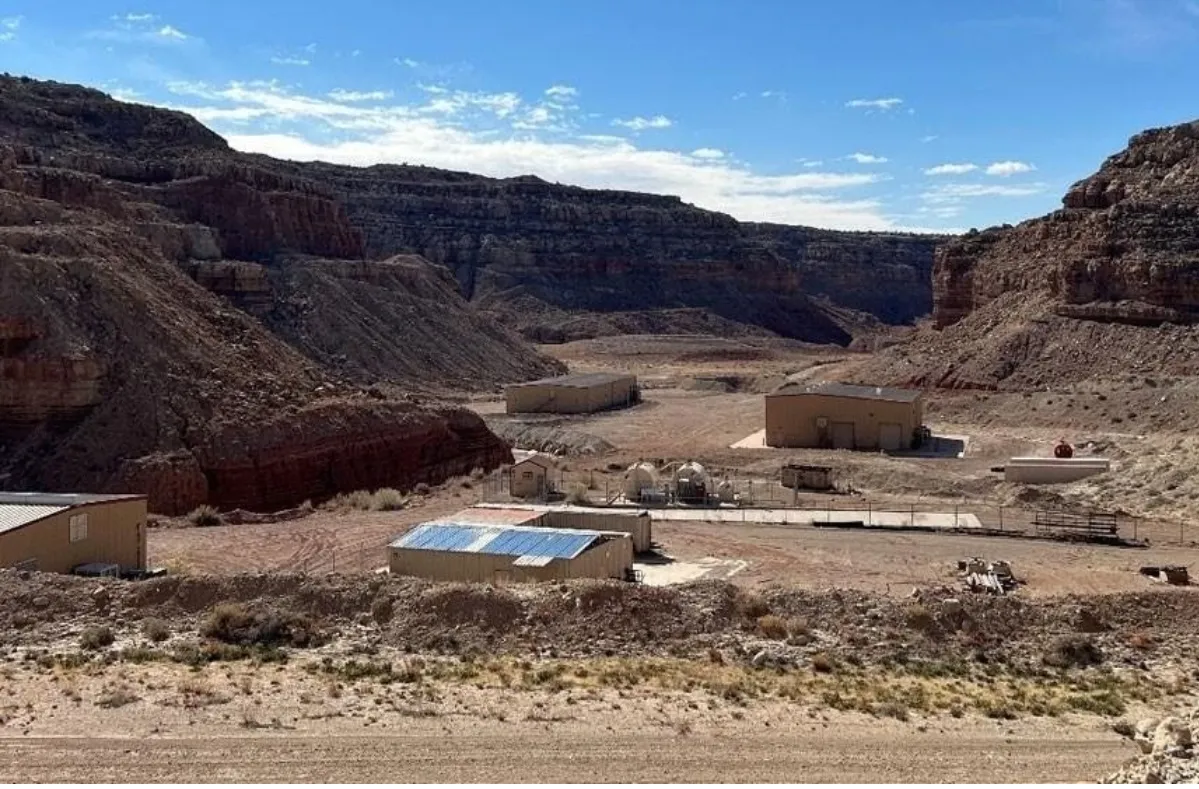
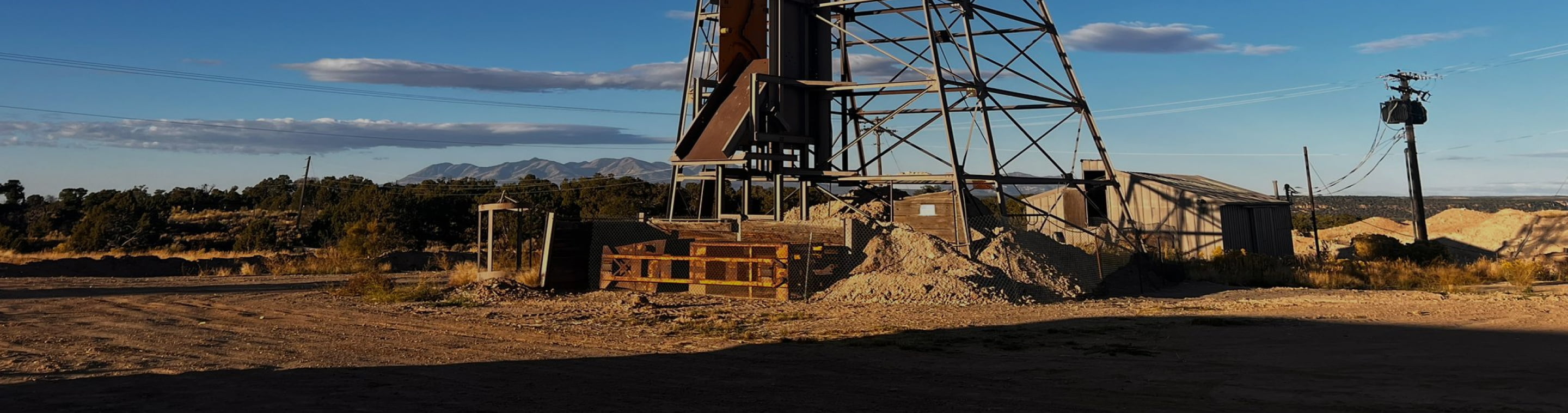
The Tony M mine holds an indicated mineral resource of 6,606,000 pounds of uranium oxide at 0.28% and an inferred resource of 2,218,000 pounds of uranium oxide at 0.27%, effective September 9, 2022, per the National Instrument 43-101 (NI 43-101) technical report by SLR Consulting. Key state and federal operating permits are in place - saving an estimated 3 to 5 years and more than US$1 million per mine compared to a greenfield permitting process - and a toll milling agreement with Energy Fuels is secured for processing at the White Mesa Mill in Utah. A completed Enhanced Evaporation Study confirmed that Landshark evaporators eliminate the need for evaporation pond expansion, and beneficiation test work demonstrated greater than 90% uranium recovery using High-Pressure Slurry Ablation. The preliminary economic assessment (PEA) targets completion in 2026, using data from the completed 2,100-tonne bulk sampling program
The 2026 capital raise drew over $300 million in demand against a $50 million offering across 45 institutional investors, approximately half of whom were new to the company, leaving approximately C$130 million on the balance sheet.
Williams described how that position shapes the restart decision:
"Whilst we have a lot of capital today, I think it was $150 million of cash on the balance sheet when we closed that transaction, we're going to be judicious. We're doing this with forethought. This isn't about how much money we can spend in the fastest amount of time. This is about how we advance, enhance, and derisk the projects in our portfolio."
The company is fully funded to execute a Tony M restart once the PEA and final technical studies are in hand, subject to market conditions. That cash position removes the need to take on debt ahead of the decision and, with it, the hedging covenants debt providers typically require.
How Sequencing Solves the Talent Problem
Capital alone cannot resolve the issue: the global mining industry lacks sufficient experienced technical personnel to simultaneously staff multiple independent projects through development. A company attempting to run Tony M, Daneros, Rim, Hurricane, and Wiluna concurrently at the same development stage would need to hire an experienced technical workforce that the labour market cannot supply in sufficient numbers.
IsoEnergy's sequencing model addresses this directly. Tony M leads, targeting 80 to 100 personnel at full development. Once Tony M reaches operational status, the technical team redeploys to Daneros and Rim within the same Utah portfolio, eliminating the need to rebuild logistics and contractor relationships from scratch. The same team then pivots to the Wiluna uranium project in Western Australia, where shallow, open-pittable carbonate deposits sit 30 kilometres south of Wiluna township, with a completed scoping study on the Lake Maitland component and an offtake partner - Japan Australia Uranium Pty and Itochu - holding the right to acquire a 35% interest in Lake Maitland for US$39.6 million.
Williams described the mechanism:
"Trying to execute on multiple projects at the exact same stage, at the exact same time, is quite challenging. Also, we can bring the expertise of our team to bear on different projects at different times, and so you can move the groups around."
Hurricane Is Growing in the Background
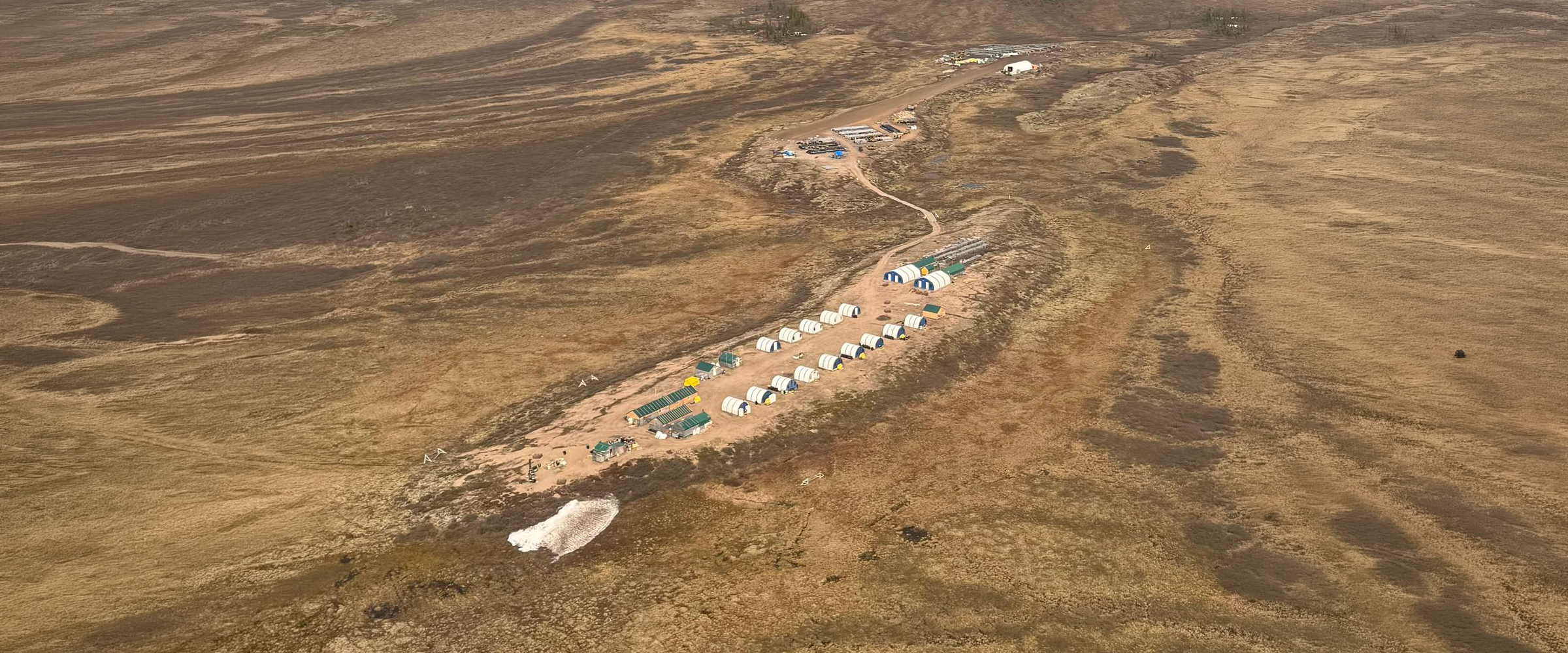
The Hurricane deposit at Larocque East in Saskatchewan's eastern Athabasca Basin holds an indicated resource of 48.6 million pounds of uranium oxide at 34.5%, effective July 8, 2022, the highest-grade indicated uranium resource published globally. The high-grade domain alone - 38,200 tonnes at 52.1% - contains 43.9 million of those pounds. The deposit lies at an approximate depth of 325 metres, with no surface water cover, and is 40 kilometres from the McClean Lake mill by road.
The 2026 winter drill program, comprising approximately 6,800 metres across 17 holes, confirmed structural continuity along the Hurricane South Trend. A significant hole returned 4.21% uranium oxide over 3.5 metres, including 11.61% uranium oxide over 1 metre, establishing a new structural control on mineralisation. Two step-out holes both intersected mineralisation, extending the known footprint approximately 540 metres along strike beyond the current resource boundary. A follow-up summer program targeting approximately 8,000 metres across 20 holes is planned to systematically test the South Trend corridor.
The deposit shares a property boundary with Cameco & Orano's Dawn Lake joint venture. Cameco's Annual Information Form, dated February 13, 2026, states that 2025 drilling at Dawn Lake continued to expand the footprint of known uranium mineralisation, with intercepts comparable in tenor and scale to other mines in the basin - a reference class that includes Cigar Lake, which produces approximately 18 million pounds per year. Williams stated IsoEnergy was expanding its own program based on current drill results, without pre-disclosing assays.
Government Capital & the Australian Variable
Government engagement with the uranium sector appears to be increasing. At a 2026 BMO conference in Florida, representatives from the US Department of Energy, Export-Import Bank of the United States (EXIM), and Development Finance Corporation (DFC) presented to attendees and held one-on-one meetings with uranium developers. Williams noted that this level of direct participation was absent at the same conference in previous years.
The evolving policy backdrop could have implications across multiple parts of IsoEnergy's portfolio. In the United States, the company owns the Coles Hill deposit in Virginia, which hosts a historical indicated resource of 132.93 million pounds of uranium oxide at 0.056%. Development remains constrained by a state moratorium on conventional uranium mining, in place since 1982, which would require action by the Virginia General Assembly before mining could proceed.
Beyond the United States, Management pointed to a developing critical-minerals partnership between Australia and the United States as a potential driver of greater Australian support for uranium development. Such a shift could influence the timeline for the Wiluna project in Western Australia, which contains measured and indicated resources of 69.1 million pounds of uranium oxide at 403 parts per million.
FAQs (AI-Generated)
Analyst's Notes





Subscribe to Our Channel


.jpg)

.png)

Stay Informed