




Lithium Demand Surges 45% Beyond EVs: Can Battery Storage Growth Sustain Prices?


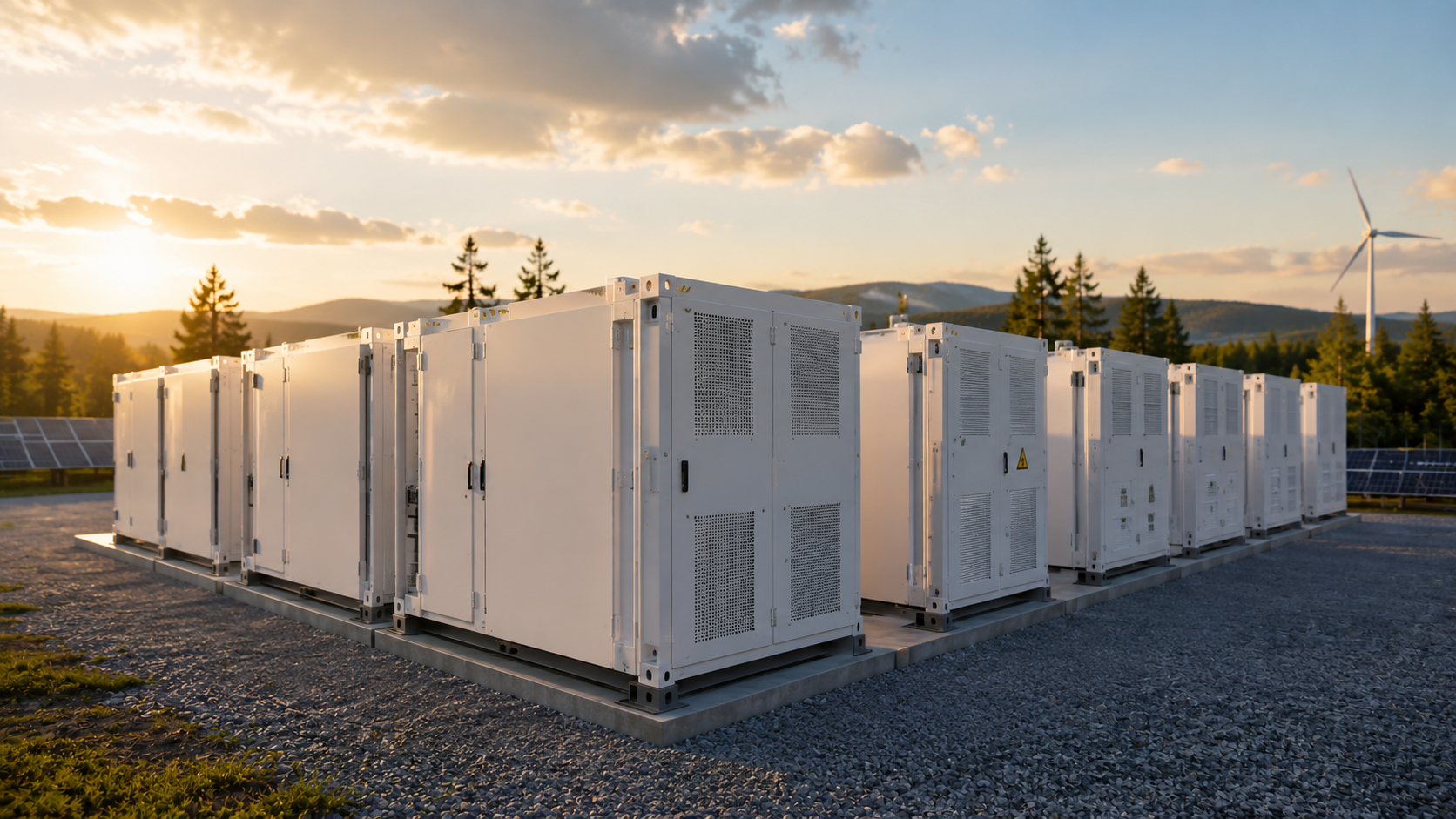
Battery storage lifts lithium demand 45% beyond EVs, while LFP supports lithium and Indonesian quotas tighten nickel supply.
- Global lithium consumption grew 45% through May 2026, above the 15% to 40% forecast range, with stationary storage driving the increase.
- Chinese electric vehicle sales fell 13% in the first half of 2026, while lithium demand exceeded prior forecasts as stationary storage drove consumption growth.
- Lithium iron phosphate accounts for 99.9% of the energy storage system market and contains no nickel, while lithium carbonate is up 93.96% year on year versus 10.01% for nickel.
- Stainless steel accounts for more than 60% of global nickel consumption, while the 32,000-tonne 2026 deficit depends on Indonesia maintaining its lower ore quota.
- Projects with economics that remain viable at lower lithium or nickel prices offer greater downside protection when commodity prices weaken.
Stationary Storage Drives Lithium Demand Above Forecasts as Electric Vehicle Sales Fall
Global lithium consumption grew 45% through May 2026, according to Albemarle, exceeding its 15% to 40% forecast range, with stationary storage driving the increase and inventories near historic lows. Albemarle's second-quarter 2026 Energy Storage net sales rose 78% to $1.28 billion, supported by an 11% increase in lithium volumes and a 60% increase in realized prices. The strength of lithium consumption and Energy Storage sales provides a basis for examining where demand is coming from beyond electric vehicles.
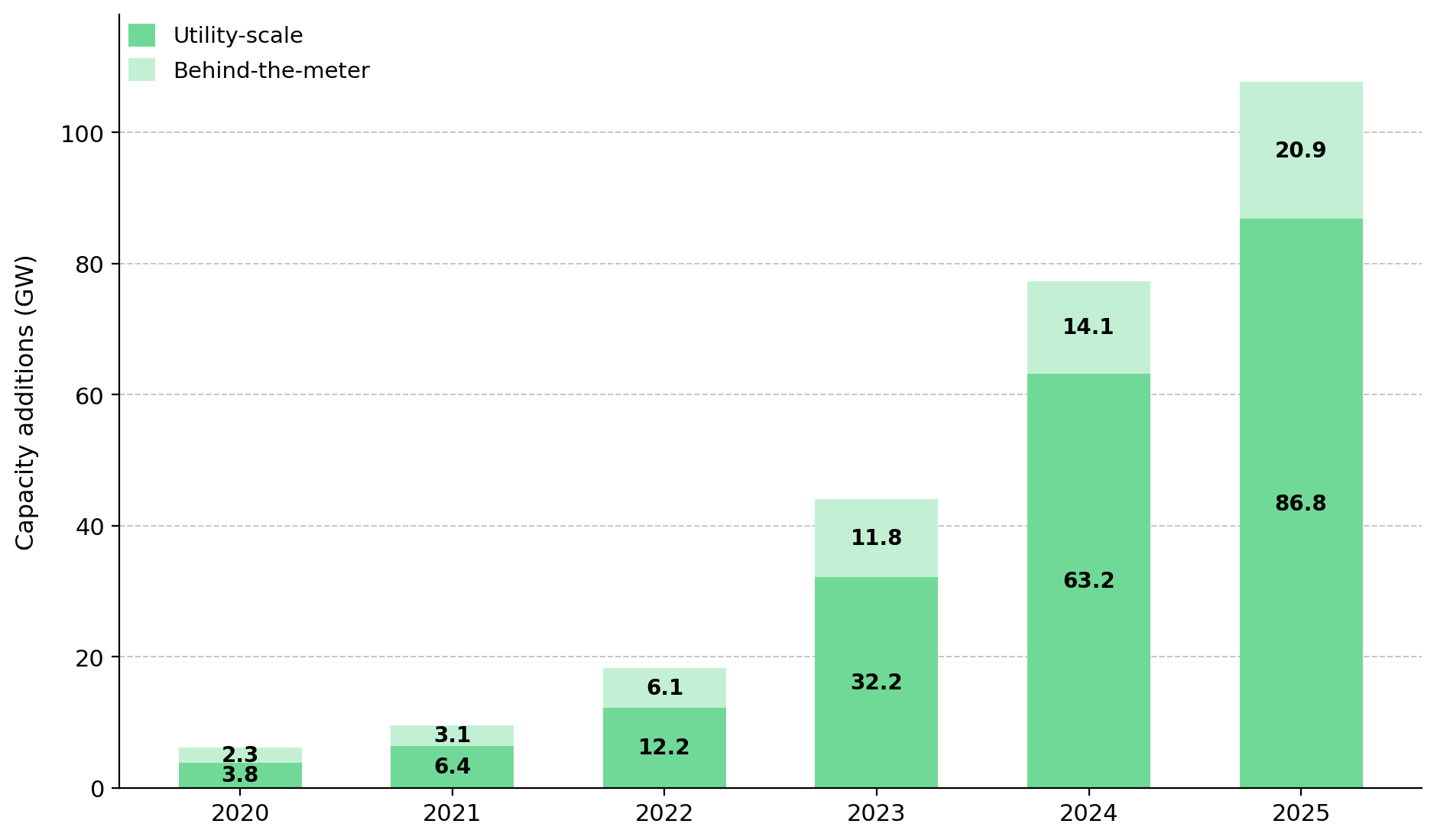
Chinese electric vehicle sales fell 13% in the first half of 2026 following subsidy withdrawal, according to China Association of Automobile Manufacturers (CAAM) data. Despite weaker vehicle sales, Chinese battery production rose 53.3% and battery exports reached 181.3 gigawatt-hours, up 42.5%, according to China Automotive Battery Innovation Alliance (CABIA). The growth extends beyond vehicles, with global battery storage deployment reaching 108 gigawatts in 2025, up 40% from 2024, and around 80% of new capacity installed at utility scale, according to the International Energy Agency (IEA). This expansion provides an additional source of lithium demand, helping explain why lithium consumption can grow even when EV sales weaken. On August 10, 2026, lithium carbonate traded at CNY 144,500 per tonne, up 93.96% year on year, while LME nickel traded at $16,859 per tonne, up 10.01%.
LFP Holds 99.9% of Storage, Strengthening Lithium Demand While Nickel Remains Anchored to Stainless Steel
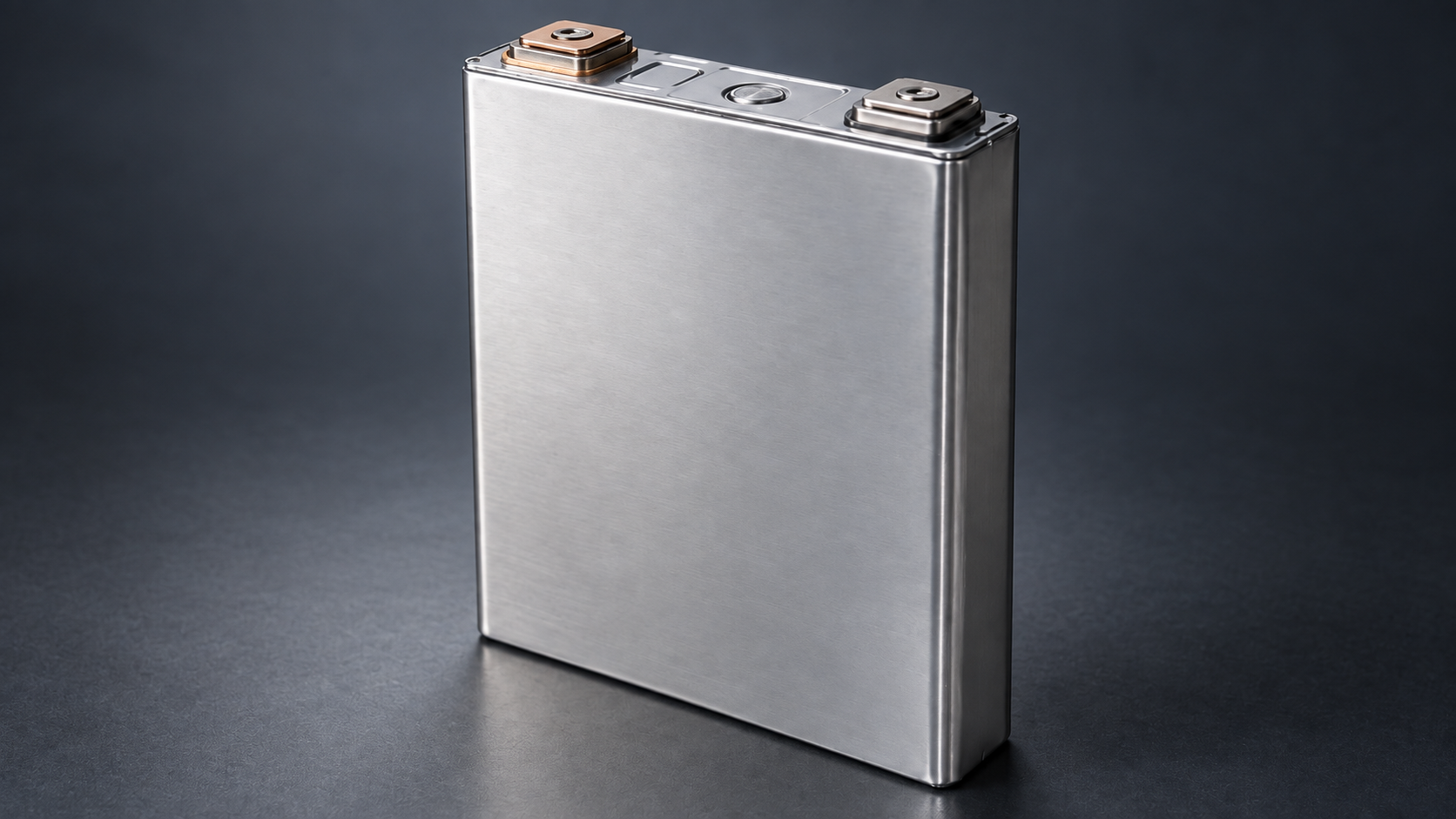
Grid-scale storage primarily uses lithium iron phosphate (LFP) cathodes. LFP uses lithium, iron and phosphate and contains no nickel, cobalt or manganese, while nickel manganese cobalt (NMC) cathodes contain nickel. LFP now accounts for 99.9% of the energy storage system market and 70.7% of the Chinese automotive battery market. Because LFP contains lithium but no nickel, additional storage capacity creates lithium demand without equivalent nickel demand.
Nickel demand is primarily tied to stainless steel, making its end-use mix important to project viability and commodity exposure. According to the International Nickel Study Group (INSG), stainless steel accounts for more than 60% of global nickel consumption, while battery demand has grown slower than earlier forecasts as LFP has gained share and plug-in hybrid demand has outpaced battery electric vehicles in several markets. The IEA, in its 2026 Global EV Outlook, said faster lithium demand growth, particularly from battery energy storage, contributed to higher lithium prices and warned that sustained high prices could strengthen the case for sodium-ion chemistries that contain no lithium.
Storage Demand Outpaces Forecasts as Lithium Supply Returns, Raising the Bar for Construction-Ready Projects
Lithium carbonate fell to CNY 140,000 per tonne in early August 2026, a near six-month low, before recovering to CNY 144,500 per tonne on August 10. The most-active Guangzhou Futures Exchange contract fell to CNY 136,800 per tonne on July 21, 2026, its lowest since February 10 and nearly 30% below its mid-May two-year high above CNY 200,000. Recent supply additions include CATL's Jianxiawo mine receiving safety permits through February 27, 2028, Mineral Resources targeting a restart of Bald Hill after an 18-month suspension, and Core Lithium restarting Finniss. With consumption running ahead of forecast and idled tonnes returning, project value will depend on which new supply can reach production rather than remain in development models.
Lithium Ionic advanced its 100%-owned Bandeira Lithium Project in Brazil, securing water access, completing a three-year mine plan and refined life-of-mine plan, and completing basic engineering for two underground mine portals. The company also began procurement for portal construction and main crushing units, moving Bandeira closer to construction as lithium demand rises. Blake Hylands, Chief Executive Officer of Lithium Ionic, explains how storage demand is outpacing lithium supply:
“The energy storage market is clearly expanding more quickly than was initially accounted for. Demand is ramping up a lot faster than people expected, and it's leaving a gap that needs to be filled.”
Indonesia Cuts Nickel Quotas, Tightening the 2026 Balance & Supporting New Nickel Supply
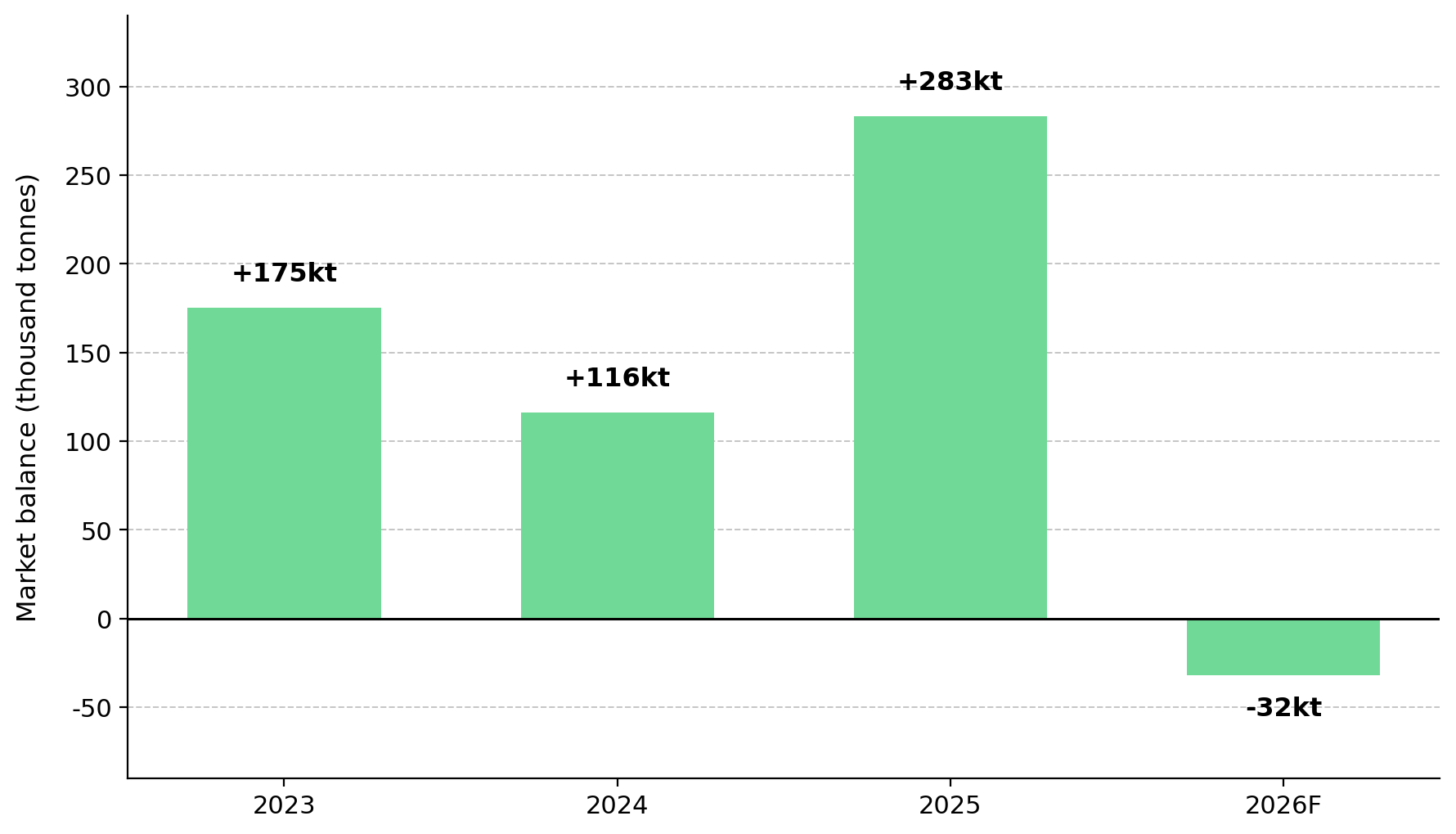
INSG forecasts 2026 primary nickel production of 3.715 million tonnes against usage of 3.747 million tonnes, creating a 32,000-tonne deficit and the first annual deficit since 2021. At under 1% of annual consumption, the deficit reflects Indonesia's supply restrictions rather than a sharp increase in nickel demand. Indonesia's 2026 Work Plan and Budget (RKAB) ore quota was set at 260 million to 270 million tonnes, down from 379 million tonnes in 2025, while Weda Bay Nickel's allocation fell to 12 million tonnes from 42 million tonnes and forced the mine to halt ore production after exhausting its quota at the end of May 2026.
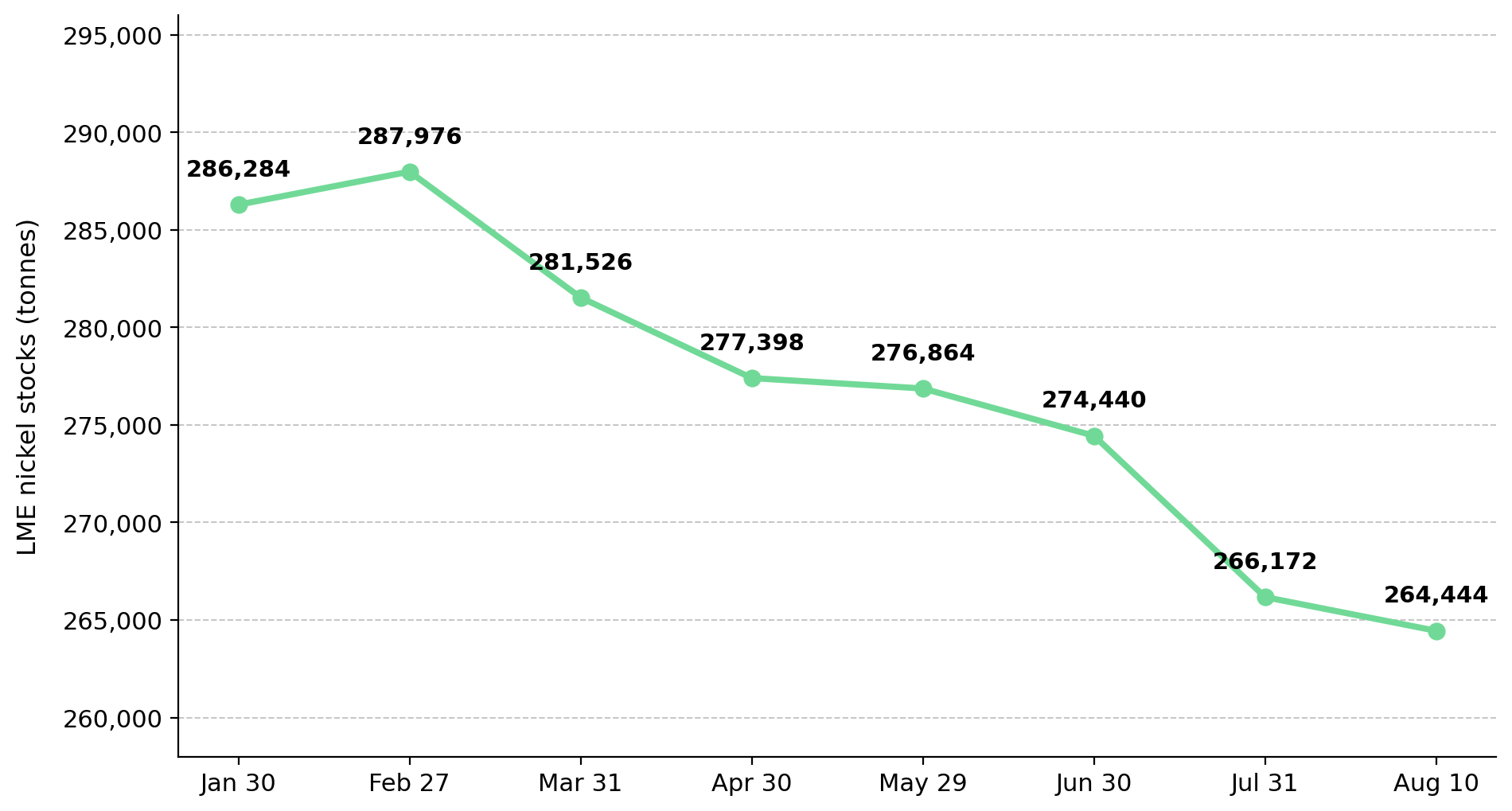
Nickel prices are responding to Indonesian quota expectations alongside physical supply conditions. On August 6, 2026, a report of a large supplementary Indonesian allocation sent the Shanghai Futures Exchange ni2609 contract down 2.57% and LME nickel down 2.89% in a single session. Physical data point to tighter operating conditions, with Indonesia importing 8.87 million tonnes of nickel ore in the first half of 2026, including 8.58 million tonnes from the Philippines, while rotary kiln electric furnace utilization fell to roughly 76% from 84% and LME stocks declined to 266,172 tonnes by July 31 from 274,584 tonnes at the end of June. The combination of quota-driven price sensitivity and tighter physical conditions increases the importance of new nickel supply outside Indonesia, particularly projects advancing toward development.
Canada Nickel reported its highest-grade drilling results to date at the 100%-owned Reid Nickel Sulfide Project in Ontario, including 1.01% nickel over 4.5 meters within a broader 0.29% nickel interval over 576.6 meters. Reid's January 2026 resource contains 2.0 million tonnes of nickel in the Indicated category and 3.2 million tonnes in the Inferred category, while an ongoing nine-hole program is targeting further resource conversion. Mark Selby, Chief Executive Officer of Canada Nickel, explains how supply limits meet rising demand:
“With Indonesia limiting supply going forward, and nickel demand growing at 5% plus a year, which is another almost 200,000 tons of nickel per year, we're in great shape.”
Nickel Supply Concentration Raises Policy Risk, Increasing the Value of Non-Indonesian Supply
Indonesia supplied almost two-thirds of mined nickel in 2025, while refining capacity outside Indonesia and China could meet only about one-third of the remaining global demand, according to the IEA. China also leads refining for 19 of 20 strategic minerals, with an average 70% market share. On August 6, 2026, the US Commerce Department announced a one-year block on exports of tungsten scrap and lithium-ion battery black mass, effective August 27, redirecting contained nickel, cobalt, lithium and manganese toward domestic processing. This concentration makes jurisdiction more important for nickel projects because LFP-based storage does not consume nickel, leaving nickel demand primarily tied to other end markets. Projects outside Indonesia that are advancing toward development and financing therefore provide new sources of supply in a concentrated market.
Lifezone Metals advanced the Kabanga Nickel Project in Tanzania into large-scale procurement, releasing approximately $854 million of contracts to market while progressing project financing and preparations ahead of a targeted first-quarter 2027 final investment decision. The company also filed an application for Kabanga to be registered as a Strategic Project under the European Union's Critical Raw Materials Act and demonstrated more than 99% recovery of platinum and palladium in its pilot recycling campaign. Ingo Hofmaier, Chief Financial Officer of Lifezone Metals, describes how supply discipline is reshaping nickel markets:
“We have been in an over-supplied market for years and there is a strong consensus that 2026 is going to be in deficit. I don't think that the Indonesians will make this a very large deficit. They will manage this and they will learn as they go along and see what actually works.”
Storage Supports Lithium Demand as Indonesian Quotas Tighten Nickel & Sodium-Ion Raises Substitution Risk
Battery storage demand is less dependent on consumer subsidies because grid stabilization and data center power requirements are tied to infrastructure investment. Data center power demand is creating a measurable storage requirement, with battery-based uninterruptible power supply capacity, primarily used in data centers, reaching 45 gigawatts in 2025, up 30% year on year, according to the IEA. This demand outlook has supported higher lithium price expectations, with Fastmarkets raising its 2026 lithium carbonate forecast to $23.80 per kilogram from $17.40 per kilogram and its 2027 forecast to $31.40 per kilogram from $22.65 per kilogram. Policy could still slow this demand growth, with China's lithium-ion battery consumption tax rising to 4% in 2027 while the battery export tax rebate falls to zero.
Nickel's 2026 supply balance now hinges on Indonesia's final RKAB quota. Revision proposals were filed by the July 31, 2026 deadline, while Indonesia Business Post reported that Energy and Mineral Resources Minister Bahlil Lahadalia said any adjustments would be measured and could affect prices. A national ceiling near current levels would leave the INSG deficit intact, while a quota approaching the previously reported 360 million wet metric tonne proposal would eliminate it. With the final quota still unknown, projects with competitive costs are better positioned to withstand a weaker nickel price outcome.
The Investment Thesis for Battery Metals
- Stationary energy storage is driving lithium demand growth, increasing the value of lithium supply while leaving nickel tied to its core end markets.
- Lithium developers and explorers that can deliver hard-rock spodumene concentrate into non-Chinese supply chains are positioned to serve storage demand driven by grid infrastructure and data center power requirements rather than consumer vehicle subsidies.
- Nickel assets must be underwritten on stainless steel consumption, cost position and supply jurisdiction, because LFP-based storage drives lithium demand without creating equivalent nickel demand.
- Indonesia's control of mined nickel supply makes its quota policy a direct factor in nickel pricing, increasing the importance of jurisdiction and supply policy when assessing nickel projects.
- Recycling and alternative processing routes can benefit from export controls that redirect contained nickel, cobalt, lithium and manganese toward domestic processing, creating additional demand for non-mining supply routes.
- Permitting visibility, secured infrastructure and construction readiness strengthen the case for projects capable of delivering new battery-metal supply.
Lithium and nickel have different supply-demand drivers, and the latest data make that distinction increasingly important. Lithium demand is being supported by stationary storage, which can continue expanding even as EV sales weaken, while LFP's dominance limits how much of that growth reaches nickel. Nickel remains anchored to stainless steel, with its near-term balance increasingly shaped by Indonesian supply policy rather than battery demand alone. The key question is therefore which projects can convert demand into durable supply through competitive costs, credible development plans, and exposure to the end markets actually driving each metal.
TL;DR
Lithium demand is running well ahead of forecasts despite weaker EV sales, with global consumption up 45% through May 2026 and stationary storage driving the increase. Battery storage deployment reached 108 GW in 2025, up 40%, while LFP accounts for 99.9% of the energy storage system market, strengthening lithium demand without creating equivalent nickel demand. Nickel remains anchored to stainless steel, which represents more than 60% of global consumption, while Indonesia's lower ore quotas have pushed the 2026 market toward a 32,000-tonne deficit. The article argues that project economics, cost position, supply jurisdiction, permitting and construction readiness matter more than broad battery-metal exposure when assessing new supply.
FAQs (AI-Generated)
Analyst's Notes





Subscribe to Our Channel





Stay Informed


