




Lithium Ionic's Debt-Led Plan to Fund Bandeira Without Diluting Shareholders


Lithium Ionic is structuring a debt-led stack to fund its US$191M Bandeira lithium build in Brazil, targeting a construction decision with minimal dilution.
- Lithium Ionic is targeting a debt-led financing structure to fund the US$191 million initial capital cost of its Bandeira lithium project, a figure close to the company's own market capitalisation of about C$200 million.
- Binding five-year offtake agreements with Yahua Group and Grand Chen carry a US$ 1,000-per-tonne floor price with no ceiling and a US$20 million prepayment facility, giving lenders a revenue base against which to price project debt.
- Management is targeting a debt facility covering almost the entire package, layering export credit agency (ECA) and lower-cost treasury debt behind an initial higher-cost tranche.
- The September 2025 feasibility study reports a post-tax net present value at an 8% discount rate (NPV8%) of US$1.45 billion, a 61% internal rate of return (IRR), and a 26-month payback at a base-case price of US$2,212 per tonne.
- A construction decision is targeted for the second half of 2026 as the financing stack closes, leaving permitting approval and final debt terms as the remaining variables.
Bandeira & the Capital Requirement
The defining feature of Lithium Ionic's funding problem is its small size. Lithium Ionic (TSXV: LTH | OTCQX: LTHCF | FSE: H3N) carries an initial capital cost of US$191 million for its 100%-owned Bandeira project in Minas Gerais, Brazil, according to the September 2025 feasibility study, split across US$59.2 million for the mine, US$107.3 million for surface works, US$4.9 million in owner's costs, and US$19.6 million of contingency. That total came in roughly 28% below the 2024 study, reducing the sum the company has to raise before construction, which is the starting point for any plan to fund it with debt rather than equity.
That build cost sits close to the value the market already assigns to the company. Lithium Ionic held about C$20.2 million in cash as of September 30, 2025, against 173,749,452 shares outstanding and a market capitalisation of roughly C$200 million. The gap between a modest treasury and a US$191 million build is the entire funding question, and management's answer is that the shortfall is small enough to be covered mostly with debt rather than by issuing equity.
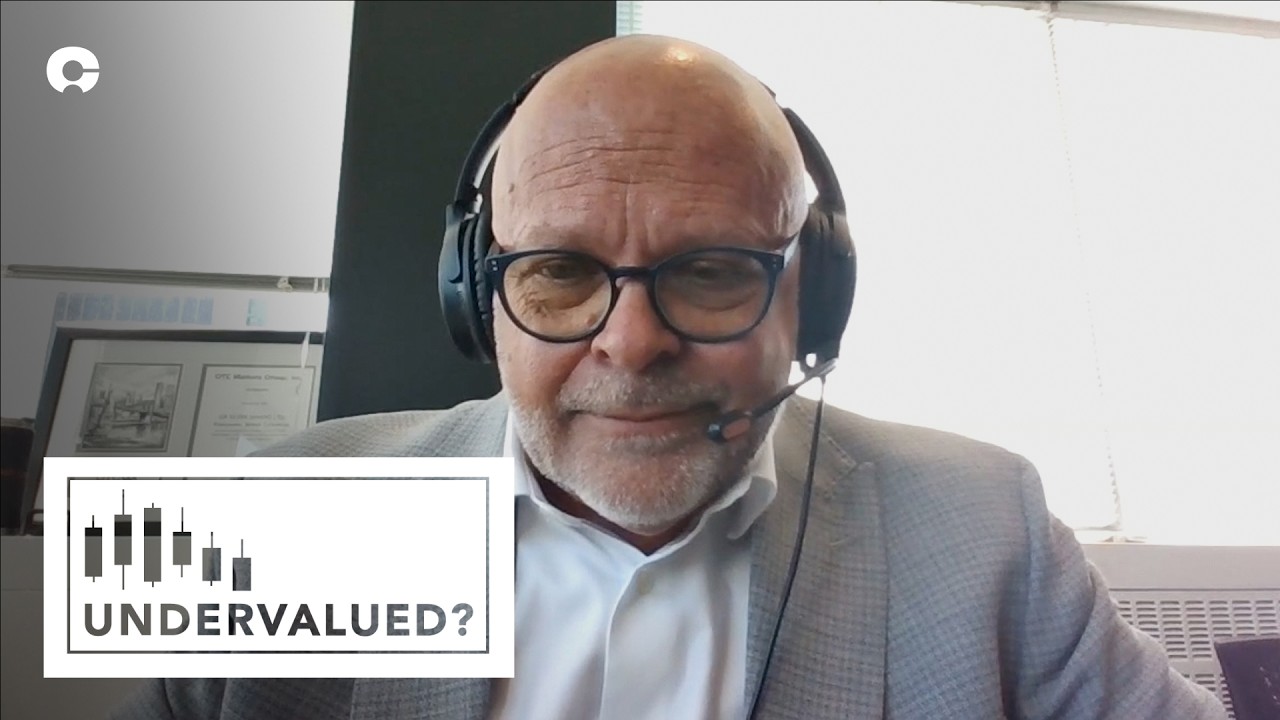
Chief Executive Officer of Lithium Ionic, Blake Hylands, is direct about the scale of the funding task:
"We're trying to solve for a number that's extremely manageable. I mean, 191 million to build it aligns very well with our market cap."
A capital requirement that matches market value is the condition that makes a debt-led structure realistic, because it keeps the equity call small enough that lenders, not shareholders, can carry most of the load.
A Debt-Led Funding Structure
Management is assembling the funding as debt first, equity last. Lithium Ionic has been working with partners toward a facility intended to cover almost the entire package, structured to place low strain on the project rather than to maximise the amount drawn.
Hylands frames the lead facility plainly:
"We have been working with some partners that have been there along the way that want to be part of a debt facility that would take care of almost the entire package."
Behind that facility, management is targeting a layered structure: an initial tranche of near-term higher-cost debt of the kind most mines are built with, followed by lower-cost capital drawn in behind it. Sizing the equity component to whatever debt and prepayment cannot cover keeps any share issue to a residual rather than the main funding event. As of December 2025, the company described the stack as close to finalised rather than closed, so the composition remains a target rather than a signed outcome.
How that residual is ultimately financed carries straight through to the share count and, with it, the re-rating case for the equity.
Offtake Agreements & Lender De-Risking
The offtake agreements function less as sales contracts than as the collateral that makes project debt bankable. In March 2026, Lithium Ionic signed binding five-year agreements with Yahua Group and Grand Chen covering about 170,000 tonnes per year of spodumene concentrate, with a US$ 1,000-per-tonne floor price, no ceiling, no discount to market pricing, and an associated US$20 million prepayment facility. The floor removes downside from the revenue base, while the absence of a ceiling preserves full exposure to higher prices. No discount to market pricing means the concentrate still sells at the full reference price, so the floor adds protection without surrendering value, and the pre-payment facility advances cash against future deliveries as working capital ahead of first production.
For a pre-production developer, a priced buyer is what a lender needs before it will price debt. Hylands is precise on what lenders need to see:
"It's not just believing in me because I say it. It's saying, here's the buyer, here's what they're willing to give, the terms are excellent, because they need this material."
The rush to secure that material sits against a backdrop of tightening supply, where government supply controls across producing countries have pushed integrated converters to lock up concentrate ahead of need. A contracted floor price converts an uncertain revenue line into a bankable base, which is the single change that most reduces the risk a lender prices into project debt.
Lower-Cost Capital: Export Credit, Treasury Debt & Development Banks
Behind the first debt tranche, management is targeting cheaper, policy-linked capital pools. Lithium Ionic points to export credit agency (ECA) opportunities and lower-cost treasury debt, set against a United States government that has grown aggressive about onshoring critical mineral supply from jurisdictions outside China. For a Brazil-based supplier positioned outside China, that onshoring push is the policy reason the United States capital would participate at all. Management has said the government wrote a letter of intent to participate roughly two years earlier and that the company would continue pursuing that support as long as the government continues to fund.
The company is also drawing interest from Brazil's national development bank (BNDES) and other state groups toward long-term project financing. Sequencing these sources behind an initial higher-cost tranche is the mechanism that lowers the blended cost of the eventual debt package, since cheaper capital layered in later pulls down the average rate paid across the stack.
None of these pools is committed, and management framed the government support as conditional on continued funding rather than as a signed facility. They are targets that would improve the terms of a debt-led structure, not settled components of it.
Feasibility Economics Behind the Debt Coverage
The economics are what give a debt-led structure room to service borrowing. At the September 2025 study's base-case price of US$2,212 per tonne, Bandeira shows a post-tax net present value at an 8% discount rate (NPV8%) of US$1.45 billion, a post-tax internal rate of return (IRR) of 61%, and a 26-month payback. The study set a deliberately conservative near-term price of US$1,392 per tonne for 2026 to 2028, below spot, so the base-case returns do not depend on prices climbing from here. At the January 23, 2026, spot price of US$2,515 per tonne, those figures rise to a post-tax NPV8% of US$1.8 billion, a post-tax IRR of 102%, and a 1.1-year payback.
The cost position underwrites that coverage. Bandeira's operating cost of US$378 per tonne of concentrate, on a 5.2% grade basis, including capitalised underground development, sits below the 50th percentile of the global hard-rock cost curve, based on an average annual output of 177,000 tonnes over an 18.5-year life at a throughput of 1.3 million tonnes per year. The plan mines 23.2 million tonnes of ore over that life to produce the concentrate, equivalent to about 22,800 tonnes of lithium carbonate equivalent per year. On a post-tax net present value-to-capital ratio, the study screens at 7.6 times, against averages of 3.3 times for global hard-rock projects, 2.2 times for lithium projects broadly, and 1.9 times for brine and clay projects, a spread that measures how much value the build converts per dollar of capital committed.
Cash generation reinforces the point. The base case carries a cumulative post-tax free cash flow of US$3.4 billion and an average of US$208 million per year across years three to eighteen, rising to US$4.1 billion cumulatively and an average of US$219 million per year at spot pricing. That average annual figure is itself close to the US$191 million build cost, a measure of how quickly the project repays the capital used to construct it. The payback shortening from 26 months at the base case to 1.1 years at spot shows how directly that coverage tracks the lithium price. A project throwing off cash at that rate can service debt without leaning on equity, which is what lets the stack skew toward borrowing.
Dilution & the Re-Rating Path
Funding the build mostly through debt and pre-payment is what keeps the equity base intact. Management has said it is structuring debt propositions to place low strain on the project and to maximise returns to shareholders, that its largest shareholders have provided runway ahead of the raise, and that proceeds from a royalty are already funding long-lead items and early earthworks. Each of those sources, the shareholder runway, the royalty proceeds, and the pre-payment, substitutes for equity at the margin and shrinks the raise that would otherwise dilute holders.
What remains open is the sequence to a decision. A construction decision is targeted for the second half of 2026 as the financing stack closes, against a permit application in place since November 2023 and still pending, while early works advance through requests for quotation issued in July 2026 to seven contractors for the two underground mine portals. Management has pointed to a path to production of roughly 18 months to two years once work begins.
Management frames the closing of the stack as the trigger for a step change in valuation, the point at which a developer funded largely by debt reaches a final investment decision (FID) without heavy dilution. A close on those terms would let the market price the equity closer to a builder than a hopeful developer, which is the re-rating management is pointing at. The variables that decide whether that holds are narrow and dated: closing the remaining debt terms, clearing the permit, and lithium prices staying supportive of the base case through the decision window.
The Investment Thesis for Lithium Ionic Corp
- Lithium Ionic is targeting a debt-led funding structure for a US$191 million build that sits close to its own market value, an approach designed to limit equity dilution as it moves toward construction.
- Binding five-year offtake agreements with Yahua Group and Grand Chen set a US$ 1,000-per-tonne floor price with no ceiling and include a US$20 million prepayment facility, giving lenders a revenue base against which to price project debt.
- Management is targeting a facility covering almost the entire package, layering export credit and lower-cost treasury debt behind an initial higher-cost tranche to reduce the blended cost of borrowing.
- The September 2025 feasibility study supports the structure with a post-tax net present value at an 8% discount rate of US$1.45 billion and a 61% internal rate of return at a base-case price of US$2,212 per tonne for spodumene concentrate.
- A post-tax net present value-to-capital ratio of 7.6 times and operating costs below the 50th percentile of the global hard-rock cost curve provide the debt coverage with headroom.
- A construction decision is targeted for the second half of 2026, leaving permitting approval and final financing terms as the principal variables for investors to track.
The case for Lithium Ionic turns less on the lithium price than on the shape of the capital it raises. A build cost that matches market value, a contracted revenue floor, and a project that screens well above hard-rock peers on capital efficiency together make a debt-led funding plan credible, and a plan executed that way would carry the equity base through construction largely intact. The reservation is that the cheaper tranches of the stack remain targets rather than commitments, and permitting and final debt terms still need to be cleared before the structure is proven.
TL;DR
Lithium Ionic is a Brazilian hard-rock lithium developer funding a US$191 million build through a debt-led stack rather than a heavy equity issue. Binding offtakes with Yahua Group and Grand Chen, a US$ 1,000-per-tonne floor price, and a US$20 million prepayment facility give lenders a revenue base, while the September 2025 feasibility study's US$1.45 billion post-tax NPV8% and 61% IRR provide coverage. Management is targeting a construction decision in the second half of 2026 as the financing stack closes. Permitting approval and final debt terms remain the variables that decide whether the structure holds together with minimal dilution.
FAQs (AI-Generated)
Analyst's Notes





Subscribe to Our Channel








Stay Informed


