




Made in America Article Series 4/5: How Execution Risk Is Driving The Next Wave of Capital Allocation


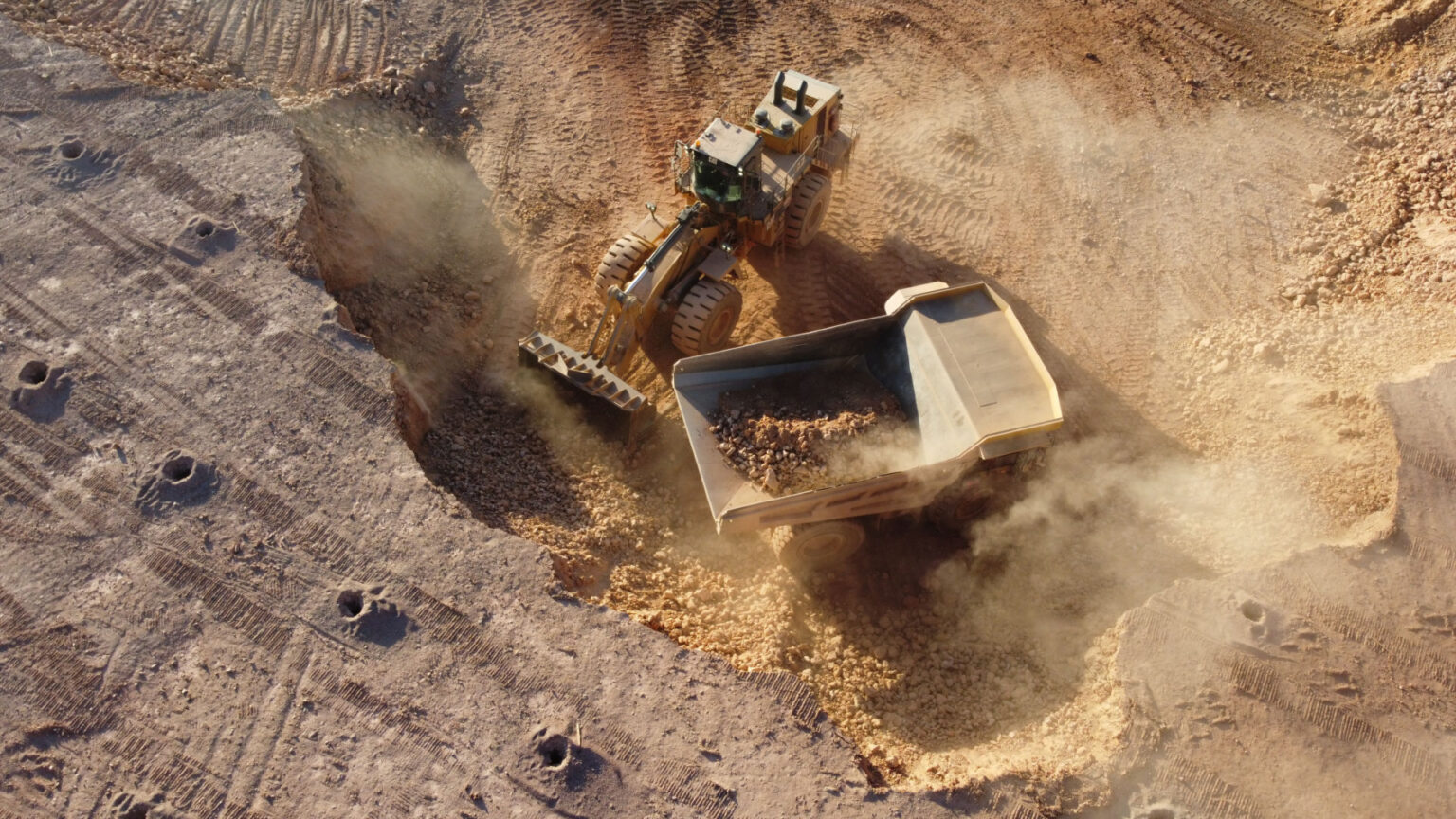
Mine execution risk now outweighs asset quality, as experienced teams, digital tools, and structured financing drive the next wave of mine development.
- Mine building has become significantly more complex, and the pool of teams capable of executing it has narrowed.
- Investors are increasingly backing management track records rather than project geology alone.
- Modern developers are using digital modeling, remote sensing and staged capital plans to reduce execution risk.
- Financing structures have shifted toward streaming, royalties and strategic equity rather than repeated dilutive raises.
- The next generation of mines will be built primarily by experienced teams applying lessons from the prior downcycle.
Experience Has Become a Competitive Advantage
Mine construction has grown more technically and financially demanding, and the pool of executives who have taken a project from resource definition through construction into production has not grown at the same pace.
The executives leading today's brownfield restarts have typically run multiple mines simultaneously at major producers before taking on a single junior project. Hycroft Mining Vice President of Exploration Alex Davidson's background traces that path directly, from Rio Tinto through a decade at Newmont's underground operations:
"About 30 years in the mining business. I worked for Rio Tinto at their Greens Creek operation, then transitioned to Newmont, about 10 years on a variety of their underground projects, where I was chief geologist."
A team that has already run mines at that scale compresses both financing risk and permitting risk, two variables that have historically driven cost overruns industrywide.
What Earlier Operators Left on the Table
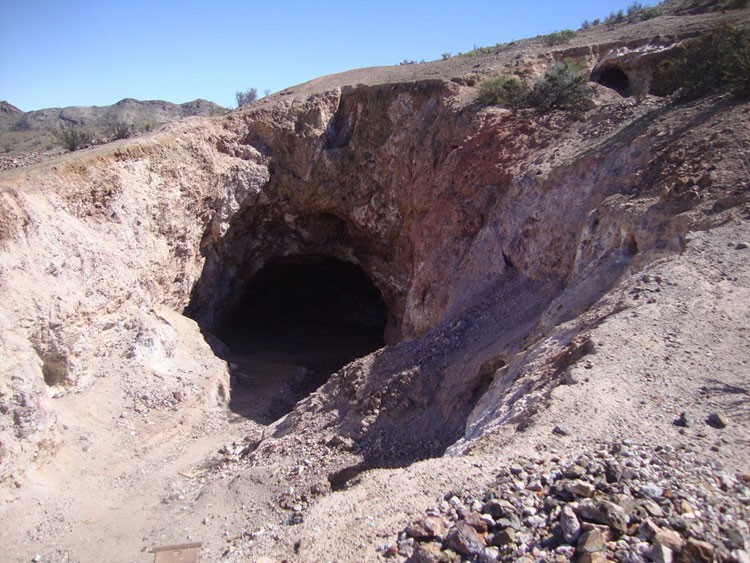
Rosebud Gold's historic operators drilled 192 kilometers of core when gold traded near $300 an ounce, and a Hecla-Newmont joint venture mined roughly a million tons between 1997 and 2000 at a 15 gram-per-tonne head grade before shutting the mine down once it could no longer define nine months of ore ahead of the mill, without ever testing whether the surrounding lower-grade material could support an open pit operation.
Ken McNaughton, Chief Exploration Officer of P2 Gold points to a similar gap: operators in the 1980s and 1990s lacked technologies that are now used to recover cyanide and separate copper from gold in solution, so those companies chased either the gold or the copper as standalone deposits rather than developing both together.
Capital Discipline Is Replacing Growth for Its Own Sake
Capital discipline, not growth for its own sake, now defines how developers sequence spending. Mining equities recovered to a combined $4.1 trillion in market capitalization by April 2026, while the number of individual financing transactions declined even as total dollars raised increased, according to S&P Global. That pattern points to selective risk-taking: institutional capital is concentrating in fewer, larger financings rather than spreading across a broad base of speculative issuers.
Integra Resources’ Florida Canyon mine in Nevada is in active commercial production, averaging 70,000 to 75,000 ounces of gold annually. Rather than repeatedly raising equity to fund its Delamar project in Idaho, Integra is using free cash flow from Florida Canyon to build its treasury. Chief Executive Officer George Salamis has described the company's aim as funding half, and hopefully more, of Delamar's construction cost from that treasury, with the remainder financed through debt. That structure limits shareholder dilution while preserving upside for existing holders.
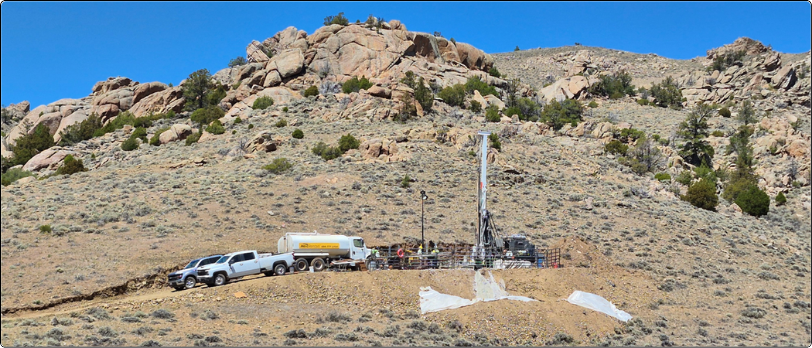
Staged development is the operational expression of the same discipline. P2 Gold's Gabbs plan is built around its Preliminary Economic Assessment, under which the project would start as a lower-cost oxide heap leach operation before transitioning to the larger sulphide deposit beneath it. The company is now optimizing that plan, targeting an increase in throughput from 9 million to 12 million tons annually and bringing the mill online in year three rather than year six, with a feasibility study targeted by year's end. Ken McNaughton is direct about where every dollar at Gabbs is currently going:
"Instead of coming at this at 9 million tons a year, we've decided to go to 12 million tons a year, bringing the mill forward from year six to year three… My target is 150 million tons of ore-grade material advanced to the indicated classification. When you talk about capital allocation, it's all going to the feasibility study."
Technology is Recovering Value that Previous Operators Missed
Digital tools are allowing developers to extract more value from historic districts than the operators who worked them decades earlier. Scorpio Gold has digitized decades of hard-copy drill data at its Manhattan project in Nevada into a 3D model tracing structural corridors across a roughly five-kilometer trend. Company geologist Teddy Berg has described the underlying dataset as drawn from multiple past operators at the district, including Kinross Gold and Newmont.
Remote sensing and artificial intelligence are extending that capability into targeting. Exploration Manager of Hycroft Mining, Justin Davenport has described the team's use of geologic artificial intelligence to vector toward high-grade silver zones within a much larger, lower-grade deposit. Silver One Resources Chief Executive Officer Gregory Crowe has said the company recently completed an airborne electromagnetic survey combined with a magnetometer that covered roughly 20,000 acres of mineral zones.
Blossom Gold's Vice President of Exploration, Dr John Decker, has said the company recently flew aeromagnetic and surface gravity surveys over its Karma claim. At the drill rig, faster geochemical data is compressing decision timelines. Decker described how handheld analytical tools are changing the pace of interpretation in the field:
"We're using a handheld XRF unit, which gives us real-time information about the presence of silver, arsenic and other gold pathfinder elements within the sample. That gives us a rapid assessment of how well-mineralized the core is."
Streams and Institutional Capital Are Replacing the Equity Raise
The World Gold Council's "Gold Mid-Year Outlook 2026," published in July 2026, reports that gold reached twelve all-time highs in early 2026, touching an intraday high of US$5,595.47 per ounce on January 29, 2026, a run supported by central bank purchases averaging roughly 1,000 tonnes annually since 2022.

That pricing floor improves the after-tax internal rate of return, or IRR, on staged oxide starts, since heap leach operations with low all-in sustaining costs, or AISC, generate free cash flow more quickly at higher gold prices. S&P Global's May 2026 report also notes improving financing conditions for copper-focused developers, tied to electrification demand.
Development capital is increasingly structured rather than simply raised. The World Gold Council has documented a shift toward sticky flows of institutional capital into gold, including growing participation from sovereign wealth funds, pension funds and endowments, and notes that a pilot program introduced in China last year allowed some of the country's top insurance companies to invest directly in gold.
That institutional depth gives producers and developers more financing options beyond straight equity issuance.
Integra Resources held $115 million in treasury as of the most recent quarter, even after spending roughly $65 million this year on sustaining capital for the operation, comparable to the prior year's spend. The stated goal for Delamar is to have roughly half of the project's total construction cost already sitting in treasury before a construction decision is made, with the remainder financed through debt rather than equity.
Blossom Gold's acquisition of the Rosebud project combined cash, a royalty and a contingent stream interest rather than a single upfront payment. Chief Executive Officer Rick Winters described the structure in a recent site interview.
"We raised $115 million in short order and acquired the project for $35 million, plus a 1% royalty."
Institutional financing has underpinned major builds before, at a scale beyond what any company here has yet reached. Silver One Resources Chief Executive Officer Greg Crowe built that kind of capital stack once already, at a previous company, Entree Gold, which held the extension to the Oyu Tolgoi deposit in Mongolia. His team formed a joint venture with Ivanhoe Mines and brought Rio Tinto into the company through an equity placement, helping finance one of the largest porphyry copper-gold-silver systems in the world. That track record, distinct from Silver One's current Nevada project, is the kind of financing history institutional allocators weigh when assessing a team's capacity to fund a project through to production.
The Investment Thesis for New Mines with Old Assets
- Experience reduces execution risk by placing permitting, financing, and construction decisions in the hands of teams that have already successfully navigated them.
- Capital discipline matters more than growth, as developers who fund capital expenditure with free cash flow and structured debt preserve shareholder value that dilutive equity raises would otherwise erode.
- Technology improves development efficiency, with three-dimensional geological modeling, artificial intelligence-driven targeting and real-time geochemistry converting historically underexplored or overlooked ground into a defined resource.
- Financing strategy influences project success, as royalty, streaming and institutional equity structures allow developers to fund construction without depending on a single dilutive raise.
- Strong management increases investor confidence, as clear execution philosophies and demonstrated safety and track records tend to generate both permitting support and institutional investment.
The next wave of mine development is increasingly built on past-producing assets rather than greenfield discoveries, marking a real departure from the prior cycle, when capital chased new discoveries and developers absorbed years of exploration risk before a project's economics were even proven.
Capital is flowing toward assets with existing infrastructure and decades of legacy drill data, where experienced management, modern technology and disciplined capital allocation can de-risk ground that previous operators already partially proved. Skipping much of the discovery risk that defined the prior cycle doesn't mean skipping the work; it means starting from a different point on the risk curve, where the geology is largely known and the remaining question is execution.
Not every future mine will start with a brand-new discovery. Many will begin with assets that already have decades of history behind them, and what happens to those assets next is the subject of Part 5, a closer look at the restart economics driving past-producing mines back into development.
TL;DR
Mine development has grown more technically and financially demanding, and investors are now backing management track records as much as project geology. Experienced executives who've run multiple mines compress financing and permitting risk, while digital modeling, remote sensing, and AI-driven targeting help developers extract more value from historic districts than earlier operators could. Financing has also shifted away from repeated dilutive equity raises toward streaming, royalties, structured debt, and growing institutional capital, including sovereign wealth funds and pension funds. Companies like Integra Resources, P2 Gold, Blossom Gold, and Silver One Resources illustrate this shift toward staged, capital-disciplined development. The result is a new investment thesis: the next generation of mines will largely be built on past-producing assets using experience and technology to de-risk known geology, rather than chasing greenfield discovery.
FAQs (AI-Generated)
Analyst's Notes





Subscribe to Our Channel










Stay Informed






















