




Made in America Article Series 5/5: Why Nevada's Past-Producing Mines Are Restarting


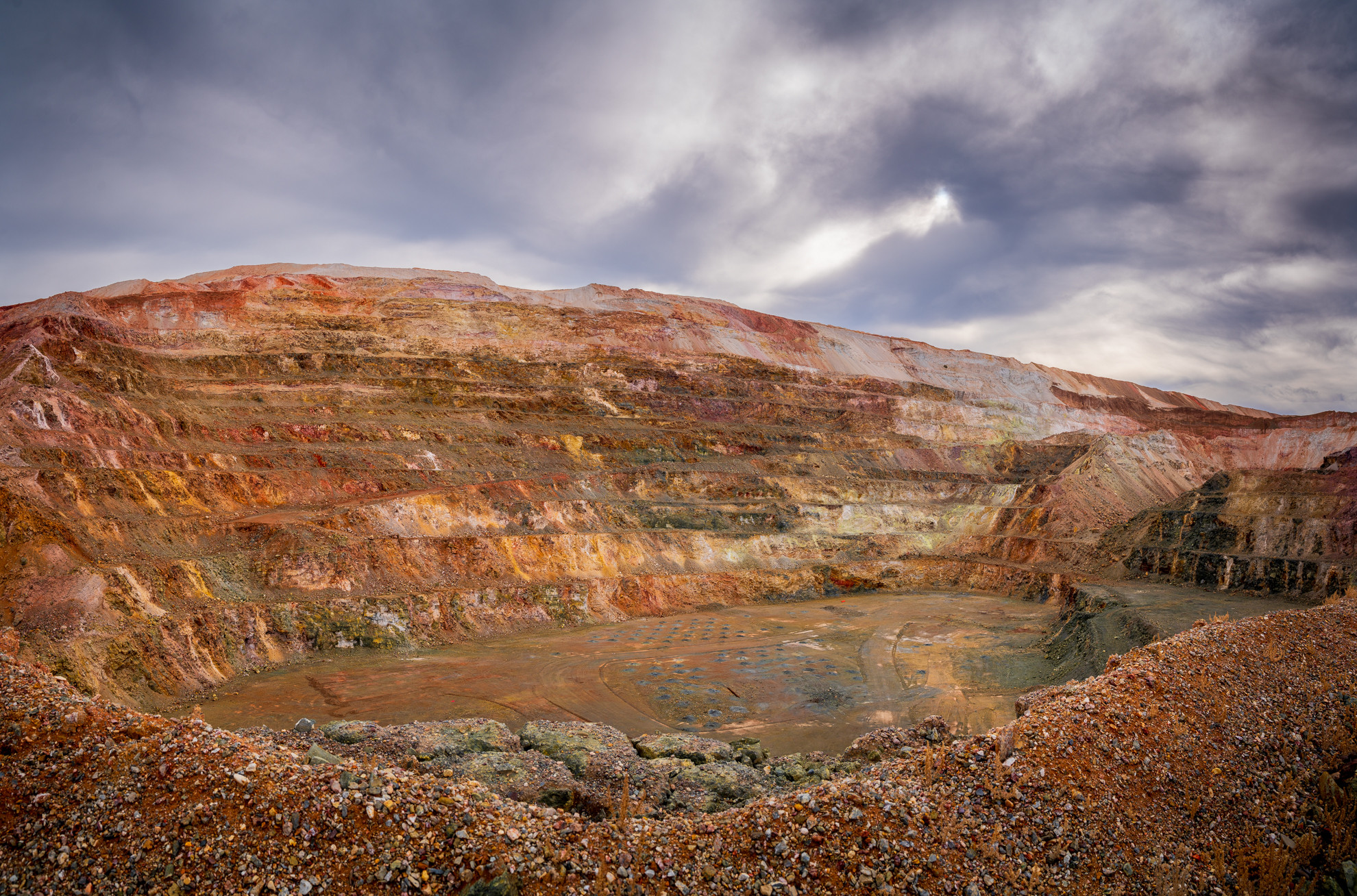
Record gold prices are turning old Nevada waste rock into new reserves, as brownfield permitting, land consolidation, and capital spending drive mine restarts.
- Record gold prices are reclassifying decades-old waste rock and backfilled material as economic reserves, directly extending mine life and improving project returns.
- A documented decline in major new gold discoveries is redirecting capital toward previously permitted, previously drilled ground rather than greenfield exploration.
- Brownfield status is compressing permitting timelines from a multi-year new-application sequence to months in some cases, translating directly into avoided costs and faster paths to production.
- Several of these assets were shelved for reasons unrelated to the size or quality of the deposit, including commodity price cycles and land ownership fragmentation, meaning the resource base was never actually the constraint.
- Capital allocation decisions, not new discoveries, are now driving resource growth at several of these projects, changing the cost of extracting ore that was already known to exist.
How $4,500+ Gold Is Turning Old Waste Into New Reserves
The macroeconomic environment for precious metals has altered the calculus for assets that were uneconomic a generation ago. Gold price set a quarterly average record of $4,506.29 per ounce in the second quarter of 2026, after touching a historical high of $5,405 per ounce in January. Average industry-wide All-In Sustaining Costs reached a record $1,706 per ounce in the fourth quarter of 2025, up 20% year over year, yet the rise in the underlying gold price has still widened miners' margins, an incentive the World Gold Council links directly to the reopening of previously closed mines and the extension of mine life beyond original closure plans.
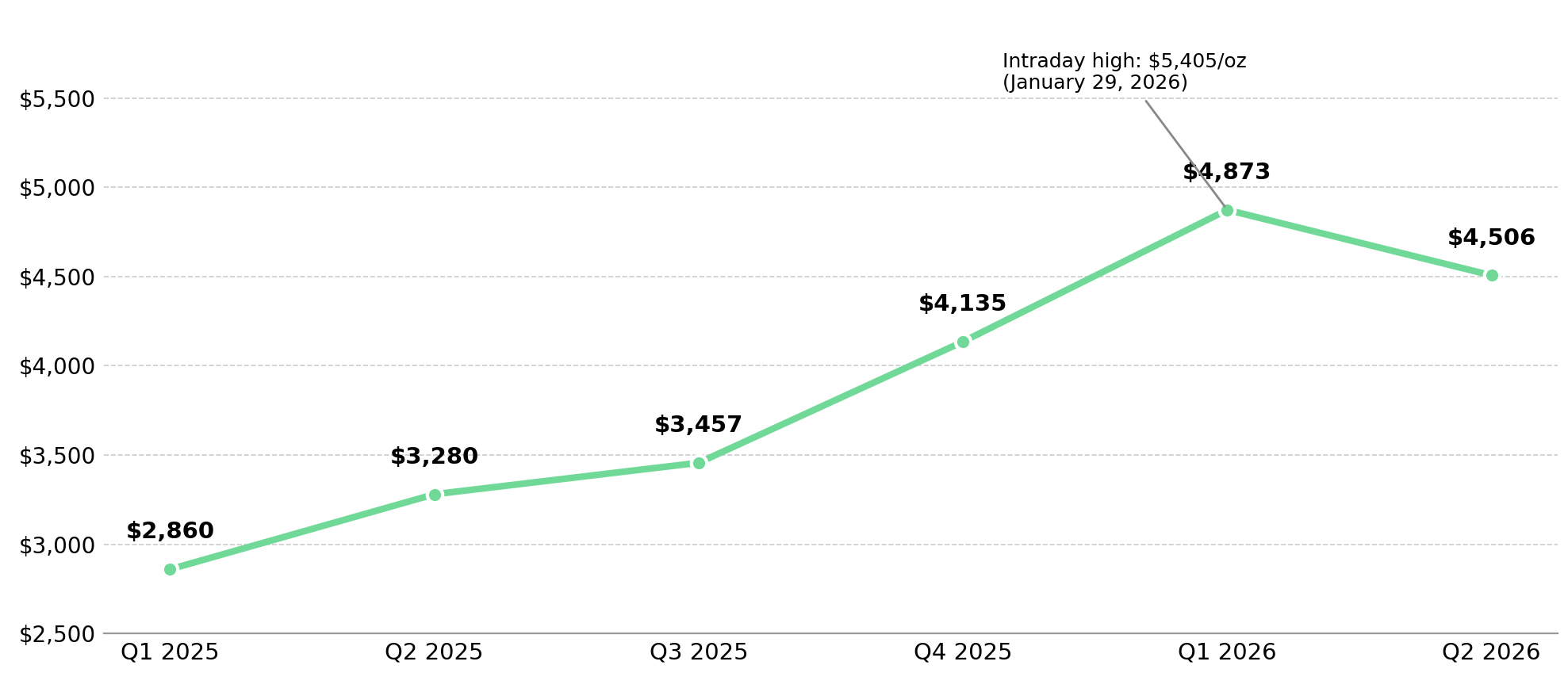
Gold Price, Quarterly Average, US$ per ounce, Q1 2025 - Q2. Source: World Gold Council
At Integra Resources' Standard Mine, cyclical gold prices have already dictated the mine's history once, closing and reopening the same ground across multiple ownership periods; the company is now betting that the current price environment changes that pattern permanently. Chief Executive Officer George Salamis describes the company's plan to test Standard under today's pricing:
"This has gone through multiple phases over a very long period of time, being mined and backfilled… It was the same as everywhere else: shut down during low-gold-price environments. But there's potential for this deposit to work very well on its own right now, and we're going to be drilling that coming up this spring. We put out a news release on 42,000 meters of drilling across the entire Florida Canyon project, including Standard."
Why Companies are Restarting Nevada’s Past Producers
The return to historic districts is driven by the advantages of brownfield redevelopment, existing permits, established infrastructure, and access to a resident workforce. The World Gold Council, citing S&P Global Market Intelligence data covering 1990 to 2024, reports that major new gold discoveries have declined steadily over that period, a trend that makes previously permitted ground more attractive relative to greenfield exploration.
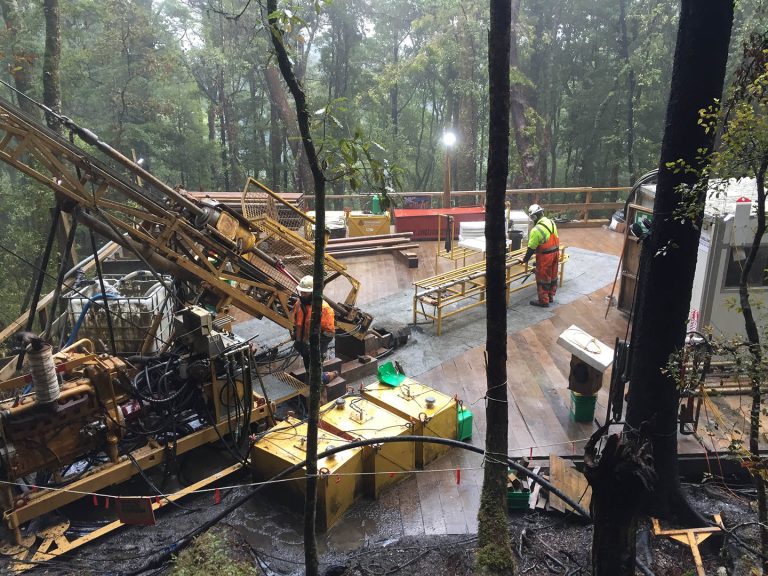
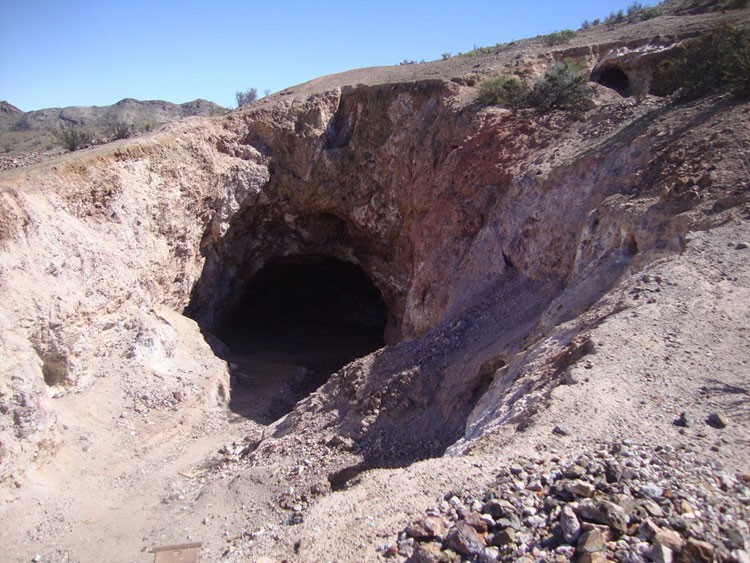
Blossom Gold Chief Operating Officer Aaron Calhoun stated that the company is targeting the reopening of an underground portal in the third quarter of 2026, with roughly 3,000 feet of rehabilitation to follow before infill drill stations are established.
At Hycroft Mining, forty years of production tell a similar story: value left unaddressed rather than value already captured. Exploration Manager Justin Davenport explains what previous operators left behind:
"They've mined it for forty years, and then it's all been heap leached for the little bit of oxide on top. Nobody's really got into all of the sulfide mineralization that's in front of us."
Restarts are Cutting Off Permitting Timelines
Even where a deposit's economics have been resolved, a restart still depends on how quickly a company can get back into the ground. Brownfield status can shorten permitting timelines, depending on what a company already has in place: an existing underground opening, an unclosed prior permit, or surface disturbance that predates the current permitting rules
Blossom Gold Chief Executive Officer Rick Winters describes the permitting path the company would otherwise have faced:
"When you go to the Bureau of Land Management, your first permit is called the Notice of Intent, and that gives you the opportunity for five acres of disturbance… You've got to go to a plan of exploration, which is a two-year permitting process, and then you do a plan of operations, which is a further two years. We have an existing underground opportunity… and because that doesn't count against our disturbance at all… it allows us to go straight from a Notice of Intent to a plan of operations, cutting the time frame in half."
Silver One Resources’ timeline advantage rests on a different mechanism: the prior operator never formally closed the mine. Chief Executive Officer Greg Crow describes what that means for the company's current permitting path:
"We've already had four levels of discussion with both the Bureau of Land Management and the Nevada Department of Environmental Protection... Kinross never completed reclamation, so the mine was never closed, and the permits are still active. They need to be updated. You get us a plan of operation, and we can update those in a matter of months."
An active, unclosed permit updated in a matter of months is a materially different starting point than a four-year new-application sequence. In both cases, the advantage is not that Nevada's permitting system is unusually generous; it is that a brownfield project starts the clock from a different, more advanced position than a greenfield one, which translates directly into avoided costs and compressed time to production.
Capital Decisions Are Changing What These Deposits Cost to Mine
Restarting an asset also depends on what the current owner chooses to spend on and where, decisions that can be compared directly with what a prior operator did or did not do on the same ground.
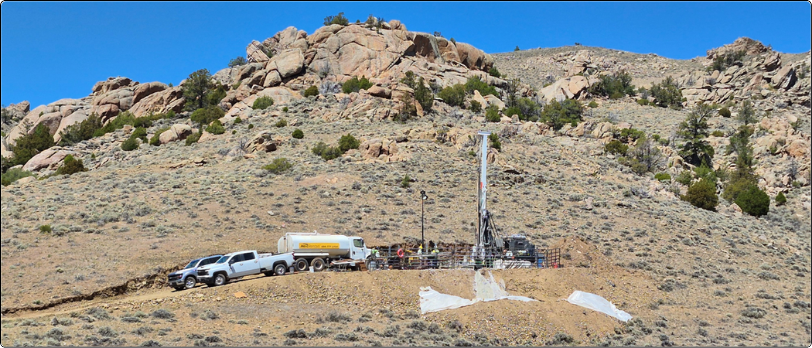
The Manhattan district was historically worked by small, fragmented operators whose open pits stopped at property boundary lines rather than at the edge of the mineralization. Scorpio Gold consolidated that land position under a single owner and is now running three drill rigs on a continuous, year-round schedule across a 50,000-meter program, a scale of exploration spend which the district's prior small-parcel operators did not have the consolidated land position, or the balance sheet, to support. Management ties that program directly to a resource expansion target, from a current 740,000 ounces to an anticipated 2 million ounces once the program is complete.
What Stopped Mining Wasn't Always Reserves Depletion
Silver One's Candelaria project did not shut down because the silver ran out. Chief Executive Officer Greg Crow attributes the closure to the price environment a prior operator was working in, not to the deposit itself:
"Kinross, who was the last producer, essentially turned off the taps back in '97, '98, due to low silver prices. Silver Standard was morphing into SSR Mining, focusing on gold mineralization, and they were selling off a lot of their old silver projects because they didn't fit their portfolio."
That distinction matters for how the asset should be read today. A deposit shelved for a price reason, rather than a resource or geological reason, is a direct beneficiary of the price move discussed above, since nothing about the underlying ounces needed to change for the economics to work. Greg Crow ties the project's current viability to exactly that shift, rather than to any new drilling or reinterpretation:
"When we looked at this, silver prices were $13, $14, $15, so we set that idea aside... and of course $70 silver doesn't hurt."
The project's constraint, in other words, was never the 108 million ounces of silver equivalent already defined in the ground. It was the gap between what that silver was worth in 1997 and what it is worth now, a gap that has closed entirely on its own.
The Investment Thesis for Mine Restarts
- A stated price threshold serves as the basis for a reclassification claim and is reversible. Where management describes backfilled or low-grade material as newly economic, that classification depends on the cited price level holding; a retreat below it reverses the logic that created the reserve.
- Brownfield status compresses a permitting timeline; its absence restores the full timeline. A project with an unclosed prior permit or existing surface disturbance can move from a multi-year approval process to just months; a project without that status carries the standard new-application timeline.
- The original reason a project was shelved determines its current risk profile. A deposit historically constrained by price cycles or land fragmentation carries a materially different profile from one constrained by unresolved geology or unproven metallurgy, and the two should be evaluated separately.
- A resource growth target is a projection tied to a funded spend program. Its credibility rests on that program's financing and pace, and a stated ounce target without a confirmed, funded drilling program behind it remains a projection rather than a demonstrated outcome.
- Management track record and financing structure now carry more weight in restart valuations than exploration success. The central diligence question shifts from whether a deposit exists to whether the team in place can fund and sequence the remaining work.
America's Next Mining Cycle Is Already Taking Shape
Part 1 established jurisdiction as a priced, underwritten variable, with domestic supply chain security adding a policy tailwind. Part 2 showed why Nevada specifically compresses execution risk through permitting certainty, inherited infrastructure, and a resident workforce. Part 3 traced that advantage to its geological root, a fault system reactivated over tens of millions of years, explaining why century-old districts still produce discoveries. Part 4 argued that execution risk now outweighs asset quality, and that teams capable of building a mine have become the scarcer resource.
Nevada's geology has produced discoveries for more than 160 years, the state ranks first globally on the Fraser Institute's Investment Attractiveness Index, and permitting timelines have shortened over the past decade rather than lengthened. Management teams across the six companies profiled in this series are applying that geological and regulatory position to specific brownfield assets, using existing data, existing permits, and current gold and silver prices to bring projects back into active development. What remains open is not whether these advantages exist, but whether each company executes on the specific timelines, resource targets, and financing plans management has described.
TL;DR
Record gold prices, averaging $4,506 per ounce in the second quarter of 2026 after a January peak of $5,405, are converting decades-old waste rock and backfilled material at Nevada mines into economic reserves. A documented decline in major new gold discoveries is redirecting capital toward previously permitted, previously drilled brownfield ground instead of greenfield exploration. Brownfield status is also compressing permitting timelines, cutting a multi-year new-application sequence down to months in some cases. Several of these assets, including Silver One's Candelaria project, were shelved decades ago for reasons unrelated to the size of the deposit, commodity price cycles and land ownership fragmentation, meaning the resource itself was never the constraint. Capital allocation decisions, not new discoveries, are now driving resource growth at companies like Scorpio Gold, while management track record and financing structure are increasingly what separates a successful restart from a stalled one.
FAQs (AI-Generated)
Analyst's Notes





Subscribe to Our Channel










Stay Informed






















