




New Found Gold Accelerates Path to Queensway Production Through Strategic Asset Integration



New Found Gold accelerates flagship Queensway to production via existing mill, targeting $250M+ cash flow over 4 years with high-grade surface mining at $1,300/oz costs.
- Hammerdown mine currently producing with first pour achieved November 2025; ramping to steady-state operations to generate near-term cash flow at current gold prices
- Flagship high-grade Queensway Gold project targeting production by end of 2027 through existing Pine Cove Mill, avoiding 2-3 year delay and capital requirements of building on-site processing facility
- Phase 1 plans to process 700 tons/day at 9-10 g/ton with all-in sustaining costs of $1,300/oz, projecting over $250 million free cash flow in first four years
- Recent 5x5 meter grade control drilling demonstrates consistent gold distribution throughout high-grade shoots, addressing previous concerns about "nuggetty" mineralisation
- Drilling 100,000 meters in 2026 (75% development, 25% exploration) with recent Dropkick discovery 11 kilometers north of existing resource demonstrating district-scale potential
New Found Gold has completed a significant transformation over the past year under CEO Keith Boyle's leadership, shifting from pure exploration focus to a near-term cash flow generation strategy. The company's decision to acquire Maritime Resources - bringing both the producing Hammerdown mine and the permitted Pine Cove Mill into the portfolio - represents a calculated approach to unlocking value from its flagship Queensway project while minimising dilution and execution risk. This strategy addresses a critical challenge facing exploration companies: the multi-year gap and substantial capital requirements between discovery and production.
Accelerating Queensway Through Existing Infrastructure
When Boyle joined New Found Gold one year ago, the mandate was clear: after five years of exploration and over 600,000 meters of drilling, the company needed to generate cash flow. The traditional path - building an on-site mill at Queensway - presented significant obstacles. As detailed in the company's July 2025 Preliminary Economic Assessment, Phase 2 development includes in-pit tailings deposition, which would extend permitting timelines considerably since production cannot commence until sufficient pit development creates tailings capacity.
This approach would delay Queensway production and cash flow by two to three years, requiring continuous financing throughout that period.
The acquisition of Maritime Resources provided an alternative path. The transaction delivered two critical assets: the Hammerdown producing mine, which generates immediate cash flow, and the permitted Pine Cove Mill with tailings infrastructure, which can process Queensway material. By utilising existing permitted facilities, New Found Gold anticipates shipping (trucking) Queensway material to Pine Cove by the end of 2027, significantly accelerating the timeline to cash generation.
Hammerdown: Immediate Cash Flow Generator
Hammerdown achieved first pour from mine production on November 12, 2025 - notably, one day before New Found Gold closed the Maritime acquisition. However, this initial production came from bootstrap operations on limited capital. Under new ownership, the mine is ramping up to steady-state production levels.
The Pine Cove Mill initially restarted in March 2025 processing stockpiled material before transitioning to fresh Hammerdown ore. New Found Gold's plan involves relocating the Nugget Pond Gold Circuit to Pine Cove, which will improve Hammerdown recoveries, then expanding total mill capacity from 700 to 1,400 tons per day. This expanded capacity will accommodate both Hammerdown production and incoming Queensway material.
At current gold prices, Hammerdown provides crucial cash flow to fund ongoing development activities, reducing the company's reliance on equity markets and limiting shareholder dilution during the critical transition period to Queensway production.
Queensway Phase 1: The Economic Foundation
Queensway represents the crown jewel of New Found Gold's asset portfolio. Phase 1 development plans call for mining 700 tons per day at grades averaging 9-10 grams per ton gold. Material will be transported 270 kilometers along the Trans-Canada Highway to the Pine Cove Mill - a well-maintained paved route that minimises trucking costs.
The economics prove compelling even with transportation costs factored in. Boyle noted:
"The cost of trucking plus processing is about a gram. So we're shipping or trucking 9 to 10 gram. So, it make lots of money."
With all-in sustaining costs projected at $1,300 per ounce and gold currently trading well above $5,000 per ounce, the operation generates substantial margins.
Over the first four years of Phase 1 production, New Found Gold projects over $250 million in free cash flow. This cash generation will fund construction of an on-site mill at Queensway, transitioning the operation to lower-cost, higher-volume processing while maintaining production continuity. The strategy effectively uses early high-grade production to self-finance long-term infrastructure development.
Interview with Keith Boyle, CEO, New Found Gold
Addressing the "Nuggety" Narrative: Grade Control Drilling Results
Historical concerns about Queensway's resource characterisation centered on its "nuggety" nature - a term implying erratic gold distribution with high-grade zones interspersed with barren intervals, creating mining and resource estimation challenges. Recent drilling results suggest this characterisation may be overly conservative.
Boyle, drawing on 40 years of mining engineering experience with significant vein mining expertise, mandated an intensive 5x5 meter grade control drilling pattern in areas targeted for initial mining. This close-spaced drilling provides detailed understanding of gold distribution within the vein system.
Rather than large nuggets separated by barren zones, the gold occurs as fine flakes distributed more uniformly through the high-grade shoots.
This drilling density will enable geologists to employ rigorous statistical analysis to determine appropriate top-cutting parameters and influence distances for high-grade intersections, potentially leading to resource upgrades from inferred to measured categories - the highest confidence classification under Canadian reporting standards. The company expects this detailed understanding will optimise mine planning and reduce reconciliation risk between estimated and actual grades.
Surface Expression and Mining Advantages
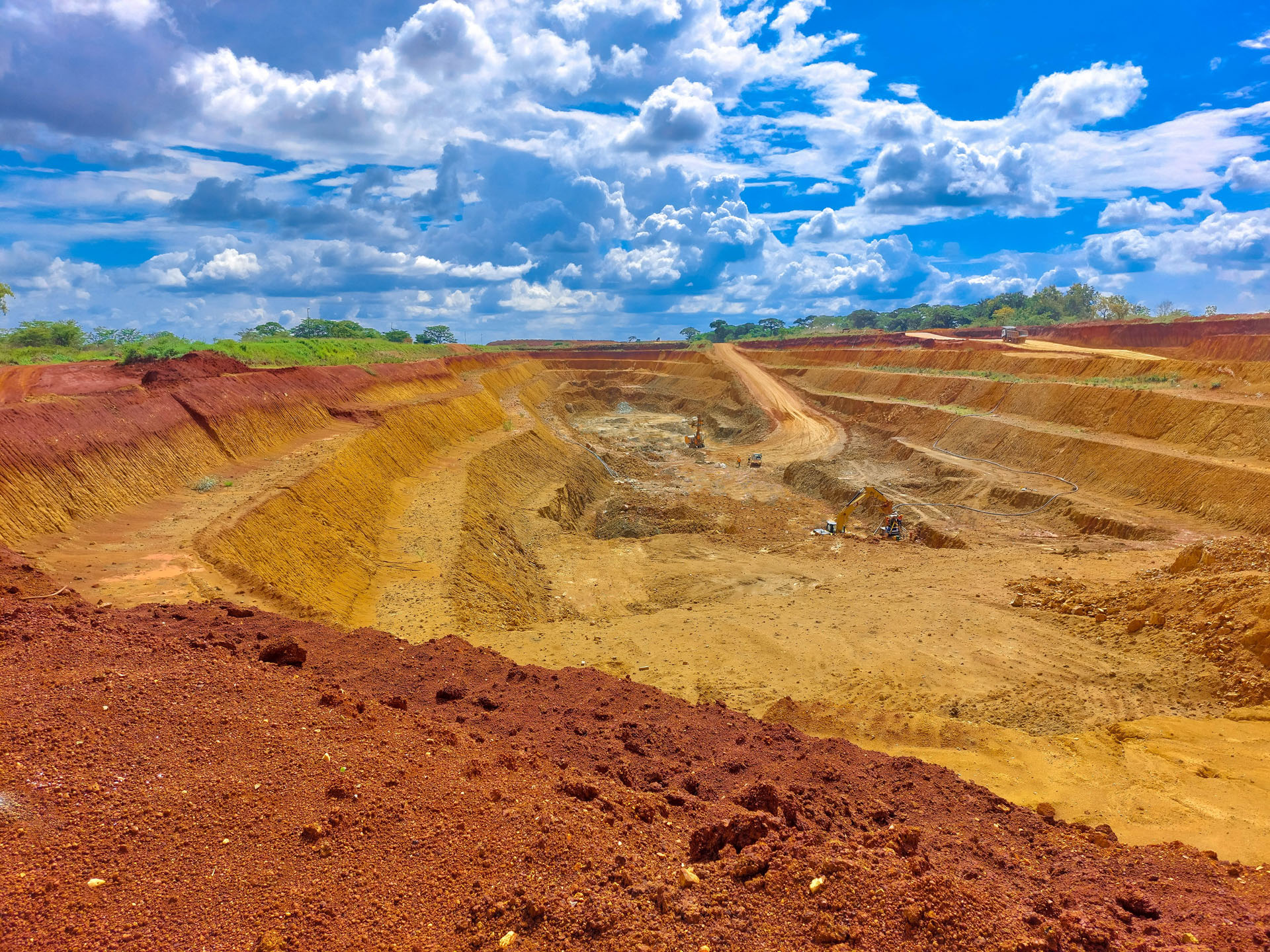
An often-overlooked aspect of Queensway's economics relates to the surface expression of mineralisation. The Iceberg zone features visible gold in outcropping veins at surface, eliminating waste stripping requirements for initial mining phases. This surface accessibility provides both economic and technical advantages: lower initial capital requirements, faster production start-up, and the opportunity for bulk sampling to validate grade estimates before committing to full-scale operations.
Visitors to the site can observe visible gold in outcrop along the Iceberg vein, providing tangible evidence of the resource quality and distribution. This surface expression substantially de-risks early mining operations compared to deposits requiring significant overburden removal or underground development before reaching ore.
2026 Drilling Program: Balancing Development and Exploration
New Found Gold drilled approximately 74,000 meters in 2025, beginning in May. For 2026, the company plans to increase this to approximately 100,000 meters across a full twelve-month program. Four drills currently operate with plans to expand to six or seven drills during summer months when ground conditions improve.
The drilling allocation reflects the company's dual focus: 75% project-related development work and 25% exploration. Project-related drilling includes completing the upgrade from inferred to indicated resource categories for Phase 1, ongoing grade control drilling, and geotechnical and hydrogeological work necessary for mine permitting and engineering.
The exploration component targets both resource expansion around known zones and new discoveries. The Dropkick zone, discovered 11 kilometers north of the existing resource, demonstrates the district-scale potential. Additional targets identified by the exploration team will receive follow-up drilling to determine whether they represent significant new zones or satellite deposits.
Capital Allocation and Execution Discipline
When asked whether he would have done anything differently over the past year, Boyle's response was unequivocal: "No, I don't know that there was anything we could have done, actually." This confidence stems from a systematic, engineering-focused approach to development.
The strategy prioritises risk reduction through proper drilling density, surface exposure to validate geological models, and appropriate engineering work before committing to production decisions. "You have to be systematic and don't take shortcuts. Drill it. Drill it till you're confident. Expose it at the surface so that you understand it... and in the meantime do the proper engineering," Boyle emphasised.
This measured approach contrasts with the entrepreneurial, exploration-focused culture that characterised the company's earlier phase. The pivot reflects a maturation from discovery to development, where engineering discipline and execution certainty take precedence over exploration excitement and marketing headlines.
The Investment Thesis for New Found Gold
- Near-Term Cash Flow De-Risks Development: Hammerdown production generates immediate cash flow, reducing reliance on equity financing during Queensway development and limiting shareholder dilution
- Accelerated Timeline to Queensway Production: Utilising existing permitted Pine Cove Mill infrastructure advances Queensway cash generation by 2-3 years versus building on-site processing, creating earlier shareholder value
- Compelling Phase 1 Economics: 9-10 g/ton grades with $1,300/oz all-in sustaining costs generate $250M+ projected free cash flow over four years at current gold prices, funding future expansion
- Self-Funding Growth Model: High-grade Phase 1 cash flow finances on-site mill construction for Phase 2, creating transition to lower-cost, higher-volume production without external financing
- Systematic De-Risking: 5x5 meter grade control drilling demonstrates consistent gold distribution, addressing "nuggetty" concerns and supporting potential resource upgrades to measured category
- Surface Mining Advantages: Visible gold in surface outcrop at Iceberg zone eliminates initial stripping requirements, reducing capital intensity and accelerating production start-up
- District-Scale Exploration Upside: Dropkick discovery 11km from existing resource plus additional targets provide blue-sky potential beyond current development focus
- Experienced Mining-Focused Leadership: 40-year mining engineer with vein mining expertise executing systematic, disciplined development approach rather than exploration-stage promotional culture
- Leveraged Gold Price Exposure: Operating margins expand significantly with gold above $2,000/oz versus $1,300/oz all-in costs, providing asymmetric upside in current macro environment
Macro Thematic Analysis
The gold mining sector faces a persistent valuation challenge: exploration companies struggle to attract growth capital while producers command premium valuations due to cash generation certainty. New Found Gold occupies a unique transition position - moving from pure exploration into near-term production with a clear pathway and existing infrastructure. In an environment where central bank gold accumulation continues, currency debasement concerns persist, and geopolitical uncertainty supports safe-haven demand, gold prices remain structurally elevated above $5,000 per ounce.
Miners capable of demonstrating executable production plans with favorable economics at conservative gold prices deserve re-rating as they de-risk development. New Found Gold's strategy of utilising existing permitted infrastructure to accelerate Queensway production while Hammerdown generates immediate cash flow addresses the critical gap between discovery and cash generation that typically requires years of dilutive financing and execution risk.
TL;DR: Executive Summary
New Found Gold has transitioned from exploration to development under CEO Keith Boyle, acquiring the producing Hammerdown mine and permitted Pine Cove Mill to accelerate Queensway flagship project cash flow by 2-3 years versus building on-site infrastructure. Phase 1 targets 700 tons/day at 9-10 g/ton with $1,300/oz all-in costs, projecting $250M+ free cash flow over four years to self-fund mill construction. Recent grade control drilling demonstrates consistent gold distribution addressing previous "nuggety" concerns, while district-scale exploration continues with 100,000 meters planned in 2026.
FAQs (AI Generated)
Building on-site requires in-pit tailings deposition, extending permitting and execution by 2-3 years. Using permitted Pine Cove Mill advances production timeline significantly while Hammerdown generates immediate cash flow, avoiding dilution.
Combined trucking and processing costs approximately 1 g/ton. With feed grades of 9-10 g/ton and $1,300/oz all-in sustaining costs, margins remain highly profitable at current gold prices despite transportation distance.
Intensive 5x5 meter grade control drilling reveals gold occurs as consistent flakes throughout high-grade shoots rather than erratic nuggets, supporting potential resource upgrades to measured category with improved mining confidence.
Approximately 100,000 meters planned with 75% focused on Phase 1 resource upgrades, grade control, and engineering work; 25% targeting exploration including Dropkick follow-up and new target generation.
Queensway material ships to Pine Cove Mill end of 2027. First four years of $250M+ free cash flow funds on-site mill construction for Phase 2 transition to higher-volume production.
Analyst's Notes





Subscribe to Our Channel













Stay Informed






















