




P2 Gold's Southwest Step-Out Extends High-Grade Corridor at Gabbs, Where It Remains Open



P2 Gold's latest Gabbs drilling extends the high-grade Lucky Strike gold-copper corridor to the southwest, where it remains open.
- P2 Gold’s latest drilling extended the higher-grade gold-copper corridor at Lucky Strike toward the southwest, where it remains open.
- Reported intersections included 112.78 meters at 0.37 grams per tonne gold and 0.17% copper and 161.54 meters at 0.36 grams per tonne gold and 0.14% copper.
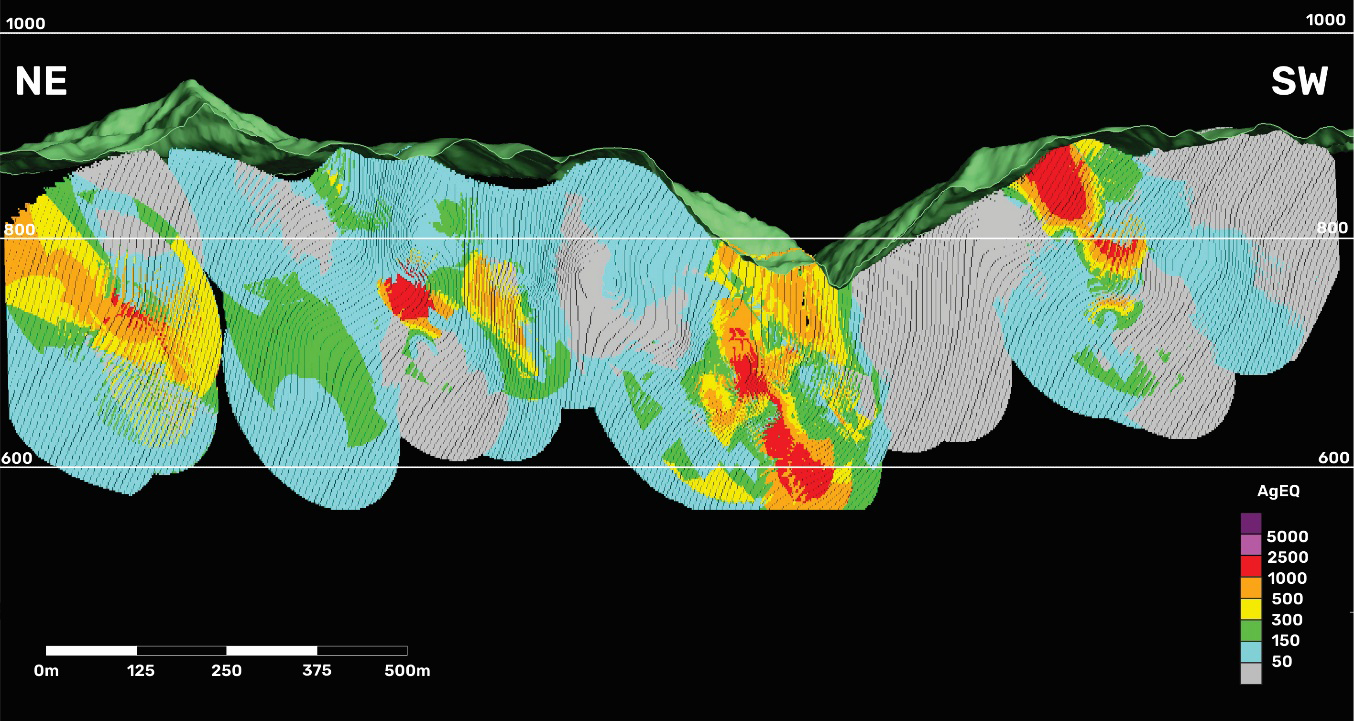
- The quartz monzonite hosting the higher-grade mineralization appears to thicken toward the southwest, while the corridor is turning in the same direction.
- The combined mineralized package exceeds 200 meters in thickness, comprising more than 150 meters of quartz monzonite and 20 to 60 meters of footwall mineralization.
- P2 Gold plans to conduct further southwest drilling before testing the open northeast and southeast extensions and preparing an updated mineral resource estimate (MRE) in the fourth quarter of 2026.
Company Overview
P2 Gold Inc. (TSXV: PGLD | OTCQB: PGLDF) is a mineral exploration and development company advancing its gold-copper Gabbs Project on the Walker Lane Trend in Nevada, where work to support a feasibility study (FS) is underway. A preliminary economic assessment (PEA) on the project, effective October 7, 2025, outlined a long-life, mid-size mine at Gabbs with average annual production of 109,000 ounces of gold and 33 million pounds of copper, processing 9 million tonnes per year over a 14.2-year mine life. The FS is advancing with a nominal production rate of 12 million tonnes per year, targeting an average annual production of 150,000 ounces of gold and 45 to 50 million pounds of copper. Gabbs has road access via paved Highway 361, with power and water on site. All zones remain open, and an infill and expansion drilling program is underway, with an updated mineral resource estimate (MRE) to follow the completion of drilling.
Southwest Extension Confirms the Higher-Grade Corridor
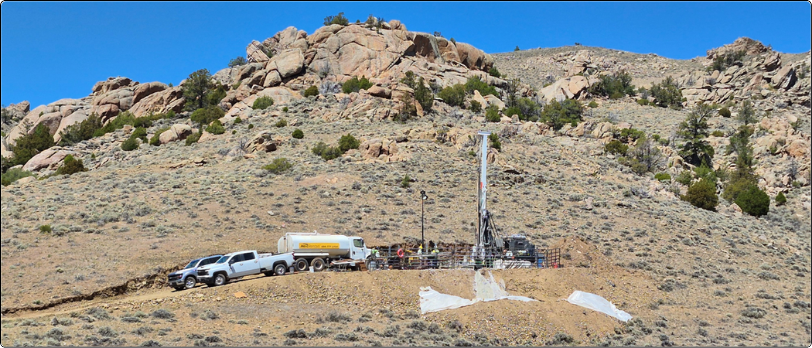
The eight holes reported here tested the western half of the Lucky Strike Zone, targeting the southwest extension of the higher-grade gold-copper corridor that runs through the zone. Beyond the two lead intercepts, one hole returned 112.78 meters at 0.37 grams per tonne gold and 0.17% copper, including 44.20 meters at 0.54 grams per tonne gold and 0.21% copper, while another returned 161.54 meters at 0.36 grams per tonne gold and 0.14% copper, including 99.06 meters at 0.50 grams per tonne gold and 0.18% copper. Two holes ended in mineralization, and one was lost in a fault zone after intersecting 15.24 meters with grades of 0.36 grams per tonne gold and 0.10% copper.
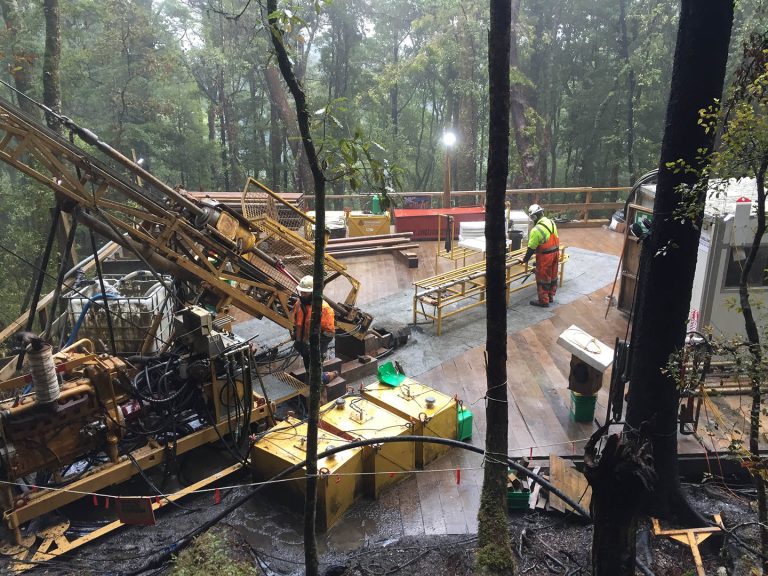
The quartz monzonite intrusive that hosts the higher-grade mineralization appears to be thickening toward the southwest, and drilling indicates the higher-grade corridor is turning in the same direction. This drill pad, at the southwest limit of drilling at Lucky Strike, sits 125 meters from the pad for a diamond drill hole that P2 Gold reported on May 20, 2026, as one of the longest intervals of high-grade gold and copper grade encountered to date at Lucky Strike.
Mineralization Style & Corridor Thickness
At Lucky Strike, gold-copper mineralization sits within and below a tabular quartz monzonite unit that P2 Gold describes as its main mineralized body, underlain by a pyroxenite footwall. Mineralization within the monzonite itself is gold-dominant, transitioning to copper-gold mineralization in the pyroxenite footwall below. The monzonite ranges more than 150 meters in thickness at Lucky Strike, and the footwall mineralization ranges from 20 meters to 60 meters, giving the combined mineralized package a thickness greater than 200 meters. That combined thickness provides the structural context for why a relatively modest downhole interval, like the lead 118.87-meter result, can still fall within a single, continuous mineralized system rather than several separate, thinner zones.
Next Steps
P2 Gold plans additional drilling to the southwest, continuing its focus on the shallower mineralization in the western half of Lucky Strike. Once that area is well defined, drilling will shift to expanding mineralization to the northeast and southeast, both of which remain open. Upon completion of the infill and expansion program, the company expects to prepare an updated MRE for Gabbs in the fourth quarter of 2026, which will form the basis of a FS to place Gabbs into production.
FAQs (AI-Generated)
Analyst's Notes





Subscribe to Our Channel






Stay Informed






















