Serabi Gold Expects 2026 Output Near 2025's 44,169 Ounces Pending Coringa Permits


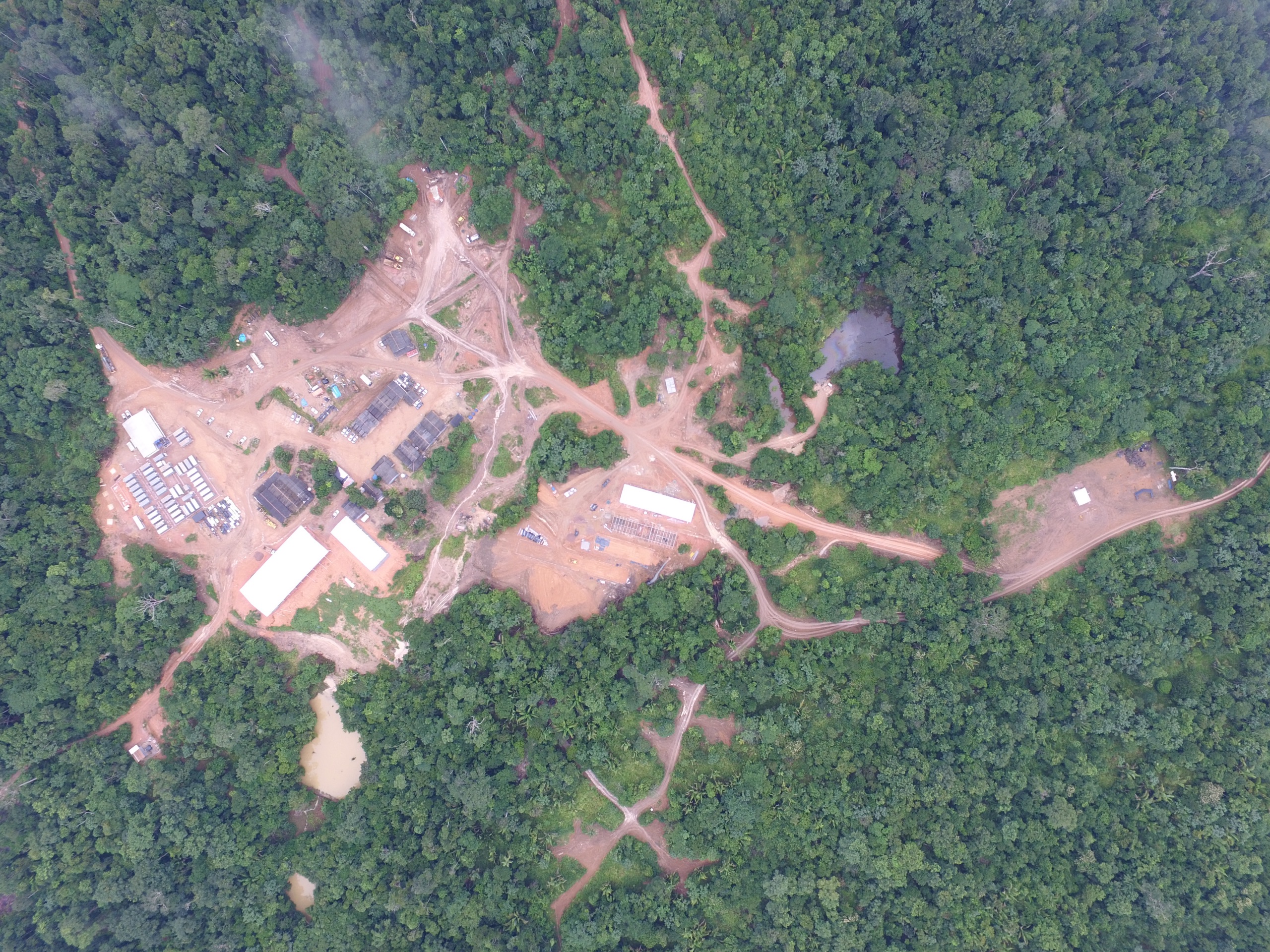
Serabi Gold's expanded Palito mill is in final commissioning, and Coringa permits now decide when more ore reaches it, with 2026 output expected near 2025.
- A fourth ball mill raising Palito plant capacity from 650 tonnes per day (tpd) to over 900 tpd is in final commissioning.
- Coringa's GUIA trial mining license permits up to 100,000 tonnes (t) of ore a year to be transported to Palito.
- Serabi now expects 2026 gold production to be at a level similar to the 44,169 ounces (oz) it produced in 2025, compared with previous guidance of over 53,000 oz.
- Coringa has produced 23,089 oz year to date at a milled grade of 7.74 grams per tonne (g/t) gold.
- Serabi held US$63.2 million in cash and had no debt as of September 30, 2026.
Serabi Gold (AIM: SRB | TSX: SBI | OTCQX: SRBIF) has installed a fourth ball mill at its Palito Complex in Pará, Brazil, raising plant capacity from 650 tonnes per day (tpd) to over 900 tpd. The mill is in final commissioning. The added capacity is meant to support increased production from Coringa ore once the outstanding Coringa approvals are secured. Those approvals have not yet been received, so Serabi now expects 2026 gold production to be at a level similar to the 44,169 ounces (oz) it produced in 2025, compared with previous guidance of over 53,000 oz.
Mill Capacity & Coringa Ore Supply
Installation of the fourth ball mill at Palito was completed on time and on budget. The mill, a rotating drum that grinds ore, will raise annual processing throughput at Palito to 330 kilotonnes in 2027.
The added milling capacity also creates the potential to restart São Chico, which has been on care and maintenance, with mining suspended, since 2023. Serabi is assessing the potential for a restart, including resampling the existing surface stockpile and evaluating re-entry into the upper mine levels. Any decision to restart would be subject to completion of that assessment and renewal of São Chico's GUIA trial mining license.
At Coringa, the shift from manual selective mining to mechanized sublevel open stoping, an underground method that mines ore in larger blocks between access levels, remains on track for the fourth quarter of 2026. Mining is underway in 4 zones: Serra, Serra South, Meio, and Galena. Development at Serra South and Galena drove heavy capital spending in 2026, and capital expenditure is expected to be materially lower in 2027.
Coringa Permitting Path
Coringa operates under a temporary GUIA license, a 3-year trial mining license that permits up to 100,000 tonnes (t) of ore a year to be transported to Palito, about 200 kilometers by road. As of September 30, 2026, 85,602 t had been transported against the current annual allowance. Until that limit is increased or an operating license (LO) is granted, additional surface-stockpiled material and run-of-mine ore (ore as it leaves the mine, before sorting or processing) at Coringa cannot be transported to Palito. The GUIA expires on January 29, 2027. Serabi is in discussions with the Agência Nacional de Mineração (ANM) about continuing operations under the GUIA until the LO is received, a request supported by a legal petition.
Chief Executive Officer of Serabi Gold, Michael Hodgson, credited the temporary route with getting Coringa into production while its full permit was still pending, speaking in July:
"In the meantime, we managed to get up and running with this kind of temporary license, and that's been incredibly valuable to the company."
The LO requires final approval from the Fundação Nacional dos Povos Indígenas (FUNAI) of the Estudo de Componente Indígena (ECI), which both Indigenous groups have approved. It also requires a change-of-land-use approval from the Instituto Nacional de Colonização e Reforma Agrária (INCRA). The change-of-land-use process has been technically and legally agreed upon and requires final approvals at the state and federal levels. After a site visit in September 2026, Pará's state environmental licensing agency agreed that Serabi can bypass the installation license stage and apply directly for the LO once the FUNAI and INCRA approvals are received. Once granted, the LO would enable the ANM to issue the mining concession that completes permitting at Coringa.
Third-Quarter Production
Serabi produced 11,008 oz of gold in the third quarter of 2026, a 9% decrease from 12,090 oz in the third quarter of 2025, driven by lower-than-expected grades at Palito. Year-to-date production reached 34,057 oz.
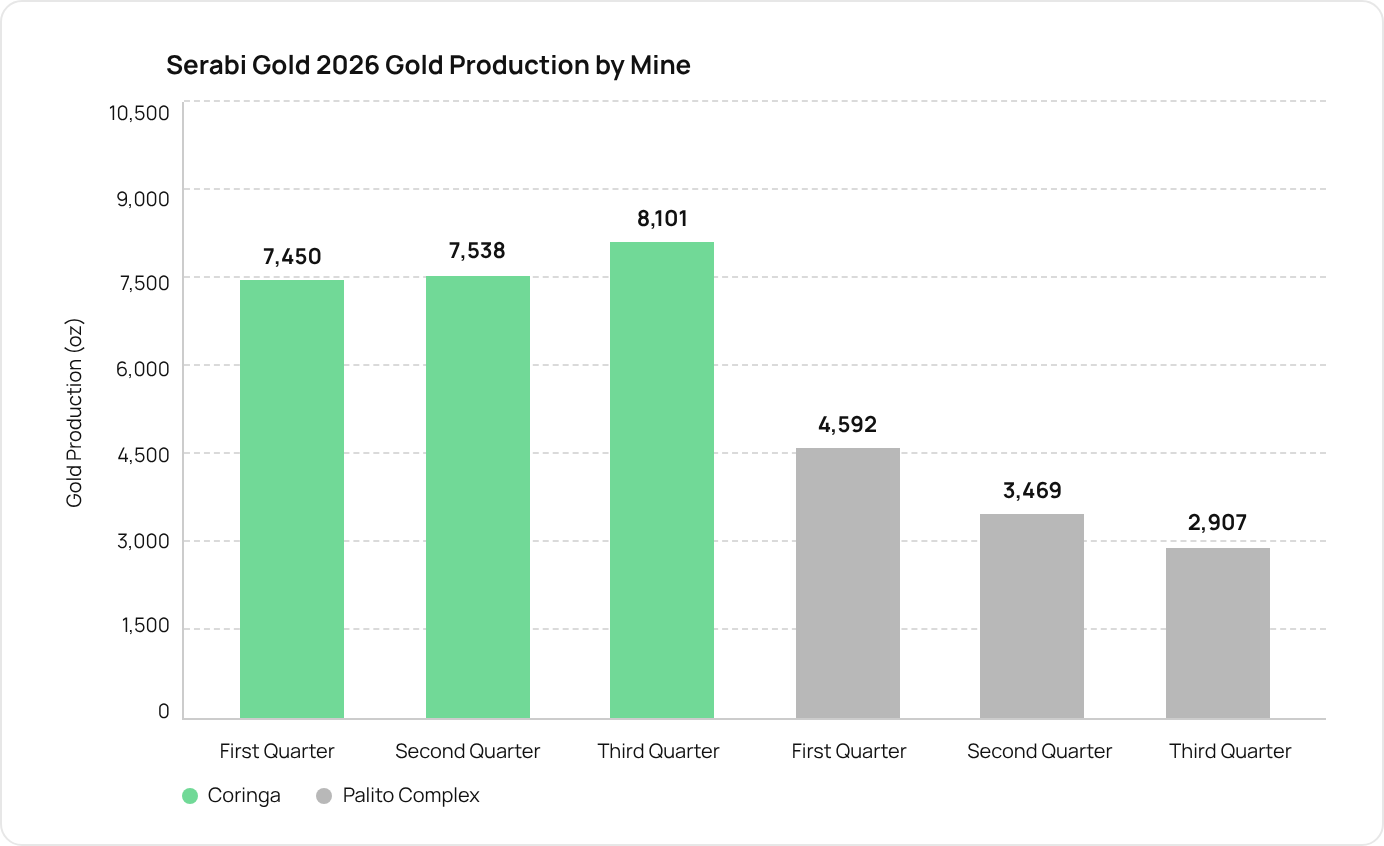
Coringa produced 7,450 oz in the first quarter, 7,538 oz in the second, and 8,101 oz in the third, for 23,089 oz year to date at a milled grade of 7.74 grams per tonne (g/t) gold. Its third-quarter mined ore rose to 34,040 t from 25,273 t a year earlier because the Meio zone is now fully ramped up. Palito produced 4,592 oz, 3,469 oz, and 2,907 oz over the same 3 quarters, for a total of 10,968 oz year to date. Its third-quarter mined grade fell to 4.01 g/t gold from 6.29 g/t a year earlier, below budget.
Without the Coringa approvals, the planned fourth-quarter production increase will not be delivered, and management will update production guidance with the third-quarter financial results expected in late November. Palito grades are expected to improve in the fourth quarter as output rises from the G3 vein, where higher-volume and higher-grade blocks await.
Investment Significance of Coringa Grades & Cash
Coringa continued to perform well in 2026, with average milled grades close to 8 g/t gold. The company's longer-term growth strategy is unchanged.
Serabi held US$63.2 million in cash as of September 30, 2026, after paying its maiden dividend of US$5.1 million in July 2026, and remains debt-free. A further US$3.4 million was received on October 1, 2026, from the September bullion sale. That position, together with lower capital expenditure expected in 2027, gives Serabi the flexibility to keep investing in its growth strategy.
Resource Base & Exploration
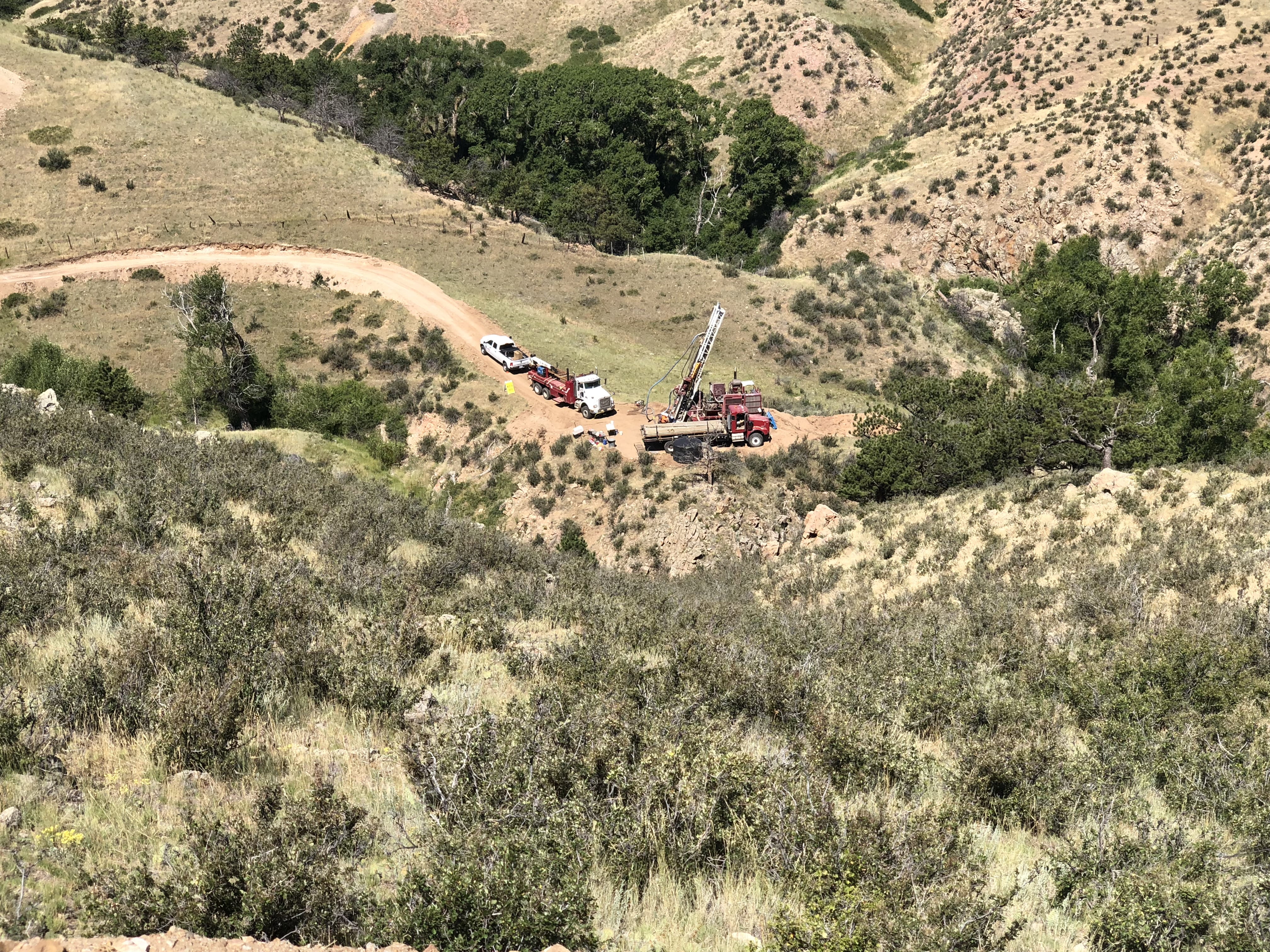
Brownfield drilling, which tests ground near existing mines, continues at both Palito and Coringa, with the 2026 brownfield exploration program scheduled to conclude in October 2026. The 2025 program lifted the consolidated mineral inventory to 1.4 million ounces (Moz) of gold across measured, indicated, and inferred categories, up from 1.0 Moz. Serabi targets a consolidated inventory of 1.5 to 2.0 Moz.
FAQs (AI-Generated)
Analyst's Notes





Subscribe to Our Channel






Stay Informed