




Why Multi-Critical Mineral Projects May Become the West's Supply Chain Priority



Multi-critical mineral projects are emerging as strategic assets, with investors increasingly valuing supply chain resilience across titanium, graphite and rare earths.
- Western governments and investors are now valuing critical mineral projects for supply chain resilience, not just resource size.
- Graphite and heavy rare earths are concentrated in China, while defence-grade titanium is effectively a Japan-only supply chain, leaving Western buyers exposed on multiple fronts.
- Companies are building multi-commodity supply chains in two ways: through acquisitions like Serra Verde and Australian Strategic Materials, or by recovering by-products from existing project flowsheets.
- Sovereign Metals' Kasiya project is a live test case, already at the Definitive Feasibility Study (DFS) stage for titanium and graphite, and is now working to add heavy rare earths from the same flowsheet.
- Financing complexity and unproven by-product economics remain key hurdles to converting multi-mineral potential into bankable projects.
For most of mining history, a project's investment case rested on a single commodity. A deposit was a copper, gold, or uranium mine, and its value rose or fell with a single price chart. That framework is being tested by a small but growing group of projects that host two, three, or more critical minerals within the same orebody, often recoverable from the same processing flowsheet. As Western governments treat supply chain concentration as a national security issue rather than a purely commercial one, multi-commodity deposits are attracting attention for a different reason: not size, but resilience.
The shift is visible in Washington's own language. On February 24, 2026, US Assistant Secretary of War for Industrial Base Policy Michael P. Cadenazzi Jr. told the Senate Armed Services Committee that China controls 95% of global heavy rare earth output, that the US imports almost 100% of what it uses, and that 90% of that supply comes from China. He called it "a clear and present danger to our national security." That testimony has reframed how investors assess project quality: resilience to a single point of failure now carries as much weight as grade or tonnage.
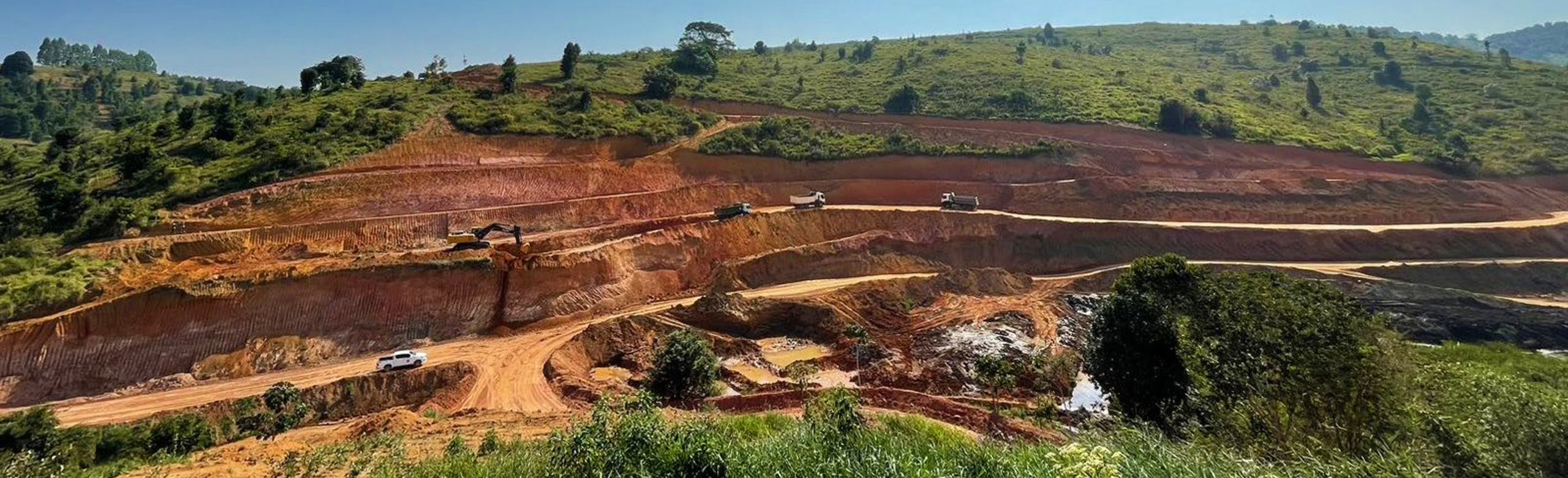
This is starting to show up in deal structures and corporate strategy across the sector, not just one company. Projects that can supply more than one input to the same defence or industrial value chain, and producers pursuing vertical integration across several critical minerals, are being treated as a distinct, increasingly preferred asset class. Sovereign Metals' Kasiya Rutile & Graphite Project in Malawi, which hosts titanium feedstock, graphite and, as confirmed on May 27, 2026, monazite containing heavy rare earths within a single mine plan, illustrates how that category is taking shape.
A Problem Bigger Than Any Single Mineral
Western economies are short of more than one mineral at once, often from the same suppliers. Cadenazzi's testimony shows that heavy dependence on China for rare earths is not an isolated vulnerability, and the pattern recurs elsewhere. Per the May 27, 2026 announcement, China tightened export controls on dual-use items to Japan, effective January 6, 2026. Despite 15 years of diversification, Japan remains approximately 60% dependent on Chinese rare earth imports overall, approaching 100% for heavy rare earths. The US is described as 100% reliant on imports for its yttrium needs.
Titanium shows a similar pattern. Sovereign's Chief Commercial Officer, Sapan Ghai, noted that global titanium metal supply comes almost entirely from China, Russia, Japan, Kazakhstan, and Saudi Arabia, with defence- and aerospace-grade material effectively limited to 2 Japanese producers.
Ghai described the practical effect of that concentration in stark terms:
"The US has zero domestic titanium supply. It has zero domestic graphite supply. It gets it all from either Japan for the titanium or from China for the graphite."
When one country, or a narrow cluster of suppliers, controls the majority of 2 or 3 input markets at once, a disruption in one commodity compounds risk rather than offsetting it. That is the condition against which multi-mineral projects are positioned, and why they are now judged less on grade or net present value (NPV) alone and more on how many points of Western supply failure a single asset can address.
Emerging Practices & Industry Progress
Capital markets activity in 2026 shows this thesis moving from commentary to transaction, and the pattern extends beyond any one project. On April 20, 2026, USA Rare Earth, Inc. agreed to acquire Brazil's Serra Verde Group for approximately US$2.8 billion, underpinned by a 15-year, 100% US government-backed offtake with price floors of US$110 per kilogram for neodymium and praseodymium, US$575 per kilogram for dysprosium and US$2,050 per kilogram for terbium. The rationale was Serra Verde's ability to supply all four magnetic rare earth elements at scale, an integration bet rather than a single-element one. On January 20, 2026, Energy Fuels Inc. announced a US$299 million acquisition of Australian Strategic Materials Limited, aiming to build a mine-to-metal-to-alloy platform outside China.
Both deals reward breadth and integration, not just resource size. Project-level by-product recovery follows the same logic. At Sovereign Metals’ (ASX: SVM | AIM: SVML | OTCQX: SVMLF) Kasiya, monazite containing dysprosium, terbium and yttrium is recovered from tailings within an already defined flowsheet, material that would otherwise be waste. Sovereign's Managing Director and Chief Executive Officer Frank Eagar, on how the approach adds a revenue stream without re-engineering the project's Definitive Feasibility Study (DFS):
"The monazite concentrate contains all four magnetic rare earth elements, Neodymium, Praseodymium, Dysprosium and Terbium, plus highly critical Yttrium. These elements appear to be recoverable from the current tailings stream of our DFS flowsheet."
Extracting a second or third critical mineral from an existing flowsheet, rather than building standalone projects for each, is increasingly the industry's preferred route to supply chain breadth at lower capital intensity.
Remaining Challenges
Multi-commodity potential adds complexity as well as upside. By-product opportunities are typically unquantified at first disclosure: Sovereign notes its monazite pathway confirmation is in progress, that downstream processing costs are still being assessed, and that no offtake or sales agreement exists yet. Radioactive element handling, tied to uranium and thorium, which are typically found alongside monazite, adds a regulatory layer that single-commodity projects do not face.
Project financing follows a similar pattern: each additional revenue stream raises the bar before capital will be committed. Ghai described the underlying dynamic as a "chicken and egg" problem, where debt providers wait for committed equity and equity investors wait for debt commitments, a sequencing challenge that compounds once a rare earth by-product, an industrial mineral, and a metal feedstock each carry distinct end markets and counterparties within the same financing package.
Project Examples Across the Sector
Kasiya is one expression of this trend, not its only one. Its monazite testwork returned an average Total Rare Earth Oxide (TREO) basket ratio roughly 7 times higher than the average across the world's 5 largest rare earth producers, with near-surface material reaching 3.1% dysprosium-terbium and 17.2% yttrium. By comparison, MP Materials Corp., described as America's only fully integrated rare earth producer, reports no measurable dysprosium, terbium, or yttrium, underscoring why heavy rare earth supply recovered as a by-product is treated as strategically distinct from conventional light rare earth output.
Serra Verde and Australian Strategic Materials represent a related but different model: acquisition-driven integration rather than in-situ by-product discovery. In both cases, US-linked acquirers committed capital to assets that broaden a supply chain across multiple elements or processing stages, rather than to a single deposit.
Regional & Jurisdictional Perspective
Geography compounds the case. Jurisdictions outside Japan's near-exclusive hold on defence- and aerospace-grade titanium supply, and outside China's dominance of heavy rare earth supply, draw disproportionate attention from Western governments precisely because so few alternatives exist. Malawi falls into that category, and Sovereign Metals’ management pointed to engagement with the US State Department, the Department of Defense, the Office of Strategic Capital, and the US International Development Finance Corporation as evidence of government interest in prioritising non-Chinese, non-Russian sources, regardless of project size.
Pricing reflects the same split. Project Blue Group Limited, a critical minerals market intelligence specialist, forecast a 2026 price for a monazite concentrate at 60% TREO grade using ex-China oxide prices and Japan-based, ex-China proxy deductions. The base case was US$16,000 per tonne, and the high case was US$19,000 per tonne, against an April 2026 Shanghai Metals Market benchmark of approximately US$6,142 per tonne for a monazite concentrate at 54% to 55% TREO grade. Project Blue attributed the premium to limited non-Chinese supply, a dynamic that applies to any non-Chinese producer of comparable material, not one project alone.
Industry Outlook
The signal from 2026 is that single commodity exposure is increasingly weighed against a different benchmark: how many distinct, China-dependent supply chains a project or company can address at once. Cadenazzi's testimony that concentrated supply chains can be weaponised applies to titanium and graphite as much as rare earths, and the scale of capital committed to Serra Verde and Australian Strategic Materials suggests Western capital is already pricing that risk into acquisitions.
Kasiya is the clearest live test of that benchmark. The project is already at the DFS stage on the strength of two commodities, titanium feedstock and graphite, and is now working to determine whether a third, heavy rare earths, can be added to the same flowsheet without reopening the capital case. For developers more broadly, the near-term test is converting multi-mineral potential into quantified, bankable economics rather than exploration upside, exactly the step Sovereign has flagged as still in progress at Kasiya.
For governments and financiers, the question is how quickly performance standards, offtake structures, and government-backed financing can extend to multi-commodity assets at the pace now demanded by security concerns, and whether projects like Kasiya end up as early proof points of a structural shift or as isolated cases.
FAQs (AI-Generated)
Analyst's Notes





Subscribe to Our Channel









Stay Informed


