Toro Deal Completion Adds Australia's Wiluna Resource to IsoEnergy Uranium Pipeline Across Key Jurisdictions


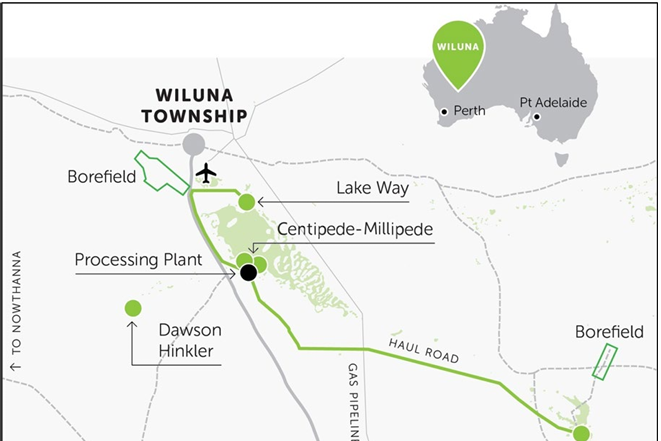
IsoEnergy closes Toro deal, adding Wiluna's 75Mlb resource; Hurricane's south trend delivers high grades; Tony M economics due by year-end.
- IsoEnergy has completed its acquisition of Toro Energy, adding the Wiluna project in Western Australia, which contains approximately 75 million pounds of uranium across three near-surface deposits with established federal and state permitting.
- Winter and summer drilling on Hurricane's south trend intersected grades as high as 11.6% U₃O₈ materially above resource-model expectations and roughly 550 metres from the existing high-grade resource boundary.
- IsoEnergy is testing a beneficiation process at its Tony M project in Utah that removed 75% of ore volume while retaining over 90% of contained uranium, with an updated economic study due before the end of 2026.
- The company is sequencing development across its three-jurisdiction portfolio, prioritising Tony M for near-term production, Wiluna for medium-term development, and Hurricane for longer-term growth.
- IsoEnergy holds approximately $130 million in cash and counts NexGen Energy which owns roughly 28% of the company among its major shareholders.
IsoEnergy, a uranium explorer, developer, and near-term producer with assets in Canada, the United States, and Australia, has spent the past several months converting a series of exploration and corporate milestones into what management describes as a sequenced, multi-decade production pipeline. CEO Philip Williams outlined progress across the company's three core jurisdictions, addressing a recently completed acquisition, encouraging drill results, and the company's approach to capital allocation in a uranium market where spot and long-term contract prices have begun to diverge.
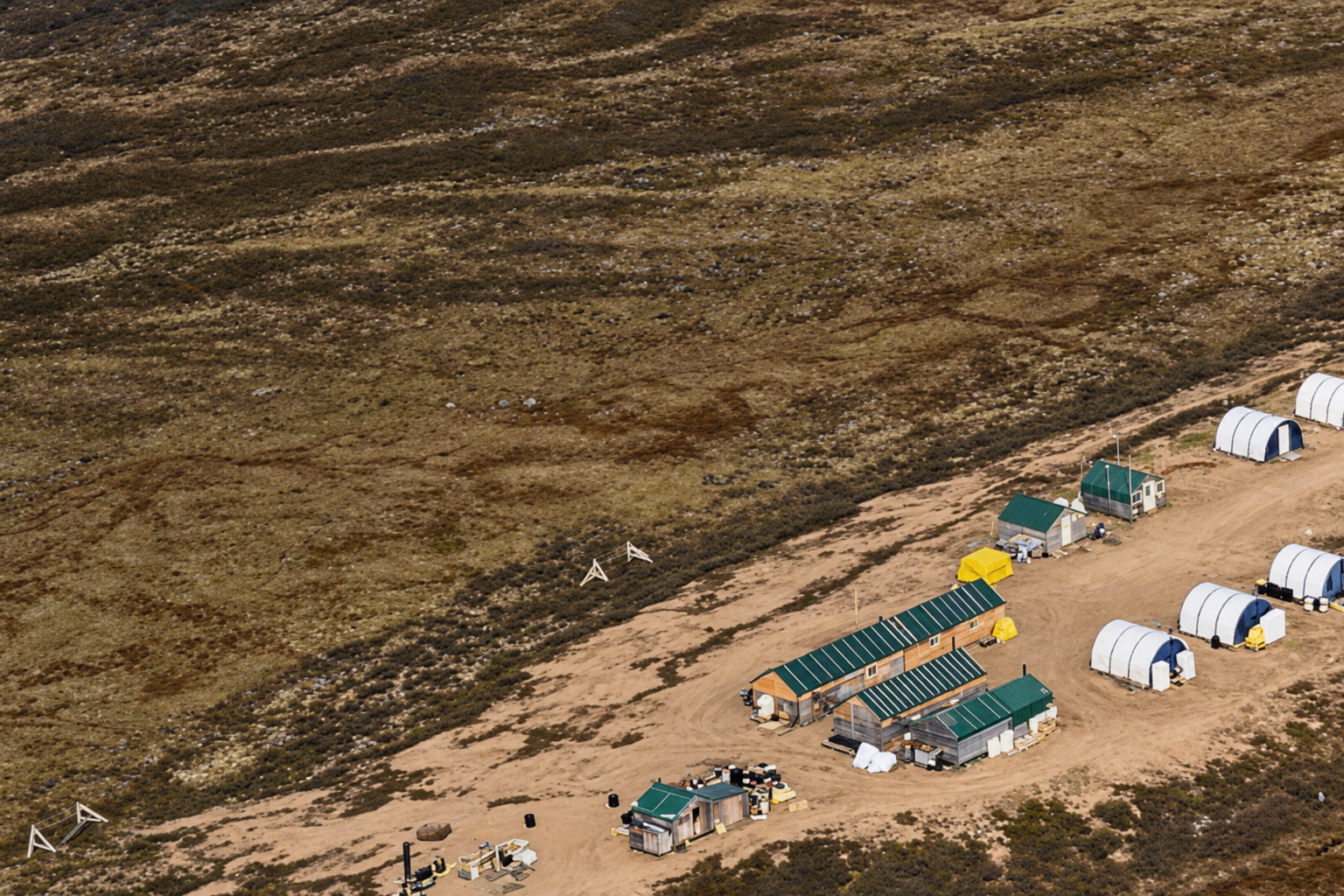
The interview took place shortly after IsoEnergy was required to evacuate its exploration camp at the Larocque East project due to nearby forest fires. Williams confirmed no injuries occurred and that the closest fire remained roughly five kilometres away, across a lake from the camp. The company expected to resume fieldwork around July 8th, with what Williams described as ample buffer remaining in the field season to complete or expand the planned 20-hole summer drilling programme.
The Toro Acquisition and Wiluna Opportunity
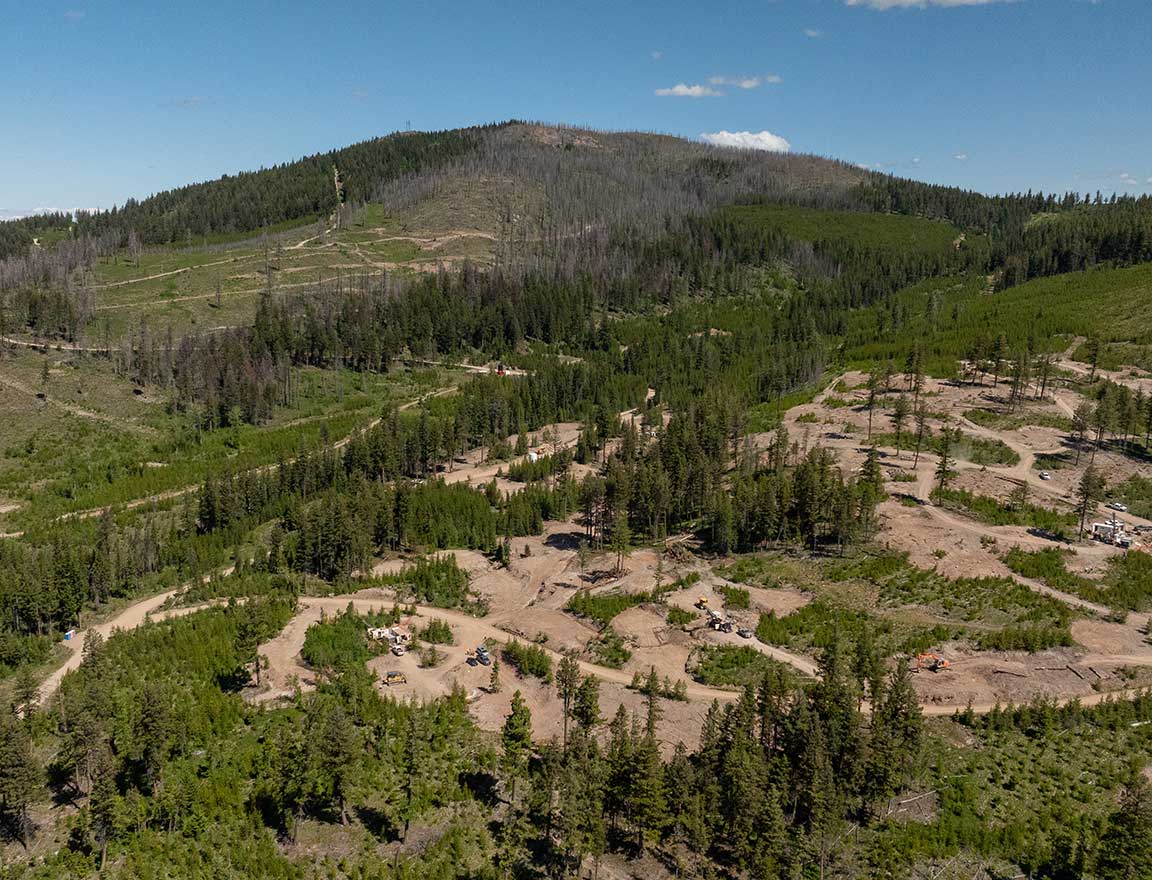
The most significant recent corporate development is the completed acquisition of Toro Energy, which brought the Wiluna project in Western Australia into IsoEnergy's portfolio. Wiluna comprises three deposits totalling approximately 75 million pounds of uranium, situated from surface to a depth of only 10 metres which Williams pointed to as favourable for future mine development. The project also carries a history of permitting, having previously received both federal and state approval to proceed to construction with the current Western Australian government indicating it will honour those prior approvals.
Williams argued that the market had previously struggled to value Toro as a standalone company because investors could not see a credible path for a single-asset, micro-cap uranium developer to fund a project with an estimated capital cost of around $300 million. Within IsoEnergy's larger balance sheet, Williams suggested the figure now becomes more manageable. Over the next 6-12 months, the company plans to update Wiluna's resource estimate and economic study to current Canadian NI 43-101 standards and to complete additional infill drilling aimed at improving resource confidence.
Hurricane's South Trend Breakthrough
At the Hurricane deposit, part of the Larocque East project in the Athabasca Basin, IsoEnergy reported a breakthrough in understanding the deposit's exploration potential. Hurricane already hosts an indicated resource of 48.6 million pounds at an average grade of 34.5% U₃O₈, among the highest-grade uranium resources globally, first discovered by the company in 2018.
Historically, exploration efforts focused on extending the main zone along strike without major new discoveries. This past winter, however, the company tested the "south trend", an area modelled to contain lower-grade mineralisation in the 1–1.5% range. Drilling instead returned grades exceeding 10%, including a best result of 11.6%. A follow-up programme of six holes over 550 metres intersected grades ranging from 0.5% up to the 10%-plus result, including 2.75% roughly 550 metres from the existing resource boundary.
As Williams explained, "That was important because it showed us that high-grade mineralisation can exist on the south trend of this area so we followed that up with multiple holes along that southern trend which had very little drilling directly into it."
The company had completed six of a planned 20 holes for the summer programme before the wildfire evacuation and intends to resume and potentially expand the programme once conditions allow.
Williams also pointed to circumstantial evidence from neighbouring operators Orano and Cameco, whose joint venture borders IsoEnergy's ground. He noted that the neighbours' management discussion and analysis disclosures described mineralisation similar to that found at the Cigar Lake and McArthur River mines, and that drilling spacing observed on the neighbouring property was notably tighter than IsoEnergy used when it originally estimated the Hurricane resource in 2022.
Interview with Philip Williams. Director & CEO of IsoEnergy Ltd.
Tony M and the Path to Near-Term Production
In Utah, IsoEnergy continues to evaluate a restart of the Tony M mine, where a 2,000-tonne bulk sample mined from surface is being processed through a beneficiation technology. Initial testing showed the process could remove 75% of material volume while retaining over 90% of contained uranium, results that will feed into an updated economic study currently underway with third-party consultants, and is expected to be delivered before the end of 2026. Williams indicated that a restart decision would follow completion of that study, with the company positioning itself to begin production as early as next year depending on market conditions, though he emphasised the company is prepared to act rather than committed to an immediate timeline.
A Sequenced, Multi-Jurisdiction Portfolio
Williams described IsoEnergy's overarching strategy as an attempt to sequence three potential mines across different time horizons rather than developing them simultaneously. Tony M in Utah is positioned as the nearest-term production candidate; Wiluna in Australia is characterised as a 3-5 year development exercise; and Hurricane in Canada is viewed as a longer-dated asset dependent on further exploration, resource updates, and potential co-development discussions with neighbouring operators. He framed the underlying rationale as insulation from the binary risk inherent in single-asset uranium developers, noting that project-specific setbacks such as permitting delays, technical issues, financing gaps can derail even high-quality deposits. A portfolio approach, in his view, spreads that risk while preserving optionality on the upside.
Market Context and Financial Position
Williams addressed the current divergence between uranium spot and term pricing, noting spot prices around $85 per pound against a long-term price reported by TradeTech UX Consulting of $94 per pound even as uranium equities have not moved in step with either metric. He attributed part of this disconnect to a broader risk-off environment affecting smaller-cap names, compounded by a pattern of underperformance among restart-stage uranium projects across the sector over the past two to three years.
"Our thinking has always been the same which is the future is going to come when it's coming; $94 uranium price on the term basis and knowing full well the contracts are being done higher than that. Our whole business plan has always been: 'get as many strong assets that we can and build a business plan around them.'"
On the demand side, Williams said IsoEnergy's underlying investment thesis is not contingent on incremental demand from artificial intelligence or data centre growth, arguing that a structural supply deficit exists independent of those trends. He noted the company had recently added a VP of Commercial focused on utility relationships to prepare for eventual offtake discussions.
IsoEnergy reported approximately $130 million in cash on hand. NexGen Energy, an early investor, holds approximately 28% of the company following dilution from the Toro transaction share issuance.
The Investment Thesis for IsoEnergy
- Newly diversified asset base: The completed Toro acquisition adds the ~75-million-pound Wiluna project in Western Australia to a portfolio that already includes the high-grade Hurricane deposit in Saskatchewan and the near-production Tony M project in Utah.
- Tier-one jurisdictional exposure: All three core assets sit in Canada, the United States, and Australia to which jurisdictions management regards as lower-risk relative to peers operating in less established mining regions.
- Near-term production optionality: Tony M's bulk sample and beneficiation testing, together with an economic study due before year-end 2026, could position IsoEnergy for a production restart decision in the near term.
- High-grade exploration upside: South trend drilling at Hurricane returned grades materially above resource-model expectations, suggesting potential for resource growth at one of the highest-grade uranium deposits globally.
- Balance sheet strength: Approximately $130 million in cash provides funding flexibility to advance study work across three jurisdictions without immediate reliance on capital markets.
- Structural market backdrop: Management points to a persistent uranium supply-demand deficit and a term price of $94 per pound as long-term tailwinds, independent of near-term equity volatility.
- Investors should monitor: the outcome of the Tony M economic study (due by year-end 2026), further south trend assay results at Hurricane once drilling resumes, and updated resource/economic disclosures for Wiluna over the next six to twelve months.
Macro Thematic Analysis
The uranium market is currently defined by a widening gap between fundamentals and equity performance. Term contract pricing, reported by TradeTech at $94 per pound, sits within range of prior highs, while spot prices near $85 per pound have shown periodic volatility. Yet uranium equities, particularly among smaller-cap developers, have largely failed to reflect this strength, with more companies trading closer to 52-week lows than highs. This disconnect reflects a broader risk-off posture toward the sector rather than a change in underlying supply-demand dynamics.
The structural case for uranium rests on a persistent gap between mine supply and reactor demand, a gap industry participants argue will widen as existing mines deplete, notably Cameco's Cigar Lake, expected to see production decline toward 2035, without a corresponding wave of new mine supply coming online. Restart-stage projects across the sector have struggled to deliver on schedule over the past two to three years, contributing to investor scepticism about which companies can actually execute, even as the macro case for uranium remains intact.
Newer sources of demand narrative, particularly artificial intelligence and data centre power consumption, have brought a wider audience to the uranium story, but also introduced scepticism among investors questioning whether the thesis is merely a short-term extension of the AI trade. Industry executives argue the underlying supply deficit is durable regardless of how much incremental demand materialises from data centres specifically.
For investors, the operative question is less whether uranium fundamentals are sound and more which companies possess the asset quality, jurisdictional positioning, and balance sheet strength to execute through the cycle.
TL;DR
IsoEnergy has closed its acquisition of Toro Energy adding the 75-million-pound Wiluna project in Western Australia to a portfolio that already includes the high-grade Hurricane deposit in Saskatchewan and the near-production Tony M project in Utah. South trend drilling at Hurricane returned grades well above resource-model expectations, while beneficiation testing at Tony M points towards a potential production restart pending an economic study due by year-end 2026. With roughly $130 million in cash and backing from NexGen Energy, IsoEnergy is sequencing all three assets according to their individual stages of readiness rather than pursuing simultaneous development.
Frequently Asekd Questions (FAQs) AI-Generated
Analyst's Notes





Subscribe to Our Channel





.jpg)


Stay Informed