




Undervalued? Fully Permitted and Infrastucture-Ready, Critical Elements Stands Out as Lithium Prices Surge


.jpg)
Critical Elements Lithium holds a fully permitted Quebec lithium project with a $2.2B NPV, active drilling upside, and a hidden Power Metallic stake - trading at deep discount.
- Critical Elements Lithium's Rose Lithium-Tantalum project in Quebec holds a completed feasibility study, all major environmental permits, and a negotiated agreement with the Cree Nation - removing most common development obstacles facing peers.
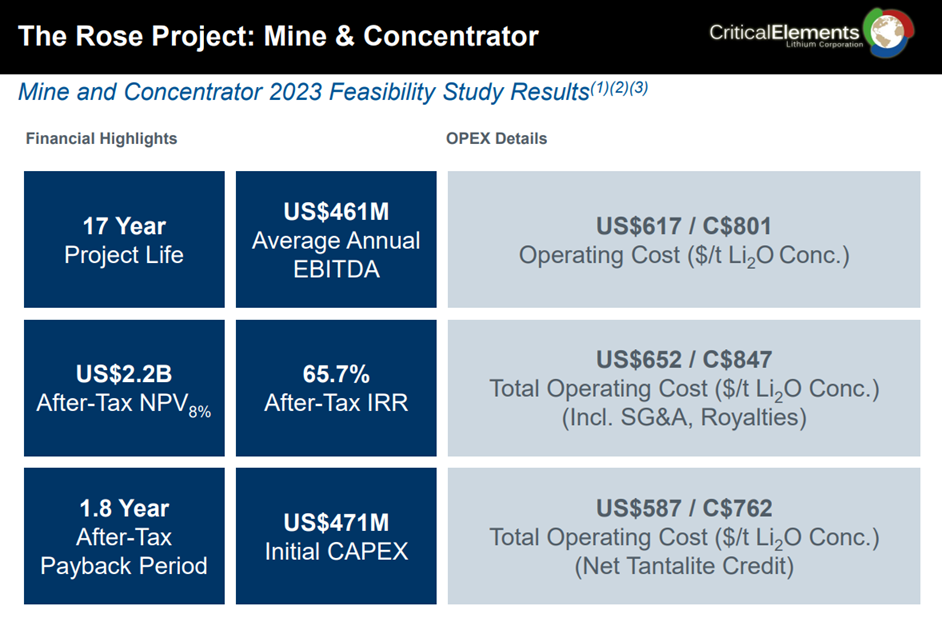
- The feasibility study outlines production of 200,000 tonnes per annum of spodumene concentrate with an NPV of $2.2 billion at an 8% discount rate, a 66% IRR, and a 1.8-year payback, based on a $2,100/t life-of-mine price - below today's spot price of approximately $2,500/t.
- A 10,000-metre summer drill programme is underway at the Rose West discovery, located less than 10 km from the main project, where the footprint was already expanded over six times in a spring programme; management expects the resource to grow materially.
- Critical Elements holds a 20% carried interest in the Nisk Joint Venture - where Power Metallic (PNPN) has made a polymetallic discovery - alongside approximately 10 million Power Metallic shares, representing exposure to a company with a market cap of nearly $300 million.
- Shares trade at around $0.37 against analyst price targets averaging $1.00, and the company is priced at a 68% discount to peer averages on a 2P reserve basis, with three analysts each carrying a speculative buy rating.
The lithium sector has spent much of the past three years navigating a steep price correction that curtailed development timelines and suppressed valuations across the board. Against that backdrop, Critical Elements Lithium (TSXV:CRE) is making the case with a fully permitted, feasibility-stage hard rock lithium project in Quebec as supply deficits widen and spodumene prices recover. Eric Zaunscherb, Chairman, outlined the company's project fundamentals, exploration activity, and a secondary asset that management argues is not yet reflected in the share price.
Permitted, Feasibility-Complete, and Infrastructure-Ready
The Rose Lithium-Tantalum project, located in the James Bay region of northern Quebec, has been under development since discovery by CEO Jean-Sébastien Lavallée and his father around 2008–2009. The project is 100% owned by Critical Elements with no royalties, options, or outstanding payments attached to it.
A 2023 feasibility study underpins the project with a production plan of 200,000 tonnes per annum of 5% chemical grade spodumene concentrate. At a life-of-mine average price of $2,100 per tonne, the study returns an NPV of $2.2 billion at an 8% discount rate, approximately 66% internal rate of return, and a payback period of 1.8 years. Current spot prices for 6% chemical grade spodumene is now at $2,500 per tonne which is above the study's base case following a fourfold increase from June of the prior year.
Quebec's regulatory and infrastructure environment provides additional support. The province's electricity grid runs on approximately 98% hydropower, and Critical Elements has already secured all major environmental permits as well as a formalized agreement with the Cree Nation. The project sits adjacent to an existing road and under a power line for which transmission access has already been approved. Zaunscherb noted that peer companies in northern Quebec with comparable or later-stage discoveries still face years of permitting work, giving Rose a clear time-to-production advantage.
Exploration: Rose West and the Nemaska Break
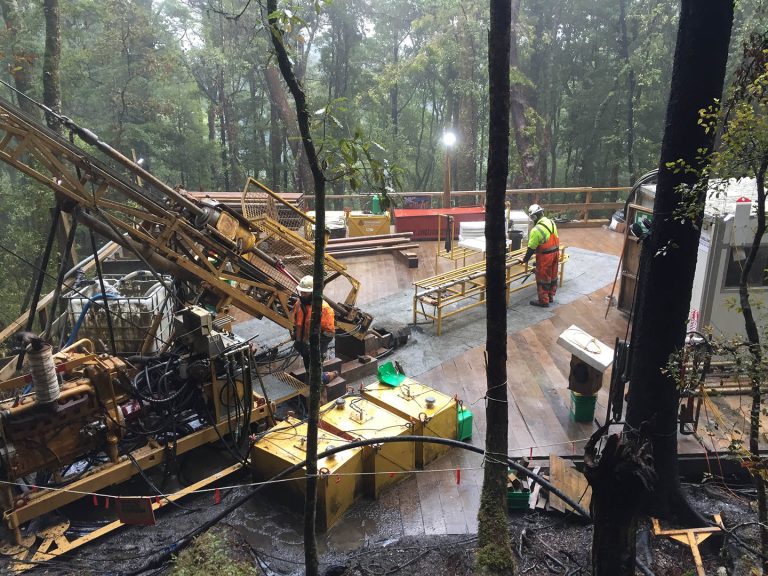
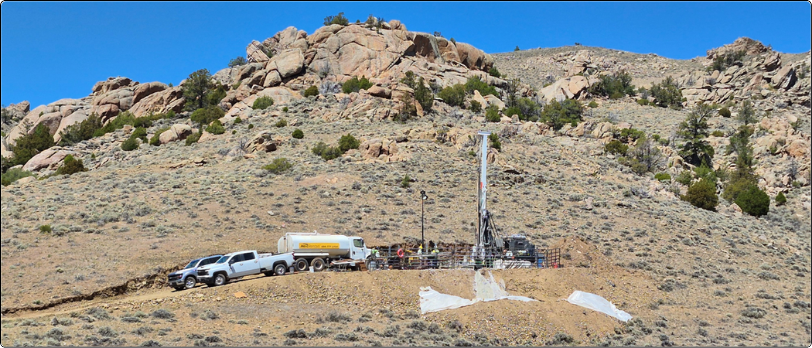
While the Rose project awaits a financing decision, Critical Elements is actively drilling to expand its resource base. A 10,000-metre summer drill programme began in mid-2025 at the Rose West discovery, located less than 10 kilometres west of the main Rose deposit. Results from a spring programme had already expanded the Rose West footprint by more than six times its original extent, and management expects further growth.
Zaunscherb indicated that Rose West would not require a separate permitting process:
"We would not have to go through the full permitting process as a stand-alone project. Rose West would be able to incorporate that in an amendment to the existing Rose permitting."
From a mine planning perspective, management's working assumption is that Rose West material would be incorporated into the Rose mine plan in Years 3-6 of production, allowing for an expanded combined operation which would have a material effect on the project's overall NPV. Grade at Rose West appears comparable to or slightly better than Rose, though Zaunscherb was careful to note that any confirmation awaits the formal resource update expected later in the year.
Beyond Rose West, the company also holds a large land position over the Nemaska structural break, a highly prospective geological feature covering more than 100 kilometres of strike length. Drilling there is planned for later in the year, led by the same exploration manager who identified the Lion Zone polymetallic discovery at the Nisk Joint Venture.
Interview with Eric Zaunscherb, Chairman of Critical Elements Lithium
The Power Metallic Interest: An Often-Overlooked Asset
One of the more distinct elements of the Critical Elements story is its secondary exposure to Power Metallic (TSXV:PNPN). The company optioned its Nisk property to Power Metallic, which subsequently earned an 80% interest in the joint venture by making the Lion Zone polymetallic discovery. Critical Elements retains a 20% carried interest, meaning it bears no exploration expenditure until a feasibility study is delivered - and owns approximately 10 million shares of Power Metallic.
With Power Metallic trading at a market cap of approximately $300 million, Critical Elements' combined interest represents substantial embedded value. Zaunscherb made the case directly to investors:
"I would suggest to you that we see a lot of value in our exposure to Power Metallic, leaving a $2.2 US billion lithium project almost as a free option, a very inexpensive option on lithium."
Current analyst coverage does not appear to fully incorporate the Power Metallic interest into Critical Elements' net asset value calculations, creating what management views as a potential re-rating catalyst as institutional investors engage more closely with the company.
Valuation and Market Positioning
On standard peer comparison metrics, Critical Elements trades at a substantial discount. Management notes a 68% discount to peer averages on a proved and probable reserve basis and a 56% discount on a measured and indicated resource basis. Analysts cover the stock, all with speculative buy ratings and price targets ranging from $0.85 to $1.20 against a current share price of approximately $0.37. The average analyst target implies a current trading price of roughly 0.37 times NAV per share.
The capital structure has been deliberately preserved. With 232 million basic shares outstanding, the company has avoided the dilution that troubled many lithium developers during the recent downturn.
The outstanding question for investors is the timing and structure of project financing. No final investment decision has been made, and the path forward - whether through debt, streaming, equity, or a strategic partner - has not been publicly defined.
Key Takeaways
Critical Elements Lithium occupies a relatively rare position in the current lithium development landscape: a fully permitted, feasibility-stage project in a top-tier jurisdiction, supported by strong commodity economics and a simplified infrastructure situation. The primary uncertainty of how and when the project will be financed is real, but it is the same uncertainty facing most of the sector. What distinguishes Critical Elements is that it has cleared the obstacles that still lie ahead for many peers. The Rose West drilling programme provides near-term news flow that could expand the resource and improve mine economics, while the Power Metallic exposure offers a secondary value driver that appears underappreciated in current valuations. For investors assessing lithium development-stage equities, the combination of permitting completeness, asset quality, and the current discount to NAV makes Critical Elements a name worth monitoring as the sector continues to recover.
TL;DR
Critical Elements Lithium holds a fully permitted, feasibility-complete hard rock lithium project in Quebec with a $2.2 billion NPV and a 66% IRR, currently trading at a steep discount to peers and analyst targets. Active drilling at Rose West is expected to grow the resource base and improve project economics, while an overlooked carried interest in Power Metallic adds significant secondary value. The key catalyst is a financing decision that would advance the project to construction - a step that would likely trigger institutional re-rating.
FAQs (AI Generated)
Analyst's Notes





Subscribe to Our Channel








Stay Informed


