




West Red Lake Gold Intersects 16.16 Grams Per Tonne Gold at Starratt-Olsen, Advancing Madsen Strategy



West Red Lake Gold reports high-grade Starratt-Olsen assays, including 16.16 grams per tonne gold over 1.5 meters, advancing its Madsen Hub and Spoke strategy.
- Hole WRL26-054 intersected 1.5 meters at 16.16 grams per tonne gold, including 0.85 meters at 24.60 grams per tonne gold.
- Hole WRL26-055 returned 4.5 meters at 5.16 grams per tonne of gold, including 1.5 meters at 10.94 grams per tonne of gold.
- The 4,100-meter, 12-hole surface program is the first focused drilling of Starratt-Olsen’s main historic mining areas since operations ended in the 1950s.
- Historic drilling and sampling support an interpreted 300-by-400-meter panel with grades potentially exceeding 10 grams per tonne of gold, while the main ore shoot remains open beyond a depth of 440 meters.
- Seven drillhole assays remain pending, while West Red Lake Gold evaluates access from Madsen’s 16 Level for potential underground drilling of Starratt’s down-plunge extension.
Company Overview
West Red Lake Gold Mines Ltd. (TSXV: WRLG | OTCQX: WRLGF) is a Canadian gold producer and developer advancing a high-grade, district-scale opportunity in the Red Lake district of Ontario. The Company's flagship Madsen Mine has recently achieved commercial production and is positioned as the central hub of a growing multi-asset platform. The Company controls a 47-square-kilometer land package in one of the world's most prolific mining districts, which has historically produced over 20 million ounces of gold from high-grade systems. West Red Lake also owns the Rowan Property in Red Lake, covering 31 square kilometers and including three past-producing mines, which represents a key source of future production growth.
Starratt Drilling Highlights
Hole WRL26-054 intersected 1.5 meters at 16.16 grams per tonne gold, from 121.15 meters to 122.65 meters, including 0.85 meters at 24.60 grams per tonne gold, from 121.15 meters to 122.00 meters. Hole WRL26-055 intersected 4.5 meters at 5.16 grams per tonne gold, from 114.0 meters to 118.5 meters, including 1.5 meters at 10.94 grams per tonne gold from 116.5 meters to 118.0 meters.
Vice President of Exploration of West Red Lake Gold, Will Robinson, commented:
"The results received from this first pass of modern drilling at the past-producing Starratt-Olsen Mine are highly encouraging. We have successfully demonstrated that Madsen-style mineralization of notable grades and thickness remains proximal to the historically mined areas. Importantly, Starratt could form part of the broader strategy to evaluate and advance multiple known gold deposits surrounding the Madsen Mine and mill, delivering on our Hub and Spoke model. In addition, several other existing targets have seen limited modern exploration. As we progress, we are developing a robust pipeline of both operations and near-term deposits, all feeding the mill at Madsen. With Madsen in production, Fork advancing toward inclusion in the 2027 production profile with ramp development, and Rowan in the permitting stage and being evaluated alongside Madsen in a proposed combined Pre-Feasibility Study, Starratt represents another opportunity to assess the potential of this broader mineralized system to the southwest along the Madsen structural trend. This initial program was designed to test the upper portions of the Starratt system from surface, and our team sees significant potential to continue exploring the main Starratt ore shoot at depth. Gold grades in excess of 10 grams per tonne gold from numerous underground drilling and chip samples collected near the shaft bottom at Starratt suggest this system continues down-dip. This high-grade panel is further reinforced by a 2016-era drillhole that returned 2 meters at 27.3 grams per tonne gold and 3 meters at 104.1 grams per tonne of gold, with numerous occurrences of visible gold. The exploration team is already looking into ways we could potentially access this area from the Madsen 16 Level exploration drive, which was advanced towards Starratt at 800 meters depth during the late 1930's and gets within 200 meters of the main down plunge extension."
Starratt Surface Drilling Program Overview
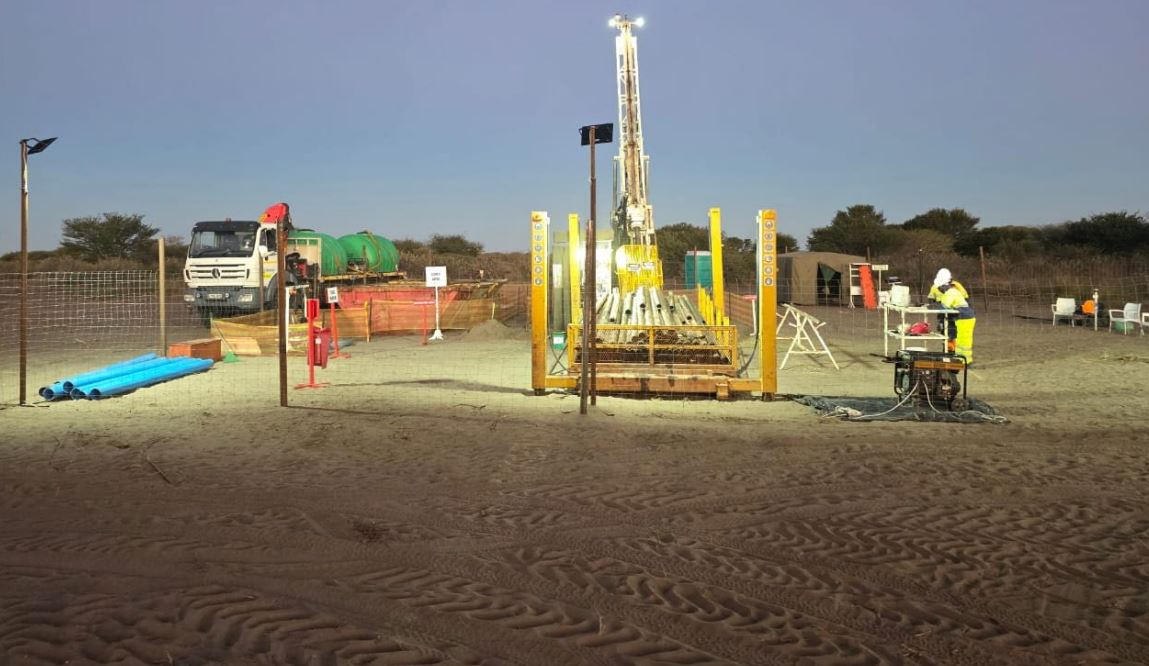
The drill program at Starratt consisted of 4,100 meters of oriented HQ-diameter diamond drilling across 12 holes. Targeted areas focused on up- and down-plunge extensions to previously mined panels at Starratt, investigating for unmined portions of previously defined mineralization and testing for new sub-parallel lenses. This program marked the first focused effort in drill testing the main areas of historic mining at Starratt since mining ceased in the 1950's.
Starratt is the second-largest historical gold producer on the Madsen property, with approximately 164,000 ounces produced between 1948 and 1956 at an average grade of 6.17 grams per tonne.
Down-Plunge Extension & Underground Access
While the 2026 surface drilling program at Starratt focused on the shallower portions of the deposit, the West Red Lake Gold team sees excellent potential at depth on the main ore shoot, which plunges moderately to the northeast at a similar orientation as the Austin and South Austin zones at Madsen. Assay results from historic underground drilling and channel sampling at the historic levels suggest that the main ore shoot previously mined remains intact and open for expansion beyond 440 meters depth.
The historic assays help to inform a panel of mineralization with a gold potential greater than 10 grams per tonne, approximately 300 meters by 400 meters. This interpretation has been further validated in a 2016-era drillhole where assays returned 2 meters at 27.3 grams per tonne of gold and 3 meters at 104.1 grams per tonne of gold within this down-plunge extension area. This impressive intercept displays classic Madsen-style mineralization often associated with high gold grades, characterized by strong silicification, biotite alteration, pyrrhotite and pyrite, diopside veining, and multiple instances of visible gold.
Additionally, there was an exploration drive extended from Madsen towards Starratt from the 16 level at a depth of 800 meters during the late 1930's that came within 200 meters of the down-plunge extension of the ore shoot at Starratt. The Madsen Mine is currently dewatered to 18 Level, and plans are already being prepared to access the 16-level exploration drift for rehabilitation, geological mapping, sampling, and potential future diamond drilling programs targeting the down-plunge extension of the main Starratt ore shoot at depth. Drilling the Starratt deep extension from underground would provide an advantageous drilling platform, requiring much shorter holes and higher-confidence drilling angles than from the surface.
Quality Assurance
Oriented HQ-sized drill core from the Starratt Mine was logged, photographed, and sampled in 0.5 to 1.5-meter intervals by trained geologists at the Madsen Mine core facility. Standard reference materials and blanks were inserted at a target rate of 10%. The core was cut lengthwise along a geologist-selected line, with the same side sampled consistently to reduce bias. Visible-gold intervals received additional supervision and saw-cleaning procedures. Sealed samples were transported to ISO/IEC 17025:2017-accredited AGAT Laboratories in Thunder Bay, Ontario, where they were prepared and analyzed using fire assay with an inductively coupled plasma optical emission spectrometry finish. Selected samples also underwent four-acid digestion and multi-element analysis.
Next Steps
Assays from the remaining 7 holes of the 12-hole Starratt surface drilling program are pending. The exploration team is evaluating potential access to the down-plunge extension of the main Starratt ore shoot from the Madsen 16 Level exploration drive, which would require rehabilitation, geological mapping, and sampling ahead of any future underground diamond drilling program.
FAQs (AI-Generated)
Analyst's Notes





Subscribe to Our Channel








Stay Informed






















