What Queensway's Environmental Preview Report Means for New Found Gold's Timeline



Newfoundland requires an Environmental Preview Report for New Found Gold's Queensway Phase 1. With funding in place, Pine Cove is the critical path to Q4 2027 ore.
- The Minister of Environment, Conservation and Climate Change for Newfoundland and Labrador has required an Environmental Preview Report (EPR) for New Found Gold's proposed Queensway Phase 1.
- The requirement follows the company's environmental registration, submitted April 30, 2026, which started the environmental assessment process on May 7, 2026.
- The company will receive EPR guidelines within 60 days of the July 3, 2026, decision letter, after which the completed EPR faces a 35-day public review and a ministerial decision within 45 days of submission.
- With Queensway Phase 1 fully funded, the Pine Cove mill conversion and expansion remains the critical path to our timeline, not development and permitting at Queensway, with the first Queensway ore to mill targeted for the fourth quarter of 2027.
- New Found Gold is targeting first material to the Pine Cove mill in the fourth quarter of 2027 and Phase 1 commercial production in the second half of 2028.
What Has Happened
New Found Gold (TSX: NFG | NYSE American: NFGC) has been notified by the province of Newfoundland and Labrador that its proposed Queensway Phase 1 gold development requires an Environmental Preview Report (EPR). The Minister of Environment, Conservation and Climate Change, the Honourable Chris Tibbs, set out the requirement in a decision letter dated July 3, 2026, following regulatory and public review of the environmental registration for the Queensway Gold Project that the company submitted in April 2026. The requirement adds a defined, time-boxed review stage to the project's path toward construction permits.
How the Environmental Assessment Process Works
The EPR sits inside a sequence with fixed statutory windows. New Found Gold submitted its Queensway Phase 1 environmental registration to the Environmental Assessment Division of the provincial Department of Environment and Climate Change on April 30, 2026, which started the environmental assessment process on May 7, 2026. The July 3 decision letter is the point at which the Minister determined that an EPR is required.
Under provincial legislation, the company will receive guidelines for completing the EPR within 60 days of the letter. Once New Found Gold submits the completed EPR, it is subject to a 35-day public review, after which the Minister must issue a decision within 45 days of submission, a window the Minister can extend by 14 days under the legislation, as happened with the initial submission.
Chief Executive Officer of New Found Gold, Keith Boyle, frames the company's position on the review:
"We thank the Minister and his team at the Environmental Assessment Division for their careful review of the Queensway Phase 1 environmental registration and look forward to submitting the EPR and responding to comments received during the public review, with the objective of release from the environmental assessment process."
Release from that process is the step that allows the company to apply for early works and construction permits for Phase 1.
Why Funding Is Not the Constraint
With the review stage defined, the remaining question for Queensway Phase 1 is regulatory rather than financial. New Found Gold holds a 100% interest in Queensway and describes Phase 1 as fully funded. As set out in the Queensway preliminary economic assessment (SLR Consulting, effective June 30, 2025), Phase 1 carries an initial capital cost of C$155 million for average annual production of 69,300 ounces of gold at an all-in sustaining cost (AISC) of US$1,282 per ounce, drawn from 1.15 million tonnes mined at an average grade of 9.64 grams of gold per tonne. The assessment is preliminary and does not define any mineral reserves.
Boyle tied the company’s progress to the its planned graduation to the Toronto Stock Exchange, which received conditional approval in June 2026:
"As we move toward commercial production at our Hammerdown Gold Project and continue to advance our fully funded Phase 1 development at our flagship Queensway Gold Project, we believe this graduation will provide greater visibility, liquidity, and an expanded capital markets presence, supporting our objective of building a leading Canadian gold mining company as we continue to create value for New Found Gold shareholders."
What Else Is Advancing in Parallel
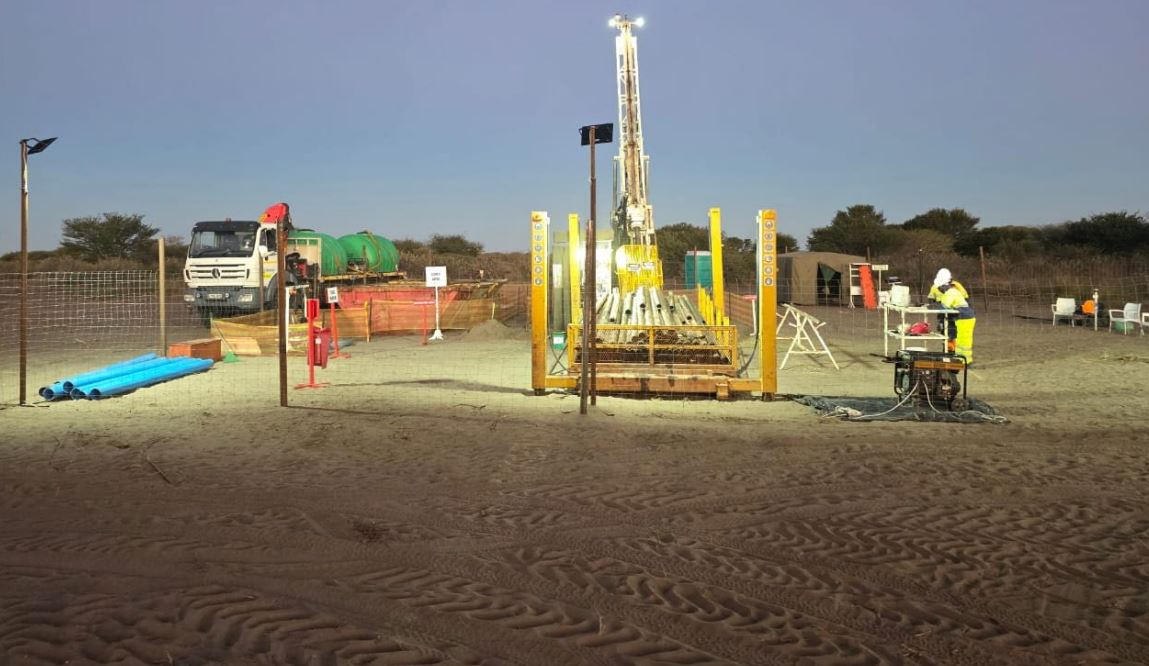
While the environmental review runs, New Found Gold is progressing with the engineering and processing work that Phase 1 depends on. Queensway Phase 1 engineering, procurement, and construction management (EPCM) work, which began in the first quarter of 2026, is underway, alongside detailed engineering, early works, and geotechnical drilling at the Pine Cove mill. The company has received the permit amendment to convert the Pine Cove circuit to gravity-carbon-in-leach, a processing route suited to recovering coarse gold, and will separately apply to expand the mill to 1,400 tonnes per day.
An updated mineral resource estimate and an updated technical report are also in progress, with the company targeting the technical report in the second half of 2026. That report is set to include the updated resource estimate, designs for Phases 1, 2, and 3, capital and operating cost estimates, and financial analysis.
These workstreams are structured so that the company can move into construction once the project is released from the environmental assessment process.
What to Watch Next
The near-term milestones are procedural. The EPR guidelines, the completed report, the public review, and the Minister's decision all sit inside the statutory windows already running from the July 3 letter. In parallel, the company is targeting the updated technical report in the second half of 2026.
Beyond the review, New Found Gold is targeting first Queensway Phase 1 material to the Pine Cove mill in the fourth quarter of 2027 and Phase 1 commercial production in the second half of 2028. Whether those dates hold depends on the project clearing the environmental assessment process within the windows allowed by the statutory timeline.
Analyst's Notes





Subscribe to Our Channel







Stay Informed