What IsoEnergy's Strongest South Trend Radioactivity to Date Means for Hurricane's Growth Story


IsoEnergy's summer drilling extended radioactivity 600 meters along Hurricane's South Trend, the strongest to date. Assays will set 2027 targets.
- IsoEnergy Ltd. completed its 2026 summer drill program at the Larocque East project, totaling 10,159 meters across 26 holes, bringing the year-to-date total to 16,963 meters in 43 holes.
- Eighteen of the 26 summer holes returned intervals at or above the 350 counts per second (CPS) cutoff over 0.5 meters, and three holes exceeded 35,000 CPS, the strongest radioactivity recorded on the South Trend to date.
- Elevated radioactivity extended across a 600-meter strike length, including step-out holes located outside the currently defined Hurricane deposit footprint.
- The Hurricane deposit hosts a mineral resource of 48.6 million pounds of uranium oxide at a 34.5% Indicated grade and 2.7 million pounds of uranium oxide at a 2.2% Inferred grade, located approximately 40 kilometers northwest of the McClean Lake mill.
- Geochemical assay results from SRC Geoanalytical Laboratories are pending and will determine how IsoEnergy scopes its 2027 drill targets.
What Has Happened
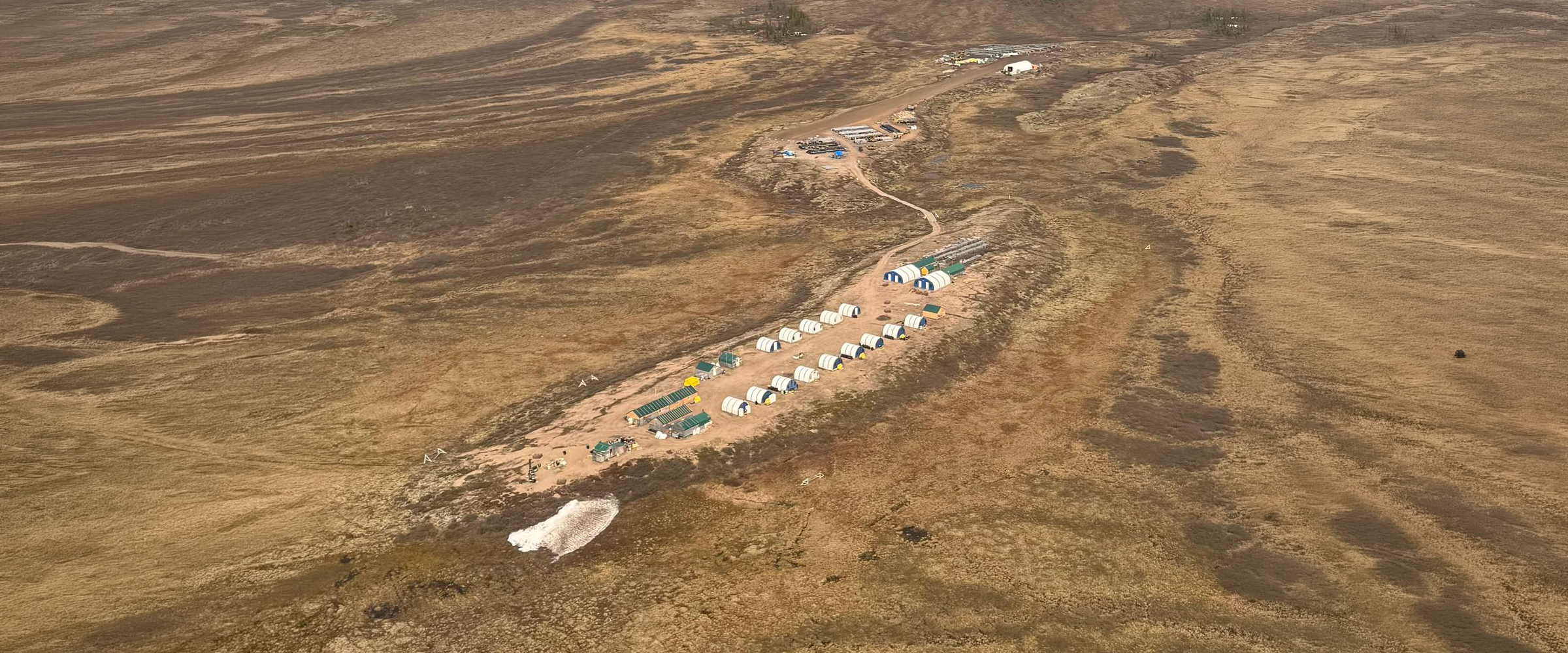
IsoEnergy Ltd. (NYSE American: ISOU | TSX: ISO) has completed its 2026 summer drill program at the Larocque East project in Saskatchewan's Athabasca Basin, reporting the strongest radioactivity yet recorded on the Hurricane deposit's South Trend. The program was originally budgeted at 8,000 meters across 20 holes but was expanded to 10,159 meters across 26 holes after early winter, and summer results justified additional follow-up drilling. Combined with the winter campaign, the company has drilled 16,963 meters in 43 holes at Larocque East during 2026.
Of the 26 summer holes, 18 returned intervals at or above the 350 counts per second (CPS) cutoff over a 0.5-meter interval, 13 returned 1,000 CPS or greater, and three exceeded 35,0CPSCPS. Radioactivity is measured on drill core using a handheld spectrometer and reported as total counts per second, a proxy for uranium content that does not always correlate directly with laboratory assay grades. All samples from the summer program have been submitted to SRC Geoanalytical Laboratories, and geochemical results are pending.

Where the Drilling Extended the System
The most consequential result is the geographic spread of elevated radioactivity across a 600-meter strike length along the South Trend, rather than any single intercept. Two step-out holes bracketing a previously reported winter intercept, which had assayed at 4.21% uranium oxide over 3.5 meters including 11.6% uranium oxide over 1.0 meter, returned some of the strongest radioactivity of the program, in the range of 11,000 to 14,000 CPS over 3.0 to 3.5 meters, with peak readings above 35,000 CPS over intervals of 0.5 to 1.0 meters. One of the two sits outside the existing deposit boundary; the other falls within the deposit footprint, in an area previously interpreted as low-grade, an interpretation the company says will be revisited once assays are available. Either way, the winter intercept's grade gives both new holes a reference point ahead of their own assay results.
Of the 26 summer holes, 18 returned intervals at or above the 350 counts per second (CPS) cutoff over a 0.5-meter interval, 13 returned 1,000 CPS or greater, and three exceeded 35,000 CPS. That distance places strongly elevated radioactivity well beyond the currently modeled resource, on a structure the company tested at multiple points along its length. Geologists targeted three interpreted South Trend structures, the J, K, and L faults, with the L fault receiving the bulk of summer drilling based on the strength of results already returned from it earlier in the year.
Why Assays, Not Radioactivity, Will Set 2027 Targets
Vice President Exploration of IsoEnergy, Dan Brisbin, addressed the summer campaign:
"Our Larocque project team and contractor partners safely completed an expanded summer program despite a temporary demobilization in June due to a nearby wildfire. Nearly half of the holes drilled in 2026 intersected elevated radioactivity. Multiple holes along the Hurricane South Trend returned strongly elevated results, including thirteen of the twenty-six summer holes at 1,000 CPS or greater, both inside the Hurricane deposit footprint and along strike of it. Geochemical results are pending, and those assays, together with the geological observations from drill core, will shape how we define targets for 2027."
The geological model for the South Trend is still being updated, and the 2027 target definition depends on assay data that has not yet been returned. The radioactivity results identify where the structural system is anomalous. The pending assays will determine whether that translates into resource-grade uranium oxide mineralization comparable to that already defined at Hurricane's core.
Why the Basin Context Matters
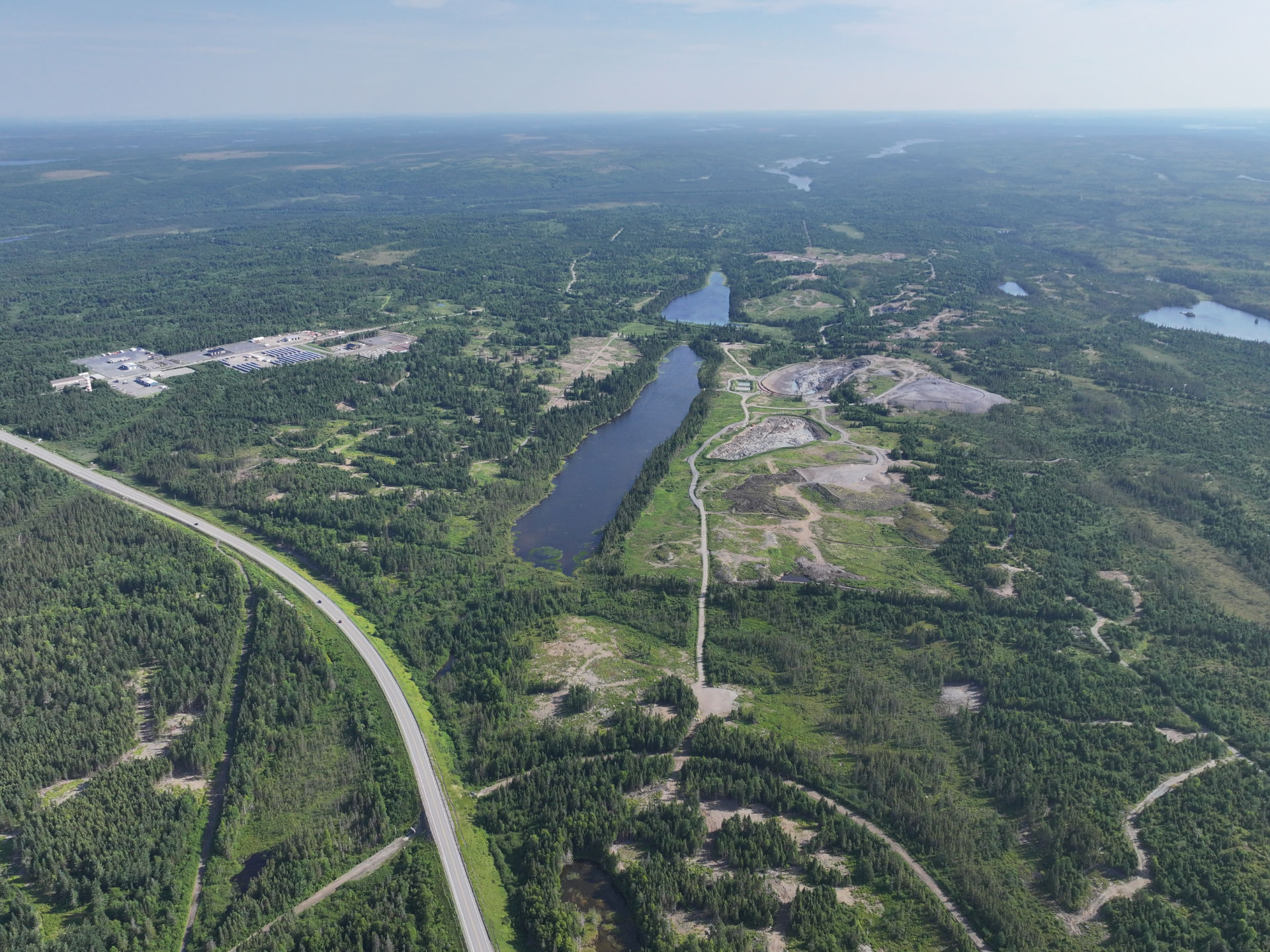
Larocque East sits on the Larocque Trend, the same structural corridor that hosts the Cameco and Orano Dawn Lake joint venture (JV) immediately to the west. Hurricane's mineralization lies at a depth of approximately 325 meters, with no water cover at the surface, supporting efficient exploration and future development optionality. The project sits roughly 40 kilometers from the operating McClean Lake mill.
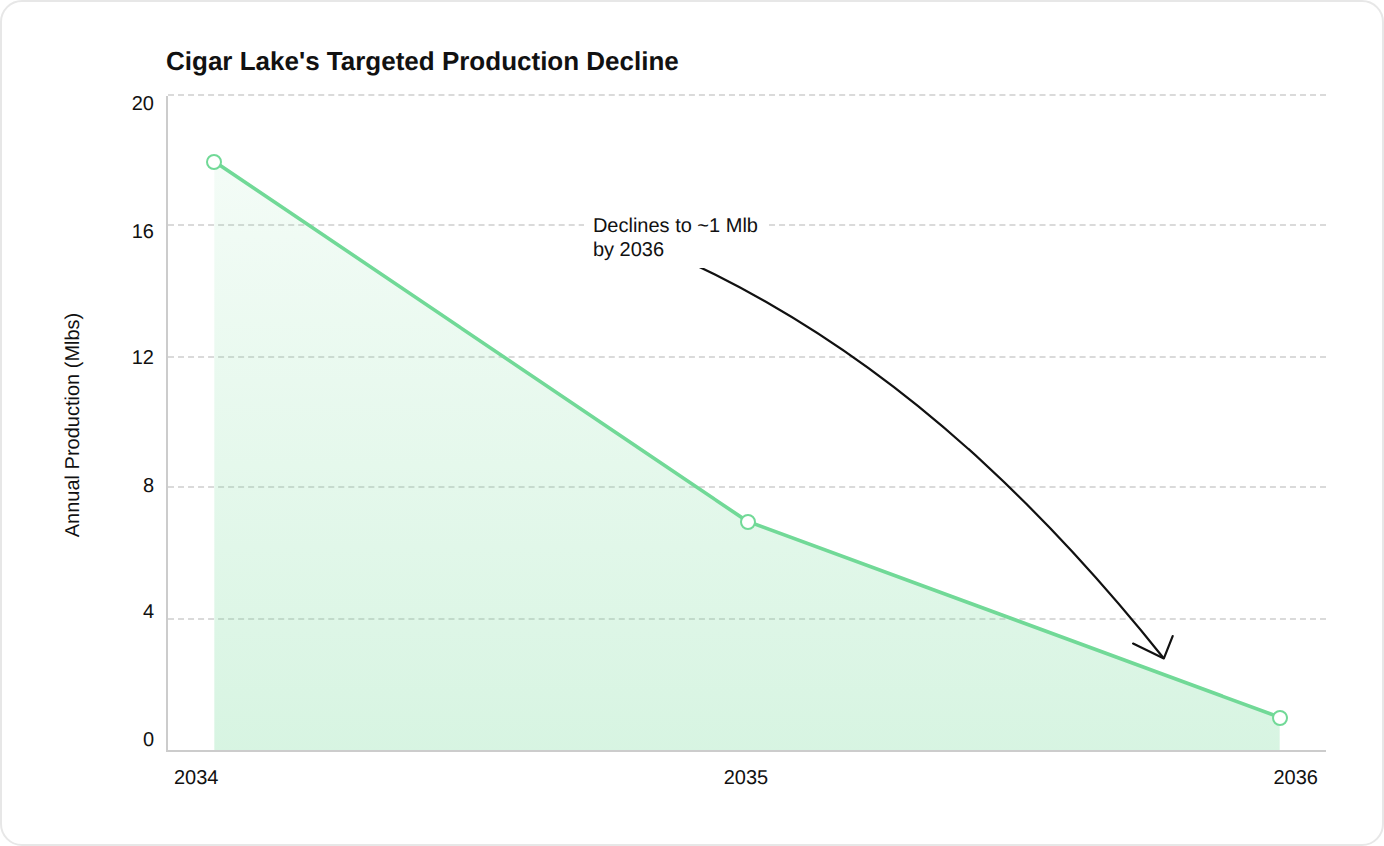
Cameco's Cigar Lake mine, the basin's largest current producer, is targeting approximately 18 million pounds of annual production before 2034, declining to roughly 7 million pounds in 2035 and about 1 million pounds by 2036, according to figures IsoEnergy cites from Cameco's 2023 Cigar Lake technical report. That production decline is the mechanism behind IsoEnergy's positioning of Hurricane as a candidate to replace displaced Athabasca Basin supply. A resource base that grows through strike extension, evidenced by radioactivity intersected up to 510 meters from the current footprint, would carry more weight toward that thesis than incremental grade upgrades confined to the existing 48.6 million pounds Indicated estimate, subject to assay confirmation.
Radioactivity readings, even at the elevated levels seen in the strongest step-out intercepts, are indicative rather than definitive, since CPS values may not correlate with uranium chemical assays. An area previously interpreted as being within a low-grade shell in the southernmost part of the deposit footprint, where one of the step-out holes was drilled, is flagged by the company as subject to revision once geochemical data are available. Converting a widened zone of interest into an expanded, classified mineral resource requires assay confirmation and subsequent technical work, neither of which has occurred yet.
Residual Risks Beyond the Assay Result
General mineral-exploration practice suggests several additional considerations that investors should weigh independently of the company's own materials. A favorable assay is a necessary condition for the extension thesis, not a sufficient one: radiometric anomalies of this strength can reflect narrow or discontinuous mineralization rather than the wide, high-grade zones that define Hurricane's existing resource, so continuity between step-outs and true thickness across the intersected intervals would typically remain unconfirmed until further infill drilling closes the gaps between holes.
Even where assays return favorable uranium oxide grades, converting a step-out intercept into a classified Indicated or Inferred resource generally requires additional drilling density, a supporting geological model, and a formal resource update prepared to National Instrument 43-101 standards, a multi-quarter process under standard Canadian disclosure practice rather than a single data release. Shallower depth than much of the basin's other mineralization is a genuine cost advantage relative to deeper Athabasca deposits, but development at Larocque East would still require its own capital, permitting, and processing arrangements, none of which this drill result addresses directly.
Key Takeaways for Investors
The summer program's significance lies in geography rather than grade: radioactivity now spans a 600-meter strike length on the South Trend, with step-out holes 75 to 510 meters beyond the existing footprint returning some of the strongest readings drilled at Hurricane to date, indicating the mineralized system extends past the boundaries of the current 48.6 million pounds Indicated uranium oxide resource, pending assay confirmation. That matters against the backdrop of Cameco's targeted Cigar Lake production decline, from approximately 18 million pounds annually before 2034 to about 1 million pounds by 2036, a supply gap that a small number of tier-one Athabasca Basin assets, Hurricane among them, are positioned to help address.
The catalyst that converts this drilling into an investment-relevant outcome is still pending. Geochemical assay results from SRC Geoanalytical Laboratories, expected to inform the 2027 drill program, will determine whether the radioactivity translates into resource-grade uranium oxide intercepts consistent with what is already defined at Hurricane's core. With cash and equivalents of C$76.2 million as of June 30, 2026, IsoEnergy has the balance sheet capacity to continue drilling at Larocque East ahead of any formal resource update, but the assay data, not the radiometric results alone, will validate the extension thesis.
FAQs (AI-Generated)
Analyst's Notes





Subscribe to Our Channel










Stay Informed