Atomic Eagle's Zambia Strategy Is Taking Shape as Exploration & Permitting Converge


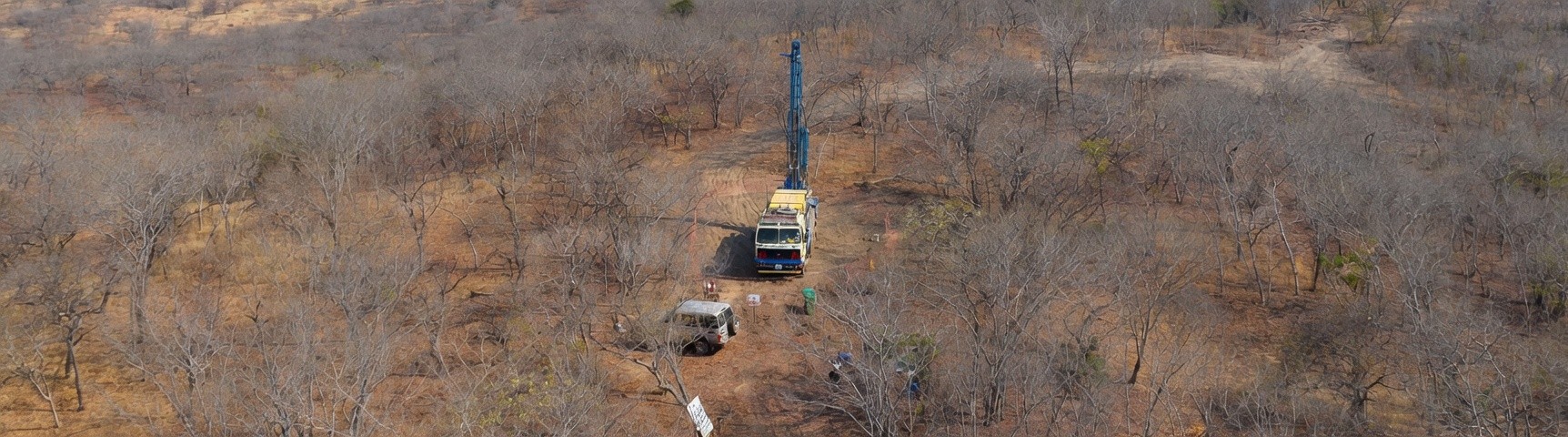
Atomic Eagle is combining permitting and exploration at Muntanga to build a scalable uranium platform in Zambia, lowering risk while expanding growth optionality.
- Atomic Eagle's June 2026 announcements pair Chisebuka drill results with approvals for the Environmental and Social Impact Assessment (ESIA) and Resettlement Action Plan (RAP), marking a shift toward a district-scale uranium strategy in Zambia.
- Permitting progress at Muntanga lowers regulatory risk for future satellite discoveries, reinforcing rather than running in parallel with ongoing exploration.
- Chisebuka drilling shows continuity between mineralised zones, demonstrating a repeatable model for converting targeted drilling into resource growth.
- Muntanga North and Namakande are being tested next, with management targeting a larger step change in resource size beyond Chisebuka.
- The binding Sitwe option adds low-cost optionality, positioning Atomic Eagle as a multi-asset uranium consolidator within Zambia.
What Has Happened
Atomic Eagle Limited (ASX: AEU | OTCQX: AEUXF) issued two announcements in June 2026 that mark a shift in how its Muntanga Uranium Project should be read by investors. On June 16, 2026, the company reported extended high-grade mineralisation at its Chisebuka target, alongside 2 drill rigs moving to the Muntanga North exploration target. On June 24, 2026, it confirmed approval of the Environmental and Social Impact Assessment (ESIA) with a "No Objection" approval of its Resettlement Action Plan (RAP) from the Office of the Vice President, Resettlement Division.
Individually, these are routine project milestones. Together, they signal something more structural: a permitting pathway that is now proven and a district that is still being defined. That combination is the basis for the strategy Atomic Eagle's management has been describing, one in which Muntanga functions less as a single deposit and more as the anchor of a wider Zambian uranium platform.
From Single Deposit to District Platform
The strategic case for Atomic Eagle rests on a distinction that is easy to miss in the news flow: permitting and exploration are not running as parallel workstreams; they are reinforcing each other. A development-ready flagship asset changes the economics of every subsequent discovery on the same tenure package, because a proven regulatory pathway, once established, does not need to be rebuilt from scratch for each new zone. The ESIA and RAP approvals apply directly to the Muntanga and Dibbwi East deposits underpinning the existing feasibility study, but they also function as a template; the government relationships, baseline studies and resettlement framework already exist, lowering the marginal cost and timeline of permitting future satellite deposits as they mature.
This is the mechanism behind Chief Executive Officer Phil Hoskins' framing of Muntanga as development-ready. The value of that status is not that construction is imminent; it is that the project now carries a materially lower regulatory risk premium than a comparable discovery-stage uranium story, while still holding the exploration upside of one. Hoskins was explicit that this is a sequencing decision rather than a change in strategy:
“We are about resource growth and updating studies and going down the development from there, but nonetheless it's great to be able to tick off those critical de-risking milestones.”
The company's own resource growth trajectory illustrates why this matters. The resource base has already expanded 24% to 58.8 million pounds of uranium oxide, growth achieved before the current Chisebuka and Muntanga North programs are even fully reported. A permitted, de-risked platform means each incremental pound added through drilling is being added to a project with a clearer path to eventual development, rather than to a standalone exploration asset still awaiting its first regulatory test.
Chisebuka: The District Model in Practice
Chisebuka is the clearest evidence so far that the district-scale thesis is more than a slide in a presentation. The target already hosted an inferred resource of 9.7 million pounds of uranium oxide before the 2026 drill program began; extension drilling has since grown both a northern and a south-west high-grade zone, with continuity demonstrated between the south-west zone and the original resource area. That continuity is the operative detail for investors; it is what allows previously separate mineralised zones to be modelled as a single, larger deposit rather than a collection of disconnected pods.
Hoskins, describing the same drilling, put the early results in blunt terms:
“The first 13 drill holes from the program almost all hit mineralisation where we expected.”
A reverse circulation program and a diamond drilling campaign targeted for the Fourth Quarter of 2026 are still to confirm these results against assay and to deliver metallurgical test work. But the strategic significance of Chisebuka is less about its final resource figure and more about what it demonstrates: that modest, targeted drilling on underexplored ground within an already-permitted tenure package can convert quickly into resource growth, a repeatable pattern rather than a one-off result.
Multi-Target Sequencing: Where the Scale Comes From
If Chisebuka demonstrates the model, Muntanga North and Namakande are where management expects the model to be tested at scale. Ground radiometric surveys are advancing across both target areas, with wide-spaced exploration drilling underway at Muntanga North and drill testing at Namakande scheduled for the Third Quarter of 2026. Hoskins has framed these targets, rather than Chisebuka, as the more likely source of a step change in resource size, citing an exploration target of an additional 40 to 100 million pounds of uranium oxide on top of the existing resource, which the company's geologists put the total size of the opportunity at between 100 and 150 million pounds.
The sequencing itself is a strategic choice worth noting: near-term, lower-cost drilling at known targets like Chisebuka funds resource growth and validates the exploration model, while capital and rigs are simultaneously directed at the larger, less-defined targets where the bigger discoveries are expected. It is a portfolio approach to exploration within a single project area, one that spreads discovery risk across multiple targets rather than concentrating it in a single deposit.
Portfolio Optionality: Sitwe & Beyond
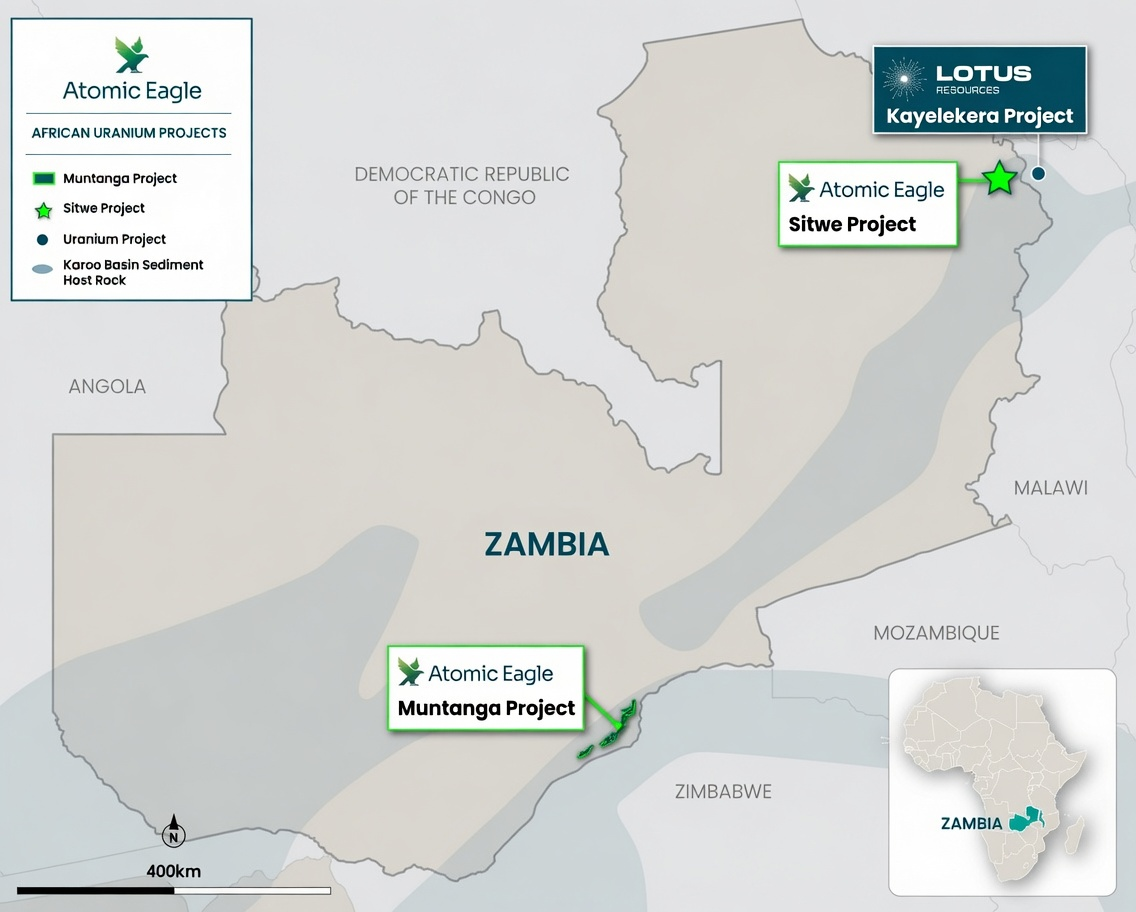
The district thesis extends beyond Muntanga's own licence boundary. Atomic Eagle holds a binding option agreement to acquire 100% of the Sitwe uranium project, located in the Lunagwa Valley of north-eastern Zambia, structured as US$200,000 of exploration expenditure to earn the right to acquire the asset for US$400,000. It is a low-cost entry into a second, geologically distinct uranium target within the same jurisdiction, adding a further call option to the platform without diverting capital from the core Muntanga program.
Combined with a licence package spanning 4 mining licences and 2 exploration licences across 1,136 square kilometres, and an ESIA approved on June 4, 2026 following submission on September 22, 2025, the Sitwe option reflects a company positioning itself as Zambia's most advanced uranium consolidator rather than a single-asset developer. That positioning is reinforced by Zambia's 3rd-place ranking in Africa for investment attractiveness and policy perception in the Fraser Institute Survey, which the company cites directly in its permitting release as jurisdictional support for the broader strategy.
What to Watch Next
The near-term catalysts worth tracking are less about individual drill results and more about whether they continue to validate the platform thesis. Results from Muntanga North's wide-spaced drilling will indicate whether the larger-scale targets can convert into resource tonnage, as Chisebuka has. Namakande drill testing, following the Third Quarter of 2026 radiometric surveys, will show whether the exploration model extends to a third target area within the same permitting envelope.
The diamond drilling program in the Fourth Quarter of 2026, and any resulting update to metallurgical assumptions or the existing feasibility study, will be the first indication of how new discoveries feed back into the project's development economics. An updated mineral resource estimate (MRE) incorporating Chisebuka and any Muntanga North or Namakande results would be the clearest test yet of whether Atomic Eagle's district-building strategy is translating exploration success into the larger-scale, de-risked platform management has been describing.
FAQs (AI-Generated)
Analyst's Notes





Subscribe to Our Channel




.jpg)


Stay Informed