




Cobra Cut One Planned Hole & Logged Copper to 300 Metres


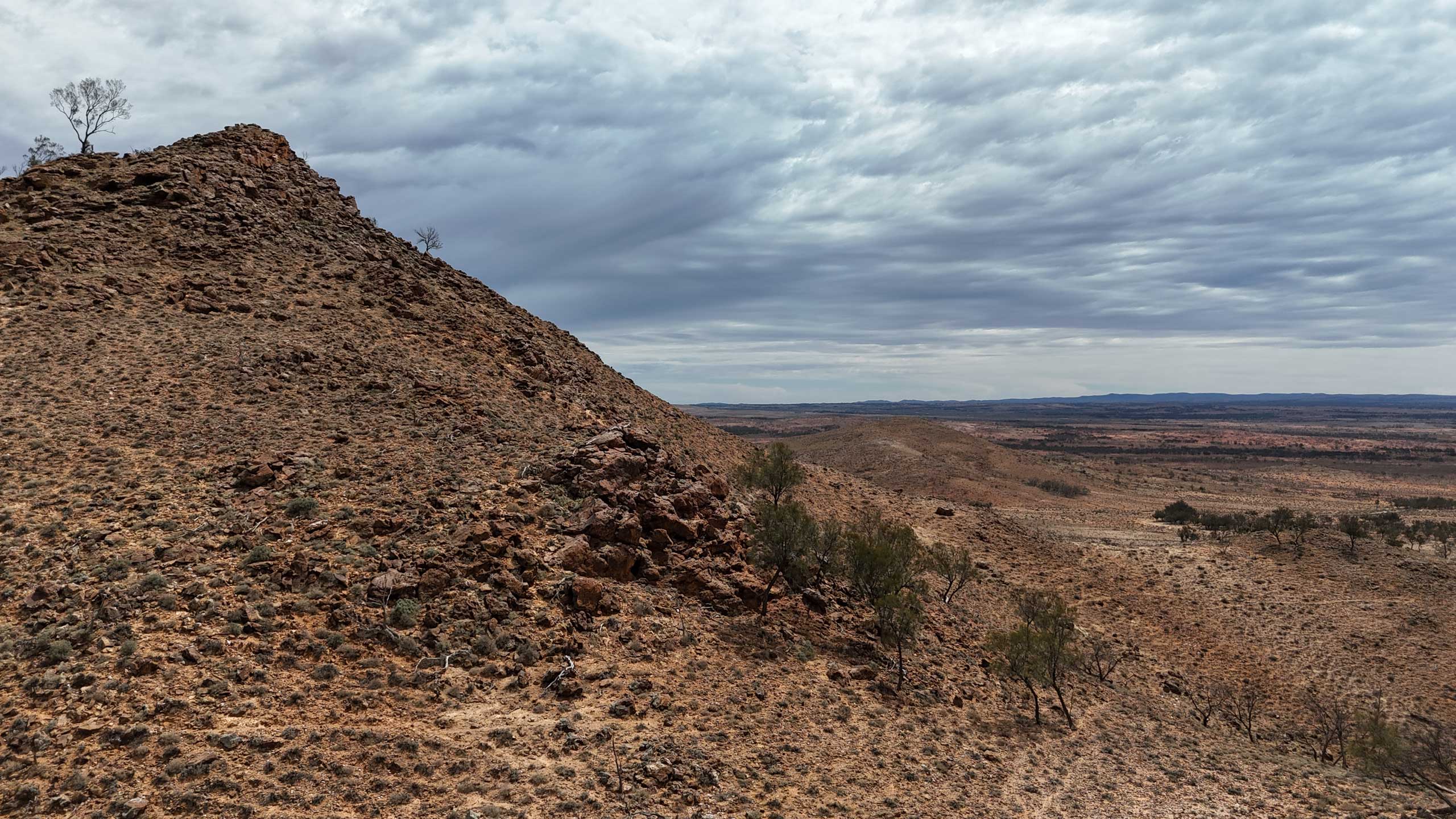
Cobra dropped a second porphyry hole at Manna Hill, drilled 2 skarn holes deeper than planned, and now faces Wudinna milestones in the same two quarters.
- Cobra planned up to 1,800 metres (m) of diamond drilling at Manna Hill and drilled slightly less than 1,500 m.
- A second hole at a combined chargeability and resistivity target was dropped after the first returned heavy pyrite.
- Those metres went into 2 skarn holes instead and carried observed mineralization in one zone to 300 m depth.
- Copper oxide found unexpectedly to the south has no established width yet, and a September drilling program is targeting the true scale of the system.
- Wudinna's maiden Mineral Resource Estimate and scoping study are both targeted for the third quarter of 2026.
Cobra Resources (LSE: COBR) went into its 2026 diamond drilling program at the Manna Hill copper project with two objectives and up to 1,800 metres (m) available to test them. It came out having drilled slightly less than 1,500 m, one objective abandoned after a single hole. Management says the metres freed up were used to drill 2 of the program's skarn holes deeper instead of testing the second target. The company came away with more depth in ground it already understood, and 1 of the 2 holes it had planned at the porphyry target.
The 2026 Manna Hill Diamond Program
The program was built to answer two separate questions: whether a porphyry source lies beneath the known skarn, and how far the skarn's own mineralization continues at depth. Geochemistry and geophysics supported the first, the diamond metres were allocated across both, and follow-up drilling was planned to chase strike extensions of the skarn.
Two holes were intended at a target where a chargeability anomaly and a resistivity anomaly coincide. Management says the first was drilled to about 440 m and hit a potassic zone carrying lighter chalcopyrite, but the intensity of the pyrite in it led the company to judge the target too pyrite-rich for the system it was chasing. The second hole, planned at 500 m, was never drilled.
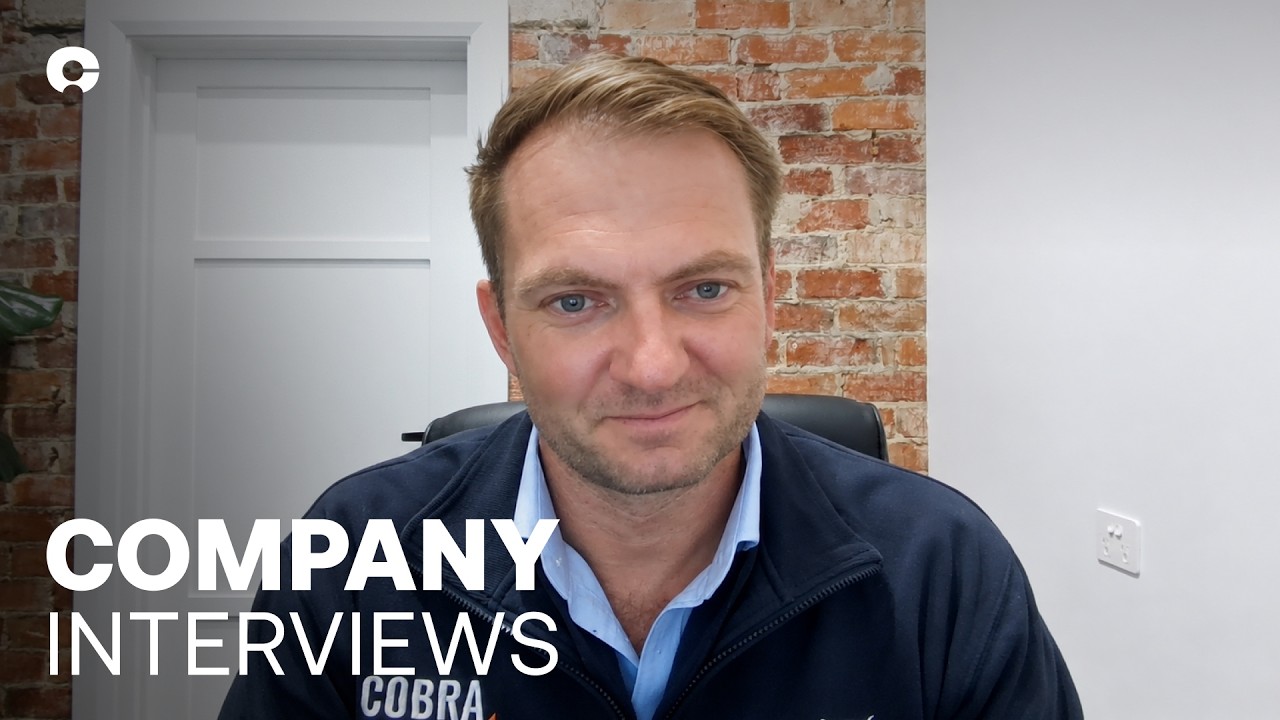
Managing Director of Cobra Resources, Rupert Verco, traces the metre count to a risk decision, not a shortfall:
"Look, I suppose that's what we do, we need to manage risk and reward appropriately."
The Redirected Metres & Depth Continuity
The redirected metres went into 2 of the program's skarn holes, drilled deeper than planned. What they encountered changes the reading of the system's size, not its grade, because the laboratory assays were still outstanding when the drilling was described.
Management says 1 of the deepened holes passed through chalcopyrite mineralization inside the skarn, into a potassic alteration zone of biotite schist, and then into a change closer to the heat source, identified as a monzogranite and a diorite intrusion. In that alteration halo, the copper mineral changes from chalcopyrite to bornite. The 2 reverse circulation holes above it had returned 86 m at 0.60% copper and 0.14 grams per tonne (g/t) gold from 18 m depth, and 74 m at 1.02% copper and 0.25 g/t gold from 70 m depth, at an inferred true width of 70 m. Cobra says observed mineralization in this zone now extends to 300 m depth as depth continuity of sulfides, not the shallow oxides defined by earlier drilling. These remain visual observations, and management's stated optimism about them is cautious pending laboratory results.
Verco reads the redeployed metres as evidence that the mineralized body does not stop at the skarn:
"So, this is showing us that the mineralization system extends beyond the skarn and into a much greater porphyry system. So, it's really encouraging."
What kind of porphyry system is still open, and the answer turns on bornite in the porphyry halo and on assays that Cobra has not reported.
Open Questions Before Step-Out Drilling
The program also produced a result nobody planned for, and it arrived without the measurements needed to size it.
One diamond hole was stepped out and drilled from the south to check the company's model of an overturned skarn. Management says it instead hit copper oxide very shallowly to the south, which opens extension in that direction, with mineralization observations continuing a long way down the hole. Neither the true widths nor the orientation of those new zones has been established, and Cobra says the drilling to date has been constrained on both depth and step-out distance. A further reverse circulation drilling program in September is targeting the true scale of the system.
Targeting itself is being remodeled before those metres are committed. Copper at Manna Hill is associated with a diorite-type porphyry, and molybdenum with monzogranite; the diorite formed during a period of polar reversal and has reversed magnetism. Porphyry diorite intrusions, therefore, appear as deep magnetic lows, and multiple such intrusions are associated with historical copper intersections. Cobra says petrology and petrophysics work is underway to establish how that reversed signature distorts its geophysics, with correlations already observed between the magnetic modeling and high-grade zones.
Wudinna Milestones in the Same Quarters
Manna Hill is not the only project on a clock. The rare earth work at Wudinna reaches its own decision points in the same two quarters as the September copper drilling.
Assays from a 74-drillhole sonic core program are complete, and ERM has been engaged and is completing a maiden Mineral Resource Estimate, targeted for the third quarter of 2026, with a scoping study on project economics in the same quarter. A hydrological assessment of particle size distribution found that 70% of 50 samples from drillholes across the Boland and Head Prospects have comparable or greater permeability than the installed Boland wellfield. Analysis of 43 additional samples is underway, and 2 bulk composite samples of approximately 100 kilograms (kg) have been taken to establish parameters for a small-scale production study.
Cobra is targeting permitting for that study from the third quarter of 2026 into late in the fourth, a small-scale plant at the existing Boland wellfield in the first half of 2027, and a bankable feasibility study across 2027, from the first quarter to the fourth. Consultants are engaged and baseline hydrological requirements are met. Preliminary engineering design for the plant is complete, combining an in situ recovery field trial across up to 4 wellfields with government-backed pilot facilities at the Australian Nuclear Science and Technology Organisation, and designed to deliver 400 kg to 600 kg of mixed rare earth oxides within an intermediate product over a field component of approximately 60 days.
Allocation Between Two Programs
Both projects reach their decision points in the same window. The copper program needs step-out metres and a remodeled geophysical target, while the rare earth project needs a resource estimate, a scoping study, and a permitting decision, all inside the third and fourth quarters of 2026.
Asked what was happening on the rare earth side, Verco puts the two schedules on the same footing:
"So, plenty coming on both projects. The team is flat out, and we're adding to the team to be able to resource all this work that's coming up."
Adding people, not deferring work, is how management has described handling the overlap. The clearest example so far of Cobra choosing between competing claims inside a single program is a 500-m hole at the porphyry target that was planned but never drilled.
FAQs (AI-Generated)
Analyst's Notes





Subscribe to Our Channel







Stay Informed






















