Debt-Free Serabi Gold Trades at 1.6x 2026 EBITDA Against 5.2x Peers: 7 Re-Rating Points


Debt-free Serabi Gold trades at 1.6x estimated 2026 EBITDA against a 5.2x peer average, with a 15% estimated free cash flow yield against 5% for peers.
Project Overview
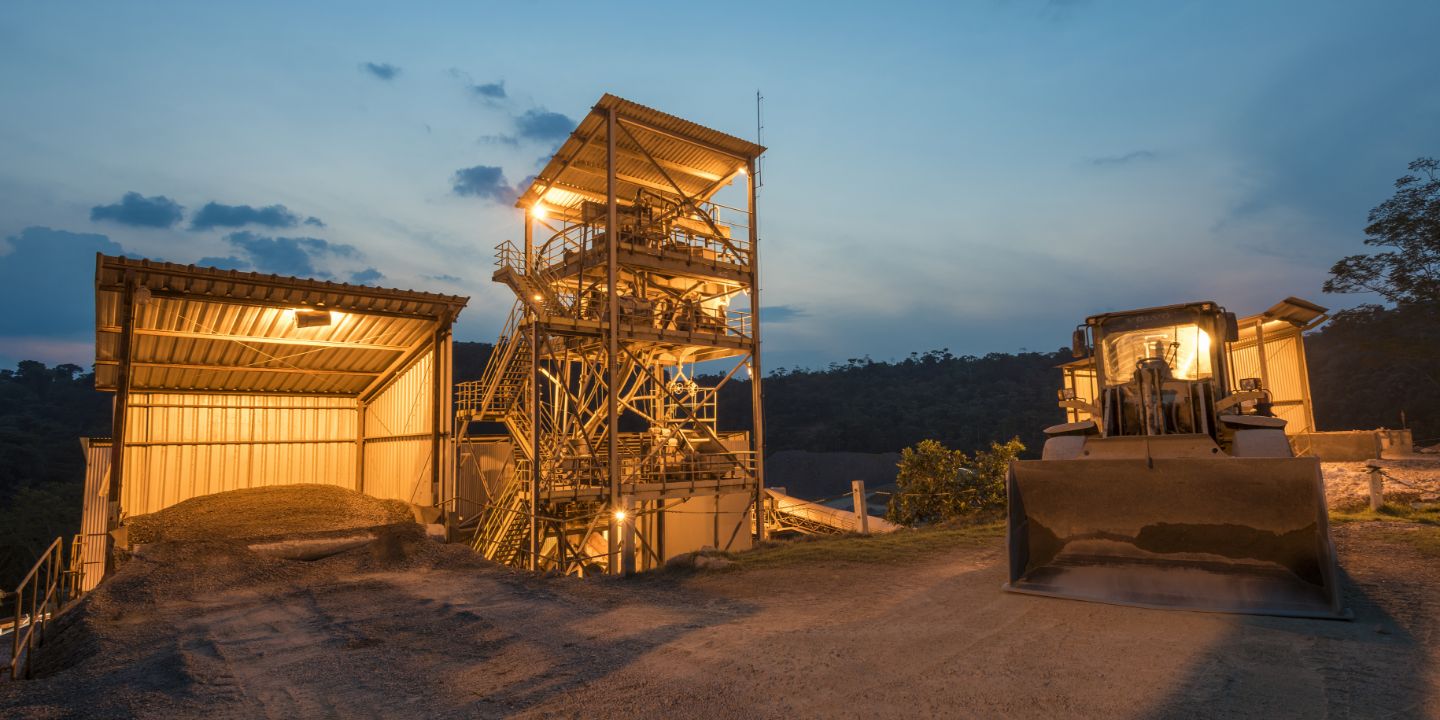
Serabi Gold (AIM: SRB | TSX: SBI | OTCQX: SRBIF) produces gold from 2 underground operations in Pará, Brazil: the Palito Complex and the Coringa mine. Coringa ore is crushed and sorted on site and trucked about 200 kilometers by road to the Palito plant, which processes ore from both mines.
The company produced 23,049 ounces (oz) of gold in the first half of 2026 and guides to more than 53,000 oz for the full year. It held US$65.7 million in cash and no debt at June 30, 2026, after fully repaying its Banco Santander short-term working capital facility on January 16, 2026.
While its 2026 production guidance still depends on the licensing route at Coringa, Serabi screens cheaper than the peer average on its 2026 cash-flow multiples on consensus broker estimates.
1. Serabi Gold Trades at 1.6x Estimated 2026 Earnings Before Interest, Taxes, Depreciation, & Amortization
Serabi Gold's enterprise value stands at 1.6x its estimated 2026 earnings before interest, taxes, depreciation, and amortization (EBITDA), against a peer average of 5.2x on consensus broker estimates. Across the peers with an estimate, 2026 enterprise value-to-EBITDA multiples range from 2.6x at Cerrado Gold to 16.5x at Americas G&S, with West Red Lake at 6.7x. Four companies in the set have no estimate. By management's own assessment, Serabi is undervalued relative to its peers.
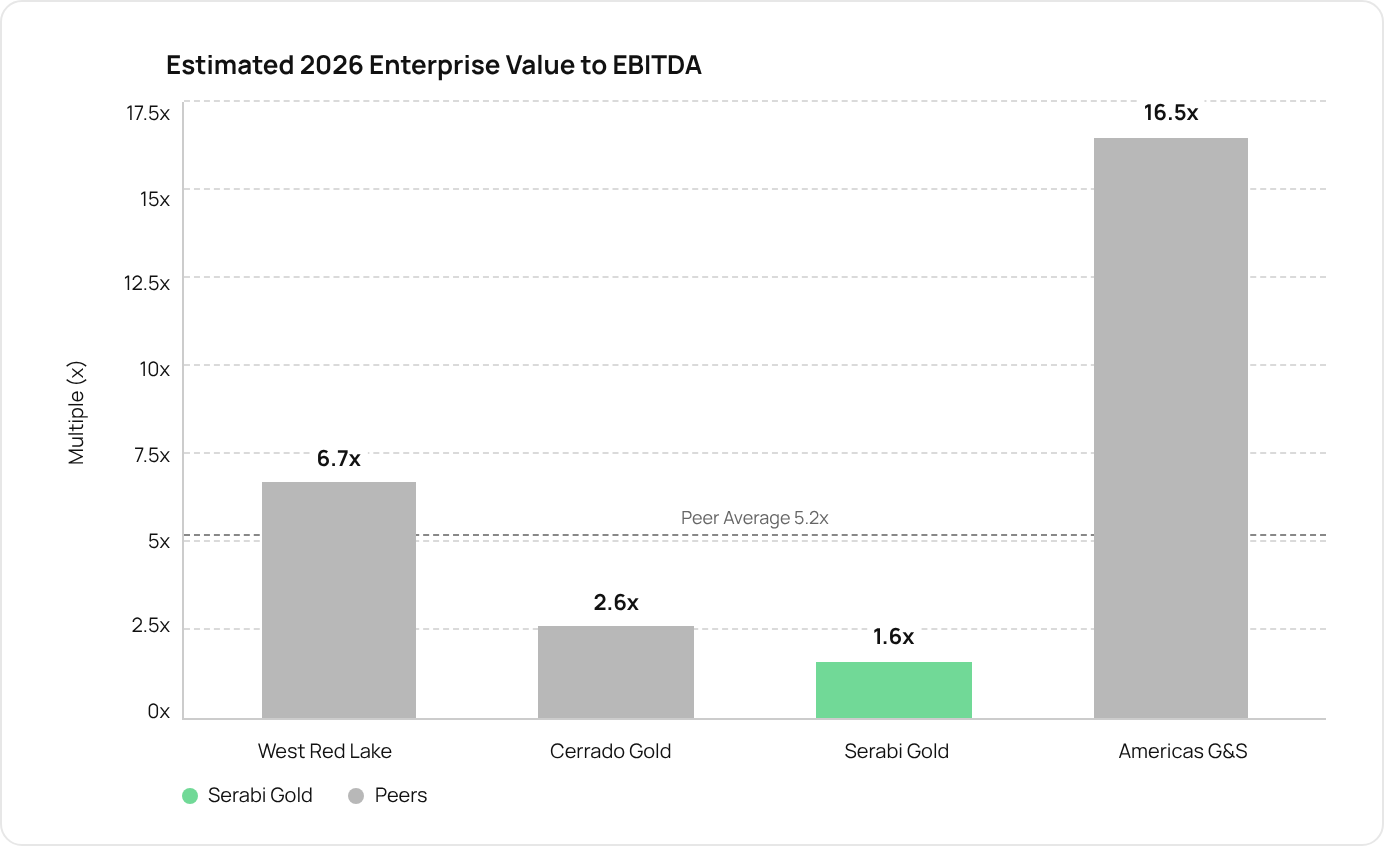
Based on these estimates, the market pays less per dollar of Serabi's estimated 2026 EBITDA than it pays, on average, across the peer group.
2. A 15% Free Cash Flow Yield Against a 5% Peer Average
Serabi's estimated 2026 free cash flow yield is 15%, compared with a peer average of 5% based on the same consensus estimates. Among peers with a figure, yields range from 1% to 8%, and yields are not shown for 9 companies.
In the first half of 2026, net cash inflow from operations was US$34.8 million after US$5.3 million of mine development spending, up from US$19.1 million a year earlier after US$2.7 million. Operating cash flow of US$40.1 million covered US$18.8 million in investing outflows and US$5.5 million in financing outflows, including the repayment of the short-term loan. Investing outflows included US$7,036,000 for property, plant, and equipment and US$5,555,000 of exploration spending.
3. Asset-Value Pricing Close to the Peer Average
On a price-to-net-asset-value basis, Serabi trades at 0.3x, compared with a peer average of 0.4x. That is the same multiple as West Red Lake, while Cerrado Gold and 4 other peers trade at 0.4x.
Serabi's gap to the group is wider on its 2026 cash-flow estimates than on this asset-based measure.
4. Cash & Nil Debt Within a US$212.6 Million Enterprise Value
Serabi's market capitalization was £204.4 million, or US$278.3 million, at a share price of £2.70 on September 18, 2026, against an enterprise value of £159.0 million, or US$212.6 million. Cash stood at US$65.7 million on June 30, 2026, up from US$49.2 million at December 31, 2025, and debt was nil.
Net funds after finance debt obligations reached US$62,971,000 as of June 30, 2026, up from US$42,083,000 at the end of 2025. Serabi had 75.7 million ordinary shares in issue and 78.5 million fully diluted as of October 2026. Classe Roca Magma FIP holds 25.0% of the shares, Ruffer 3.7%, and directors 0.7%. The board's cash flow forecasts show adequate resources for Serabi to continue in operation for the foreseeable future, even if neither of the Coringa licensing scenarios arrives and production at Coringa is suspended.
5. First-Half EBITDA Rose 69% to US$44.4 Million With the Gold Price
First-half 2026 EBITDA rose 69% to US$44.4 million from US$26.3 million, on revenue of US$100,068,000 against US$62,528,000 a year earlier. The average realized price for gold was US$4,687 per ounce, up from US$3,093 per ounce in the first half of 2025, and gold sales reached 21,348 oz. The second-quarter realized price for gold was US$4,490 per ounce, down from US$4,926 per ounce in the first quarter. Profit after tax was US$30.1 million, against US$18.9 million, and a renewed incentive keeps Palito’s nominal corporate income tax rate at approximately 15.25% through 2035, down from 34%.
Over the same half, cash cost rose to US$2,010 per ounce from US$1,379, and all-in sustaining cost (AISC) rose to US$2,682 per ounce from US$1,792. The rise over the first quarter came largely from the continued ramp-up at Coringa and about US$4 million of one-time general and administrative charges. AISC now also includes the Meio zone, which has reached commercial production. For full-year 2025, AISC was US$1,816 per ounce, and EBITDA was US$77.9 million.
6. Coringa Tonnage or the Full Concession Behind 2026 Guidance
Serabi's guidance of more than 53,000 oz for 2026 assumes 1 of 2 outcomes at Coringa. Coringa operates under a 3-year temporary GUIA license from Brazil's Ministry of Mines that allows 100,000 tonnes (t) of ore a year to be transported to Palito. The guidance assumes either that this limit rises to 200,000 t or that the full mining concession arrives by the fourth quarter of 2026, which would lift all tonnage limits at Coringa. That license expires on January 29, 2027, or earlier if the annual tonnage limit is exceeded. Serabi's board is currently confident that the term or the tonnage limit will be extended, with highly encouraging progress made with the Ministry of Mines, though there is no certainty yet on timing, and an update is due in mid-October 2026.
Chief Executive Officer of Serabi Gold, Mike Hodgson, contrasted Brazilian licensing with the process investors know at home:
"In the UK and in Canada, everything's black or it's white. But in Brazil, there's an awful lot of gray. And so we have to kind of try to explain very, very complicated situations exactly where we are with our licensing."
For the full concession, the board of the Federal Agency for Indigenous Lands must approve the Indigenous Component Study, as recommended by the agency's legal and technical departments. The Land Registry board must approve the change of land use from agriculture to mineral exploitation, which is already technically and legally approved. Both board approvals are anticipated in the fourth quarter of 2026, after which SEMAS can issue an Operating License.
7. A Self-Funded Plan Toward 100,000 Ounces a Year
Serabi's growth plan runs in 3 phases: raising production to more than 53,000 oz in 2026, building a larger consolidated resource through drilling in 2025 and 2026, and expanding production capacity in 2027. That 2026 figure compares with the production of 38,000 oz in 2024. The plan points to more than 100,000 oz a year, with 2028 marked by a question mark. Without expansion, the existing Palito plant can process at most about 60,000 oz per year.
Hodgson linked the second producing mine to a step change in output:
"We're doubling our production. We've been a 1-asset producer, now we're a 2-asset producer."
The plan is organically funded, with a further US$15 million in underground development in 2026 and a US$9 million exploration program for 2025 and 2026, including 30,000 meters of diamond drilling per year. Measured, indicated, and inferred resources reached 1.4 million ounces after 2025 drilling, up from 1.0 million. At Palito, 1 additional ball mill, a rotating drum that grinds ore, estimated at US$5 million, is planned to lift milling capacity from 650 to 900 tonnes per day by the fourth quarter of 2026. A second ball mill remains dormant at Coringa, and a restart at São Chico is being assessed. The 2026 drilling program concludes in October 2026, and the plant expansion phase follows in 2027.
Key Takeaways for Investors
- Serabi Gold trades at 1.6x estimated 2026 earnings before interest, taxes, depreciation, and amortization, versus a peer average of 5.2x based on consensus broker estimates.
- Its estimated 2026 free cash flow yield of 15% compares with a peer average of 5%.
- Serabi held US$65.7 million in cash and had nil debt as of June 30, 2026, against an enterprise value of US$212.6 million as of September 18, 2026.
- Guidance of more than 53,000 ounces for 2026 assumes a higher GUIA tonnage limit or the full Coringa mining concession by the fourth quarter of 2026.
- The plan to produce more than 100,000 ounces per year includes increasing Palito milling capacity from 650 to 900 tonnes per day by the fourth quarter of 2026.
Bottom Line
Serabi Gold has US$65.7 million in cash and no debt. Based on consensus broker estimates, it trades at 1.6x estimated 2026 EBITDA, against a 5.2x peer average, with a 15% estimated free cash flow yield, against 5% for the group. On price to net asset value, it trades close to its peers, at 0.3x versus 0.4x. Guidance of more than 53,000 oz for 2026 assumes a higher GUIA tonnage limit or the full Coringa concession in the fourth quarter, with an update due in mid-October 2026. The board's forecasts show adequate resources even if Coringa production is suspended. First-half operating cash flow of US$40.1 million funded growth spending and the loan repayment. The gap to the peer multiple is priced on a producer that is funding its expansion from its own cash.
Analyst's Notes





Subscribe to Our Channel
Stay Informed