F3 Uranium targets overlooked geological domains in July 2026 drill program


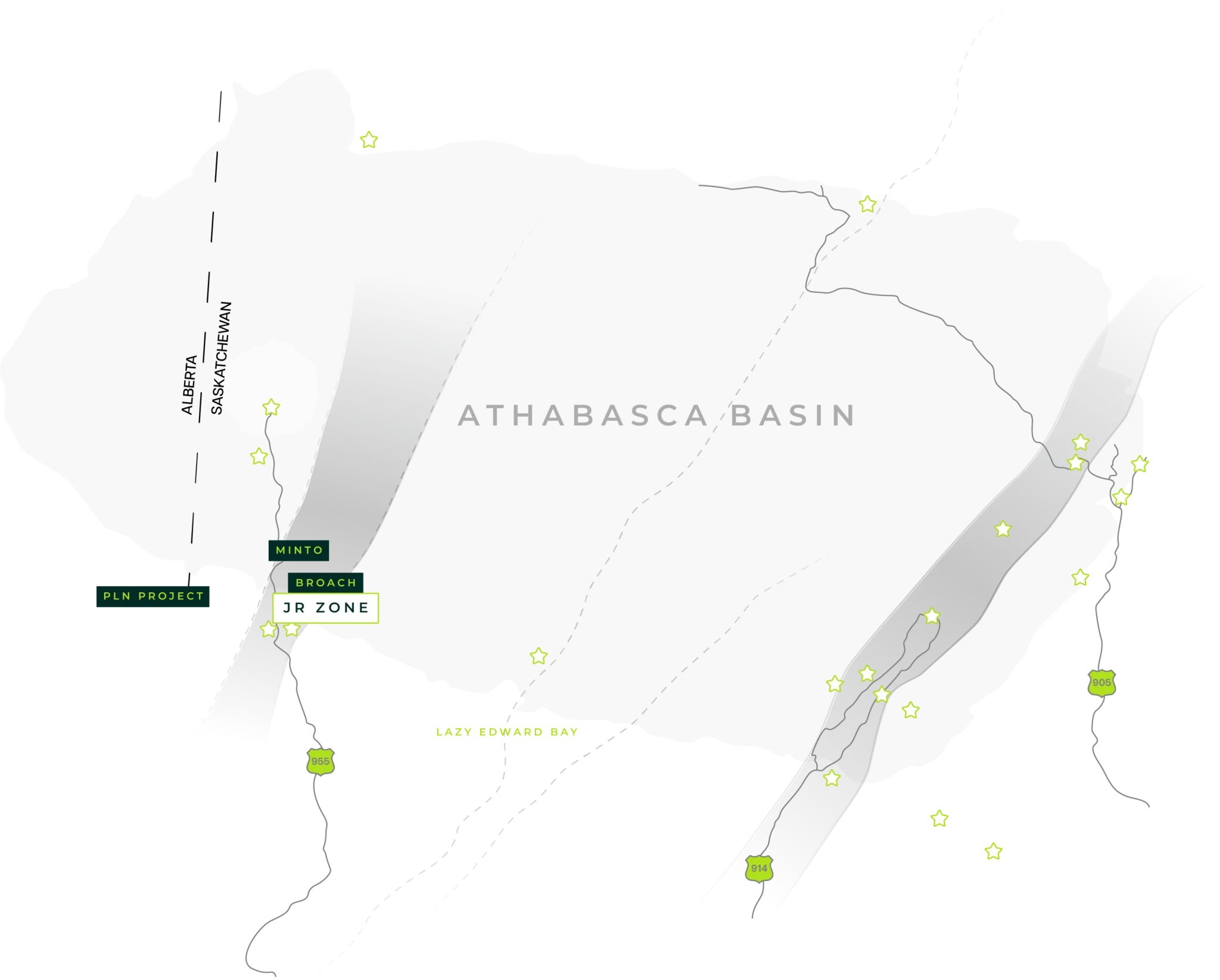
F3 Uranium: 11.8Mlb JR Zone at 4.41% U3O8, Tetra rewrites basin model, $23M treasury, July 2026 drill program across first-time Athabasca targets.
- Raymond Ashley, President and COO of F3 Uranium, outlined the geological significance of the Tetra Zone discovery, which has demonstrated that high-grade uranium can occur in structures lacking graphite and sulfides - overturning a long-held assumption in Athabasca Basin exploration.
- F3's JR Zone maiden resource estimate, released at end of 2025, stands at 11.8 million pounds at 4.41% U3O8, with 10.8 million pounds of that grading 12.23% U3O8 - fully indicated.
- Age-dating and mineralogical studies confirm the JR Zone and Tetra Zone share the same hydrothermal system despite being 13 kilometres apart on separate structural trends, materially expanding the prospective footprint of the Patterson Lake North (PLN) project.
- F3 is testing resistivity (DC-IP) surveying as a replacement for conventional electromagnetic targeting in the graphite-free "Clearwater domain," with results expected to guide the placement of future drill holes near Tetra.
- A 4,000-metre drill program is commencing in early July 2026, funded from a $23 million treasury that provides runway through to the end of 2027, targeting multiple first-pass locations across the PLN land package.
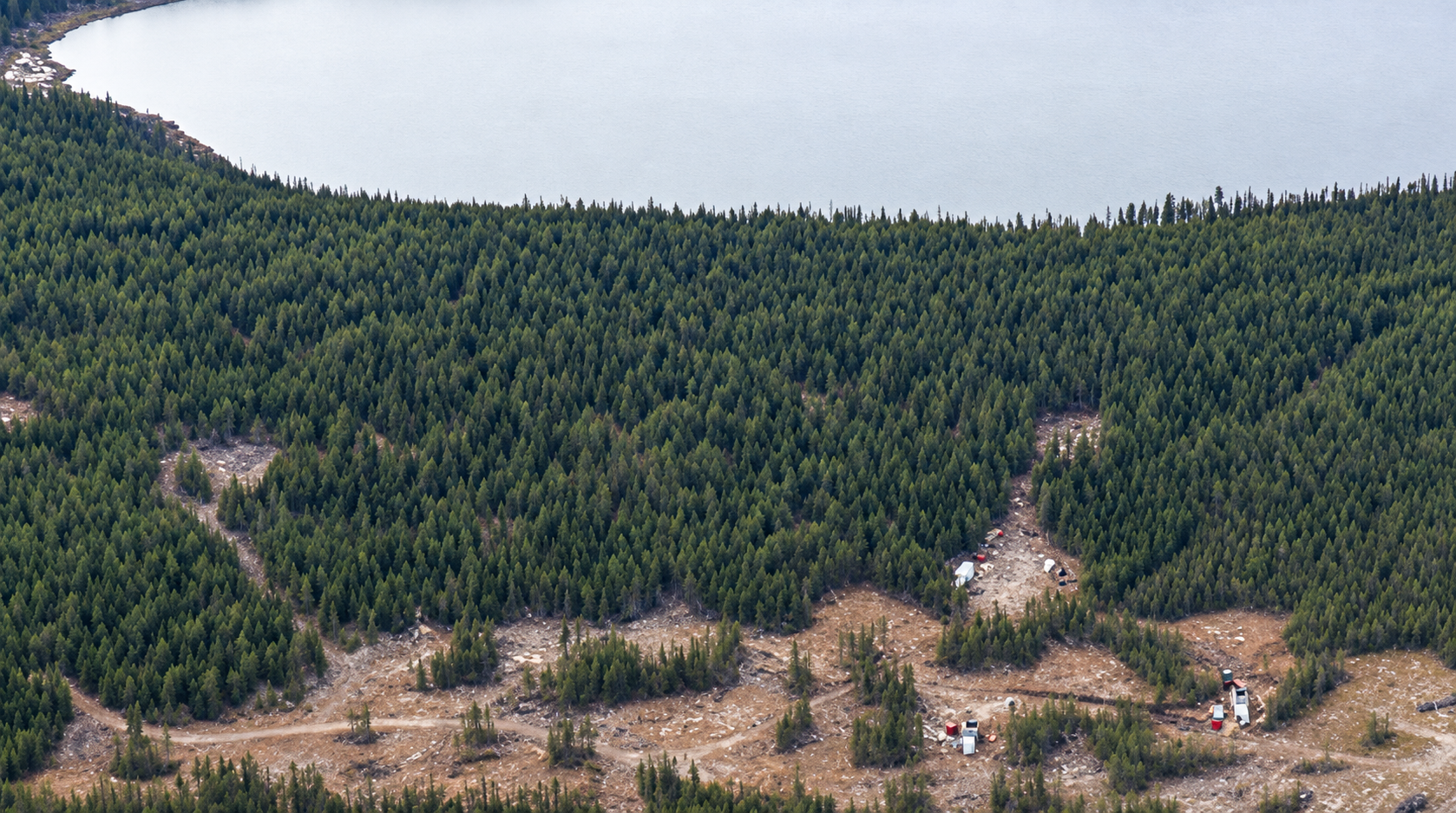
F3 Uranium Corp. is a Canadian uranium exploration company operating the Patterson Lake North (PLN) project in the southwest Athabasca Basin of Saskatchewan. The company sits within striking distance of some of Canada's most significant uranium assets - the Arrow deposit and the Triple R deposit - and is working to build its own resource base on an extensive land package in the same geological neighbourhood. In a detailed interview, Raymond Ashley, President and Chief Operating Officer, walked through the company's track record, its current exploration program, and the implications of the Tetra Zone discovery for how the company and potentially the broader industry approaches uranium exploration in the region.
The JR Zone: An Established High-Grade Resource
F3's first significant discovery at PLN was the JR Zone, announced in 2022 with a discovery hole returning seven metres grading 15% uranium. Following several years of infill and step-out drilling, the company published a maiden independent resource estimate at the end of 2025. The JR Zone contains 11.8 million pounds of uranium at 4.41% U3O8, fully in the indicated category - a grade that places it firmly in the high-grade tier of unconformity-type deposits globally. Of that total, 10.8 million pounds grades 12.23% U3O8, reflecting the concentration of the higher-grade core.
The JR Zone sits along the northwest-trending A1/B1 structural corridor. Ashley noted that the team had identified and drilled along this conductor for years before intersecting significant uranium, returning only trace values as recently as 2019. The deposit was found on a subsequent return to an untested portion of the structure.
The Tetra Discovery: Challenging a Basin-Wide Assumption
Shortly before the JR Zone resource estimate was published, F3 announced a fourth discovery - the Tetra Zone - located approximately 13 kilometres from JR on an east-west trending structure in a part of the PLN property known as the Clearwater magnetic domain. What makes Tetra fundamentally different from virtually every other deposit in the Athabasca Basin is the absence of graphite and sulfides in the host structure.
For decades, the established exploration model in the basin has depended on electromagnetic (EM) surveys to identify conductive structures - faults and shear zones enriched in graphite and sulfides - as proxies for uranium prospectivity. The Clearwater domain had historically been avoided precisely because no such conductors were detected there.
"We've learned that we don't need conductive structures, graphite and sulfides in these structures for it to be perfect for uranium. That's what we've learned. And we've learned that whole area is therefore prospective for the same kind of mineralisation."
The discovery itself was made using ground EM data that detected a very weak conductor beneath the Cretaceous mudstone cover - weaker than anything conventionally targeted - but the intersection of high-grade uranium in a non-graphitic structure was still unexpected.
Mineralogy Confirms a District-Scale Hydrothermal System
To assess whether the JR Zone and Tetra Zone were genetically linked, F3 commissioned uranium age-dating and detailed mineralogical work on drill core from both deposits. The findings were significant.
"The ages of the uranium at Tetra - there's several ages - and they completely match with the ages at JR. The mineralogical phases are also the same. The alteration clay mineral assemblages are also the same."
This result indicates that despite sitting on structurally disconnected features trending in different orientations and separated by 13 kilometres, both deposits formed within a single, large-scale hydrothermal system. For investors, the implication is material: the same mineralising process that created both deposits likely operated across the full width of the PLN property, regardless of whether individual structures carry graphite and sulfides.
Interview with Raymond Ashley, President and COO, F3 Uranium
Adapting the Exploration Toolkit
Without the ability to use EM conductors as guides in the Clearwater domain, F3 has turned to resistivity surveying as a potential targeting method. Laboratory analysis of Tetra drill core at the University of Calgary confirmed a measurable resistivity contrast associated with the mineralized and altered rock package. A pilot resistivity survey over the Tetra Zone was completed in mid-2026 to test whether that contrast is detectable from surface.
Separately, 1.2 kilometres along the same weak conductor as Tetra, a historic drill hole returned 423 parts per million uranium - described by Ashley as the highest anomalous uranium value recorded on the PLN property outside of the JR and Tetra zones themselves - alongside the same clay alteration signature observed at the Tetra discovery. Ground gravity anomalies have been developed in this area to supplement the targeting. These lines of evidence have been sufficient to designate the area as the starting point for the July 2026 drill program.
The 2026 Drill Program and Upcoming Catalysts
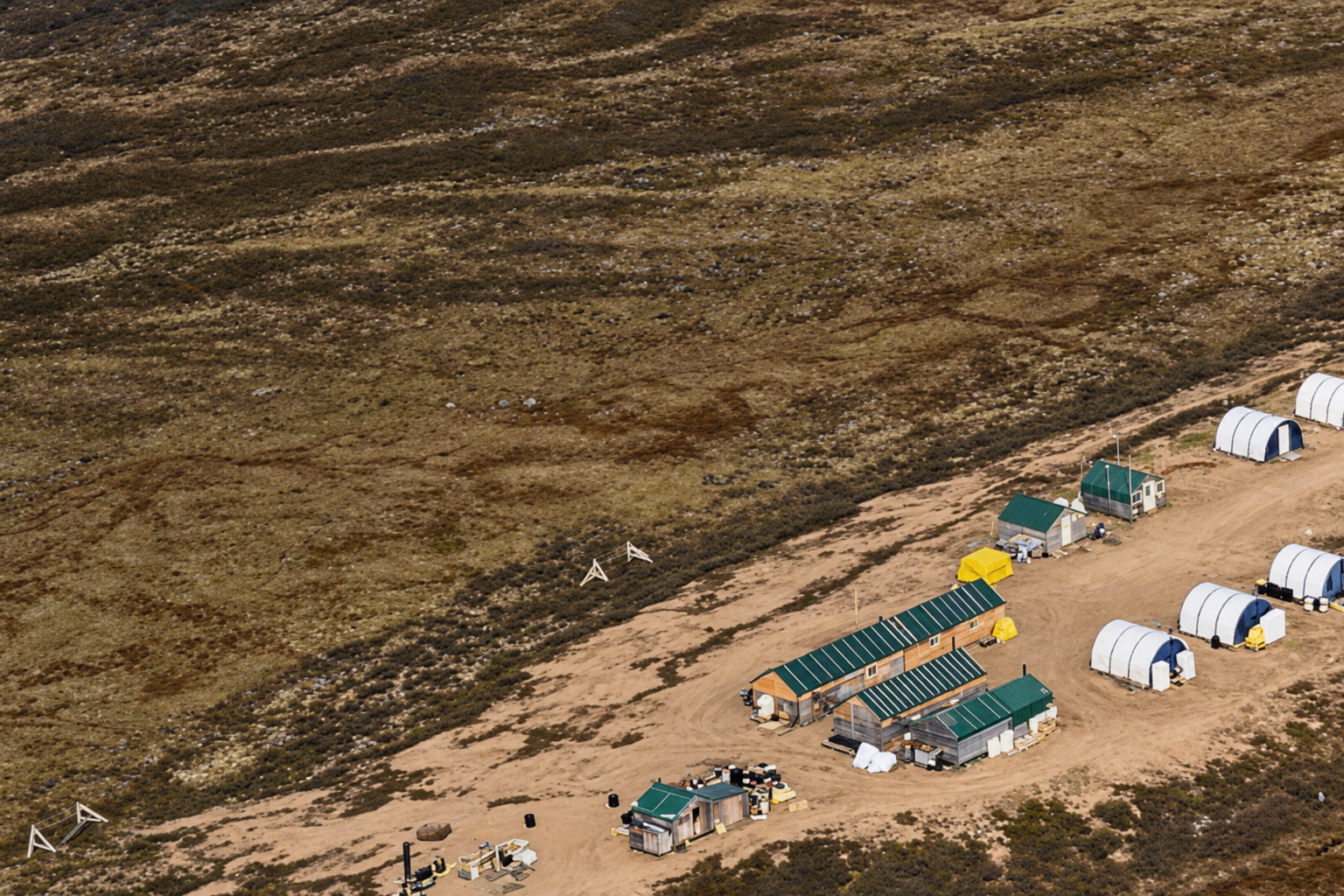
F3 is commencing a 4,000-metre drill program in early July 2026. In addition to the area 1.2 kilometres from Tetra, targets include the A4 conductor - a seven-kilometre structural trend on the PLN property with only one historic drill hole - and a newly interpreted conductor at Brooch Lake on the southern portion of the Broach property, identified through reprocessing of legacy EM data. Priority targets along the southeast extension of the A1/B1 structure, adjacent to the JR Zone, also remain on the schedule.
Financial Position and Strategic Options
F3 holds approximately $23 million in its treasury. Ashley characterised this as adequate to fund a summer 2026 drill program, a winter 2026/27 program, and likely a further summer 2027 program. The company is simultaneously engaged in discussions with larger mining companies regarding potential corporate transactions, though Ashley was clear that exploration remains the operational priority.
"If we can tag into new pods of uranium, keep growing and then grow this resource, that's what people will take notice of. And that's what we're focused on, discovery."
The PLN project sits approximately 25 kilometres from Arrow and Triple R, where Paladin Energy is progressing toward mine development with associated milling infrastructure. Ashley noted that the proximity to a future mill may allow PLN deposits to function as satellite ore sources rather than requiring development of a standalone processing facility - a consideration that reduces the minimum resource scale needed to attract a development partner.
The Investment Thesis for F3 Uranium
- Established high-grade resource: JR Zone maiden resource of 11.8 million pounds at 4.41% U3O8, fully indicated, with a high-grade core of 10.8 million pounds at 12.23% - comparable in grade to the region's best-known deposits.
- Proven discovery team: The same technical leadership responsible for the J-Zone and Triple R discoveries is running exploration at PLN, providing institutional knowledge and geological pattern recognition built across multiple Athabasca Basin discovery cycles.
- Expanded geological model: Tetra demonstrates that high-grade uranium can exist without graphite-sulfide-bearing conductors, opening up a previously unexplored portion of the PLN land package and increasing the property-wide target inventory.
- Largest land package in the area: F3 controls one of the most extensive land positions in the southwest Athabasca Basin, providing the scale required for a multi-pod resource analogous to Triple R.
- Funded through 2027: $23 million in treasury provides capital for multiple drill programs without near-term equity dilution pressure, allowing the exploration thesis to be tested across multiple targets.
- Catalyst-rich near-term pipeline: Resistivity survey results over Tetra, first-time drilling of the A4 conductor and Brooch Lake targets, and step-out drilling near the Tetra anomaly provide multiple potential newsflow events in the 2026–2027 window.
- Mill proximity reduces standalone development threshold: Proximity to the planned Arrow/Triple R mill (~25 km) creates the potential for PLN deposits to contribute as satellite feed rather than anchor a standalone mine, lowering the commercial viability threshold for individual discoveries.
- Corporate development optionality: Active discussions with major mining companies introduce the possibility of a transaction or partnership that could re-rate the asset ahead of resource maturity.
Macro Thematic Analysis
Uranium has re-emerged as a strategically important commodity as governments worldwide look to nuclear power to provide reliable, low-carbon baseload electricity alongside the growth of intermittent renewables. Data centre demand, driven by artificial intelligence workloads, is accelerating power consumption in jurisdictions that are increasingly turning back to nuclear as a reliable supply source. The Athabasca Basin in Saskatchewan remains the global benchmark for high-grade uranium deposits and is home to the next generation of planned Canadian uranium mines. Within this context, southwestern Athabasca has attracted sustained exploration interest given the concentration of high-grade assets at Arrow and Triple R, with the planned development of milling infrastructure in the area creating a logistical foundation for smaller satellite deposits to be commercially viable. F3 Uranium's PLN project is positioned directly within this emerging district. As Ashley noted: "At PLN, we may not need a standalone mine because there's going to be a mill 25 km away - so at some point that mill is going to need mine feed."
TL;DR
F3 Uranium holds a large southwest Athabasca Basin land package anchored by the JR Zone maiden resource of 11.8 million pounds at 4.41% U3O8 and the Tetra Zone, a discovery that has demonstrated high-grade uranium can form without graphite-sulfide-bearing conductors - expanding the geological model and the prospective footprint of the PLN project. The company is funded with $23 million through to the end of 2027 and is launching a 4,000-metre drill program in July 2026 across multiple first-time targets. Proximity to the planned Arrow/Triple R mill, approximately 25 kilometres away, provides a pathway for PLN deposits to function as satellite ore feed rather than requiring a standalone development, reducing the minimum resource scale needed to attract a major mining partner.
FAQs (AI Generated)
Analyst's Notes





Subscribe to Our Channel






Stay Informed