




Lithium Ionic Sees Spodumene Pricing & Equity Markets Diverging as Brazil's Trade Access


Lithium Ionic gains US$30M from its Salinas sale as firm spodumene pricing, Brazil’s open trade policy and Chinese conversion capacity shape its path to Bandeira.
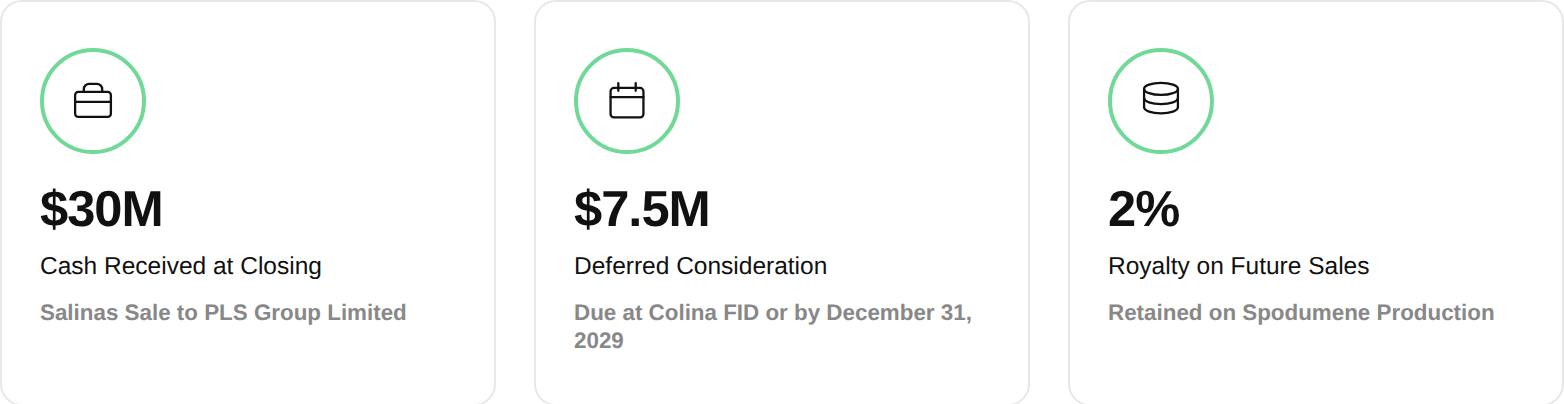
- Lithium Ionic has closed the sale of its Salinas properties to PLS Group Limited, banking US$30 million in cash, with a further US$7.5 million contingent on a final investment decision (FID) on a separate PLS project, plus a retained royalty on future spodumene sales.
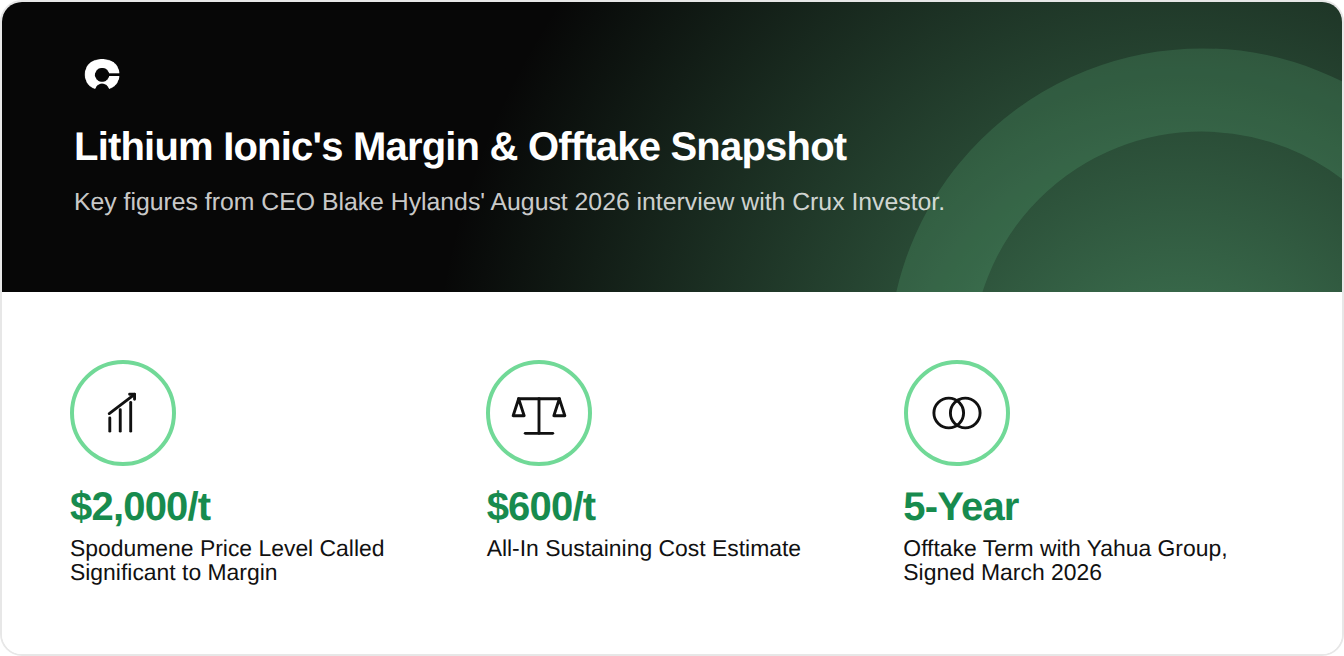
- Spodumene has remained relatively high even as lithium equities have not broadly repriced to reflect this, with management citing an all-in sustaining cost estimate of US$600 per ton and flagging US$2,000 per ton as significant to the project's margin.
- Brazil's 2022 decree removing restrictions on lithium trade gives Lithium Ionic access to buyers outside any single bloc, a hedge against the kind of trade-policy volatility currently affecting other jurisdictions' export relationships with the US.
- China's downstream conversion capacity still sets the practical ceiling on where newly produced spodumene can be profitably sold, concentrating buying power with integrated producers such as Yahua Group.
- Europe's refining and battery investment is advancing faster than North America's, though neither yet approaches China's scale, meaning Lithium Ionic's 5-year offtake term keeps its options open rather than locking in a single alternative market too early.
Lithium Ionic Corp. (TSXV: LTH | OTCQX: LTHCF | FSE: H3N) has completed the sale of its Salinas group of lithium properties to PLS Group Limited, receiving US$30 million in cash with a further US$7.5 million in deferred consideration payable on the earlier of a positive final investment decision (FID) for PLS's Colina Project or December 31, 2029, alongside a retained 2% royalty on future spodumene sales. The transaction adds non-dilutive cash to the balance sheet at a time when the company's own commentary on market conditions offers a useful lens into why timing and buyer selection matter as much as the deal itself.
Spodumene Pricing Has Held Firmer Than the Equity Market
The gap between commodity strength and equity performance is the more consequential signal from this period than the Salinas sale on its own. Spodumene has stayed relatively high even as Australian producers and explorers that traded well earlier in the year have since given back those gains. Chief Executive Officer of Lithium Ionic, Blake Hylands, flagged pricing in the US$2,000-per-ton range as significant to Lithium Ionic's margin, against an all-in sustaining cost estimate of US$600 per ton, a gap that has persisted even as equity markets for lithium developers broadly have not caught up. That divergence is the more interesting signal, since it suggests the repricing Lithium Ionic needs isn't a commodity-side catalyst so much as a shift in how equity investors are valuing lithium developers generally, independent of any single company milestone.
Hylands, on the disconnect:
"We have this really kind of unique time, I think in all the battery metal space and actually in a lot of the commodities where pricing is there, and the equity market isn't quite there yet."
Brazil's Trade Flexibility Reduces Buyer-Concentration Risk
A July 2022 presidential decree removed restrictions on trade in lithium-bearing products, formalizing Brazil's position as an open exporter rather than one tied to a single buyer bloc. That status carries more weight now than it might have several years ago, given the volatility in trade terms between the US and multiple trading partners over the past year. An open jurisdiction reduces the risk that a shift in any single bilateral relationship disrupts a producer's ability to sell.
Hylands, on that flexibility:
"Brazil is a unique trading jurisdiction where you can trade globally. It's open to the world."
For a company on a 5-year offtake term signed in March 2026, that optionality functions as a hedge rather than an immediate revenue lever: it does not change where Lithium Ionic sells today, but it preserves the ability to redirect supply if conditions with any one buyer or region shift before the current agreements expire.
Chinese Conversion Capacity Remains the Practical Ceiling on Where Supply Can Go
China's roughly 15-year head start in building conversion and battery capacity still concentrates buying power in the hands of a small number of integrated producers, and that concentration, not the number of potential buyers globally, is the real constraint on where a developer can place material at scale. Yahua Group, one of Lithium Ionic's offtake counterparties, is among the world's largest integrated lithium hydroxide producers and supplies battery and electric vehicle manufacturers including Tesla and Ford, giving it a customer base that a newer conversion entrant elsewhere could not immediately replicate.
Europe's refining and battery investment is advancing faster than in North America, but neither region yet offers conversion capacity on China's scale. That gap is the reason a 5-year offtake term functions as a deliberate hedge rather than a limitation: it commits Lithium Ionic to a proven buyer now while leaving room to reassess as Europe's capacity, in particular, continues to build out.
The Salinas Proceeds Extend Runway Into the Permitting Endgame
The US$30 million in cash from Salinas provides the company with a source of funding that doesn't depend on construction debt or on equity closing first. Hylands said the proceeds help cover operational costs and let the company begin ordering long-lead items, such as the mill, ahead of Bandeira's remaining permitting step, which he identified as the final gating item before a construction decision. That sequencing lets pre-construction work start on a timeline set by the company rather than by when its construction financing package comes together.
FAQs (AI-Generated)
Analyst's Notes





Subscribe to Our Channel




Stay Informed


