




Silver Miners Target Resource to Production Growth in 2026 Eyeing for the Critical Metals' Re-evaluation



Primary silver producers and developers enter 2026 with funded balance sheets, major drill programs, and structural demand tailwinds from solar, EVs, and US critical minerals policy.
- Silver's supply-demand fundamentals are structurally supportive, with approximately 70% of global production derived as a by-product of base metal and gold mining, meaning primary supply cannot respond efficiently to rising prices regardless of market conditions.
- Industrial demand for silver is being reshaped by secular forces including solar photovoltaic manufacturing, electric vehicle production, grid infrastructure expansion, and AI data centre growth, creating durable consumption that is not sensitive to short-term price cycles.
- The United States government's designation of silver as a critical mineral, combined with China's decision to restrict silver exports in response to surging domestic industrial demand, has introduced significant policy and geopolitical dimensions that reinforce the structural supply tightness in global silver markets.
- Established primary silver producers are entering 2026 with materially stronger balance sheets, fully funded growth plans, and operational improvement programs that are expected to drive production increases and margin expansion through the year without requiring additional equity capital.
- Early-stage silver producers and explorers are advancing toward significant resource definition and production milestones in 2026, with valuations that in several cases remain substantially below those of peers that have already achieved comparable resource sizes or cash flow status.
Silver has long occupied an unusual position in commodity markets simultaneously a monetary metal, an industrial input, and increasingly a critical material for the global energy transition. What distinguishes the current environment from previous silver bull cycles is the durability and breadth of the demand drivers now emerging on the industrial side, set against a supply landscape that has not meaningfully expanded in response to higher prices.
From established producers expanding high-grade assets in Idaho and Nevada, to emerging explorers world-class silver jurisdictions of Mexico and Peru, the companies active in primary silver mining today are operating in an environment that is generating genuine cash flow, attracting institutional capital, and delivering resource growth at a pace not seen in years.
The case for silver in 2026 is not built on speculation, it is built on the operational and geological progress being made across the sector right now.
The Supply-Demand Foundation
The structural supply-demand case for silver is consistent across company management teams and independent of any single producer's narrative. Approximately 70% of global silver production derives from lead, zinc, copper, and gold mining operations, where silver is a by-product. This means primary silver supply does not respond efficiently to price signals. When silver prices rise, incremental supply from by-product sources adjusts slowly, and the pipeline from primary producers is limited by the small number of high-grade silver assets globally.
On the demand side, the transformation is being driven by forces that are secular rather than cyclical. Solar photovoltaic manufacturing is the fastest-growing source of silver demand globally, with each panel requiring meaningful quantities of the metal and no viable substitute for its electrical conductivity. Electric vehicles, consumer electronics, and the expansion of AI data centre infrastructure are layering additional structural demand on top of traditional monetary and investment demand.
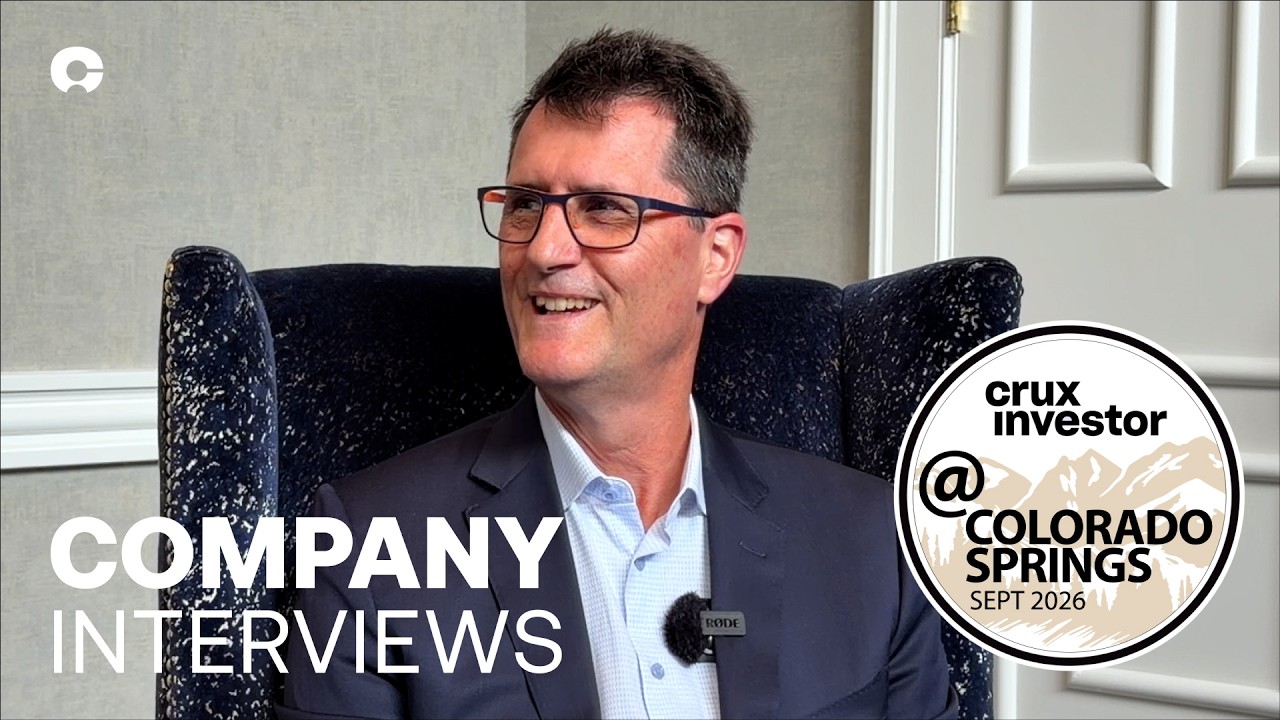
Hycroft Mining CEO Diane Garrett described the environment plainly:
"When you have China that is limiting exports and restricting exports of silver because their industrial demand is building so much, that's a good indicator. With the US designating silver a critical mineral and wanting to stockpile silver, they're not making these decisions because of a short term view. They're looking at this on a long term basis."
Interview with Diane Garrett, President & CEO of Hycroft Mining
China's decision to restrict silver exports reflects domestic industrial demand growth that is absorbing supply that previously flowed to international markets, removing a meaningful buffer from global availability.
The United States government's designation of silver as a critical mineral has direct policy implications for domestically located silver projects. It signals a strategic imperative to secure domestic supply chains, increases the development value of large US-based silver assets, and opens pathways to expedited permitting that would not otherwise be available.
Silver Valuation Opportunity
Among established silver producers, Americas Gold & Silver and Santacruz Silver Mining both entered 2026 with significant operational milestones and materially improved balance sheets.
Americas Gold & Silver operates the Galena mine in Idaho's Silver Valley, the world's third highest-grade primary silver mine, with a resource base exceeding 150 million ounces. The company announced its largest exploration program in company history with 64,000 meters of drilling focused on expanding known high-grade veins that have already delivered intercepts approaching 5 kilograms per ton silver, alongside copper and antimony by-products. Management's three-year plan targets a return to 5 million ounces of annual production, a level last achieved in 2002, through equipment modernisation, mining method transitions, and hoist upgrades at Galena.
Oliver Turner, Vice President of Corporate Development, noted that seven analysts have initiated coverage in the past 14 months, with consensus models placing the company at 0.7 to 0.85 times net asset value against a peer group average of approximately 1.5 times:
"We're trading using these consensus numbers anywhere from a 0.7 to a 0.85 times multiple. The average of that pure group is around 1.5 times. So that would tell you that with nothing else changing, if we did nothing else with our business plan in terms of what's out there in the public market, we would be potentially a double from here."
Critically, all planned growth initiatives are fully funded from $130 million in cash and a $50 million undrawn credit facility, with Turner confirming the company do not need to raise any capital for anything that we've talked about.
Interview with Oliver Turner, VP, Corporate Development of Americas Gold & Silver Corp.
Santacruz Silver Mining entered 2026 having completed the elimination of all debt and streaming obligations to Glencore, closing the year with approximately $80 million in treasury. The company operates four producing mines across Bolivia and Mexico, with its January 2026 NASDAQ listing broadening access to US institutional capital. Executive Chairman and CEO Arturo Préstamo Elizondo described the company's outlook:
"This year is going to be a very good year for us from an operations point of view and also from a financial point of cash flow building. We think it is the right time for us to build our next mine organically."
Near-term catalysts include Soracaya project permitting targeted for Q3 2026 with production commencement expected in Q4, Esperanza mine commercial production, and continued recovery at the Bolivar mine following 2025 flooding that has already resulted in discovery of new high-grade veins.
Interview with Arturo Préstamo Elizondo, Executive Chairman & CEO of Santacruz Silver Mining
Building the Next Generation of Silver Production
At the earlier stage of the silver development spectrum, companies are advancing toward significant resource and production milestones that will define their positioning through 2026 and beyond.
Kuya Silver is operating the Bethania Silver Mine in central Peru and is completing the acquisition of the Camila processing mill eliminating dependence on third-party toll milling and opening a third-party processing revenue stream for regional miners. With approximately $15 million on hand post-acquisition, the company has funded an aggressive exploration program targeting 100 million ounces of silver across a 4,500-hectare land package that has grown one-hundredfold from its original 45-hectare footprint. CEO David Stein was direct about the near-term cash flow potential:
"With these silver prices, this is going to generate a shocking amount of cash flow by the end of this year."
The company expects resource expansion drill Rigs to be mobilised in Q3 2026, and to deliver its first profitable quarter within one to two reporting periods.
Interview with David Stein, President & CEO of Kuya Silver
Capitan Silver is executing a 60,000-meter drill program at the Cruz de Plata project in Durango, Mexico, following 2025 land consolidation with Fresnillo that expanded cumulative high-grade silver strike targets from 7 kilometres to over 21 kilometres. CEO Alberto Orozco described the geological evolution:
"What changed from that point to what we got with the land consolidation is that it evolved to become a full mineral system basically on the silver front, tripling our targets from 7 kilometers cumulative of high-grade silver structures to over 21 kilometers"
The company is ramping to four drill rigs, targeting depth extensions and system-scale demonstration in a jurisdiction where the technical team has previously built and operated three mines.
Interview with Alberto Orozco, CEO of Capitan Silver
In Nevada, Hycroft Mining's February 2026 Mineral Resource Estimate update represents one of the most significant data points with a reported 562.6 million silver ounces and 16.4 million gold ounces in the Measured and Indicated category alongside an initial high-grade silver resource of 90.2 million ounces within the Brimstone and Vortex systems, established after only 14 months of drilling.
Hycroft Mining's Nevada Silver-Gold Giant project economics on the large-scale open pit operation are expected by the end of Q1 2026. Brimstone and Vortex both remain open along strike and at depth. Garrett articulated the development logic:
"What high grade does is it gives us optionality. We could go underground first and by doing that you're getting better cash flows up front and then you can build in the scalability to mine the rest of the ore body."
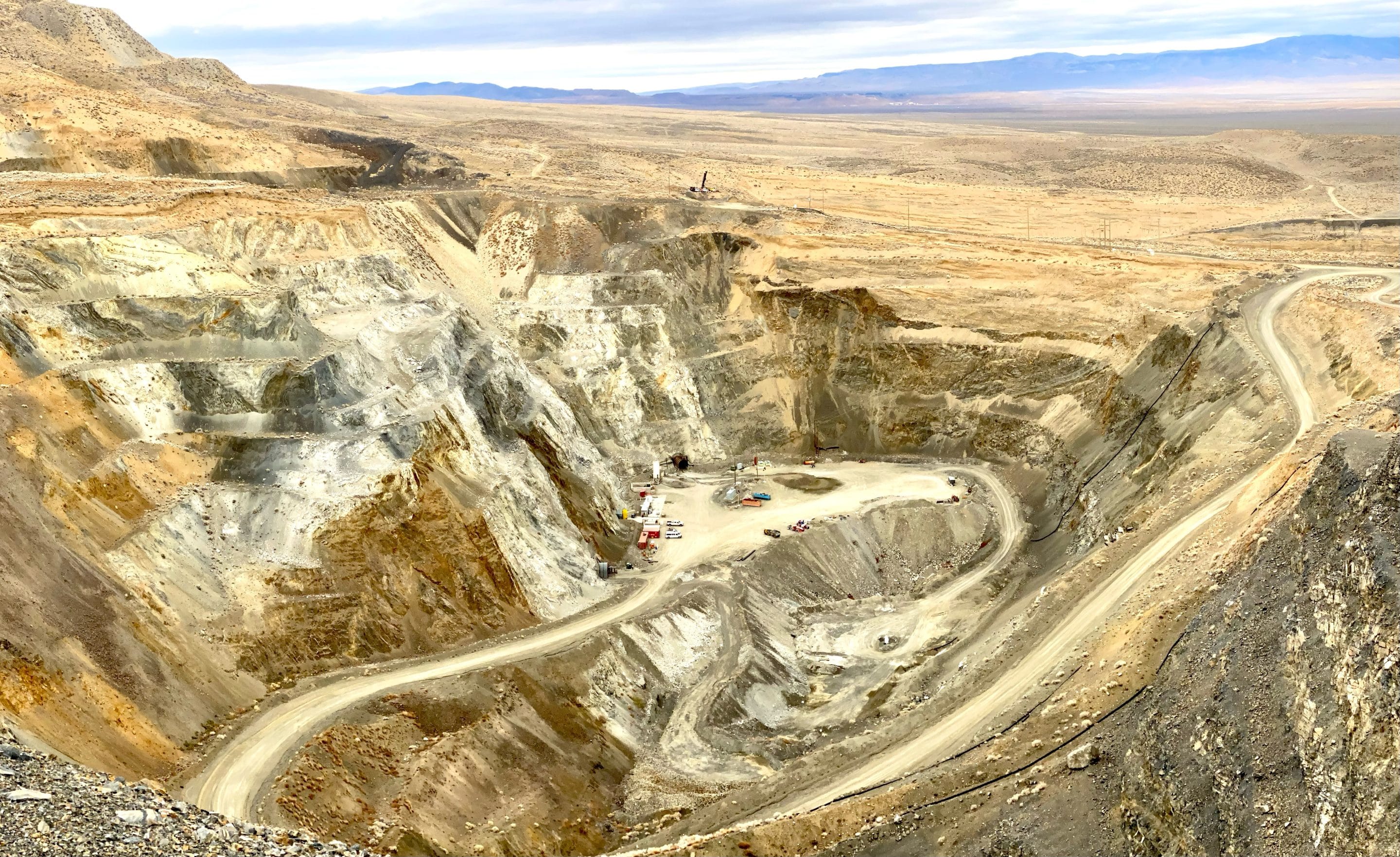
Prince Silver Corp is targeting a maiden resource estimate of approximately 100 million silver equivalent ounces at the historic Prince project in Nevada by Q3 or Q4 2026, leveraging 130 historical drill holes to accelerate the timeline to resource definition. CEO Derek Iwanaka explained:
"Permitting is very straightforward. And what we're going to look into really is since we have these critical minerals at the project, we can get fast tracked through the US government. Maybe that could shorten down the time frame."
The company is targeting a 100-million-ounce silver equivalent resource in 2026 with recent drilling identifying significant gold mineralisation expanding the project's value proposition beyond silver.
Interview with Derek Iwanaka, CEO of Prince Silver Corp
Looking Ahead: Key 2026 Catalysts
The calendar of near-term catalysts across the silver sector is unusually dense.
- Hycroft is expected to publish large-scale open pit project economics by end of Q1 2026 and an underground mining assessment for the high-grade systems.
- Americas Gold & Silver will deliver exploration results from its 64,000-meter campaign through the year, with the antimony processing joint venture with US Antimony expected to begin contributing financial benefits in 2027.
- Santacruz Silver targets Soracaya production commencement in Q4 2026. Kuya Silver anticipates its first profitable quarter within two reporting periods.
- Capitan Silver is flowing results from a four-rig campaign designed to demonstrate system scale with its 60,000-meter drill program at Cruz de Plata, Mexico.
- Prince Silver expects nine drill hole results within weeks, followed by a maiden resource estimate in the second half of the year.
The Investment Thesis for Silver
- Supply is structurally constrained and cannot respond quickly to price signals. With approximately 70% of global silver production derived as a by-product of base metal and gold mining, primary silver supply is inherently inelastic, meaning higher prices do not translate into meaningful near-term supply increases and price appreciation tends to be amplified during periods of strong demand.
- Industrial demand is growing from durable, policy-backed sources. Solar photovoltaic manufacturing, electric vehicles, grid infrastructure, and AI data centre expansion are adding structural layers of silver consumption that are embedded in long-horizon energy transition commitments and government policy, rather than being driven by short-term economic cycles.
- US critical minerals designation and China's export restrictions are tightening the global supply picture. Silver's classification as a critical mineral by the US government signals a strategic, long-term policy intent to secure domestic supply chains, while China's decision to restrict silver exports removes a historically available source of global market supply, collectively reinforcing structural tightness that is unlikely to reverse quickly.
- Primary silver producers are generating meaningful cash flow at current price levels and are operationally improving. With silver trading above $84 per ounce, established producers with funded balance sheets and clear production growth plans are positioned to expand margins through operational efficiency, grade improvement, and economies of scale without relying on equity markets to fund growth.
- Valuation gaps across the sector remain significant relative to historical precedents. Current operating cash flow multiples for silver miners are substantially below peak multiples achieved during the previous precious metals bull cycle, and several primary silver producers trade at material discounts to their net asset value relative to peer group averages, suggesting re-rating potential as production milestones are delivered.
- Exploration programs are generating genuine geological discovery and resource growth. Active drill campaigns across multiple primary silver jurisdictions are expanding known resources, identifying new high-grade systems, and in some cases uncovering mineralisation not previously documented, representing geological optionality that is not yet fully reflected in market capitalisations.
- The investment opportunity spans the full development spectrum. Large-scale developers offer resource scale, institutional validation, and development pathway optionality; established producers offer cash flow leverage and operational improvement; and early-stage producers and explorers offer discovery and valuation re-rating potential at lower market capitalisations, allowing investors to calibrate risk and return across the sector.
TL;DR
Silver enters 2026 with a supply-demand structure that is more constrained than at any point in the previous bull cycle. Approximately 70% of global production is derived as a by-product of other mining operations, meaning primary supply cannot meaningfully respond to higher prices regardless of market incentives. Meanwhile, industrial demand from solar manufacturing, electric vehicles, and grid infrastructure is adding durable, policy-backed consumption layers that are secular rather than cyclical in nature. US government designation of silver as a critical mineral and China's restriction of silver exports have added geopolitical dimensions that reinforce structural supply tightness. Against this backdrop, established primary silver producers are entering 2026 with funded balance sheets, clear production growth roadmaps, and valuations that in several cases remain at material discounts to peer group averages. Earlier-stage producers and explorers are advancing toward resource definition and first-cash-flow milestones that could trigger valuation re-ratings through the year. The combination of structural supply constraints, accelerating industrial demand, policy tailwinds, and a dense near-term catalyst calendar across the sector makes 2026 a year that warrants close attention from investors with commodity exposure in their mandate.
Frequently Asked Questions (FAQs) AI-Generated
Silver has historically functioned as a store of value and inflation hedge alongside gold, which supports investment demand during periods of monetary uncertainty or currency debasement. At the same time, silver's unique physical properties — particularly its electrical conductivity — make it an irreplaceable input in solar panels, electric vehicles, consumer electronics, and power infrastructure. This dual demand profile means silver benefits from both monetary and industrial demand cycles simultaneously, and the industrial demand component is increasingly structural rather than cyclical, providing a more durable floor under price than silver has historically enjoyed.
Approximately 70% of global silver production is extracted as a by-product of lead, zinc, copper, and gold mining operations. In these operations, silver output is determined by the volume and grade of the primary metal being mined, not by the silver price. This means the majority of global silver supply cannot be accelerated in response to higher silver prices. The remaining primary silver supply — from mines where silver is the principal revenue source — is limited by the small number of such deposits globally and by the time required to develop, permit, and build new mining operations, typically measured in years rather than months.
A critical mineral designation signals that the US government considers secure domestic supply of that material to be a strategic priority, typically due to its essential role in defence, energy, or technology applications and the risk of supply chain disruption. For silver, the designation has several practical implications: it can accelerate permitting timelines for qualifying domestic projects, it increases the eligibility of silver mining companies for federal funding and support programs, and it signals a long-horizon policy intent to develop domestic supply rather than rely on imports. For investors, it increases the strategic value of large, development-ready silver assets located within US jurisdiction.
During the previous precious metals bull cycle in the 2000s, mid-tier silver and gold producers reached operating cash flow multiples of 25 to 35 times at the cycle's peak. Current silver miners are trading at operating cash flow multiples of approximately 5 to 9.5 times, which is substantially below those historical peak levels. Additionally, some established primary silver producers are trading at 0.7 to 0.85 times their net asset value, compared to a peer group average of approximately 1.5 times. If the current cycle follows historical precedent and multiples expand toward previous peak levels, significant share price appreciation could occur independent of any further increase in the silver price itself.
The primary risks facing silver mining companies include operational execution risk — the ability to deliver production growth and cost targets on schedule — and commodity price risk, as silver remains a volatile metal subject to sharp price movements in both directions. Jurisdiction risk varies significantly across the sector, with operations in politically stable jurisdictions such as the United States and established Canadian-regulated jurisdictions carrying materially lower sovereign and regulatory risk than operations in some Latin American countries. Financing risk is relevant for earlier-stage companies that have not yet achieved cash flow, though several companies in the current environment have entered 2026 with funded balance sheets that reduce near-term dilution risk. Metallurgical and processing risk is a specific consideration for deposits where ore processing is technically complex, requiring careful assessment of recovery rates and processing economics before making investment decisions.
Analyst's Notes





Subscribe to Our Channel










Stay Informed






















