




Sovereign Metals Adds Empirical Rehabilitation Data to Kasiya's Bankability Case as DFS Nears Completion


Sovereign Metals' two-year Kasiya rehabilitation trials deliver IFC-aligned field data as the DFS nears completion and project financing groundwork advances.
- Two years of pilot mining and rehabilitation trials at the Kasiya Rutile-Graphite Project have produced maize yields of 5.2 tonnes per hectare, compared with a regional average of 1 tonne per hectare, and the empirical data have now been integrated into the Mine Closure and Rehabilitation Plans within the Definitive Feasibility Study (DFS).
- The International Finance Corporation (IFC) is actively supporting integration of its Performance Standards into Kasiya's DFS and Environmental and Social Impact Assessment (ESIA), strengthening the project's pathway to international development finance institution lending.
- The Optimised Pre-Feasibility Study (OPFS) delivered a pre-tax net present value at an 8% discount rate (NPV8%) of US$2,322 million, a 27% internal rate of return (IRR), and average annual earnings before interest, taxes, depreciation, and amortization (EBITDA) of US$409 million over a 25-year mine life.
- Kasiya's graphite by-product incurs an incremental production cost of US$241 per tonne, below China's weighted-average production cost of US$257 per tonne, positioning the project to the left of the global graphite cost curve, despite graphite being a secondary revenue stream.
- Rio Tinto holds a 19.9% strategic equity stake and participates in the Sovereign-Rio Tinto Technical Committee, which oversees the DFS. At the same time, a Memorandum of Understanding (MOU) with Project Vault partner Traxys covers up to 80,000 tonnes per year of graphite.
Sovereign Metals is advancing the Kasiya Rutile-Graphite Project in Malawi. Kasiya holds 17.9 million tonnes of contained rutile, the world's largest known resource of the mineral, and 24.4 million tonnes of contained graphite, the second-largest known flake graphite resource globally, across a currently known mineralized area of 201 square kilometers.
The IFC Collaboration & What Bankability Requires
For a project of Kasiya's scale, the gap between a completed feasibility study and funded construction is rarely bridged by study economics alone. Development finance institutions and export credit agencies, the lenders most likely to participate in financing a project of this profile and jurisdiction, apply a structured set of environmental and social standards as conditions of lending. The most widely referenced framework is that of the International Finance Corporation (IFC), a member of the World Bank Group. Its Performance Standards define the environmental and social requirements that development finance institutions use to evaluate whether a project is eligible for their financing. Meeting those standards requires not just policy commitments but documented, verifiable evidence that operations are being designed and managed to those requirements.
Sovereign Metals' collaboration with the IFC is structured to integrate those Performance Standards into the Definitive Feasibility Study (DFS) and Environmental and Social Impact Assessment (ESIA) during the study phase itself. That is a meaningful distinction. The requirements are being designed into the project's operational and closure plans rather than assessed against them after the fact, which is what development finance institutions look for when evaluating whether a project's environmental and social commitments are credible, executable, and audit-ready.
The rehabilitation data announced in April 2026 is one direct output of this process. The Mine Closure and Rehabilitation Plans, now integrated into both the DFS and ESIA, are grounded in two full seasons of empirical field results rather than modeled assumptions. Development finance institutions distinguish between the two, and the difference carries weight in credit assessments at the scale Kasiya will require.
Rehabilitation Results: Two Seasons of Empirical Evidence
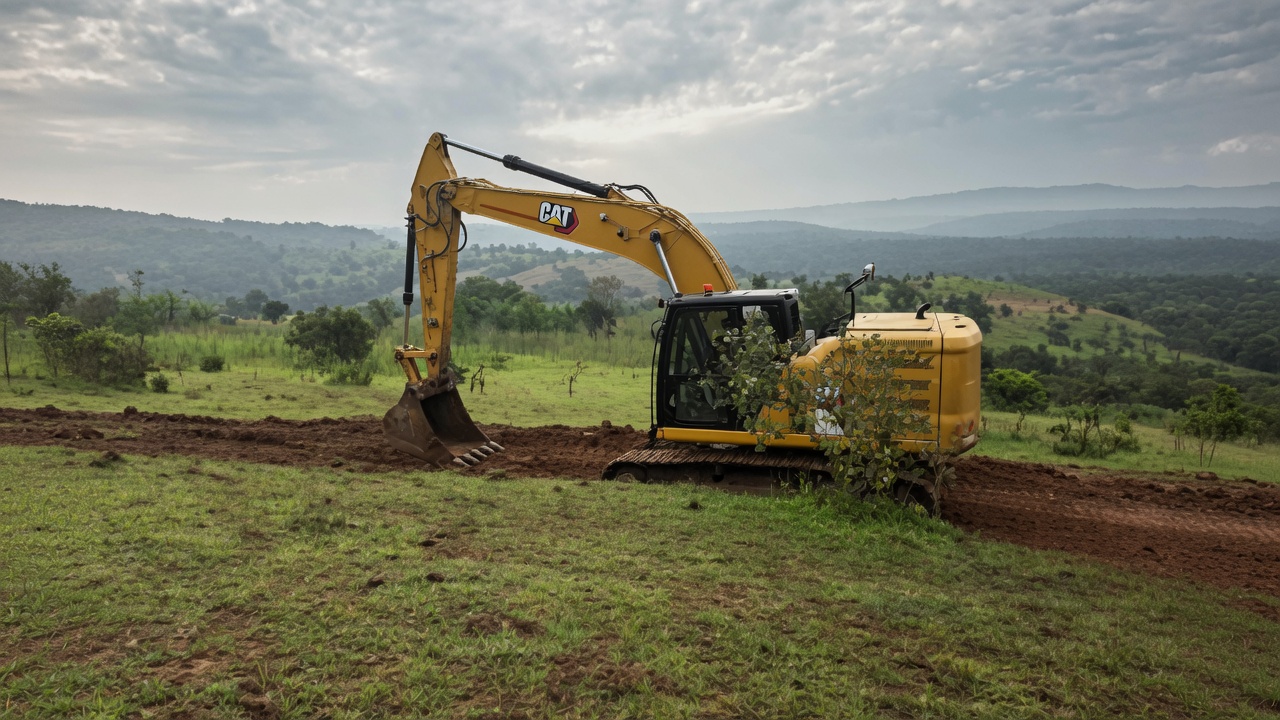
The pilot mining and rehabilitation program at Kasiya was conducted over a 10-hectare trial site, during which 170,000 cubic meters of material were mined, with the processed ore backfilled after extraction. The first year of rehabilitation trials produced maize yields of 5.2 tonnes per hectare compared with a regional average of 1 tonne per hectare. Pre-mining agricultural land in the region loses crop-carrying capacity at 3% to 4% per annum, meaning the rehabilitation method is designed to reverse a structural trend rather than simply restore a pre-mining baseline.
The second year of trials expanded into a multi-cropping system combining maize with Giant Bamboo (Dendrocalamus asper), winter beans, grass fodder, and groundnuts. Bamboo and maize co-exist with minimal competition, and the bamboo serves a dual role as a long-term carbon sequestration and soil remediation solution as it matures. Second-year yields are expected to reach the 5.2 tonnes per hectare benchmark at harvest in mid-2026. The method operates under a no-tillage, minimal soil disturbance principle, with all activities conducted by hand without heavy machinery. This is explicitly designed to be replicable and maintainable by local farming communities beyond mine closure without specialist equipment or ongoing external support.
A further outcome of the program is community-driven. After two years of collaboration, the 28 local farmers involved formally requested that Sovereign remain at the site and support the establishment of a farming co-operative. The company plans to continue working with those farmers throughout 2026, developing the co-operative model with a view to scaling it across the broader project area as mining progresses.
Frank Eagar, Managing Director and Chief Executive Officer of Sovereign Metals, frames the scope of the program's significance:
"Not only will the overwhelming success and empirical data collected through this pilot mining and rehabilitation trial underpin the DFS accuracy, but it also demonstrates that land post mining can be successfully rehabilitated and our ability to improve agricultural productivity."
Project Economics & the DFS Threshold
The Optimised Pre-Feasibility Study (OPFS), published in January 2025, established the economic framework within which the rehabilitation and IFC workstreams are operating. The study delivered a pre-tax net present value at an 8% discount rate (NPV8%) of US$2,322 million, a 27% internal rate of return (IRR), and average annual earnings before interest, taxes, depreciation, and amortization (EBITDA) of US$409 million, with an EBITDA margin of 64% over a 25-year mine life. Capital expenditure (capex) for the first production was estimated at US$665 million. Total life-of-mine revenue is estimated at US$15,990 million. The OPFS assumed a rutile received price of US$1,490 per tonne and a long-term graphite basket price of US$1,290 per tonne.
The OPFS was completed with input from Rio Tinto subject matter experts and under the oversight of the Sovereign-Rio Tinto Technical Committee. That level of technical review distinguishes the study from prefeasibility work produced without significant company participation, and it provides a degree of external validation relevant to how project financiers assess execution risk.
The DFS is the study level required to support a construction and financing decision. Each of the parallel workstreams underway, including IFC integration, the rehabilitation plan, the ESIA, commercial offtake development, and permitting baseline work, is feeding into or will be incorporated within the DFS package. The bankability of that document is therefore a function not only of the economics it contains but of how comprehensively the environmental, social, and commercial workstreams have been completed alongside it.
Graphite's Role in the Cost Structure
Kasiya is structured as a primary rutile project. Graphite is extracted as a by-product of the same mining and processing operations, meaning production incurs only incremental costs added to the process plant to separate and treat the graphite stream. The OPFS defines the incremental graphite production cost at US$241 per tonne, free on board at the port of Nacala. China's weighted average natural graphite production cost is approximately US$257 per tonne.
Kasiya's weathered geology is the mechanism behind this position. The deposit is hosted in soft, friable saprolite requiring no drilling, blasting, crushing, or grinding before processing. The circuit runs load and haul, scrubber, and wet concentration plant, a three-step sequence against the multi-step or longer front-end required by hard-rock graphite operations. That simplified processing preserves flake size, yielding 57% of production in the large-to-jumbo fraction (plus-80 mesh) and 12% in the medium fraction (plus-100 mesh). By comparison, Syrah Resources' Balama project in Mozambique, the largest listed graphite producer globally, produces 89% of its output as small flakes. Large to jumbo flakes traded at US$1,140 to US$1,193 per tonne in the fourth quarter of 2024, against US$564 per tonne for small flakes. The weathered ore also produces a concentrate grading 96% to 98% total carbon, compared to a typical 94% to 95% for hard-rock peers, with sulphur content below 0.02%.
Testwork conducted at German laboratories ProGraphite and Dorfner Anzaplan confirmed suitability for refractory, expandable graphite, and battery anode markets, covering over 94% of global natural graphite demand by volume. At full scale, beginning in year six of the mine life, Kasiya is expected to produce approximately 265,000 tonnes of flake graphite per year.
Eagar describes the project's cost position relative to China:
"They can't compete at that price. We almost have the ability to take the Chinese market share with that operating cost. From the potential of becoming a long-term secure source of supply of flake graphite, Kasiya is sitting very nicely within that opportunity."
Resource Scale & Rio Tinto's Role
Rio Tinto invested A$60 million for a 19.9% equity stake in Sovereign Metals in 2023, positioning just below the 20% threshold that triggers a mandatory takeover bid under Australian corporate law. The investment brought Rio Tinto into direct participation in the project's technical development through the Sovereign-Rio Tinto Technical Committee, with involvement extending through the current DFS phase. The Probable Ore Reserve stands at 538 million tonnes at 1.03% rutile and 1.66% total graphite carbon, containing 5.5 million tonnes of rutile and 8.9 million tonnes of graphite, classified under the Joint Ore Reserves Committee (JORC) 2012 standard.
The total mineral resource base comprises 1,809 million tonnes at 1.0% rutile and 1.4% graphite, with Indicated resources of 1,200 million tonnes and Inferred resources of 609 million tonnes. That resource scale underpins the 25-year mine life modeled in the OPFS. The technical committee structure means Rio Tinto's involvement extends beyond passive equity ownership to active oversight of the study process that will form the basis of any future development decision.
Risks & Remaining Milestones
Several workstreams must advance in parallel for Kasiya to reach a construction decision on the timeline Sovereign is targeting. The DFS completion is the primary near-term deliverable. Following completion, the project will enter the Malawian permitting sequence, including the mining license application and environmental permitting. The ESIA, being developed concurrently with IFC involvement, feeds directly into that regulatory process.
The capex estimate from the OPFS will be updated and finalized in the DFS, and project financing at that scale. The IFC workstream and the Rio Tinto relationship are both structurally relevant to the assembly of that financing package. The pace at which the IFC workstream converges with the DFS and ESIA through 2026 will determine whether the institutional groundwork translates into a construction decision without a material schedule extension.
On the commercial side, the Traxys Memorandum of Understanding (MOU) covers up to 80,000 tonnes per year against anticipated full-scale graphite production of approximately 265,000 tonnes per year. The balance of graphite offtake and the rutile offtake program remains to be completed, and Eagar has confirmed that discussions with additional counterparties across both commodities are active.
"Our next steps really are to complete a definitive feasibility study, which is very well on track. We're hoping to get that done within the next quarter or two quarters. And then really we'd be heading into permitting in Malawi. This year is an important year for Kasiya and its development timeframe."
The Investment Thesis for Sovereign Metals
- Kasiya holds the world's largest known rutile resource at 17.9 million tonnes of contained rutile and the second-largest known flake graphite resource at 24.4 million tonnes of contained graphite, providing a scale of mineral endowment that underpins a 25-year mine life with material production volumes in both commodities.
- The Optimised Pre-Feasibility Study delivered a pre-tax net present value of US$2,322 million, a 27% internal rate of return, and a 64% earnings before interest, taxes, depreciation, and amortization margin, driven by a low-cost operating model that benefits from soft saprolite ore requiring no blasting or grinding and a graphite by-product cost structure that is largely subsidized by rutile.
- Rio Tinto's A$60 million equity investment for a 19.9% stake and direct participation in the Sovereign-Rio Tinto Technical Committee provides both technical validation during the study phase and direct involvement from one of the world's largest mining majors.
- The graphite incremental cost of production of US$241 per tonne positions Kasiya below China's weighted average production cost of US$257 per tonne, a structural cost advantage derived from the by-product model that applies regardless of rutile price movements and that most ex-China graphite developers cannot replicate.
- The International Finance Corporation collaboration and two years of empirical rehabilitation data embed international development finance standards directly into the Definitive Feasibility Study and the Environmental and Social Impact Assessment, building the evidential record that development finance institution lenders require as a condition of project financing.
- A memorandum of understanding with Traxys for up to 80,000 tonnes per year of graphite, connected to the US government's Project Vault supply chain program, establishes an initial commercial position in the Western critical minerals supply diversification effort ahead of production.
Kasiya's investment case combines scale, cost structure, and institutional backing that are each unusual in isolation and more so in combination. A graphite by-product whose incremental costs fall below the Chinese average, a rutile resource with no comparable global peer, a major's technical participation in the study process, and an active IFC relationship all contribute to a development profile that distinguishes the project from most others at its stage. The remaining milestones, DFS completion, permitting, and project financing, carry execution risk inherent to any development-stage project in a frontier jurisdiction. How those workstreams converge through 2026 will determine whether that profile translates into a construction decision.
TL;DR
Sovereign Metals has completed 2 years of pilot mining and rehabilitation trials at Kasiya, and has integrated multi-season empirical data into the Mine Closure and Rehabilitation Plans within the DFS. The IFC collaboration is running in parallel, embedding its Performance Standards into the study and ESIA to build the bankability evidence record that development finance institution lenders require. These workstreams sit alongside OPFS economics, showing a US$2,322 million pre-tax NPV, a 27% IRR, and graphite by-product costs of US$241 per tonne, against China's weighted-average of US$257 per tonne, all underpinned by Rio Tinto's 19.9% strategic equity stake and Technical Committee participation. The DFS is expected within one to two quarters of February 2026, after which the permitting sequence in Malawi and the assembly of the project financing package will define the path to a construction decision.
FAQs (AI-Generated)
The IFC's Performance Standards are the environmental and social framework that development finance institutions apply as conditions of lending. By integrating those standards into the DFS and ESIA during the study phase itself, Sovereign Metals is building an evidential record that satisfies lender requirements by design rather than retrospectively, as institutional project financiers assess when evaluating whether a project's environmental and social commitments are credible and audit-ready.
The pilot program mined, processed, and rehabilitated a 10-hectare trial site, achieving first-year maize yields of 5.2 tonnes per hectare, well above the regional average of 1 tonne per hectare. A second year expanded the system to include Giant Bamboo, winter beans, grass fodder, and groundnuts, with second-year yields expected to match the first-year benchmark at harvest in mid-2026. The empirical data from both seasons are now incorporated into the Mine Closure and Rehabilitation Plans within the Definitive Feasibility Study.
China produces the majority of the global natural graphite supply, and its weighted-average production cost of US$257 per tonne has historically made it difficult for ex-China projects to compete on economics. Kasiya's graphite incremental cost of US$241 per tonne is achievable because capital and operating costs are primarily allocated to rutile, meaning the graphite stream carries only the marginal costs of separation and treatment, a structural advantage that most standalone graphite developers cannot replicate.
Rio Tinto participates in the Sovereign-Rio Tinto Technical Committee, which has overseen the OPFS and continues through the current DFS phase. That structure places Rio Tinto in active oversight of the study process rather than in a passive financial position, and the involvement of Rio Tinto subject matter experts directly in the OPFS provides a degree of external technical validation relevant to how project financiers assess execution risk.
The primary near-term milestone is completion of the DFS, which will finalize capital costs and the project schedule required to support a financing decision. Following the DFS, the Malawian permitting sequence, completion of rutile and graphite offtake coverage beyond the existing Traxys MOU, and the assembly of a project financing package, likely involving development finance institutions and export credit agencies, will collectively define the timeline to a construction decision.
Analyst's Notes





Subscribe to Our Channel



Stay Informed


