Tudor Gold’s New Perfectstorm Porphyry Sits Between Gold Intervals, Like Goldstorm



Tudor Gold says its new Perfectstorm porphyry sits between gold-dominant intervals, as at Goldstorm. A single hole shows that order; true widths remain unknown.
- Tudor Gold reported a new copper-gold-silver-molybdenum porphyry system, the PSP Zone, about 1 kilometer southwest of its Goldstorm Deposit at its closest point.
- The company states the porphyry sits between higher-grade intervals of gold-dominant mineralization, similar to Goldstorm.
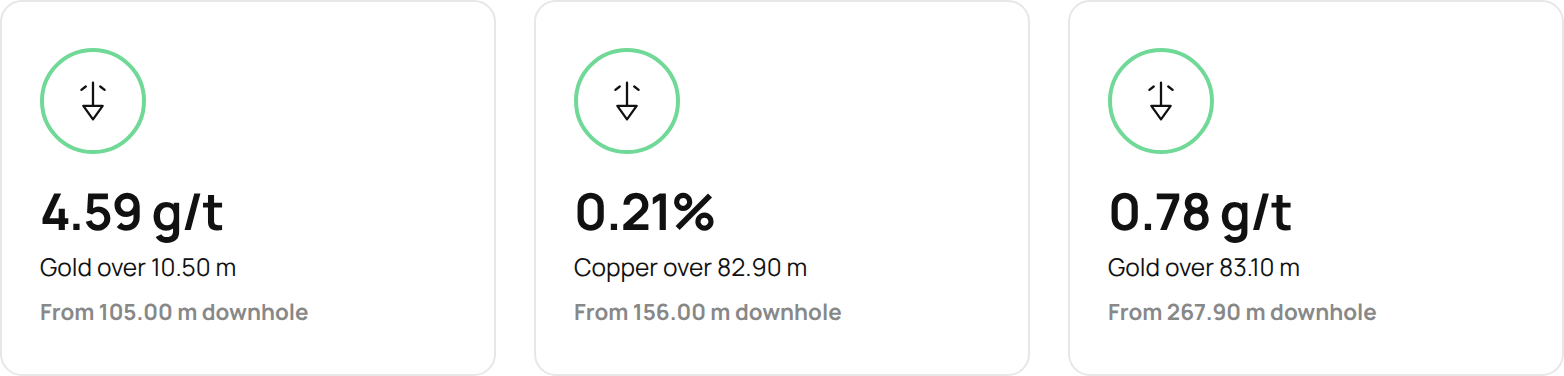
- One hole cut 4.59 grams per tonne gold over 10.50 meters, then 0.21% copper over 82.90 meters, then 0.78 grams per tonne gold over 83.10 meters.
- Tudor reports 5.8 million Indicated ounces of gold for Goldstorm at 1.78 grams per tonne at a US$125 per tonne net smelter return (NSR) cutoff.
- True widths are undetermined, and Tudor's two Perfectstorm drills are now focused on the new porphyry and a separate gold-silver trend.
New Copper-Gold Porphyry System at Treaty Creek's Perfectstorm Zone
A single hole at Tudor Gold Corp.'s (TSXV: TUD | Frankfurt: H56 | OTC: TDRRF) Perfectstorm Zone reported gold intervals above and below a copper-molybdenum interval, consistent with the company's statement that its new porphyry sits between higher-grade intervals of gold-dominant mineralization, as at its Goldstorm Deposit about 1 kilometer away at its closest point. Tudor reported the discovery, named the PSP Zone, on August 6, 2026, from 3 of the first 4 holes of its 2026 Treaty Creek Project Exploration Program at Perfectstorm. Treaty Creek is 80%-owned by Tudor and lies in British Columbia's Golden Triangle, and Tudor's March 2026 presentation lists a Mineral Resource Estimate (MRE) for an additional Treaty Creek deposit among its 2026 plans, without naming the deposit.
One Hole Reports Gold, Copper-Molybdenum & Gold Intervals
That hole opened with 4.59 grams per tonne of gold and 0.67 grams per tonne of silver over 10.50 meters, from 105.00 meters downhole, including 11.15 grams per tonne of gold over 3.00 meters. Tudor states that the PSP results are hosted within a potassic-altered diorite intrusive. The next reported interval in the hole returned 0.24 grams per tonne gold, 2.11 grams per tonne silver, 0.21% copper, and 50.76 parts per million molybdenum over 82.90 meters from 156.00 meters, including 0.30% copper over 30.85 meters from 208.05 meters.
From 267.90 meters, the lower gold interval returned 0.78 grams per tonne gold and 0.29 grams per tonne silver over 83.10 meters, including 2.73 grams per tonne gold over 2.50 meters from 283.50 meters and 1.89 grams per tonne gold over 9.00 meters from 342.00 meters. In the same hole, gold intervals are therefore reported both above and below the copper-molybdenum interval.
In another PSP Zone hole, a gold interval of 1.23 grams per tonne over 6.00 meters from 265.50 meters is followed by 0.36 grams per tonne gold, 0.28% copper, and 42.52 parts per million molybdenum over 10.50 meters from 331.50 meters, and a deeper interval from 393.00 meters grading 0.87 grams per tonne gold, 0.07% copper, and 96.13 parts per million molybdenum over 10.50 meters. The company states that further drilling is required to determine the orientation and true widths of the mineralized body, so the ordering does not establish continuity between holes. The third PSP Zone hole's reported interval returned 0.27% copper and 0.34 grams per tonne gold over 67.35 meters from 180.00 meters. All assays are uncut, and intervals are drilled lengths.
Goldstorm's Zones Provide the Comparison
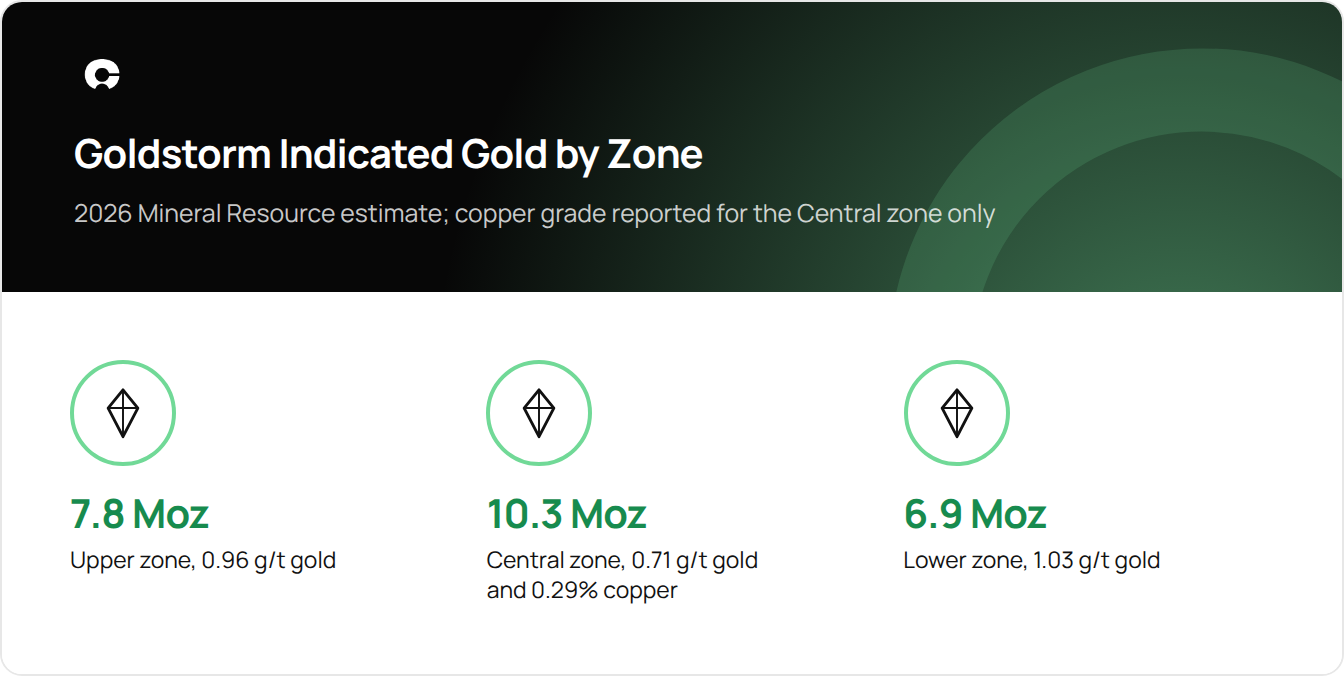
Tudor Gold, citing its January 22, 2026 news release, divides the Goldstorm Mineral Resource Estimate (MRE) into 3 zones. The Upper zone carries an Indicated 7.8 million ounces of gold at 0.96 grams per tonne, the Central zone 10.3 million ounces at 0.71 grams per tonne with 0.29% copper for 2,887.5 million pounds, and the Lower zone 6.9 million ounces at 1.03 grams per tonne. The Central zone is the only one for which the presentation reports a copper grade.
At a US$50 per tonne net smelter return (NSR) cutoff, the Indicated resource is 912.3 million tonnes at 0.85 grams per tonne gold for 24.9 million ounces; at US$125 per tonne, it is 102.1 million tonnes at 1.78 grams per tonne for 5.8 million ounces. Tudor has filed a permit application for an underground ramp to drill the high-grade SC-1 Zone, and a Preliminary Economic Assessment (PEA) on an underground mine at Goldstorm, which the company describes as its first step toward production, is underway.
Tudor's stated strategy includes expanding high-grade gold potential at Goldstorm and advancing an underground ramp to access higher-grade mineralization. Perfectstorm has no Mineral Resource, so the Goldstorm figures serve as a geological reference point rather than a proxy for PSP's scale.
Two Drills Now Focused on Perfectstorm's PSP & PSE Zones
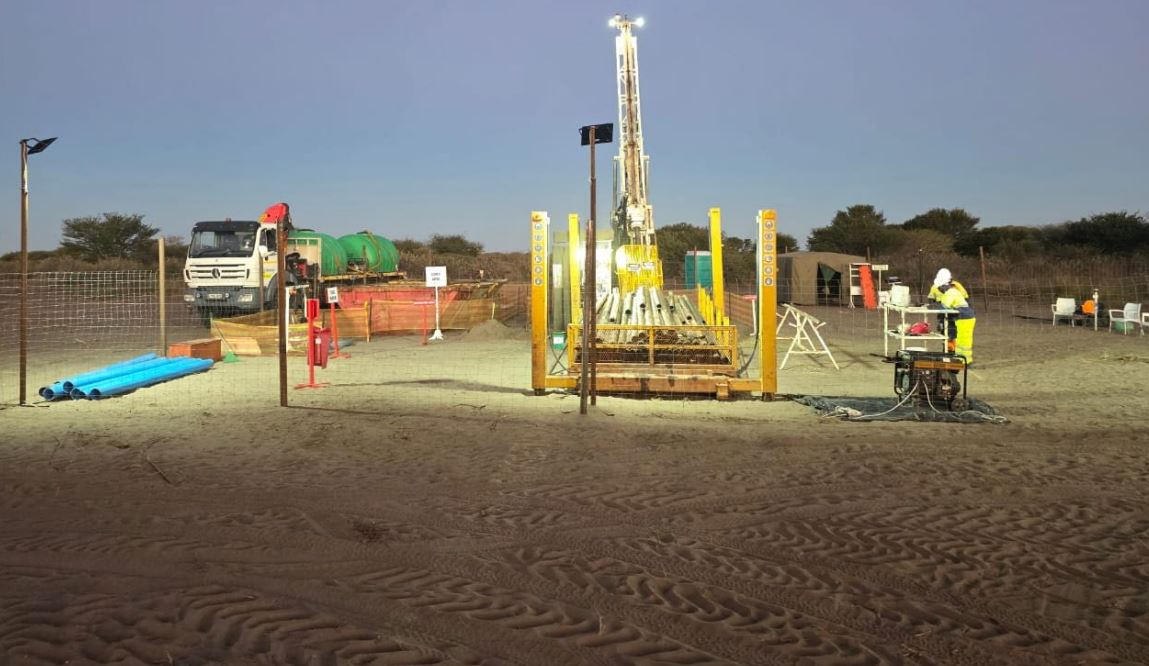
Tudor states that both drills active at Perfectstorm are now focused on the PSP Zone and the separate PSE Zone. The PSP Zone lies along the northeast-southwest Sulphurets corridor, which hosts multiple porphyry deposits and prospects, and is located 4 kilometers northeast of Seabridge Gold's Iron Cap Deposit; the system remains open in all directions.
The PSE Zone is a near-surface, gold-dominant epithermal vein system distinct from the porphyry. A PSE Zone hole returned 0.78 grams per tonne gold and 2.90 grams per tonne silver over 74.15 meters from 86.45 meters, including 2.16 grams per tonne gold over 9.10 meters, confirming continuity between earlier holes along more than 360 meters of strike.
The company lists completing the 2026 exploration drill program, receiving the permit for the underground exploration ramp, and completing the PEA among Tudor's 2026 plans.
FAQs (AI-Generated)
Analyst's Notes





Subscribe to Our Channel









Stay Informed