




US Gold Corp's CK Gold Project Beyond the Feasibility Study: 6 Things You Need to Know


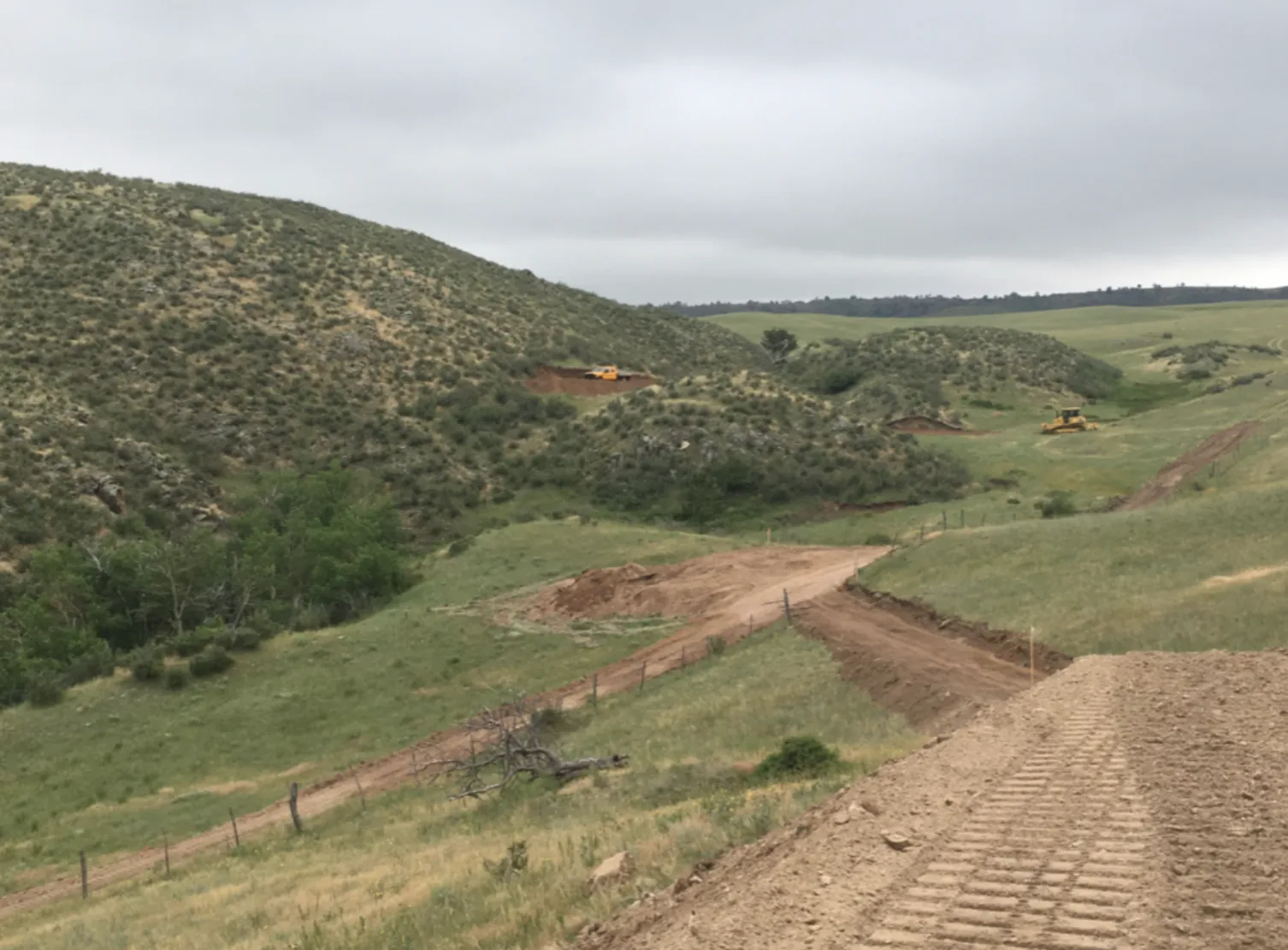
US Gold Corp outlines 5 value initiatives at its fully permitted CK Gold Project in Wyoming, each of which falls outside the March 2026 feasibility study baseline.
Project Overview
US Gold Corp (NASDAQ: USAU) published its CK Gold Project Feasibility Study (FS) on March 2026, establishing an after-tax net present value at a 5% discount rate (NPV5%) of $632 million at $3,250 per ounce gold and $1.30 billion at recent spot prices of $4,500 per ounce gold, with an after-tax internal rate of return (IRR) of 27%, a 2.5-year payback period, initial capital of $394 million, and a proven and probable reserve of 1.015 million ounces of gold, 260 million pounds of copper, and 3.031 million ounces of silver across an 11-year mine life. The project is fully permitted on Wyoming state land 20 miles west of Cheyenne, with no federal involvement and no permit subject to challenge under Wyoming state law. Mine access road construction commenced in January 2026.
The company identified five value enhancement opportunities sitting entirely outside the FS baseline: approximately 900,000 additional gold equivalent ounces in resource, a metallurgical recovery improvement from 71.5% to approximately 95%, an aggregate and rail ballast revenue stream from approximately 40 million tonnes of waste rock priced at $20 to $25 per tonne, a resource expansion program targeting 2,900 feet of untested strike length, and a pit water storage scenario that could reduce or eliminate the $27 million reclamation cost.
1. The Feasibility Study Is the Floor, Not the Ceiling
By limiting the initial pit to Wyoming state jurisdiction, US Gold Corp secured an enforceable permitting timeline without the risk of federal review, but excluded approximately 900,000 gold-equivalent ounces from the base-case production schedule. The current FS mine plan requires only Wyoming state approval, avoiding potential federal challenges while leaving those ounces within the existing resource pit shell outside the production schedule. The five upside initiatives disclosed in April 2026 are additive to the base-case FS economics, with a construction decision targeted for 2026 as each workstream advances alongside project financing.
2. Mine Expansion: Approximately 900,000 Gold Equivalent Ounces Sitting Outside the Current Plan
At current life-of-mine (LOM) recoveries of 71.5% for gold, 80.6% for copper, and 68.7% for silver, the approximately 900,000 gold-equivalent ounces outside the FS production schedule represent over 500,000 gold-equivalent ounces of additional payable production accessible through future pit expansion and permit amendments, with no new infrastructure capital required.
The CK deposit is defined by 215 drill holes totalling 136,600 feet. Existing resources below the current pit boundary can be incorporated through future permit amendments without triggering federal review, as the project footprint sits entirely on Wyoming state land. Any resource addition would extend mine life beyond the current 11 years and add production value against the existing capital base. Any pit expansion also increases the volume of granodiorite waste rock available for aggregate and rail ballast sales at $20 to $25 per tonne, meaning each additional tonne of resource yields secondary revenue in addition to its metal value.
3. Metallurgical Recovery From 71.5% to Approximately 95% Gold Recovery
The FS baseline recovers 71.5% of gold through conventional flotation; applying carbon-in-leach (CIL) cyanidation to flotation tailings could increase total gold recovery to approximately 95%, adding approximately 250,000 ounces of recovered gold from the current mine plan and a further approximately 225,000 ounces from an expanded pit. Gold reporting to flotation tailings under the current process is stored in a fully lined tailings management facility as pulverised rock. Test work confirms that CIL cyanidation applied to those tailings can recover the locked gold, increasing LOM gold recovery from 71.5% toward 95%. The company is also evaluating iodine as an alternative lixiviant, which is reusable and has been applied with low-sulfide deposits in Nevada without the use of cyanide.
Chairman of US Gold Corp, Luke Norman, addressed the recovery pathway:
“You throw a whisper of cyanide at it through CIL, and you're in the high,97% to 98% recovery by the all-in, by the time you bring it in."
4. Resource Expansion: The Deposit Remains Open on Three Sides
80% of historical drill holes at CK end in mineralisation or are not closed off laterally, and mineralisation remains open at depth below 800 feet and along 2,900 feet of untested strike length, indicating the current reserve understates the deposit's geological extent.
The current mineral resource was defined within the existing drill grid; the resource boundary reflects drill coverage rather than a geological or economic cutoff. The deposit is hosted in a granodiorite shear zone within the Silver Crown Mining District and has been postulated to be of porphyry origin, a deposit type that is typically not isolated. Step-out drilling at depth and along strike, combined with conversion of inferred material within the existing resource pit shell, are the two pathways the company is targeting for resource growth.
The company has stated that depth and strike length volumetrics are sufficient to potentially double the current gold-copper resource if mineralisation continues along strike. Any addition of resources would extend mine life and increase production value relative to the existing capital base.
5. Aggregate & Rail Ballast: A Secondary Revenue Stream With a Named Off-Taker
Approximately 40 million tonnes of granodiorite waste rock in the current mine plan has an estimated in-situ value of $800 million to $1 billion, based on local crushed stone pricing of $20 to $25 per tonne, yet none of this potential revenue is included in the FS financial model. The CK project is located 3 miles north of Interstate 80 and 20 miles west of Cheyenne, placing it within trucking distance of Wyoming and Colorado construction markets. Comparable crushed stone from a nearby Martin Marietta quarry sells locally at similar pricing, while market studies commissioned by US Gold indicate regional demand of 2 to 3 million tonnes annually. A railroad company located 4 miles from the project has also expressed interest in purchasing 400,000 tonnes of ballast per year.
Norman quantified the in-situ value of the waste rock:
"Just under the reserve alone, there's between 800 million and a billion dollars in situ that rock sitting on the surface for free."
6. Closure Optimisation & the Water Storage Scenario
The FS budgets $27 million for mine reclamation under a closure plan that includes partial pit backfill and restoration of the land to pasture and wildlife habitat. US Gold is advancing an alternative scenario in which the exhausted open pit is repurposed as a municipal water reservoir connected to the Cheyenne Board of Public Utilities water supply network, supported by a water users agreement approved by the Cheyenne City Council in November 2021 and a formal water purchase agreement approved in February 2022. A pumped-storage power generation project has also been identified as a potential post-mining use. US Gold is conducting hydrological, water-monitoring, and technical studies to assess the reservoir's viability. If confirmed, the project could eliminate or substantially reduce the budgeted reclamation cost while creating a long-term infrastructure asset for the City of Cheyenne.
Key Takeaways for Investors
- The CK Gold Project's after-tax net present value at a 5% discount rate of $632 million at the feasibility study base case of $3,250 per ounce of gold rises to $1.30 billion at recent spot prices of $4,500 per ounce of gold, and each of the five upside initiatives disclosed in April 2026 is additive to both figures.
- All major permits are secured under Wyoming state law with no federal involvement; under Wyoming state law, awarded permits cannot be challenged or revoked, removing a permitting risk category that has delayed comparable development-stage projects.
- Approximately 900,000 gold-equivalent ounces of mineral resources are within the existing resource pit shell but outside the feasibility study production schedule. At current recoveries, those ounces represent over 500,000 gold-equivalent ounces of additional payable production accessible through permit amendments, with no new infrastructure capital required.
- Applying carbon-in-leach cyanidation to flotation tailings could increase gold recovery from the FS baseline of 71.5% to approximately 95%, adding approximately 250,000 ounces of recovered gold from the current mine plan.
- Approximately 40 million tonnes of granodiorite waste rock from the current mine plan carries an in-situ value of $800 million to $1.0 billion at local market pricing of $20 to $25 per tonne, with a named railroad off-taker located 4 miles from the project, and none of this revenue is included in the feasibility study financial model.
- The approved mine closure plan budgets $27 million for reclamation, but a parallel pit water storage scenario supported by water agreements with the City of Cheyenne, signed in November 2021 and February 2022, could reduce or eliminate that liability.
The Bottom Line
With the FS published, all state-level permits secured, and construction of the mine access road commenced in January 2026, US Gold Corp is targeting a construction decision in 2026. The company's four-point action plan covers: finalising project financing; finalising the resource expansion drill plan; evaluating CIL and alternative lixiviants to increase gold recovery from 71.5% toward 95%; and advancing the aggregate partnership framework for approximately 40 million tonnes of waste rock at $20 to $25 per tonne. Each of the five upside initiatives is independent of the others and of the construction decision. Resolution of any single initiative adds a discrete, quantifiable increment to the base case feasibility economics.
Analyst's Notes





Subscribe to Our Channel





Stay Informed






















