




7 Signals of De-Risking as Buen Retiro Hits 21.84% Copper Near Surface


Buen Retiro's recent drilling returned extremely high-grade and shallow copper, including a 1 m intercept at 21.84% copper, the project's highest grade to date, in the material the company plans to treat first.
Project Overview
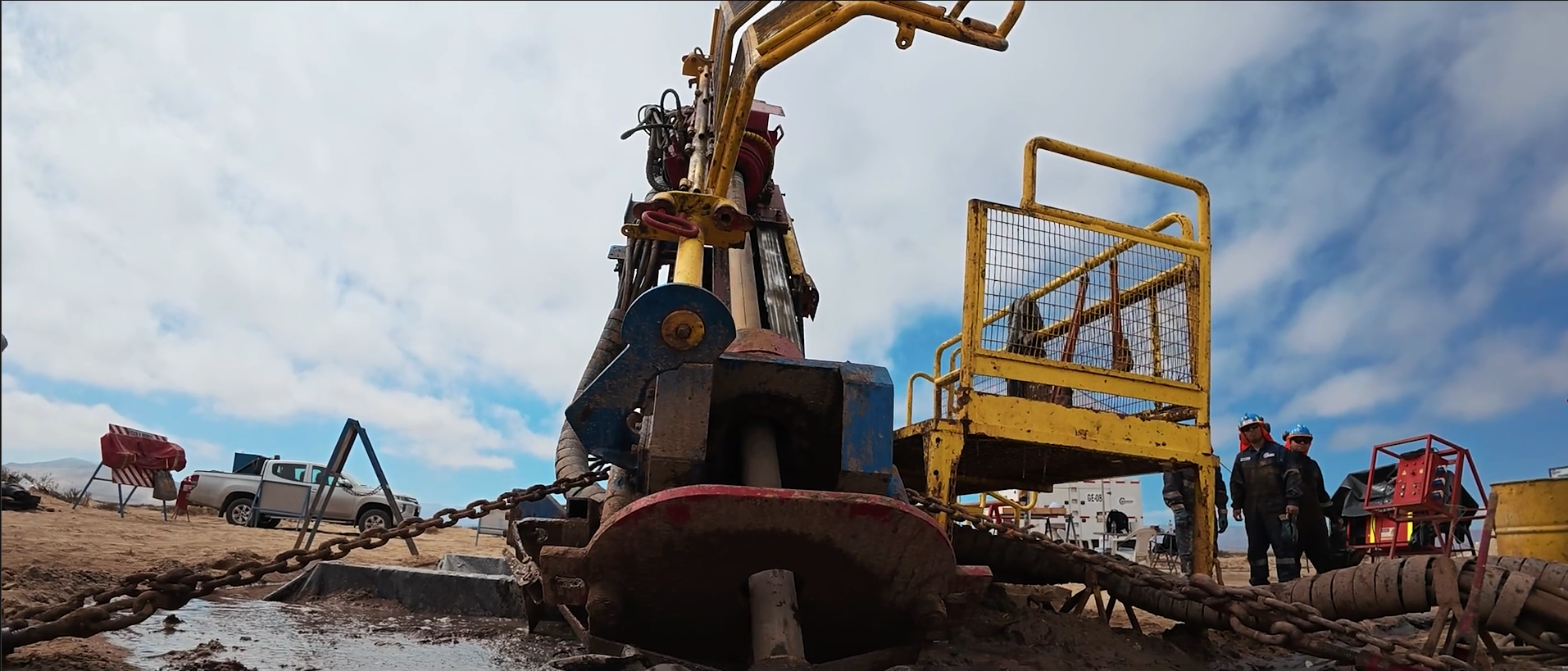
Fitzroy Minerals (TSXV: FTZ | OTCQX: FTZFF | FSE: C3Y) has reported assays from the latest block of definition drilling at Buen Retiro, an iron oxide copper gold project near Copiapó in Chile. Twenty holes make up the round. Of those, 5 were drilled for geotechnical data, 1 was abandoned at a fault zone, and the remaining 14 produced the reported intervals. Since the start of February 2026, the company has completed 92 diamond drill holes for 16,376 meters (m), and it is targeting 22,000 m across 2026.
The assays reported in this round will be included in the company's first mineral resource estimate.
1. The Highest Grade Came From the Material Scheduled to Be Mined First
The highest grade Buen Retiro has produced came out of the shallow holes drilled to define the material the company will treat first.
Shallow infill drilling returned 8.8 m at 3.70% copper from 30 m downhole, roughly 21 m below surface. Inside that interval, 2.8 m graded 11.35% copper, and a 1-m interval graded 21.84% copper, the highest grade recorded from drilling at Buen Retiro to date. At that depth, the meter is approximately 26 m below the surface.
Those holes were placed for a specific job. The shallow infill program was drilled to better define the resources the company will extract early in the mine plan, and a short-hole program measured grade in the upper part of the Tenorita area. Assay intervals in this round are reported on a minimum thickness of 5 m and a minimum average grade of 0.20% copper, which is the floor below which these figures are reported.
2. The Hole Stopped at an Old Working, Not at the End of the Copper
Drilling ended when the hole broke into a void left by artisanal miners, with the core still grading 5.81% copper.
The hole finished at 38.8 m, the base of the 8.8-m interval, on hitting the void. The core graded 5.81% copper at that point, within the wider interval grading 3.70% copper from 30 m, so the hole ended in mineralization rather than outside it.
3. A Second Hole Put High-Grade Copper 16 m Below Surface
A second reported hole showed the same near-surface pattern, opening at 16 m depth and grading almost 1% copper over 31 m.
That hole returned 31 m at 0.96% copper from 16 m depth, including 5 m at 1.81% copper from the top of the interval and 7 m at 2.28% copper from 29 m. Both intervals begin within 30 m downhole, in the same near-surface part of the deposit that the shallow infill program was drilled to define.
Reported intervals in the round are estimated to be 80% to 90% of true thickness, the share of the drilled width that is the real width of the mineralized body.
4. The Round Also Lengthened the Trend & Opened New Ground
A reverse circulation hole extended the main trend to 1.9 kilometers (km), and the round returned copper from a newly identified area and a 100-m extension to known mineralization.
A reverse circulation hole passed a fault zone that had stopped an earlier diamond attempt, and it intersected native copper and chalcocite, a copper sulfide mineral, at 239 m depth. That intersection extends the main Tenorita trend by 200 m to 1.9 km along strike. Assays for the hole are pending.
Two of the reported intervals came from holes that were not infill drilling. A 100-m extension to known mineralization in the northeast of the Tenorita area returned 105 m at 0.74% copper from 58 m depth, including 12 m at 3.01% copper. Between the Manto Negro and Nativo areas, a newly identified zone returned 83 m at 0.46% copper from a depth of 69 m, including 49 m at 0.68% copper. The drilling is identifying many new exploration targets.
5. Two Rigs Leave in September for the First Resource
Half the fleet comes off-site at a data cut-off, so this round's assays reach the first estimate.
Two of the diamond rigs are expected to leave the site in September, having reached a data cut-off that allows time for logging, assaying, and inclusion in the maiden mineral resource estimate. The company is targeting a further 6,000 m of drilling in 2026 and will operate 2 rigs at Buen Retiro through the fourth quarter: the reverse-circulation rig, primarily for regional exploration testing of shallow targets, and the diamond rig, primarily for deep targets.
The laboratory work behind those assays has its own controls. Company-inserted quality assurance and quality control samples make up about 12% of primary core samples, a silica blank goes in every 20 samples and always immediately after a section containing native copper, and the company's visual review of the standards and blanks identified no significant issues. A second laboratory will replicate procedures from the next stage of drilling onward.
6. The Grade Feeds a Heap Leach Route Into Capacity That Already Exists
Copper this close to the surface suits the heap leach development the company is planning, into a plant within 90 km that is operating below capacity.
Buen Retiro is planned as a conventional enhanced-recovery heap-leach operation, in which ore is stacked and irrigated to dissolve copper. Pucobre's Planta Biocobre is offered as a potential processing facility under a letter of intent for joint development, with a stated capacity of 800 metric tons per month (9,600 per year), with 80% of its availability offered to the project. It is 1 of 3 underused plants within a 90-km radius.
President and Chief Executive Officer of Fitzroy Minerals, Merlin Marr-Johnson, traces the copper price case to a shortage of cheap, buildable discoveries:
"It's a supply-constrained, mature industry. There's a lack of quality, easy, low-cost new discoveries that can be brought into production."
Fitzroy holds 70% of Buen Retiro, and Pucobre has confirmed its intent to exercise its 30% claw-back right by repaying 90%.
7. Every Step Between This Core & First Production Has a Quarter Attached
The grade now enters a sequence with a quarter attached to each stage, ending in production targeted for early 2028.
The company is targeting an environmental submission in the fourth quarter of 2026, the first mineral resource estimate in the first quarter of 2027, and the pre-feasibility study in the second quarter of 2027. Financing and the investment decision follow across the second and third quarters of 2027. Environmental and metallurgical work runs across the third and fourth quarters of 2026, and sulfide exploration drilling continues from the third quarter of 2026 through the second quarter of 2027.
Alongside that, the company aimed to complete the drill-out of the Tenorita area in August to meet its stated production ambition, and the Caballos copper porphyry project is scheduled for 5,500 m of drilling in the fourth quarter of 2026, following deep geophysical work in the third quarter. Fitzroy held C$23.9 million in cash in August 2026.
Key Takeaway for Investors
- The highest grade the project has drilled came from shallow infill holes that define material for early extraction in the mine plan: 8.8 meters at 3.70% copper from 30 meters downhole, including a 1-meter interval of 21.84% copper.
- A second shallow hole carried the pattern, returning 31 meters at 0.96% copper from a depth of 16 meters, including 7 meters at 2.28% copper.
- The trend grew as the round closed, reaching 1.9 kilometers along strike and adding copper from a newly identified area and a 100-meter extension to known mineralization.
- Two rigs stand down in September at a data cut-off that clears logging and assaying time, thereby putting this round's grades within the maiden mineral resource estimate.
- Production is targeted for early 2028, following an environmental submission in the fourth quarter of 2026, the resource estimate in the first quarter of 2027, and the pre-feasibility study in the second quarter of 2027.
Bottom Line
Buen Retiro's first mineral resource estimate will be built on a data set whose latest round measured the project's highest grade to date in the material scheduled to be mined first, at a depth the company reaches early in the mine plan. The main trend now measures 1.9 km, 200 m longer than before the round, and a 100-m extension to known mineralization and a newly identified area returned intervals of 105 m and 83 m. With 70% of the project, a partner that has confirmed its intent to claw back 30% by paying back 90%, and production targeted for early 2028, the company goes into its first estimate with high-grade copper at the top of the deposit and existing capacity within 90 km to treat it.
Analyst's Notes





Subscribe to Our Channel






Stay Informed


