




Carolina Rush Tests Deep Porphyry Target in Partnership with OceanaGold


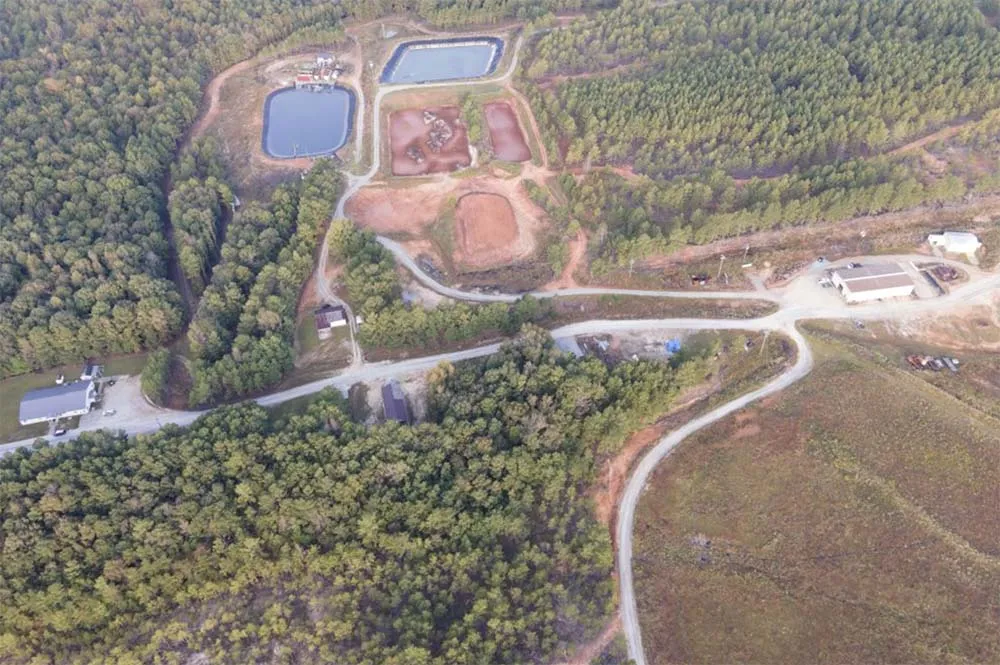
Carolina Rush explores Brewer gold mine in SC with OceanaGold partnership. 500K oz resource, deep porphyry target. Free-carried through $20M spend. Results due mid-2025.
- Carolina Rush Corporation is exploring the historic Brewer gold mine in South Carolina through a partnership with OceanaGold, a C$12 billion mining company that operates the adjacent Haile mine 15 minutes away
- Oceana can earn 80% by spending $20M over 5 years ($8M in first 2 years for 50%), with Carolina Rush maintaining 20% and being free-carried through exploration; the property purchase price is approximately $27M
- Current maiden resource of 500,000 oz gold could expand to 1-2 million oz, but the primary target is a deep porphyry copper-gold system similar to world-class deposits
- Carolina Rush maintains a proprietary database of southeastern US prospects and is pursuing additional projects through partnerships, leveraging underexplored geology in a pro-mining jurisdiction
- Three drill holes underway (currently drilling second hole), with assay results expected in coming months
The southeastern United States, birthplace of North America's first gold rush, is experiencing renewed interest as modern exploration techniques and partnerships unlock geological potential that has largely been ignored for over a century. Carolina Rush Corporation, led by CEO Layton Croft, is at the forefront of this resurgence, exploring the historic Brewer gold mine in South Carolina through a strategic partnership with OceanaGold. With gold prices at elevated levels and critical minerals in high demand, the company is testing whether the region can deliver world-class porphyry copper-gold deposits in addition to near-surface gold mineralisation.
The Brewer Gold Mine: A Complex System with Untapped Depth
Carolina Rush's flagship asset is the Brewer gold mine, a past-producing property that operated as an oxide gold heap leach operation during the 1980s and 1990s before being abandoned. The company secured the property through a competitive public tender in 2020, just before the COVID-19 pandemic began. Since then, Carolina Rush has completed 36 drill holes and established a maiden resource of 500,000 ounces of gold, compliant with NI 43-101 standards.
However, the near-surface gold represents only part of the story. The US Geological Survey identified Brewer as a porphyry target with copper potential as early as the 1970s, and the system shares geological characteristics with the nearby Haile mine, which contains approximately 5 million ounces and is operated by OceanaGold. Croft believes the near-surface resource could expand significantly with additional drilling. "I think with more drill holes that number could get to one or two million ounces," he stated, though he acknowledges that the real prize is the deep porphyry system.
The geological complexity of Brewer has attracted attention for decades, but testing the deep porphyry target requires substantial capital and expertise - resources that were beyond the reach of a junior exploration company operating independently.
Strategic Partnership with OceanaGold
Recognising the need for a major partner to pursue the deep porphyry potential, Carolina Rush structured an earn-in joint venture with OceanaGold in 2025. The terms provide Oceana with the opportunity to earn up to 80% of the project by spending $20 million over five years. The agreement is structured in two phases: Oceana must spend $8 million over the first two years to earn 50%, with a minimum commitment of $1.5 million (approximately three drill holes). If they choose to continue, an additional $12 million over the subsequent three years would increase their stake to 80%.
Carolina Rush serves as operator during the initial phase, earning management fees that help cover general and administrative expenses. The company remains free-carried through the entire $20 million exploration program, preserving its 20% interest without additional capital requirements. After the earn-in is complete, Oceana would be responsible for paying the full $27 million purchase price to the US government (the property is held under option) to secure their 80% interest.
The partnership is particularly strategic given Oceana's proximity. Operating the Haile mine just 15 minutes away, Oceana possesses intimate knowledge of the regional geology, existing infrastructure, and permitting pathways. As Croft noted, "They have a mine, they have a mill. It's literally 15 minutes in a car." While he cannot speak for Oceana's plans, the potential for Brewer to serve as a satellite deposit feeding into existing infrastructure presents obvious operational synergies.
Testing the Deep Porphyry Thesis
The deep drilling program commenced in January 2026, with Carolina Rush currently halfway through the second of three commitment holes. Assay results are still pending, with laboratory turnaround times extending beyond historical norms due to industry-wide capacity constraints. Croft anticipates it will be "some months" before all assays are returned and analysed.
The immediate catalyst for investors is whether Oceana elects to continue funding beyond the minimum commitment. "Should I stay or should I go? Is Oceana going to stay with us or not?" Croft framed it as one of the key questions for 2026. The decision will depend on the initial drill results and whether they indicate sufficient mineralisation to justify pursuing the porphyry system more aggressively.
The three-hole commitment is designed to provide initial data on the deep porphyry potential while limiting Oceana's downside risk. If the results are encouraging, the partnership could accelerate drilling to reach the $8 million first-phase target within the two-year window.
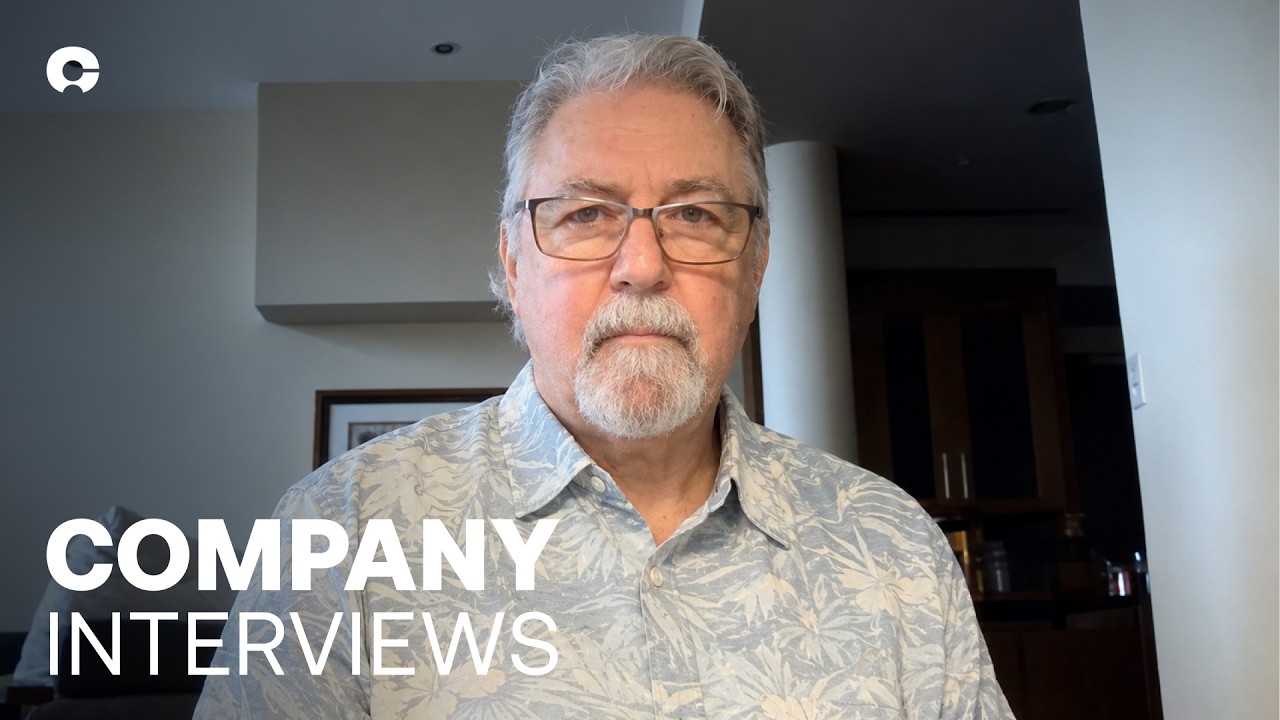
Interview with Layton Croft, CEO, Carolina Rush
Navigating South Carolina's Pro-Mining Jurisdiction
One of the challenges facing Carolina Rush is that Brewer is designated as a Superfund site, controlled by the US Environmental Protection Agency. This classification can deter investors concerned about environmental liabilities and regulatory complications. However, Croft believes the jurisdiction offers advantages that may offset these concerns.
South Carolina is generally pro-mining, particularly after the successful permitting and development of the Haile mine by Romarco (later acquired by Oceana). The Haile project navigated a challenging permitting process that included wetlands, endangered species concerns, and US Army Corps of Engineers involvement. "What Romarco did has paved the way for a permitting process in South Carolina that I think comparative to North Carolina and would be favorable," Croft explained.
Building a Regional Platform
Beyond Brewer, Carolina Rush is positioning itself as a regional consolidator with specialised knowledge of southeastern US mineral potential. The company maintains a proprietary database of prospects compiled over several years, digitising historical mining data dating back to the late 1700s. This database represents an asset in itself, providing competitive intelligence on targets that are not widely known to the broader market.
Carolina Rush previously held two additional gold projects under private lease but dropped them to focus resources on Brewer. However, the company continues to evaluate opportunities for partnerships and acquisitions that would expand its portfolio without requiring significant capital deployment. The strategy involves leveraging existing technical expertise and relationships with landowners throughout the region, where private land ownership creates challenges for assembling adequate land packages.
Croft describes the company as "an explorer that has a competitive advantage in this region," though he acknowledges the model could evolve depending on the success at Brewer. If the porphyry system proves to be mineralised and economic, "we've cracked the code on the southeast," he suggested, which would likely attract significant interest from larger mining companies seeking similar targets in the area.
The company is actively engaged in discussions with other parties regarding projects unrelated to Brewer, though Croft emphasised that any new acquisitions would need to demonstrate rapid value creation and a clear pathway to cash flow.
Strategic Evolution in a Strengthening Market
When asked about how the current market environment might influence Carolina Rush's business model, Croft noted that he recognised that elevated gold prices and increased investor interest create opportunities for creative structuring and value creation that might not have been possible in weaker markets.
While committed to maintaining the company's identity as an explorer, Croft expressed openness to evolving the model beyond the current partnership approach. He mentioned potential strategic alliances with larger companies on a geographic basis and project generator models as possibilities that "aren't part of our current model and could be and maybe should be."
This flexibility reflects a pragmatic approach to capital allocation and shareholder value creation, particularly important for a junior exploration company operating in a capital-intensive sector.
The Investment Thesis for Carolina Rush
- Optionality on world-class porphyry discovery: Deep copper-gold porphyry potential in a region where no geologist would typically look for such deposits, creating asymmetric upside if mineralisation is proven
- Free-carried exploration: Zero capital requirements from shareholders during the $20M Oceana-funded drilling program, with Carolina Rush maintaining 20% ownership and receiving management fees
- Near-term resource growth: Existing 500,000 oz gold resource could expand to 1-2 million oz with focused drilling on near-surface targets, providing a de-risked baseline value
- Strategic partner validation: $12 billion OceanaGold's commitment signals technical merit and provides access to adjacent infrastructure (mill 15 minutes away) for potential future production
- Regional consolidation opportunity: Proprietary database and local relationships position company to acquire additional projects at attractive valuations in underexplored jurisdiction
- Multiple value inflection points: Drill results (Q2-Q3 2026), Oceana continuation decision, potential new project acquisitions, and longer-term porphyry discovery all provide catalyst visibility
- Favourable jurisdiction: Pro-mining South Carolina with precedent permitting pathway established by adjacent Haile mine development
Macro Thematic Analysis
The southeastern United States represents one of the most compelling domestic mining frontiers in North America, driven by policy imperatives around supply chain security and critical mineral production. The region's gold-copper endowment, combined with significant lithium deposits in the broader Carolina belt, aligns with federal initiatives to reduce dependence on foreign sources for strategic materials. Carolina Rush's exploration at Brewer occurs against a backdrop of elevated gold prices driven by central bank buying and geopolitical uncertainty, while copper demand continues to strengthen from energy transition infrastructure and industrial electrification.
The company's partnership model with OceanaGold demonstrates how junior explorers can leverage major mining companies' capital and expertise to test high-risk, high-reward targets that might otherwise remain unexplored. If Carolina Rush successfully proves a porphyry copper-gold system in South Carolina, it would fundamentally reshape perceptions of the region's mineral potential and likely catalyse increased exploration investment across the southeastern states, where private land ownership and state-level regulatory frameworks may offer advantages over western US jurisdictions facing more complex federal oversight.
TL;DR: Executive Summary
Carolina Rush offers investors free-carried exposure to a potential world-class porphyry copper-gold discovery in South Carolina through a $20M earn-in partnership with OceanaGold, while maintaining a de-risked 500,000 oz gold resource that could expand to 1-2 million oz. With three commitment drill holes underway and results expected in coming months, the near-term catalyst is whether Oceana continues funding, validating the deep porphyry thesis in a region where such deposits would be considered highly unconventional. The company's proprietary regional database and local expertise position it for portfolio expansion beyond Brewer, creating multiple pathways to value creation in an underexplored, pro-mining jurisdiction.
FAQ's (AI Generated)
Carolina Rush is currently drilling the second of three commitment holes. Due to laboratory capacity constraints industry-wide, assay results are expected to take several months to return. Results should be available mid-2026.
As operator of the Brewer exploration program, Carolina Rush receives management fees from Oceana Gold that help cover general and administrative expenses while being free-carried through the $20 million exploration spend.
If Oceana exits, Carolina Rush retains 100% ownership of Brewer and could seek an alternative partner or continue with focused near-surface gold drilling. The 500,000 oz resource provides standalone value.
Carolina Rush has compiled a proprietary regional database over multiple years, established relationships with local landowners on private land, and secured the premier Brewer project with validation from a $12 billion partner operating adjacent infrastructure.
Near-surface gold (500K-2M oz potential) provides baseline value and lower risk, while a porphyry discovery would be transformational - similar systems globally contain hundreds of millions of tons. Porphyries are extremely rare in the southeastern US, creating high-risk, high-reward optionality.
Analyst's Notes





Subscribe to Our Channel












.jpg)
Stay Informed






















