




Cobra Drills Three Manna Hill Systems: 7 Things You Need to Know


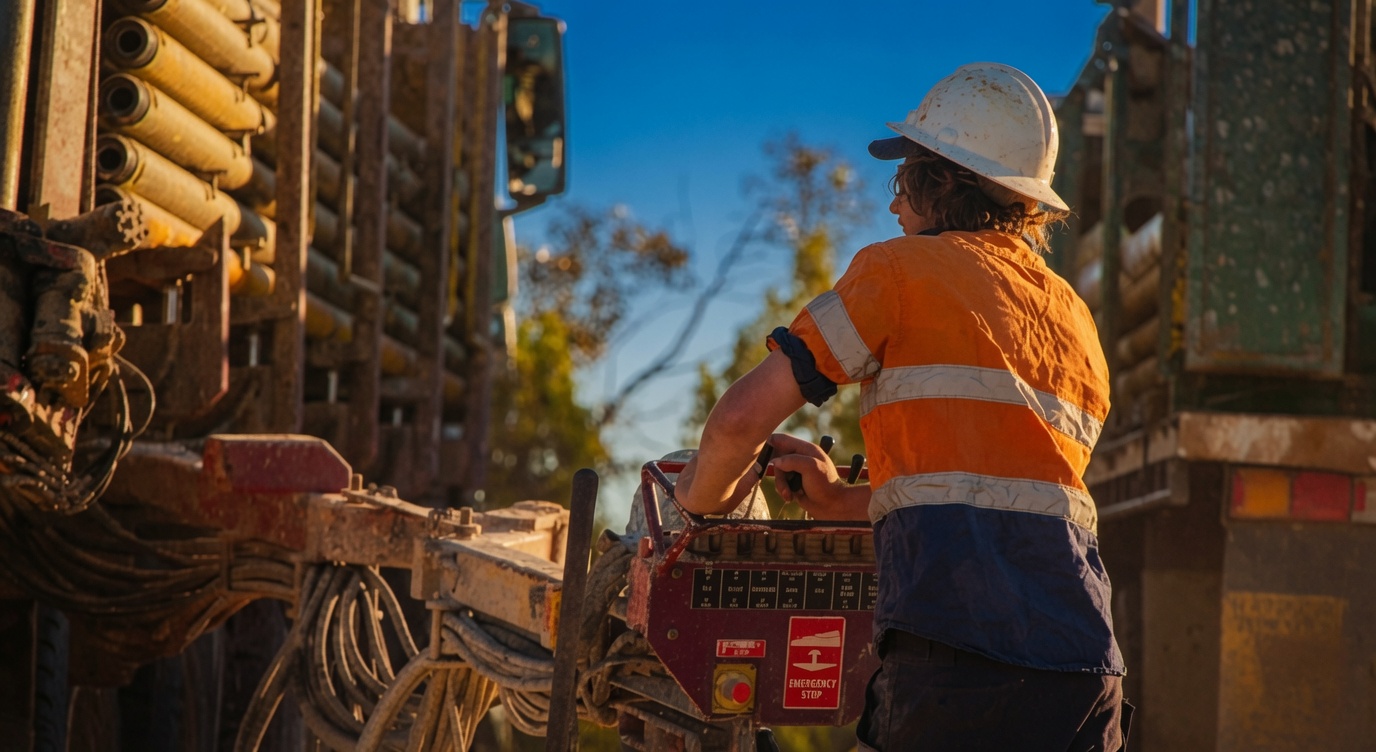
Cobra drills three Manna Hill systems this quarter, while two anomaly-defined porphyry targets get no drilling row of their own. Assays are outstanding.
Project Overview
Cobra Resources (LSE: COBR) optioned the Manna Hill copper project in the Nackara Arc of South Australia in 2025 and exercised the option to acquire it in July 2026, and describes the ground as holding multiple underexplored prospects with potential for large-scale copper discoveries. The landholding hosts copper, gold, and molybdenum prospects, with skarn mineralization exposed at the surface. Blue Rose, the prospect that has absorbed the drilling so far, has returned 47 meters (m) at 2.2% copper and 0.78 grams per metric ton (g/t) gold from 11 m.
Reverse circulation holes at Blue Rose in January 2026, reported in March and April 2026, returned 86 m at 0.60% copper and 0.14 g/t gold from 18 m, and 74 m at 1.02% copper and 0.25 g/t gold from 72 m. Two gold prospects, Golden Sophia and Dodd Hill, occupy separate parts of the same landholding. Manna Hill has no mineral resource estimate, no economic study, and no production figure, and it is one of two projects Cobra is advancing.
A published schedule, in two stages, now changes the reading of the project more than any new grade does.
1. Three Systems Enter the Drill Schedule Together
Cobra has three separate systems scheduled for drilling inside the third quarter of 2026, not one. The company frames the work as a step-out to test the Blue Rose skarn and two other porphyry systems. Its project timeline places Blue Rose drilling from the third quarter of 2026 into the fourth quarter, and drilling at Anabama and Netley Hill in the third quarter, with the present position marked late in that quarter.
Three prospects under the rig at once change what a single quarter can settle. A follow-up program at one prospect tests whether a known zone extends further; three programs across three systems test how much of the landholding hosts the same mineralizing system. Cobra has published no meterage total, hole count, rig count, or budget for any of the three, so the size of each test is not on the record.
2. What the Blue Rose Diamond Holes Logged
The diamond program moved Cobra's target downward on logged observation, and the assays that would price that move are outstanding. Disseminated and blebby bornite was logged from 220 m to 257 m in one hole, and a fault-bound anhydrite breccia from 190 m to 220 m in a second. A third hole cut hydrothermal breccia from 350 m to 402 m, part of what Cobra totals as more than 50 m of hydrothermal breccia across the program. Portable X-ray fluorescence readings taken from the surface to 321 m in a single hole show an early, high-temperature phlogopite-albite mineral assemblage, overprinted only slightly by the cooler chlorite-serpentine minerals that form later.
Cobra interprets that sequence as copper mineralization associated with increasing potassic alteration at depth, a shift in chemical and geological controls relative to the shallow calc-silicate-hosted mineralization above it, and places the deeper copper in the potassic zones of a porphyry system. The company states that the drilling validates its Blue Rose porphyry model and supports the presence of a preserved, scalable porphyry source. The validation rests on a geological model built from the core, not on a laboratory grade.
The program that produced those holes was cut short. It drilled 1,465 m across four holes after Cobra dropped the second of two intended porphyry holes, having judged the pyrite in the first too intense to justify a second attempt, and redirected the meters into deepening two skarn holes instead. Observed sulfide mineralization now extends to 300 m depth within a high-grade portion of the existing footprint, and Cobra calls the deeper sulfides a positive indicator for a fertile porphyry system, a reading that the pending assays will either support or not across a drill section 1.6 kilometers wide.
3. An Oxide Zone South of the Skarn Has No True Width or Orientation
One of the deepened holes intersected shallow copper oxide from 14 m to 67.5 m downhole, outside the modeled skarn footprint, and no company disclosure gives its true width or its orientation. The hole was stepped out and drilled from the south to check Cobra's structural reading of the skarn, and returned shallow copper oxide instead.
Managing Director and Chief Executive Officer of Cobra Resources, Rupert Verco, traces the zone to a hole drilled to test something else:
"Unexpectedly, we hit a lot of copper oxide very shallowly to the south, which opens up a lot of extension to the south of that skarn."
An incidental result from a validation hole is a thin basis for spending, and this one sits on ground Cobra already holds. Cobra is drilling this quarter anyway, so a measurement of it falls on the near-term schedule.
Asked whether the widths and orientation of the new zone were understood, management did not give them, saying instead that deeper, stepped-out drilling would be needed to establish the true scale of the system. The Blue Rose step-out is the program scheduled to do that work, which puts a measurable answer on a zone found by accident inside the current quarter.
4. Anabama & Netley Hill Arrive With Intersections Already Standing
The two other systems in the current program already have porphyry-style copper and molybdenum intersections on record. At Netley Hill, Cobra lists 350 m at 0.1% copper, 0.015% molybdenum, and 1 g/t silver, alongside 24 m at 0.3% copper and 0.02% molybdenum, 64 m at 0.1% copper and 0.02% molybdenum, and 40 m at 0.05% molybdenum. At Anabama, it lists 27 m at 0.2% copper and 24 m at 0.06% molybdenum, plus 9 m at 0.4% copper, 21 m at 0.13% copper, and 9 m at 0.095% molybdenum.
Cobra classifies both prospects as porphyry, while it classifies the Blue Rose and Neptune Rose ground as skarn and porphyry. Neither prospect is being approached as untested ground.
Cobra publishes none of these intersections with a hole identifier, a depth from surface, or a date, so an investor cannot place them against a drilling round or judge how they were sampled. The current quarter's drilling addresses that gap at both prospects: not whether copper and molybdenum are present, but on what terms.
5. Round Hill & Welsh Prince: What the Anomalies Carry
Cobra's two other porphyry targets are described by anomaly, not by intersection. State radiometric datasets highlight large uranium and thorium anomalies across both, which Cobra interprets as associated with hydrothermal alteration. Round Hill is labeled a porphyry target with a uranium anomaly and surface copper mineralization, and Welsh Prince a porphyry target on a non-coincident thorium-uranium anomaly.
Both targets are at an earlier stage of definition than the rest of the map they appear on. Blue Rose and Neptune Rose, Anabama, and Netley Hill each appear on that map with a list of intersection figures beside the prospect name. Neither Round Hill nor Welsh Prince appears in an intersection figure, and the radiometric datasets for both are pre-existing state coverage rather than a survey commissioned by Cobra.
6. The 2027 Schedule: Clearance, Surface Work & Regional Drilling
Regional target drilling does not begin until 2027, and two other workstreams are scheduled before it. Cobra's timeline places heritage clearance across the fourth quarter of 2026 and again the second quarter of 2027, and a soils survey and geophysics program from the fourth quarter of 2026 into the first quarter of 2027. Regional target drilling has one block in the first quarter of 2027 and a second from the second quarter of 2027 through the third.
Ahead of all of it, diamond drill results are scheduled from the third quarter of 2026 through the fourth quarter.
Verco names what he anticipates from the two deepened holes, without putting a figure on it:
"In holes two and hole four, I'd expect to see some broader zones of mineralization."
That expectation was framed as hope rather than guidance, and no assay result, grade, or width from the diamond program has been published. Until one is, the near-term catalyst at Manna Hill is a laboratory report on holes already drilled, and the 2027 work follows it in the schedule.
7. The Targeting Work Between Programs
Between drill programs, Cobra is working on why its magnetic data reads the way it does. The company identifies petrology and petrophysics as its two areas of work, aimed at understanding remnant magnetism and its effects on the geophysical response used to pick targets.
Verco describes the geophysical problem being worked on before further holes are collared:
"And what we're doing with them is working through things like petrophysics, where we're understanding our reverse magnetism and how it impacts our geophysics, and that will better refine our targeting going forward."
Cobra makes that refinement conditional on a detail it does not yet understand. The bornite zone coincides with a magnetic anomaly picked out by modeling the geophysical data, which Cobra presents as a direct correlation between geophysics and mineralization and a direct targeting method for further porphyry-type mineralization. The 2027 regional drilling will test whether it ranks targets any better than this program did.
Two advisors are engaged in the work. Technical and Strategic Advisor of Cobra Resources, Stephen McIntosh, spent 33 years at Rio Tinto and is a former Group Executive for Growth and Innovation. Geological Advisor of Cobra Resources, Professor Ross Large AO, is a distinguished professor of economic geology and a former head of a university economic-geology research center, and the geochemical analysis of the deep chemistry log in one diamond hole is credited to him. A remnant magnetized anomaly already appears as an interpreted body at one end of Cobra's drill section, which is the feature against which the petrophysical work is being run.
Key Takeaway for Investors
- Three systems in one quarter put Blue Rose, Anabama, and Netley Hill under the rig inside the third quarter of 2026, testing three prospects on the landholding instead of extending one.
- A model ahead of its assays describes the porphyry reading at Blue Rose, which draws on bornite, anhydrite, and hydrothermal breccia logged in core, while the assays that would attach grade and width to it remain unpublished.
- Intersections without provenance are the position at Anabama and Netley Hill, where the copper and molybdenum intervals Cobra lists come with no hole identifier, no depth, and no date.
- Two targets described by anomaly alone cover Round Hill and Welsh Prince, presented as porphyry targets on uranium and thorium anomalism, and given no drilling row of their own on the published timeline.
Bottom Line
Manna Hill is being drilled at three places at once this quarter, while the assays supporting its geological model are still in a laboratory. Behind that program are two porphyry targets defined on state radiometric anomalism, which appear on Cobra's target map without an intersection figure or a drilling program of their own. The only regional drilling on the timeline begins in the first quarter of 2027, alongside heritage clearance and a soils and geophysics program that run from the fourth quarter of 2026 into the second quarter of 2027. The drilling now underway will produce numbers within months, and any spending further out would be argued from those numbers. Nothing published so far settles it, because nothing published so far includes an assay of the holes the argument depends on.
Analyst's Notes





Subscribe to Our Channel






.jpg)
Stay Informed






















