




Cobra Resources Turns Its Capital-Light ISR Concept Into a Designed Production Study at Boland


Cobra Resources has turned its capital-light ISR concept into a designed, permit-tracked production study at Boland.
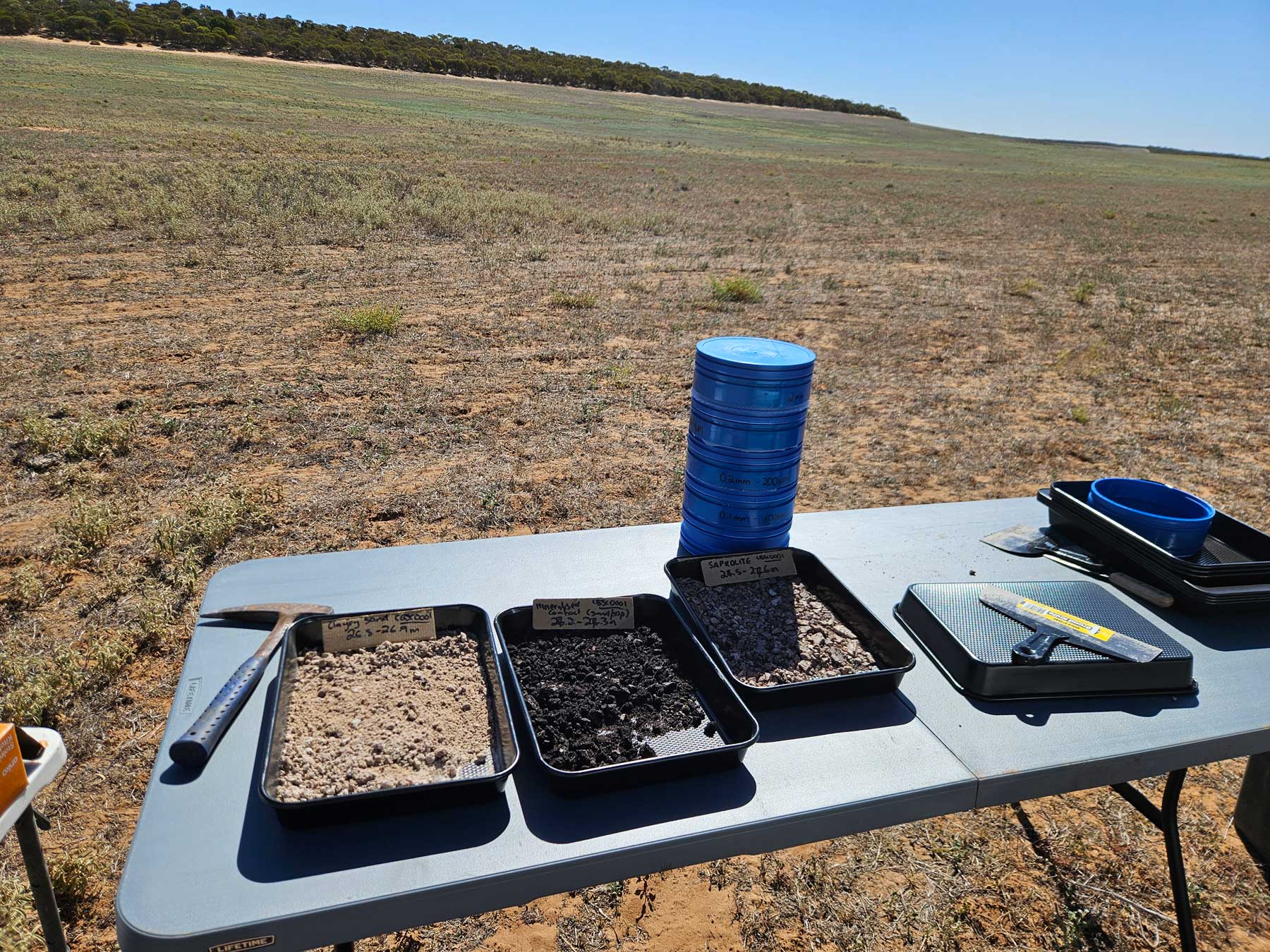
- Cobra Resources has received all assay results from its completed 74-hole Sonic core drilling programme at the Boland and Head rare earth prospects in South Australia.
- Global consultancy ERM has been engaged to complete a maiden Mineral Resource Estimate (MRE), targeted for the third quarter of 2026, to feed a scoping study.
- Cobra has completed the engineering design for a small-scale, in situ recovery (ISR) production study at its existing Boland wellfield, targeted to run in the first half of 2027.
- The study is designed to produce 400 to 600 kilograms of Mixed Rare Earth Oxides (MREO) by combining an ISR field trial with the government-funded pilot facility at the Australian Nuclear Science and Technology Organisation (ANSTO).
- Environmental consultants have been engaged, and the permitting process has begun for the demonstration, which is intended to carry validated economics toward a bankable feasibility study.
What Has Happened
Cobra Resources (LSE: COBR) has received all assay results from the completed 74-hole Sonic core drilling programme across the Boland and Head rare earth prospects in South Australia, and used the update to convert a loosely described demonstration into a designed piece of work. The drilling extended high-grade mineralisation at Head, including 2.35 metres (m) at 1,567 parts per million (ppm) total rare earth oxide (TREO) from 11 m depth. Global consultancy ERM is now completing a maiden Mineral Resource Estimate (MRE), 43 samples are under metallurgical analysis, and two bulk composites have been taken for production testing. Alongside that, Cobra has completed the engineering design and process modelling for a small-scale in situ recovery (ISR) production study at its Boland wellfield and engaged environmental consultants to begin permitting it. The completed dataset moves the project past the 80% of assay and permeability results reported earlier, and prior updates had described this next step only as a capital-light ISR field demonstration.
The Designed Production Study
The demonstration now has a defined shape: an ISR field trial at the existing Boland wellfield feeding a finishing stage at ANSTO's pilot plant. Across up to four wellfields, Cobra will trial natural acid generation, pH control, sequential recovery and remediation, running the leach for a field component of roughly 60 days. That field stage is designed to produce 400 to 600 kilograms of Mixed Rare Earth Oxides (MREO) as an intermediate product. Rather than build a full processing plant on site, Cobra will precipitate a slurry and ship it to the Australian Nuclear Science and Technology Organisation (ANSTO), where dissolution, iron removal, cerium removal, aluminium removal, and a final carbonate precipitation complete the flowsheet.
Managing Director of Cobra Resources, Rupert Verco, is precise on why the pilot facility does the heavy lifting:
"One of those options is to utilise the pilot facility at ANSTO. Rather than putting the infrastructure in the field, we would deploy storage and mixing facilities, execute the ISR process, then precipitate a slurry solution and ship that to ANSTO to complete our flowsheet."
Splitting the work across two sites keeps field capital low while handing the chemically complex separation to an existing, government-funded facility. It also gives the design a clear division of proof: the wellfield tests whether the ground behaves as modelled, and ANSTO tests whether the product finishes to specification.
Reagent Cost & Radionuclide Control in the Design
Cutting reagent acid is central to the design, because it is a major driver of an ISR project's operating cost. Cobra is testing whether saline groundwater from Boland can drive an ammonium sulphate reaction and reduce its use of ammonium nitrate, a high-cost input, while the deposit's own capacity to generate acid offsets the need to buy in. Verco puts modelled acid consumption at 1 to 16 kilograms of sulphuric acid per tonne, low enough that in-ground generation could cover a large share of it.
Verco is direct about the reagent economics:
"In some holes it's as high as 60 kilograms of sulphuric acid per tonne of material treated. It is unlikely you can capture all of that acid, but if we could do up to 50%, it's a huge cost saving, and it also mitigates supply risk, because sourcing sulphuric acid internationally and domestically is very challenging at present."
Radionuclide content is the other item the study is built to manage. The same pH control that governs acid generation also lowers impurities and radionuclides, and precipitating cerium during impurity removal without solvent extraction lifts the heavy rare earth share of the product to 43% at under 0.9% impurities. Building these steps to reduce external acid dependency and maintain product quality before capital is committed is the cost-and-quality case the field study exists to settle.
From Production Study to Maiden Resource & Feasibility
The production study does not stand alone; it is the validation step in a chain that runs resource, scoping study, bankable feasibility. ERM's maiden MRE, targeted for the third quarter of 2026, draws on the now-complete assay set and a permeability screen in which 70% of 50 samples matched or exceeded the permeability of the installed Boland wellfield. Cobra intends to model permeability and natural acid generation alongside grade, so the resource carries economic parameters rather than tonnes and grade alone.
The higher-confidence Pidinga formation is expected to anchor a component classified as indicated, with the shallower formations adding scale at lower confidence. That structure hands the scoping study a resource already framed around the levers that drive cost, and the field trial then tests those assumptions in the field. Proving them at a production scale is what the company means when it describes the study as supporting a move to a bankable feasibility study.
ISR Precedent in South Australia
A fast, low-cost permitting path is only credible because South Australia has done this before. Four ISR pilot studies have run in the state over the past two years across copper and uranium, including a recently completed uranium pilot by Alligator Energy, a few hundred kilometres away, alongside commercial ISR uranium operations in the same geological formations. Cobra has met the regulatory requirements for a baseline hydrological assessment and has engaged JBS&G Environmental Consultants and Rendement Consulting to begin securing approvals for the demonstration.
Verco frames the jurisdiction plainly:
"In the last two years, we've had four pilot studies occur, all of them have been in-situ recovery. We have a very productive regulator that's willing to work with companies to get those permits in place, so we're in the right postcode in that regard."
The cost case rests on the same precedent. Verco points to ISR operating at 15% to 20% of the capital intensity of hard-rock mining, with aquifer-confined operations carrying remediation liabilities per pound that are roughly 28 times lower than those of an open-cut mine such as Ranger. That gap between a confined ISR process and conventional mining is central to Cobra's route to lowest-cost production.
What to Watch Next
The calendar Cobra has published runs from a maiden resource to a bankable feasibility study across roughly 18 months. The maiden MRE is targeted for the third quarter of 2026, with a scoping study and the demonstration permitting following into the fourth quarter. Construction and installation of the study infrastructure is targeted for the first quarter of 2027, the field production study at the Boland wellfield for the first half of 2027, and the ANSTO processing stage for the second and third quarters of 2027. The bankable feasibility study is targeted to run through to the end of 2027. In parallel, Cobra continues to advance its Manna Hill copper project.
FAQs (AI-Generated)
Analyst's Notes





Subscribe to Our Channel





Stay Informed






















