IsoEnergy Cites Strong Fraser Institute Rankings Across Canadian, US, & Australian Operations


IsoEnergy highlights Fraser Institute's top mining jurisdiction rankings across Canada, the US, and Australia while filing its fiscal 2025 annual report with the SEC.
IsoEnergy published results from the Fraser Institute's 2026 Annual Survey of Mining Companies on February 27, highlighting top-tier scores for Saskatchewan, Western Australia, South Australia, and Queensland as validation of its geographic strategy. Saskatchewan ranked third globally on the Investment Attractiveness Index (IAI), its sixth top-ten placement in seven years, while Western Australia climbed to sixth globally on the IAI and third on the Best Practices Mineral Potential Index (BPMPI), strengthening the strategic rationale for the company's pending acquisition of Toro Energy Limited, announced in October 2025. The company's flagship Hurricane deposit in Saskatchewan holds 48.6 million pounds of uranium oxide (U3O8) at a grade of 34.5%, making it the highest-grade published Indicated uranium Mineral Resource Estimate (MRE) on the planet. The company simultaneously filed its annual report on Form 40-F for the fiscal year ended December 31, 2025 with the US Securities and Exchange Commission (SEC), satisfying NYSE American listing requirements.
On a combined pro forma basis, the pending Toro Energy acquisition would push IsoEnergy's total resource base to 133 million pounds Measured and Indicated (M&I) plus 39 million pounds Inferred under Canada's National Instrument 43-101 (NI 43-101) reporting standard, alongside historical resources of 154 million pounds M&I and 88 million pounds Inferred. IsoEnergy's own analysis of the World Nuclear Association's (WNA) 2025 World Nuclear Fuel Report indicates that identified supply sources, comprising existing mines, development-stage projects, planned mines, prospective sources, and secondary supply, cover approximately 179 million pounds U3O8, equivalent to roughly 46% of the 391 million pounds projected to be required annually by 2040 under the WNA's Reference Scenario. The WNA describes the resulting shortfall as an "unspecified gap" that will require considerable exploration and timely investment to fill.
IsoEnergy Flags Jurisdiction Strength, Files Annual Report
IsoEnergy pointed to strong jurisdictional rankings across its three operating regions on February 27, using the Fraser Institute's 2026 Annual Survey of Mining Companies to reinforce the regulatory foundations underpinning its uranium portfolio spanning Canada, the United States, and Australia. The Toronto-headquartered company, which trades on the Toronto Stock Exchange and NYSE American, simultaneously filed its annual report on Form 40-F for the fiscal year ended December 31, 2025 with the SEC. The dual announcement arrives as IsoEnergy runs a bulk sampling program at its Tony M mine in Utah, advances winter drilling at the Hurricane deposit in Saskatchewan's Athabasca Basin, and works toward completing its pending acquisition of Australian uranium developer Toro Energy Limited.
Fraser Institute Findings
Saskatchewan secured third place globally on the IAI, its sixth top-ten placement in seven years. The IAI combines mineral potential and policy environment assessments and is widely regarded as a benchmark measure of global mining investment competitiveness.
Australia showed the most notable upward movement in this year's survey. Western Australia climbed to sixth globally on the IAI and third on the BPMPI. South Australia ranked fourth on the IAI and Queensland placed thirteenth. In the United States, Utah ranked 38th overall on the IAI and twelfth on the Policy Perception Index (PPI). The company noted the decline in Utah's overall ranking was primarily driven by a reduction in perceived mineral potential, while the state's policy sentiment remained comparatively favourable.
Chief Executive Officer and Director of IsoEnergy, Phil Williams, said the rankings reinforce the company's approach to asset selection:
"Saskatchewan's sustained top-tier performance, together with Western Australia's meaningful advancement this year, reinforces the geological quality and policy stability that underpin our asset base and guide our mergers and acquisitions strategy. These results affirm our disciplined focus on advancing high-quality projects in tier-one jurisdictions where we believe institutional capital can be allocated with confidence and long-term value can be responsibly created."
Work In Progress
At the Tony M mine in Utah, a 2,000-tonne bulk sampling program was underway as of the company's March 2026 corporate presentation, with completion and processing at the nearby White Mesa Mill expected in April 2026. Completed beneficiation test work has demonstrated uranium recovery rates above 90%. A completed Enhanced Evaporation Study confirmed that Landshark evaporators eliminate the need for evaporation-pond expansion, reducing both permitting timelines and capital requirements.
At Larocque East in Saskatchewan, a 2026 winter drill program targeting approximately 5,200 metres across up to 13 holes is currently underway. The previous summer's drilling expanded the mineralised footprint along the Hurricane Main and South trends, with drill hole LE25-202 returning 1.05% U3O8 over 0.5 metres in Area D, which the company described as the strongest uranium intersection to date outside the Hurricane deposit itself.
Where The Project Stands
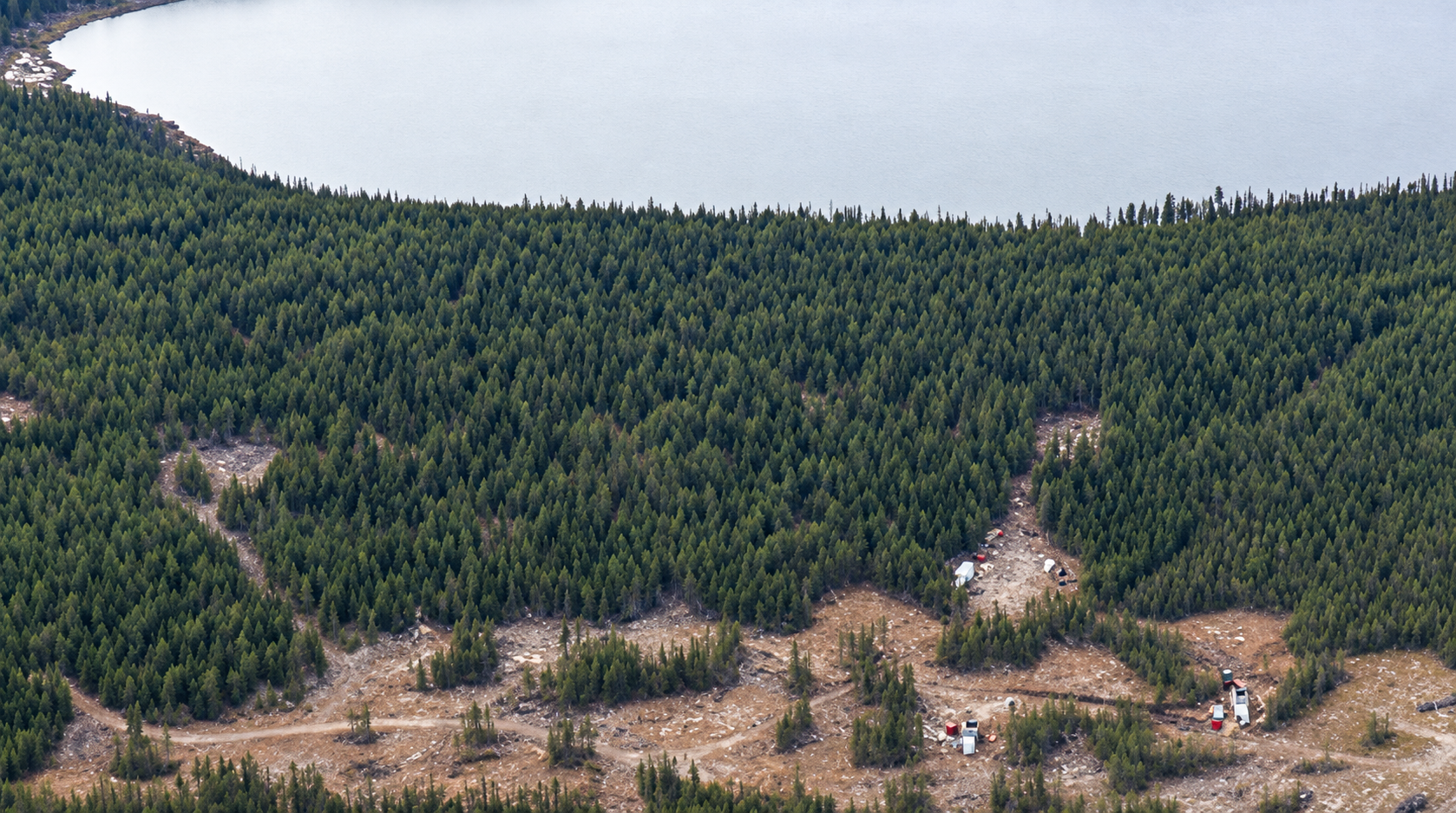
The Hurricane deposit at Larocque East carries an Indicated MRE of 48.6 million pounds U3O8 at an average grade of 34.5%, alongside an Inferred resource of 2.7 million pounds at 2.2% U3O8. The deposit sits at a depth of 325 metres with no water cover at the surface and is located 40 kilometres from the operating McClean Lake processing mill.
The Tony M mine holds a current NI 43-101 Indicated MRE of 6.6 million pounds U3O8 at 0.28%, with an additional Inferred resource of 2.2 million pounds at 0.27%. The mine holds key state and federal operating permits, which the company estimates represent three to five years of time savings and more than US$1 million per mine in avoided permitting costs. All Utah projects are within trucking distance of the White Mesa Mill, providing an existing toll milling pathway.
Queensland's thirteenth-place IAI ranking is notable given the state's historical restrictions on uranium mining leases. The Liberal National Party of Queensland, elected in October 2024, has not yet publicly stated its position on a potential revision to that policy.
Market Fundamentals
The broader market context shaping IsoEnergy's portfolio development is defined by a projected structural gap between uranium supply and demand. The WNA's 2025 World Nuclear Fuel Report projects global uranium requirements of just over 150,000 metric tonnes of uranium (tU), equivalent to approximately 391 million pounds U3O8, annually by 2040 under its Reference Scenario, rising to over 204,000 tU, or approximately 530 million pounds U3O8, under its Upper Scenario.
IsoEnergy's own analysis of that report calculates that identified supply sources, comprising existing mines, development-stage projects, planned mines, prospective sources, and secondary supply, cover approximately 179 million pounds U3O8, equivalent to roughly 46%of the 391 million pounds projected under the Reference Scenario. The WNA has confirmed in its public reporting that "future demand cannot be met from identified supply sources" and that what it terms an "unspecified gap" will require "considerable exploration, innovative techniques and timely investment" to close. The association has also extended its estimate of the typical timeline from uranium discovery to production to between 10 to 20 years, up from a prior estimate of 8 to fifteen years.
Williams framed the macro context in terms of jurisdictional positioning, stating that a "structural supply deficit supports a strong long-term price environment, particularly favourable for producers in Western, allied jurisdictions with established regulatory and permitting frameworks."
By The Numbers
GHT analysts currently cover IsoEnergy's stock, all carrying Buy ratings with price targets ranging from C$18.00 to C$28.25 per share. NexGen Energy remains the company's largest shareholder at approximately 30% of shares outstanding. The company reported pro forma cash and equivalents of approximately C$143.8 million and an equity portfolio valued at roughly C$55.8 million as of February 18, 2026.
Portfolio Scale
On a pro forma basis incorporating the pending Toro Energy transaction, IsoEnergy's total mineral endowment would reach 133 million pounds M&I and 39 million pounds Inferred under NI 43-101 standards, plus historical resources of 154 million pounds M&I and 88 million pounds Inferred across multiple jurisdictions. The Wiluna Uranium Project in Western Australia, the primary Toro asset, carries an M&I resource of 69.1 million pounds U3O8 plus a further 4.5 million pounds Inferred.
Analyst's Notes





Subscribe to Our Channel






Stay Informed