IsoEnergy Hits Strongest Radioactivity to Date Over 600 Meters at Larocque East



IsoEnergy's summer drilling at Larocque East hit its strongest radioactivity yet over 600 meters of the Hurricane South Trend. Assays now decide its value.
- IsoEnergy completed 10,159 meters in 26 holes at Larocque East over the summer, lifting the year-to-date total to 16,963 meters in 43 holes.
- Elevated radioactivity was intersected over a 600-meter strike length on the Hurricane South Trend, with 18 of 26 holes exceeding the 350 counts per second (CPS) cut-off over 0.5 meters.
- 3 holes returned readings above 35,000 CPS, including the strongest radioactivity drilled to date on the South Trend.
- The strongest results came from the L fault zone both inside and outside the existing Hurricane deposit footprint, including 510 meters east of it.
- All samples have been submitted to SRC Geoanalytical Laboratories, and assay results will determine whether the radioactivity converts into resource growth.
Company Overview
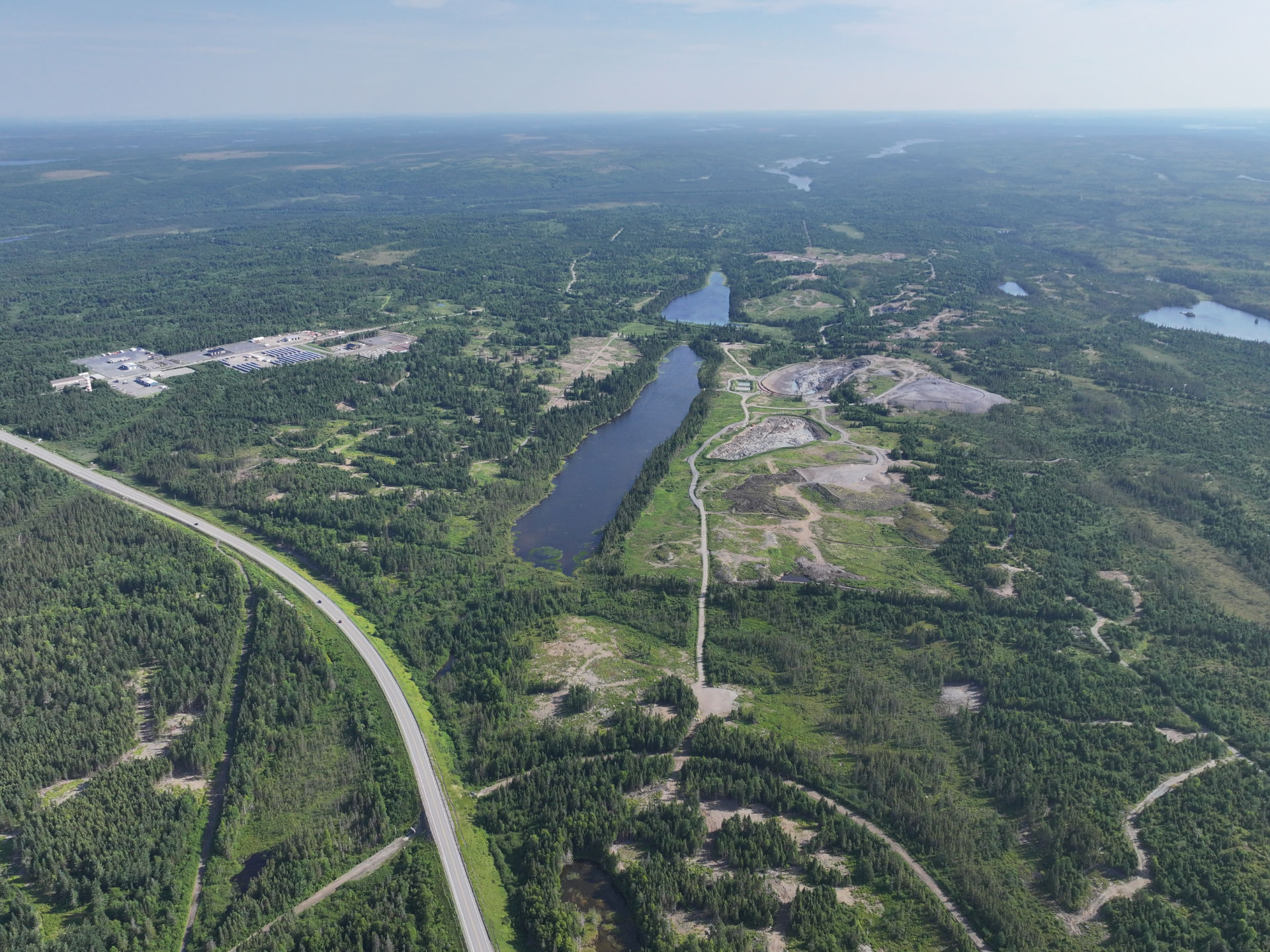
IsoEnergy Ltd. (NYSE American: ISOU | TSX: ISO) is a globally diversified uranium company with current and historical mineral resources across Canada, the US and Australia at varying stages of development. Its flagship asset is the Larocque East project in Saskatchewan's Athabasca Basin, host to the Hurricane deposit, which the company describes as the world's highest-grade indicated uranium mineral resource. Hurricane holds a mineral resource of 48.6 million pounds of uranium oxide at 34.5% uranium oxide in the Indicated category and 2.7 million pounds at 2.2% uranium oxide in the Inferred category. Mineralization lies at a depth of approximately 325 meters, and the project is located roughly 40 kilometers northwest of the McClean Lake mill.
An 8,000 Meter Program Became a 10,159 Meter Program
IsoEnergy expanded its planned 8,000-meter, 20-hole summer campaign to 10,159 meters across 26 holes completed to target, with 3 further holes abandoned in sandstone. The decision to expand followed encouraging winter and early summer results, and it is the clearest signal in the release of how the exploration team read the ground as it drilled. Year-to-date, 43 holes totaling 16,963 meters have been completed. The program was interrupted by a temporary demobilization in June because of a nearby wildfire.
Almost all of that meterage went into the Hurricane South Trend, the group of east-striking J, K and L faults sitting south of the deposit. 17 holes tested the L fault, 6 tested the J and K faults, and a single hole tested the eastern extension of the Hurricane Main Trend. That allocation matters when reading the results: this was a concentrated test of a single structural corridor rather than a scattered regional program, and the hit rate should be judged on that basis.
Radioactivity results reported by the company are total gamma measured on drill core using a handheld spectrometer, expressed in counts per second (CPS), with 3 readings averaged for each 0.5-meter sample interval. 18 of the 26 holes returned intervals at or above the 350 CPS cut-off over 0.5 meters, and 13 returned 1,000 CPS or greater.
The L Fault Produced the Strongest Numbers on Both Sides of the Deposit Boundary
The 2 most consequential intercepts bracket a winter hole that returned 4.21% uranium oxide over 3.5 meters, including up to 11.6% uranium oxide over 1.0 meter. 11 meters west of it, summer drilling intersected 14,135 CPS over 3.0 meters, including 36,292 CPS over 1.0 meter. 75 meters east of it, and outside the existing Hurricane footprint, a second hole intersected 11,075 CPS over 3.5 meters, including 43,160 CPS over 0.5 meters, the strongest reading recorded on the South Trend to date.
The interpretive point sits with the western intercept. Both it and the winter hole were drilled in the southernmost part of the deposit footprint, in ground previously interpreted as within the low-grade shell. IsoEnergy has said that interpretation will be revisited once uranium geochemistry is available. If ground currently modeled as low-grade carries mineralization comparable to the winter result, the change would be in grade within the existing footprint rather than in footprint size, which is a different and less commonly available source of resource upside.
Further east, drilling intersected 10,110 CPS over 2.0 meters including 35,900 CPS over 0.5 meters, 28 meters west of a winter hole that returned 1.00% uranium oxide over 1.5 meters including up to 2.75% uranium oxide over 0.5 meters. That intercept sits on the interpreted L fault 510 meters east of the existing Hurricane footprint. Between the 2, a further hole returned 849 CPS over 5.0 meters, including 2,490 CPS over 1.0 meter, and the company notes potential remains open along strike to the east.
Supporting Results Fill in the Corridor Rather Than Extend It
Away from the 3 headline intercepts, the results describe a corridor with continuity but variable intensity. On the western L fault, holes returned 1,094 CPS over 3.0 meters, 1,115 CPS over 1.0 meter, a peak of 1,893 CPS over 0.5 meters, and an average of 686 CPS over 4.5 meters. On the J fault, one hole that tested the optimal target position intersected 1,971 CPS over 4.5 meters, including 6,430 CPS over 0.5 meters.
Several holes missed. 3 holes on the J and K faults did not intersect elevated radioactivity, and each is interpreted to have reached the unconformity 4-6 meters from the optimal target position. A 140-meter step-out to the east intersected an 80-meter-wide altered interval above the unconformity but no reported radioactivity, landing 20 meters south of the interpreted target. The single hole on the Main Trend returned a maximum of 476 CPS. Alteration without radioactivity is not a null result at this stage, but it does mean the eastern extent of the system is still defined by targeting precision rather than by drilling.
Vice President Exploration of IsoEnergy, Dan Brisbin, framed the outcome in terms of what still has to arrive:
"Geochemical results are pending, and those assays, together with the geological observations from drill core, will shape how we define targets for 2027."
Why the Radioactivity Numbers Are Not Yet Resource Numbers
IsoEnergy explicitly states that total gamma counts per second measured on the core indicate uranium content but may not correlate with chemical assays. That caveat carries particular weight at Hurricane, because the deposit's Indicated grade of 34.5% uranium oxide sets an unusually high bar for what counts as material. A 36,292 CPS interval is a strong radiometric result, but the winter drilling provides the more useful reference point: the best winter intercept returned 4.21% uranium oxide over 3.5 meters, a fraction of the deposit's average Indicated grade.
The data verification described in the release supports the radiometric figures themselves, not their conversion to grade. Brisbin compared spectrometer readings on the core to downhole probe measurements, checked the readings against values marked on the core boxes in the core photographs, and verified composite lengths and CPS values. What remains outstanding is the geochemistry from SRC Geoanalytical Laboratories.
Next Steps
All samples from the summer program have been submitted to SRC Geoanalytical Laboratories, and IsoEnergy will report results when available. The Hurricane area geological interpretation is being updated using information from all 43 holes drilled in 2026, with geochemical results to be added on receipt. The revised interpretation of the southern portion of the deposit footprint, currently modeled as a low-grade shell, will follow the uranium geochemistry. New and existing information will then be integrated during evaluation of 2027 drill target potential.
FAQs (AI-Generated)
Analyst's Notes





Subscribe to Our Channel










Stay Informed