




Serabi Gold & The 81-Million-Tonne Matilda Copper Option


While investors focus on Serabi Gold plc’s high-grade gold, the Matilda copper-gold porphyry discovery adds greenfield option value today.
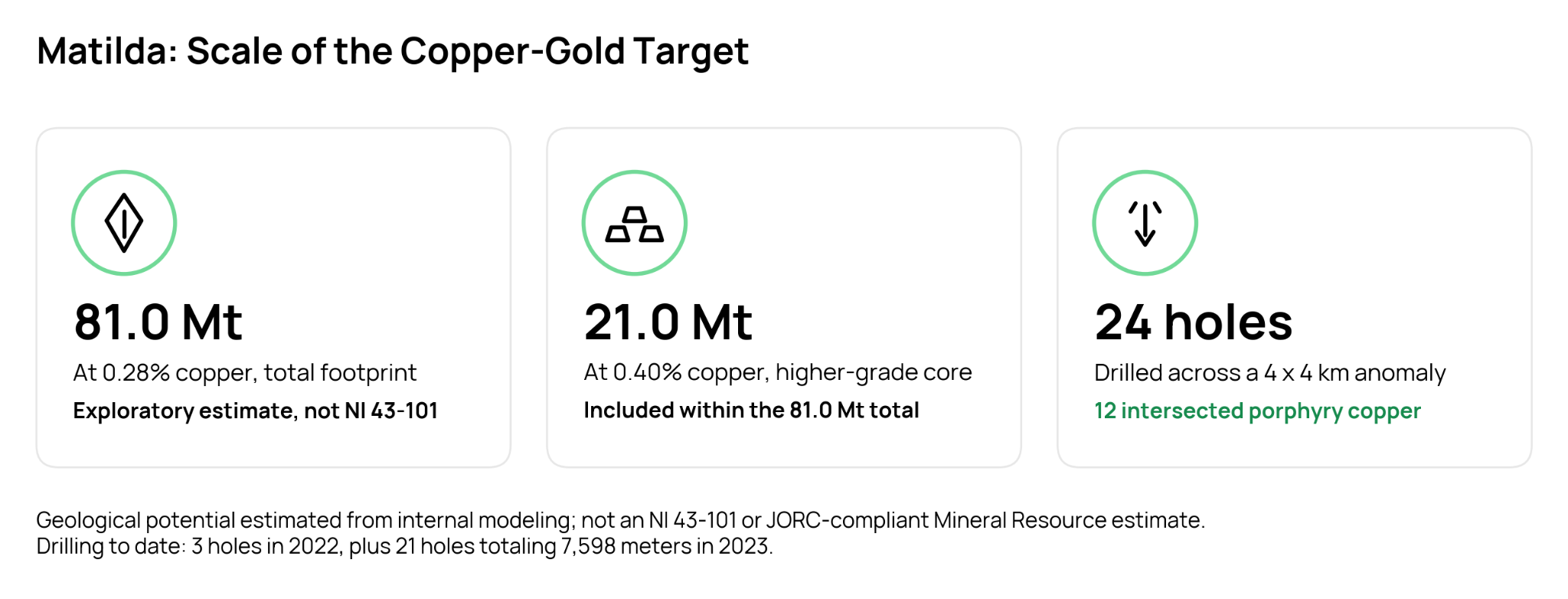
- Matilda hosts an estimated geological potential of 81 million tonnes grading 0.28% copper, including a higher-grade core of 21 million tonnes grading 0.40% copper.
- Serabi completed 24 drill holes at Matilda, with 12 of the 21 holes drilled in 2023 intersecting copper porphyry mineralization.
- The 4-kilometer-by-4-kilometer Matilda anomaly remains in the early stages, and the 81-million-tonne estimate represents geological potential rather than a formal National Instrument 43-101 (NI 43-101) or Joint Ore Reserves Committee Mineral Resource estimate (MRE).
- Commercial development of Matilda would require a separate flotation concentrator and substantial capital.
- Serabi is debt-free after repaying US$5.3 million in the first quarter of 2026 and held US$65.7 million in cash as of 30 June 2026, allowing it to fund gold growth while retaining Matilda as longer-term copper-gold optionality.
Unlocking a Base-Metal Footprint in the Tapajós
Public markets value Serabi Gold plc (AIM: SRB | TSX: SBI | OTCQX: SRBIF) almost exclusively on high-grade gold production at the Palito Complex and Coringa permitting. This focus overlooks an asset within the company's 64,709-hectare exploration license: the Matilda copper-gold porphyry system, which provides greenfield optionality at no capital cost.
The Tapajós region in Pará State is a 90,000-square-kilometer mineral province hosting the 3rd-largest alluvial goldfield globally, yet only 7 hard-rock deposits have been defined. This under-explored territory has triggered a land grab by mining majors targeting tier-1 discoveries, positioning Serabi's tenement footprint as strategic real estate. Defining this target allows Serabi to maintain focus on gold production. As copper demand increases and capital costs for greenfield development rise, holding an active, prospective porphyry anomaly on a debt-free balance sheet provides corporate optionality.
Unpacking the Matilda Porphyry Footprint
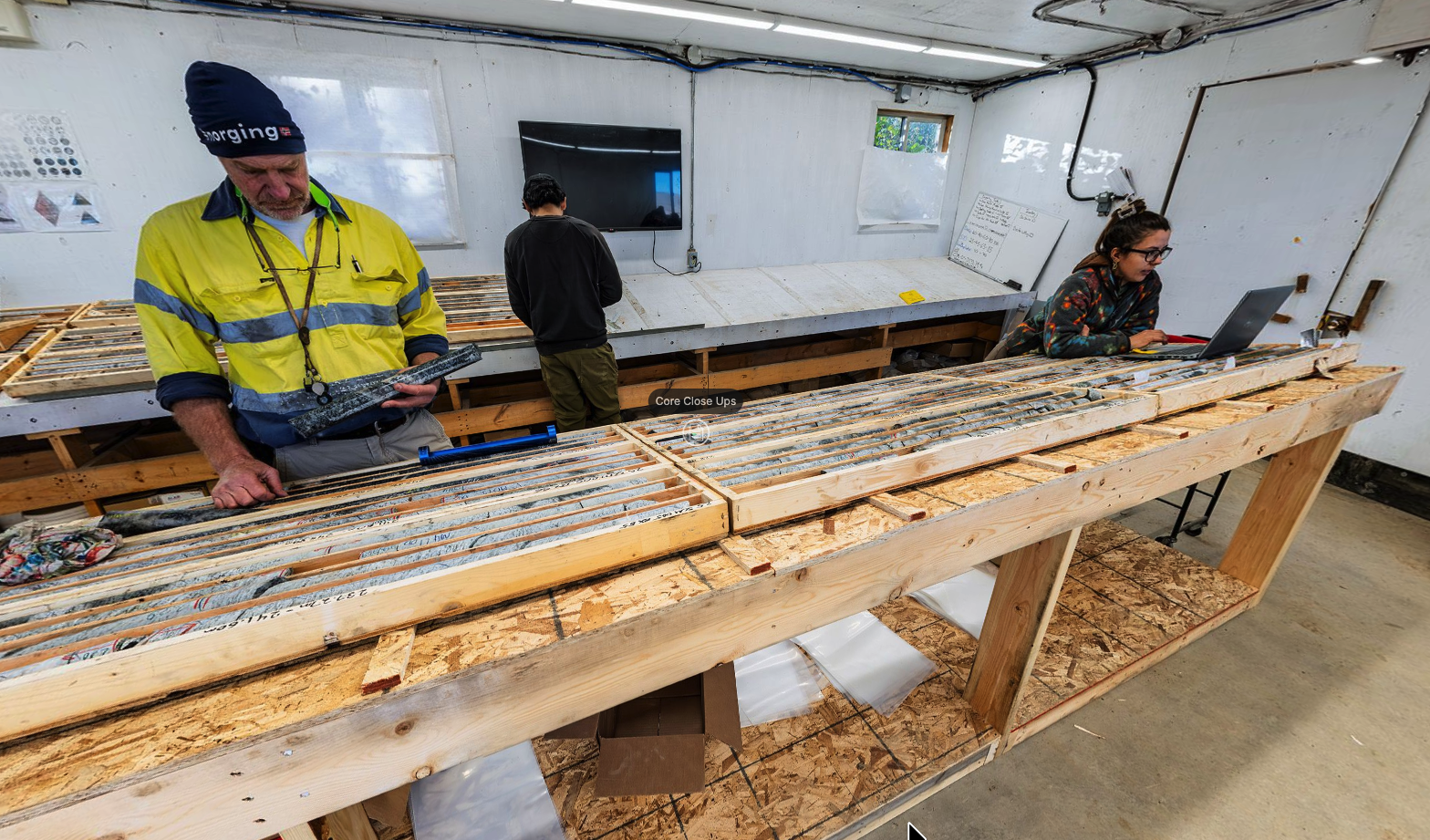
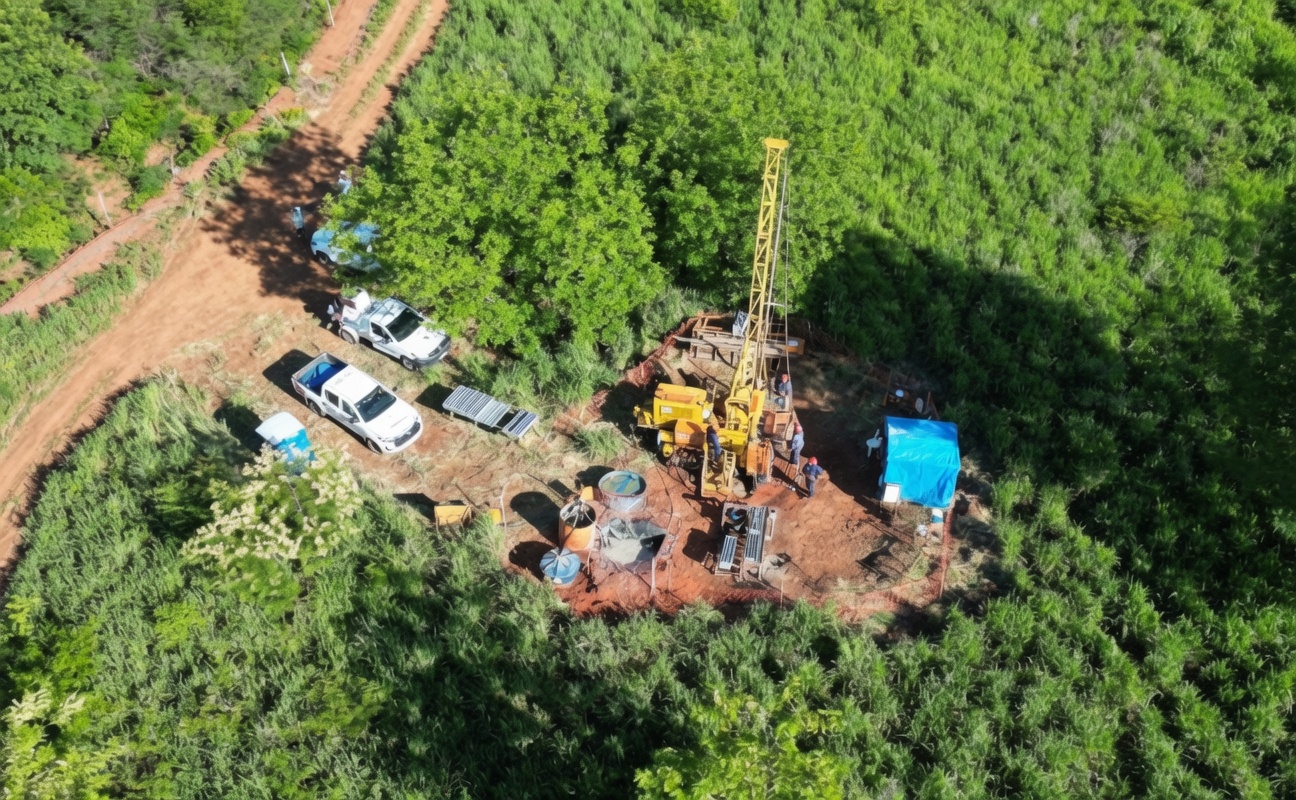
Matilda is distinguished from Serabi's narrow-vein gold mining by its physical scale. The prospect comprises a 4-kilometer-by-4-kilometer geochemical anomaly coincident with a core of anomalously high magnetic susceptibility. Mapping has identified outcropping granites exhibiting potassic, propylitic, and sericite-chlorite alteration, as well as dacite porphyry and quartz-sulfide veins. Following 3 drill holes in 2022 that verified this discovery, Serabi completed 21 holes in 2023, totaling 7,598 meters, with 12 holes intersecting copper porphyry mineralization. The company estimates the geological potential of Matilda at 81 million tonnes grading 0.28% copper, including a higher-grade core of 21 million tonnes grading 0.40% copper.
Core Gold Focus vs. Porphyry Continuity
The Matilda copper porphyry requires a different development philosophy than high-grade gold veins. At Palito and Coringa, mineralization is hosted within narrow veins requiring closely spaced drilling to trace individual structures and maintain reserve replacement. In contrast, copper porphyry deposits are defined by continuous mineralized envelopes. This continuity allows Serabi to hold and advance Matilda with high capital efficiency. The company does not deploy cash flow into high-density infill drilling campaigns, holding Matilda as a strategic asset while focusing capital on gold catalysts.
Chief Executive Officer of Serabi Gold Mike Hodgson highlighted this strategic contrast:
"The thing is, with all of this drilling, is that we're not drilling copper deposits, which are just like continuous; you've kind of got to drill to see the result, drill again, don't drill there, do that; it's got to be a little bit disciplined"
Residual Technical Risks & Development Realities
Technical and financial parameters at Matilda remain undefined. The exploration model is based on low-density sampling, with only 24 drill holes completed across a 4-by-4-kilometer anomaly, leaving uncertainty in grade continuity. Furthermore, the 81-million-tonne figure represents exploratory geological potential derived from internal modeling, rather than a formal, independent, third-party-audited National Instrument 43-101 (NI 43-101) or Joint Ore Reserves Committee (JORC)- compliant Mineral Resource estimate (MRE).
Matilda's mineralization is incompatible with the Palito carbon-in-pulp (CIP) leaching circuits designed for gold recovery. Consequently, commercialization would require constructing a separate, capital-intensive flotation concentrator circuit to produce a copper concentrate.
This model contrasts with the low capital requirements of Serabi's gold expansions. While the Palito mill expansion requires only US$5 million, commercial porphyry development would require substantially more capital, creating a scale barrier.
The Value Asymmetry of Greenfield Exploration
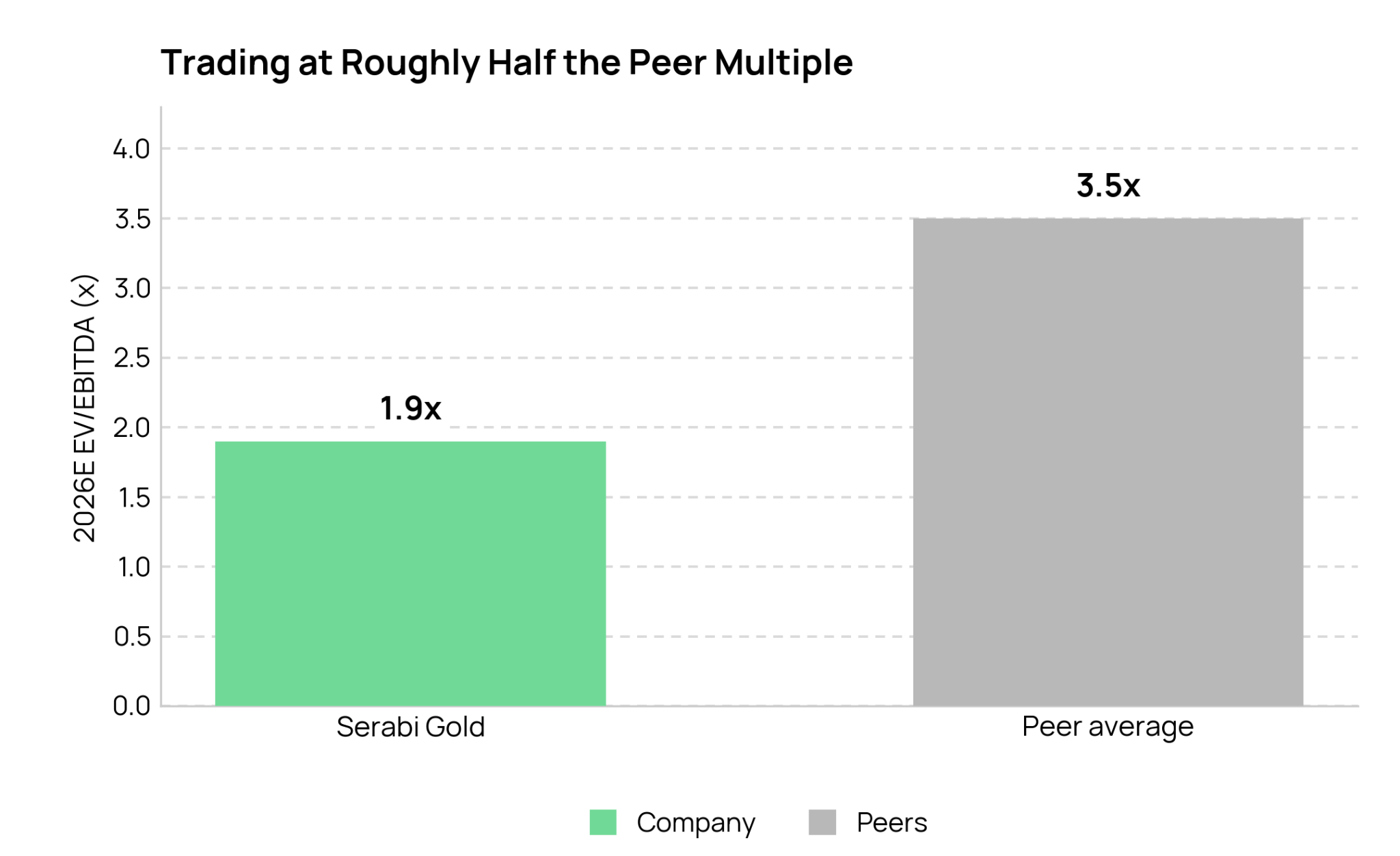
Optionality is supported by an exceptionally strong balance sheet. Serabi became debt-free in the first quarter of 2026 after repaying US$5.3 million, and held US$65.7 million in cash as of 30 June 2026, funding its US$5 million mill expansion without diluting shareholders. Despite this, Serabi's valuation remains discounted. According to consensus broker estimates, the company trades at a 2026 estimated enterprise value to earnings before interest, taxes, depreciation, and amortization (EV/EBITDA) multiple of 1.9x, compared to a peer-group average of 3.5x. Serabi leads its peer group with a targeted 2026 free cash flow yield of 26% compared to a peer average of 14%. This risk-mitigation strategy is underpinned by a cautious approach to corporate development.
Hodgson commented on the team's strict parameters:
"We've looked at a lot of stuff, and we haven't done anything yet because we do have a lot of discipline in this, and we don't have to rush."
This capital-preservation mindset ensures that value-oriented investors are buying a profitable gold producer at an attractive valuation, while receiving an 81-million-tonne copper-gold option card at Matilda completely free of charge.
Fully Funded Copper Optionality Within a High-Grade Gold Producer
Serabi Gold plc represents a junior gold producer where the market is assigning zero value to its greenfield copper optionality. By holding a debt-free balance sheet with US$65.70 million of cash, the company can fund its gold production growth to more than 53,000 ounces while preserving the long-term upside of the Matilda copper-gold porphyry. For institutional capital seeking copper exposure alongside high-margin gold cash flows, this prospect represents a funded option card in Pará State.
FAQs (AI-Generated)
Analyst's Notes





Subscribe to Our Channel





Stay Informed






















