




Tudor Gold's High-Grade Underground Strategy: Why the Smaller Mine Is the Development Thesis


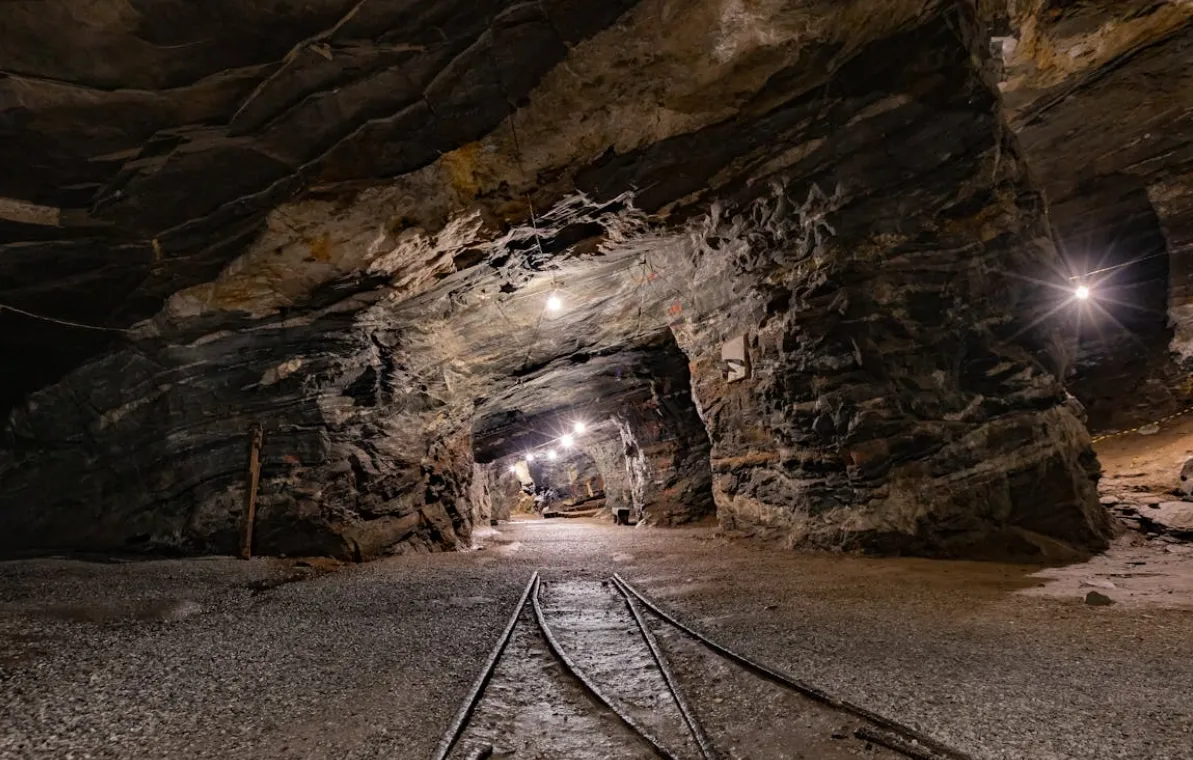
Treaty Creek is being repositioned around a high-grade underground entry point ahead of a third-quarter 2026 preliminary economic assessment.
- Tudor Gold has pivoted away from a bulk-tonnage open-pit scenario at the Goldstorm Deposit in favour of an underground mine targeting 10,000 tonnes per day of higher-grade material, establishing a capital profile the company aims to finance independently without immediately resorting to a major joint venture partner.
- By applying a US$175 per tonne net smelter return (NSR) cut-off to the Goldstorm resource, Tudor isolates a higher-grade core of 3.4 million indicated ounces grading 2.33 grams per tonne gold alongside 2.4 million inferred ounces grading 4.02 grams per tonne gold, which forms the mine plan input for a preliminary economic assessment (PEA) targeting completion in the third quarter of 2026.
- The May 2026 metallurgical program confirmed that all 3 Goldstorm zones (Upper, Central, and Lower) produce saleable gold and copper concentrates using a conventional flotation flowsheet at a primary grind of 120 microns, with the Upper Zone returning 86.3% gold recovery and the Lower Zone 87.3%, supporting the capital expenditure assumptions in the PEA.
- The underground starter mine is framed by management as a financial mechanism to access the full 24.9 million indicated-ounce resource sequentially, with higher-grade production funding capital recovery before cut-off grades are lowered to bring broader portions of the deposit into the mine plan.
- A permit application for an underground exploration ramp has been filed to allow year-round infill drilling on the high-grade SC-1 zone, while a 10,000-metre-plus surface exploration programme planned to commence in May 2026 is testing the CBS, Eureka, and Perfectstorm zones, each of which could deliver a maiden resource independently of the Goldstorm PEA outcome.
Metallurgy as Context, Not Catalyst
The May 2026 metallurgical results from Tudor Gold Corp. (TSXV: TUD) confirmed what the company needed to be confirmed before its preliminary economic assessment (PEA) could carry weight: that the Goldstorm Deposit's three zones produce saleable gold and copper concentrates using a conventional flotation flowsheet. The Upper Zone returned 86.3% gold recovery. The Lower Zone returned 87.3%. The Central Zone delivered combined recoveries of 82.1% for gold, 88.7% for silver, and 94.1% for copper. On its own, that is a technical result. In context, it is the final input that validates a deliberate strategic repositioning built over a year. That repositioning is the real story. It is not the same story as the metallurgy release.
The Capital Constraint Behind 24.9 Million Ounces
The Goldstorm Deposit hosts 24.9 million indicated ounces of gold, 148.7 million ounces of silver, and 3.048 billion pounds of copper. It is one of the largest undeveloped gold-copper deposits in North America. It is also, as currently configured, a deposit whose full scale creates a structural financing question rather than a direct path to production.
A conventional bulk-tonnage open-pit scenario at that scale requires capital that a company of Tudor's size cannot advance without a major mining partner. With a major partner comes dilution, timeline risk, and loss of strategic control. The headline resource figure, rather than simplifying the development path, adds a layer of complexity around how the project gets financed and on what terms.
President and Chief Executive Officer of Tudor Gold Corp., Joseph Ovsenek, described the rationale:
"We currently have a preliminary economic assessment underway, looking at an underground mine on how we can mine somewhere in this area. Lawn hole stooping 10,000 tonnes a day, a little higher cut off pace back fill give ourselves prod. Come up with a two to 300 ounce, 200 to 300,000 ounce gold producer for 20 years plus".
By targeting a smaller, higher-grade footprint, the company aims to establish a capital profile it can finance independently without immediately resorting to a major joint venture partner.
Isolating the Higher-Grade Core
The mechanism for addressing the bulk-tonnage capital question is a higher net smelter return (NSR) cut-off. By applying a US$175 per tonne NSR cut-off to the Goldstorm resource, Tudor isolates a higher-grade core of 3.4 million indicated ounces grading 2.33 grams per tonne gold, alongside 2.4 million inferred ounces grading 4.02 grams per tonne gold. At a US$125 per tonne NSR cut-off, the indicated resource expands to 5.8 million ounces grading 1.78 grams per tonne gold. That higher-grade inventory, not the 24.9 million ounce headline, is the foundation for the underground starter mine.
The PEA, being advanced by Fuse Advisors Inc. of Vancouver and targeting completion in the third quarter of 2026, is scoped around this material. The metallurgical results directly support that scoping. The confirmation that a conventional flotation circuit performs consistently across all three Goldstorm zones and as a blended feed means Fuse Advisors can build the PEA on a tested flowsheet. A complex or non-standard processing route would have introduced technical risk and upward pressure on capital and operating cost assumptions. The conventional 120-micron grind followed by zone-specific flotation stages avoids that outcome.
Sequencing as Strategy
What distinguishes Ovsenek's approach is not simply the decision to start with higher-grade material. That is standard mine planning logic. What is strategically distinct is the explicit framing of the starter mine as a financial mechanism to access the full deposit on different terms later.
Ovsenek outlined the sequencing rationale:
“The way we would work it is you start with a higher grade cut-off, you get your capital cost all paid for, you're producing, you're going well, and then you drop your cut-off, you bring more of these other shapes in, and then eventually you're mining down in this area because all your capital's paid for, and then you can actually afford to drop your cut-off and keep your production up."
The 24.9 million ounce resource is not abandoned under the underground strategy. Management's sequencing thesis is that higher-grade underground production funds infrastructure and capital recovery first, creating the option to lower cut-off grades later and bring broader portions of the deposit into the mine plan under a less capital-intensive scenario.
Building the Resource Underneath the PEA
While the PEA advances, Tudor is also working to expand the higher-grade inferred inventory that feeds the underground scenario. A permit application has been filed to construct an underground ramp to access the high-grade SC-1 zone for drilling. The ramp would allow year-round infill drilling, which is critical in a jurisdiction where surface drilling is constrained to a four to five-month seasonal window. Infill drilling from underground converts inferred resources into indicated resources and defines stope geometries for the mine plan, both of which directly feed into the confidence level of the PEA and any subsequent studies.
In parallel, a 10,000-metre-plus surface exploration programme planned to commence in May 2026 is testing earlier discoveries at the CBS, Eureka, and Perfectstorm zones along the Sulphurets fault. These zones lie on the same structural corridor as the Goldstorm Deposit. A maiden resource on any of these targets would expand Treaty Creek's total ounce count independently of the Goldstorm PEA outcome. That matters because the per-ounce valuation metric the market currently applies to Tudor is calculated against the full project resource base, not Goldstorm alone.
The Negotiating Position
One dimension of the underground strategy that is directly relevant to the development timeline is Treaty Creek's ongoing permitting interaction with Seabridge Gold Inc. Seabridge has proposed routing its Mitchell Treaty Twin Tunnels (twin 22-kilometre infrastructure tunnels) through Tudor's mineral claims to access its KSM deposits. The proposed routing traverses the upper part of the Goldstorm Deposit, impacting approximately 5 million ounces of gold.
The Mines Branch of the government of British Columbia recently decided not to issue Seabridge's tunnel permit until an agreement with Tudor was reached or a court decision was made. That decision shifts the dynamic from litigation-dependent to negotiation-dependent.
Ovsenek addressed that distinction:
"Neither a Tudor nor Seabridge wants to have the time drag on or put the decision in someone else's hands, a judge who really doesn't know anything of what's going on in the area. So what we feel the path forward here and what the big win for us is, we will need to negotiate a path for Seabridge to build its tunnels through our property."
Tudor is approaching those negotiations with a defined mine plan and a capital thesis that does not depend on resolving the Seabridge question first.
What the PEA Needs to Confirm
The PEA targeting the third quarter of 2026 will provide an initial economic assessment on placing the Goldstorm Deposit into production as an underground mine. The metallurgical program has now delivered the processing flowsheet and recovery inputs. Variability testing is underway on zone-specific drillhole samples to inform the annual production schedule for the PEA.
The underground ramp permit, if granted, provides the access needed to conduct year-round infill drilling, which is required to convert inferred material and finalise stope designs ahead of any future prefeasibility study. The PEA itself is the threshold event: the document that transitions Treaty Creek from a resource-defined exploration asset to a costed development project, and against which the current C$ 16.70-per-ounce valuation can be reassessed.
FAQs (AI-Generated)
Analyst's Notes





Subscribe to Our Channel






Stay Informed






















