Beyond the VAC Deal: How Energy Fuels Is Building a Mine-to-Magnet Critical Minerals Platform


Energy Fuels' $1.9 billion VAC acquisition advances its mine-to-magnet strategy, linking US uranium, rare earth processing & magnet manufacturing.
- Energy Fuels produced more than 1.5 million pounds of uranium oxide during the first half of 2026 while using its uranium business to support expansion into critical minerals.
- The White Mesa Mill is the only commercial facility in the US licensed to process monazite into separated rare earth element (REE) oxides alongside uranium and vanadium production.
- Heavy mineral sands projects in Australia, Madagascar and Brazil are designed to supply up to 60,000 tonnes per annum of monazite feedstock for planned rare earth processing expansion.
- The pending acquisition of Australian Strategic Materials (ASM) extends Energy Fuels into rare earth metals and alloy production, complementing its existing oxide separation capabilities.
- The proposed US$1.9 billion acquisition of Vacuumschmelze GmbH & Co. KG (VAC) adds permanent magnet manufacturing, completing the company's planned mine-to-magnet critical minerals platform.
What Has Happened
Energy Fuels (TSX: EFR | NYSE American: UUUU) has entered into a definitive agreement to acquire advanced magnet manufacturer Vacuumschmelze GmbH & Co. KG (VAC) for US$1.9 billion in equity value. The transaction represents another step in a broader strategy to transform Energy Fuels from a leading US uranium producer into a vertically integrated critical minerals company.
Rather than treating the acquisition as a standalone transaction, management positions it as the downstream extension of a platform already anchored by uranium production, rare earth processing and heavy mineral sands development. Combined with the pending acquisition of Australian Strategic Materials (ASM), the company is targeting ownership of each major stage of the rare earth value chain, from mining and mineral processing through to metals, alloys and permanent magnets.
White Mesa Is the Foundation of the Strategy
The White Mesa Mill is the operational asset that links Energy Fuels' uranium business with its planned rare earth expansion. The facility currently processes uranium and vanadium ores while serving as the only commercial operation in the US licensed to process monazite into separated rare earth element (REE) oxides. That existing hydrometallurgical capability, together with established licences and infrastructure, provides a foundation that would otherwise require years of permitting, engineering and construction before downstream expansion could begin.
Uranium remains the financial engine supporting that strategy. Energy Fuels produced more than 1.5 million pounds of uranium oxide during the first half of 2026 and is targeting 1.5 million to 2.5 million pounds for the full year. Current uranium production provides operating cash flow while the company expands its rare earth business, reducing reliance on future rare earth revenues during the build-out phase.
The planned Phase 2 expansion would increase monazite processing capacity from approximately 10,000 tonnes to 60,000 tonnes per annum, enabling production of separated neodymium-praseodymium, dysprosium and terbium oxides for downstream conversion into metals, alloys and permanent magnets.

Why Heavy Mineral Sands Matter
Expanding White Mesa requires a long-term supply of rare earth-bearing feedstock. Rather than relying exclusively on conventional hard rock rare earth deposits, Energy Fuels has assembled a portfolio of heavy mineral sands projects including Donald in Australia, Vara Mada in Madagascar and Bahia in Brazil. These operations recover monazite alongside titanium and zirconium minerals, allowing rare earth feedstock to be produced as part of broader mineral sands operations instead of requiring dedicated rare earth mines.
Chief Executive Officer of Energy Fuels, Mark Chalmers, discussed the company's feedstock strategy:
"It's a small world in the rare earth business, and our market cap is about half of an MP, but again, MP is focused on bastnaesite, and that does not have heavies. We're focused on monazite, which has the lights and the heavies, and now we're also opening that window for MREC so we can take material from like ionic clays or other sources."
The distinction is commercially significant because monazite contains both light and heavy REEs. That broadens the range of products the White Mesa Mill can produce while also allowing Energy Fuels to process feedstock from multiple deposit types as additional supply becomes available.

Closing the Downstream Gap with ASM & VAC
Separating rare earth oxides captures only part of the value chain. Those materials must subsequently be converted into metals, alloys and permanent magnets before reaching manufacturers supplying the automotive, aerospace, defence, robotics, semiconductor and data centre industries. Historically, much of that downstream processing has remained concentrated outside Western supply chains.
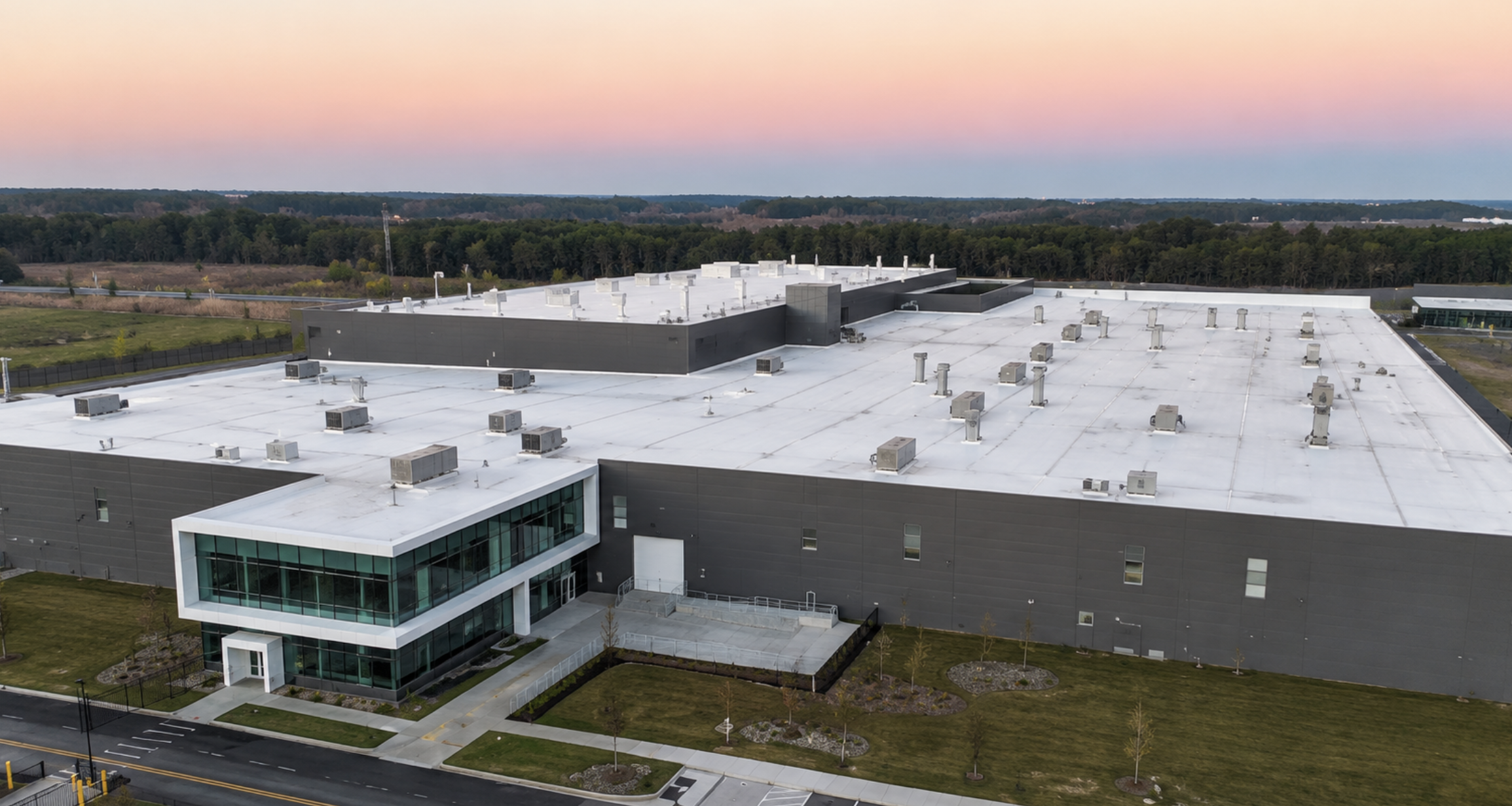
Energy Fuels' pending acquisition of Australian Strategic Materials would add commercial rare earth metals and alloy production through its operating Korean Metals Plant together with plans for a future American Metals Plant. The proposed acquisition of VAC extends that integration into permanent magnet manufacturing, including the Sumter, South Carolina facility, which features the capacity to produce approximately 2,000 tonnes per annum of neodymium-iron-boron permanent magnets and has expansion potential to 12,000 tonnes per annum.
Chalmers explained why the company has chosen acquisitions rather than building each capability independently:
"I think as I've said, there are these fragments, and we're not a fragment. And right now, the world wants to see fast and quick, and you don't get there with a fragment if you just have one island in the middle of this. There are huge opportunities upstream, downstream, the inbounds, the recognition, the appreciation that the fragment can't survive on its own. All the above are playing into our hands in a really positive way."
Rather than relying on third-party processors between mining and finished magnets, Energy Fuels is targeting ownership of multiple stages of the value chain. Acquiring existing operations also provides established technical expertise, operating facilities and customer relationships, shortening the timeline required to assemble an integrated critical minerals platform.
Broader Context
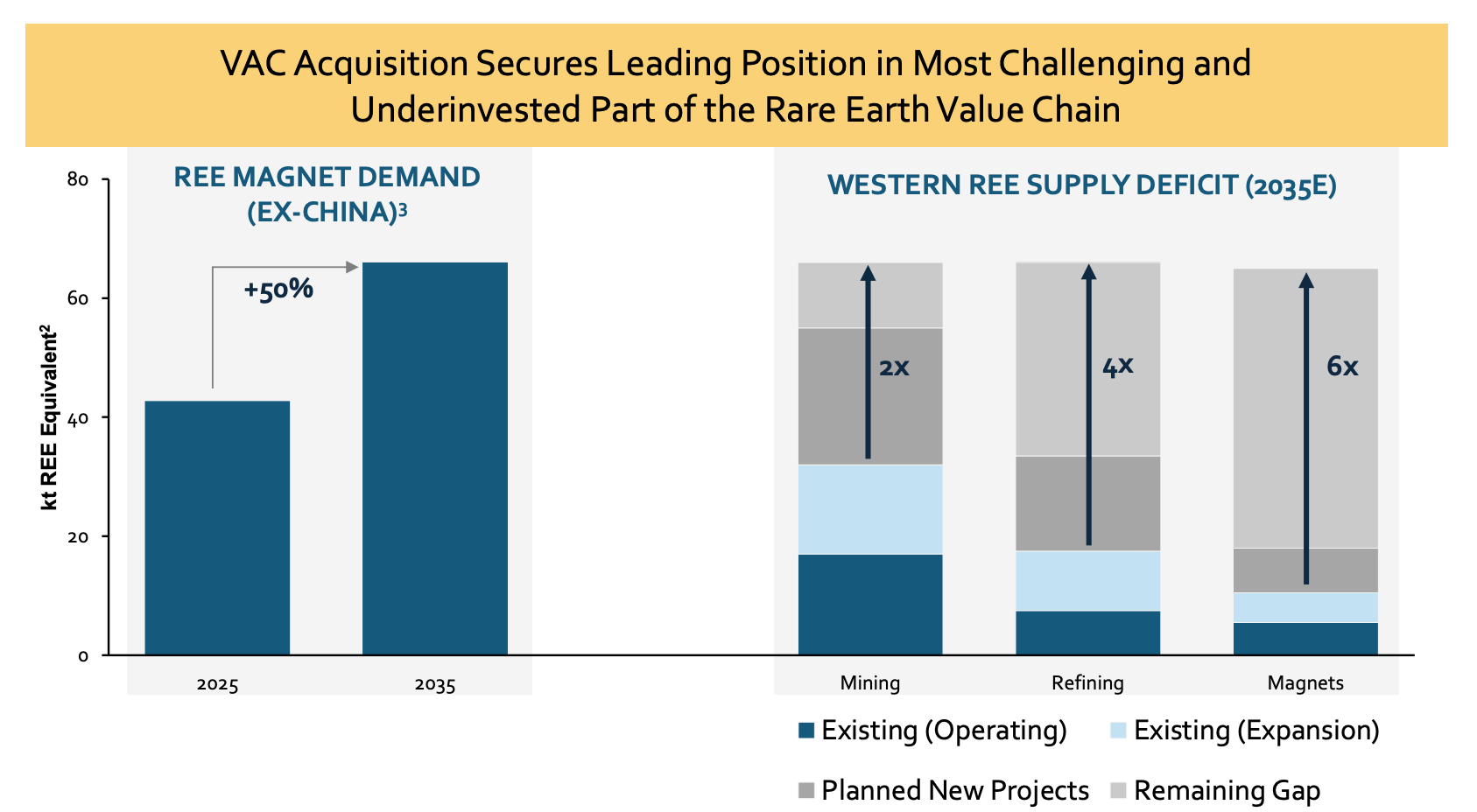
Energy Fuels' strategy reflects a broader effort to establish critical mineral supply chains outside China. Approximately $60 billion of investment will be required by 2035 to develop sufficient Western mining, refining and permanent magnet manufacturing capacity to meet projected demand for permanent magnet REEs. The company also identifies electrification, robotics, industrial automation, defence systems and hyperscale data centres as long-term demand drivers for permanent magnets. Rather than competing solely as a miner or processor, Energy Fuels is targeting ownership of multiple stages of the value chain. The company aims to retain more processing and manufacturing activity within its own operating platform instead of relying on third-party processors between mining and finished products.
What to Watch Next
The next phase of Energy Fuels' strategy depends on execution rather than additional acquisitions. Key milestones include completion of the pending ASM and VAC transactions, a final investment decision on the Donald Project, expansion of rare earth processing capacity at the White Mesa Mill and continued development of the Sumter permanent magnet facility.
Progress across White Mesa, Donald, ASM and VAC will demonstrate whether Energy Fuels can assemble the integrated operating platform outlined in its July 2026 development roadmap. At the same time, uranium production will remain an important indicator because it continues to provide the operating foundation supporting investment across the company's broader critical minerals strategy.
FAQs (AI-Generated)
Analyst's Notes





Subscribe to Our Channel











Stay Informed