




Gold Companies Advance to Production Within 24 Months as $4,500 Gold Price Enables Self-Funded Development


Gold developers advance $1B+ in projects through cash flow, debt, acquisitions—Heliostar, Rio2, Cabral, Adavale, Kingman, Tudor, P2 demonstrate execution across development stages.
- The gold development sector has fundamentally shifted from equity dilution-dependent growth models to capital-efficient strategies utilizing internal cash flow generation, non-dilutive debt financing, and strategic acquisitions that preserve shareholder value during critical development phases.
- Multiple developers are transitioning to production within 12-24 months, providing quarterly operational validation and immediate cash flow generation that eliminates dependency on volatile capital markets while demonstrating technical execution capability.
- High-margin development projects in the bottom quartile of the global cost curve combine rare geological characteristics—including grades exceeding 5 grams per ton paired with bulk tonnage volumes—with metallurgical innovations that deliver exceptional unit economics and downside price protection.
- Multi-asset operational platforms with jurisdictional diversification across premier mining regions mitigate single-project binary risks while infrastructure proximity and established regulatory frameworks materially reduce capital requirements and permitting timelines.
- Management teams with demonstrated mine-building track records, meaningful insider ownership structures, and explicit near-to-medium term value realization objectives are executing systematic technical advancement that compresses development risk and positions assets for valuation re-rating.
The gold sector entered 2026 with a fundamental shift in how development-stage companies create shareholder value. Traditional equity dilution cycles that historically eroded returns have given way to capital-efficient strategies leveraging internal cash flow, non-dilutive financing, and strategic acquisitions. With gold prices sustaining above $4,500 per ounce, producers with operational assets and high-margin development projects can compound growth without capital market dependency. This article examines seven companies executing distinct pathways to production, resource expansion, and corporate development that exemplify this evolution.
Near-Term Gold Production Transitions
Heliostar Metals represents a clear articulation of internally financed growth in the junior gold sector. The company targets expansion from 30,000-40,000 ounces in 2025 to 300,000 ounces by decade's end without equity dilution, funded entirely by operational cash flow. Stephen Soock, VP of Investor Relations and Development, briefly explains the company's plan:
"We're going right from a PEA to a feasibility study that we intend to drop in Q1 2027 and then make our investment decision on the back of that 18-month build timeline, ramping up to that 100,000 ounces a year in the second half of 2028."
The restarted San Augustin mine, with 68,000 ounces of gold in reserve and planned production of approximately 45,000 ounces over 14 months, is projected to generate around $65 million in 2026 at current gold prices. Combined with La Colorada's low-grade, low-strip ratio configuration providing cost efficiency and gold price leverage, Heliostar maintains the financial foundation to fund its $20-25 million annual development budget through 2026.
Interview with Stephen Soock, VP of Investor Relations and Development of Heliostar Metals
Cabral Gold adopted a parallel approach through different financial mechanisms. The company secured $45 million US in non-dilutive gold loan financing to construct its Cuiú Cuiú mine in northern Brazil, with construction targeted for Q4 2026 production. President and CEO Alan Carter explained the strategic rationale and confirmed the financing achievement:
"We recently raised $45 million through a gold loan. Project is in construction. We should be producing gold in the fourth quarter of 2026. There was no equity raise as part of that, which I think surprised a lot of people."
This structure transforms Cabral from a pure exploration company dependent on market sentiment into a cash-generating entity with internal funding capacity for aggressive exploration across its district-scale gold system.
Interview with Alan Carter, President & CEO of Cabral Gold
Rio2 Limited exemplifies the transition from single-asset developer to multi-jurisdictional producer. The company advances toward January 2026 first gold production at its Fenix heap leach project in Chile whilst simultaneously integrating the recently acquired Condestable underground copper mine in Peru, producing 27,000 tonnes of copper equivalent annually (60 million pounds copper) at current throughput rates.
Executive Chairman Alex Black characterized Rio2's strategic positioning candidly:
"We're not building a company for the next 20 years. I can tell you that because I don't have 20 years in me. It's really about taking advantage of the situation, taking advantage of the time, the metal prices and building something up that is very very valuable."
Interview with Alex Black, Executive Chairman of Rio2 Ltd.
The Condestable acquisition provides immediate cash generation, generating over $100 million in annual free cash flow after taxes with sustaining capital requirements below $10 million per year. while Fenix advances through commissioning toward nameplate capacity of 20,000 tonnes per day by Q3 2026. Rio2's operations targets 60-70,000 gold ounces during the 2026 ramp-up year before achieving 100,000 ounces annually from 2027 onwards, with the 1.7 million ounce starter project representing only a portion of the property's 5 million ounce resource.
High-Margin Assets Demonstrate Exceptional Unit Economics
Kingman Minerals, operating at the extreme end of the grade spectrum, provides optionality through historic high-grade mineralization of gold and silver Rosebud mine in Arizona. Interim CEO Simon Studer noted the company's plans on 2026 exploration program:
"The first step is to get an understanding of the continuity along strike of the productive veins to the southeast and that's the kind of safe or the lowest hanging fruit in terms of drilling that we expect will deliver results with which we will hope to be able to excite the market."
Kingman's 2020 underground channel sampling revealed values reaching 688 g/t gold from material left behind by previous miners at the Rosebud Mine in Arizona. While no compliant resource exists, historical drilling grades have ranged around 9-13 g/t n gold over 2-meter intervals, demonstrating the deposit's high-grade character that could support small-scale production scenarios.
Interview with Simon Studer, Interim President & CEO of Kingman Minerals
P2 Gold's Gabbs Project in Nevada demonstrates how metallurgical advances enhance project economics materially. President and CEO Joe Ovsenek highlighted the improvements:
"Our gold recoveries have gone from 78% to 85%. Copper recoveries in the oxides have gone from 54% to 67%. Big jumps…The real game-changer for Gabbs is the introduction of a SART plant, which is a development for the recovery of gold and copper oxides."
The October 2025 preliminary economic assessment established after-tax NPV of $942.9 million at 5% discount rate based on a 14.2-year mine life producing an average of 109,000 ounces of gold and 15,000 tonnes of copper annually.
Adavale Resources demonstrated rapid value creation through strategic acquisition. Executive Chairman Allan Ritchie outlined the opportunity and established a maiden JORC resource of 115,000 ounces at London-Victoria within nine months. The former BHP Gold asset benefits from existing infrastructure, operational nearby mill, and proximity to Alkane's Tomingley processing facility located 50 kilometers away.
Managing Director David Ward's prior experience with the asset provided institutional knowledge advantages. The granular historical data, currently being digitized, provides unprecedented understanding of mineralization controls unavailable through modern exploration alone.
Favorable Jurisdictional Positioning and Infrastructure Access
Nevada-based projects benefit from established regulatory frameworks and infrastructure availability that materially reduce both capital requirements and permitting risk. Ovsenek emphasized the jurisdictional advantages:
"Nevada, everybody loves Nevada, and not only for geology but also permitting. It's well known and especially heap leaching in Nevada. It's straightforward."
P2 Gold's Gabbs Project benefits from paved Highway 361 access and a powerline crossing the property, while P2 targeted water permit approval in late 2025 with mining plan of operation filing to follow.
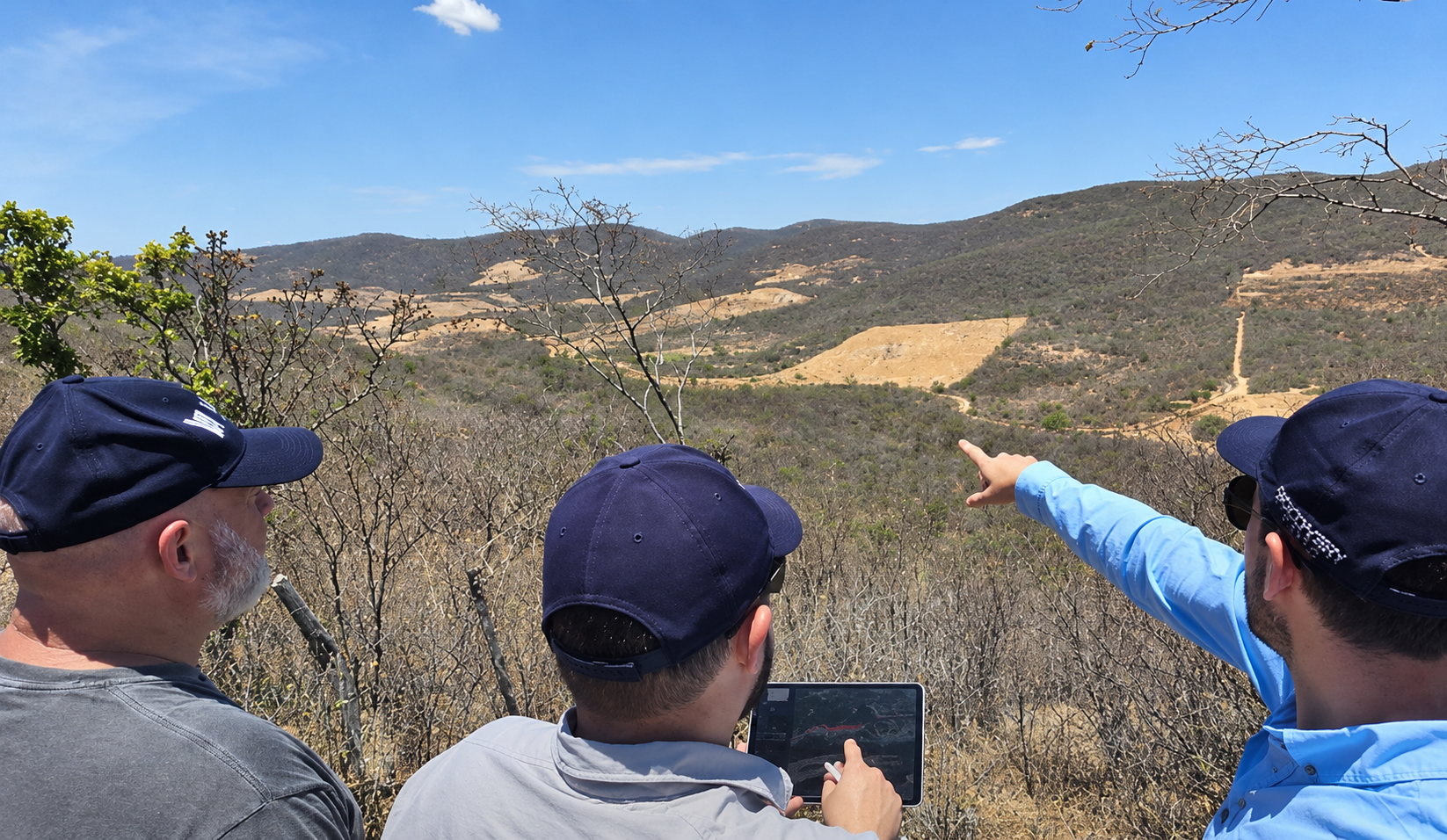
In British Columbia's Golden Triangle, Tudor Gold's positioning provides strategic optionality through proximity to operating mines and advanced development projects. President and CEO Joseph Ovsenek highlighted the management team's regional familiarity:
"We all worked together at Pretium Resources. The mine we built, Brucejack Mine, is about 15 kilometers south of Tudor. We know the players, we know the area, and we're quite comfortable working here."
The December 2025 $11.5 million LIFE financing, with participation from Eric Sprott maintaining a 15.1% interest, provides execution visibility for resource model refinement and underground ramp permitting targeted for May 2025.
Similarly, brazilian regulatory frameworks enabled Cabral Gold's staged development strategy. Carter explained the permitting pathway as trial mining licences authorize initial 1,500 tonnes per day operations, sufficient for oxide processing while full mining licence approval for 3,000 tonnes per day expansion is anticipated January 2026. This regulatory structure allows operators to demonstrate technical and environmental competence through smaller-scale operations before authorizing full production.
Management Execution Track Record and Aligned Incentives
Operational pedigree carries particular weight for development-stage assets in permitting-intensive jurisdictions. Multiple management teams demonstrated prior mine-building experience. Ovsenek referenced the Brucejack track record:
"What we think is our claim to fame is Pretium Resources, where we took the Brucejack mine from discovery through to production in under eight years. One thing we've learned is you have to set aggressive targets. If you don't, you fill that time."
This execution capability spans Tudor Gold, P2 Gold, and Rio2's leadership teams.
Adavale's corporate structure distinguishes it through meaningful insider ownership minimizing cash compensation. Ritchie emphasized alignment:
"All of the directors and officers in the company, the four of us, have bought on the market, acquired over 5% of the company. Most of us take our directorship package in shares only. I take a modest amount as the executive chairman and CEO just in shares."
This structure ensures capital preservation, with Phase 1 and Phase 2 drilling programs each costing approximately A$350,000, enabling multiple drill campaigns annually without significant dilution.
Kingman Minerals' management converted accumulated fees and forgiven debt into the recent financing on the same terms as outside investors. Studer emphasized alignment with approximately 60% insider ownership and 42 million shares outstanding (potentially 70 million fully diluted), the structure aligns management and shareholder interests for the 2026 exploration program.
Looking Forward to 2026
The calendar year provides clear catalyst sequences across the portfolio.
- Rio2 delivers quarterly production reports through 2026 as Fenix ramps toward nameplate capacity while Condestable contributes consistent cash flow.
- Cabral Gold advances construction toward Q4 2026 commissioning while maintaining aggressive exploration across its district-scale system.
- Tudor Gold targets underground ramp permit approval by May 2026, followed by systematic drilling at the SC-1 Zone.
- P2 Gold expects updated mineral resource estimate mid-2026 incorporating infill drilling, with feasibility study targeted for late 2026 and construction planned for 2028.
- Heliostar Metals progresses Ana Paula development work through 2026, including advanced metallurgical testing, engineering optimization, and underground mine design, with feasibility study targeted Q1 2027. The company expects to spend approximately $20-25 million on drilling, development, studies, and early works.
- Adavale Resources completes Phase 2 drilling at London-Victoria, with metallurgical testing and scoping studies planned for late 2026. Kingman executes drone-based magnetometry in December 2025 followed by Q1 2026 drilling testing continuity along strike of productive veins.
These catalysts occur against sustained elevated gold prices and improving institutional recognition of capital-efficient development strategies. Companies demonstrating execution credibility, jurisdictional advantages, and financial discipline are positioned to capture premium valuations as development risk compresses through systematic technical advancement.
The Investment Thesis for Gold
- Self-Funded Growth Trajectory Eliminates Equity Dilution Risk: Target developers generating $65M-$100M+ annual internal cash flow from producing assets or securing non-dilutive debt financing ($45M gold loans, LIFE offerings) to fund advancement without serial equity raises that historically eroded shareholder returns.
- Near-Term Production Catalysts Within 12-24 Months: Focus on companies with defined production timelines (Q1 2026 first pours, Q4 2026 commissioning) providing quarterly operational validation, proof of technical execution, and transition from development-stage discount to producer valuations.
- Bottom-Quartile Cost Structures Deliver Economic Resilience: Prioritize projects demonstrating $1,000 AISC or better, combining rare high-grade characteristics (5+ g/t) with bulk tonnage scale, plus metallurgical innovations (85%+ gold recovery through SART technology) that maintain profitability through price volatility.
- Jurisdictional Quality and Infrastructure Access Reduce Execution Risk: Concentrate exposure in established mining regions (Nevada, British Columbia Golden Triangle, Brazilian mining districts, Australian Lachlan Fold Belt) where permitting precedent, existing infrastructure, and proximity to operating mines compress development timelines and capital intensity.
- Management Pedigree and Insider Alignment: Seek teams with demonstrated mine-building experience (Pretium-Brucejack track record delivering discovery-to-production in under 8 years) backed by 5%+ insider ownership and equity-based compensation structures ensuring aligned execution incentives.
- District-Scale Resource Expansion Concurrent with Development: Monitor systematic exploration programs (3+ drill rigs operating alongside construction) targeting conversion of inferred resources and testing 50+ peripheral targets within 5 million ounce resource envelopes that provide multi-decade mine life optionality.
- Strategic Positioning for Corporate Transactions: Identify management teams explicitly targeting 3-5 year value realization horizons through M&A rather than indefinite operation, particularly assets positioned between operating mines in consolidating districts where acquisition optionality creates premium valuations.
TL;DR
The gold sector's 2026 development pipeline demonstrates fundamental evolution from dilution-dependent exploration models toward capital-efficient production growth. Companies executing self-funded strategies through operational cash flow, non-dilutive financing, and strategic acquisitions are positioned to deliver shareholder value without the serial equity raises that historically eroded returns. Near-term production catalysts and multiple developers provide quarterly validation of technical execution while high-margin assets like Ana Paula and Gabbs demonstrate globally competitive unit economics.
The combination of elevated gold prices sustaining above $4,500 per ounce, established infrastructure in premier jurisdictions, and systematic technical advancement through feasibility-stage work positions these developers for valuation re-rating as development risk compresses. Investors seeking exposure to gold sector growth should prioritize companies demonstrating execution credibility, capital discipline, and clear pathways to production over the coming 12-24 months. The transition from equity-dependent exploration to internally financed development represents the sector's most significant structural shift, rewarding those who recognize this evolution early.
Frequently Asked Questions (FAQs) AI-Generated
Companies are deploying three primary capital-efficient strategies: (1) generating internal cash flow from restarted or recently acquired producing assets that generate $65M-$100M+ annually to fund development budgets, (2) securing non-dilutive debt financing structures such as $45M gold loans or LIFE offerings that avoid equity issuance during critical construction phases, and (3) executing strategic acquisitions of cash-flowing operations that immediately contribute free cash flow while providing jurisdictional diversification. This represents a fundamental departure from the serial equity financing cycles that historically characterized junior mining development.
The combination of sustained $4,500+ gold prices and significant metallurgical advances has transformed project economics. Companies are achieving 85%+ gold recovery rates through technologies like SART (sulphidization, acidification, recycling, and thickening) for oxide gold-copper processing, materially improving unit economics. Additionally, projects demonstrating rare combinations of high grades (5+ grams per ton) with bulk tonnage characteristics can achieve all-in sustaining costs around $1,000 per ounce, placing them in the bottom 15% of the global cost curve and providing substantial downside protection even in price correction scenarios.
Established mining jurisdictions like Nevada, British Columbia's Golden Triangle, Brazilian mining districts, and Australia's Lachlan Fold Belt offer three critical advantages: (1) regulatory frameworks with permitting precedent and streamlined approval processes that reduce timeline uncertainty, (2) existing infrastructure including roads, power, and proximity to processing facilities that materially lower capital requirements, and (3) proven geological potential with operating mines nearby that validates district prospectivity and potentially creates strategic acquisition optionality from larger producers seeking to consolidate regional assets.
Near-term catalysts include first gold pours and production ramp-ups (January 2026 at Fenix, Q4 2026 at Cuiú Cuiú) providing quarterly operational validation, updated mineral resource estimates incorporating infill drilling programs (mid-2026 at multiple projects), feasibility study completions advancing projects toward construction decisions (Q1 2027 Ana Paula feasibility), permitting approvals enabling underground exploration or expanded throughput, and drill results from systematic exploration programs testing district-scale potential beyond initial mine plans. These technical milestones have disproportionate impact on enterprise value per ounce ratios as they compress development risk.
Management teams with demonstrated mine-building experience—particularly those who advanced projects from discovery through construction and commissioning—provide operational execution credibility that reduces perceived development uncertainty. Teams that delivered the Brucejack Mine from discovery to production in under 8 years demonstrate capabilities across permitting navigation, community engagement, study sequencing, and construction management that are difficult to replicate with less experienced operators. When combined with meaningful insider ownership (5%+ of outstanding shares) and equity-based compensation structures, this alignment ensures management incentives directly correspond to shareholder value creation rather than corporate overhead consumption.
Analyst's Notes





Subscribe to Our Channel












.jpg)

Stay Informed






















