Energy Fuels Starts $104 Million Heavy Rare Earth Separation Expansion in Utah & Unlocks Western Mine-to-Magnet Supply Chain


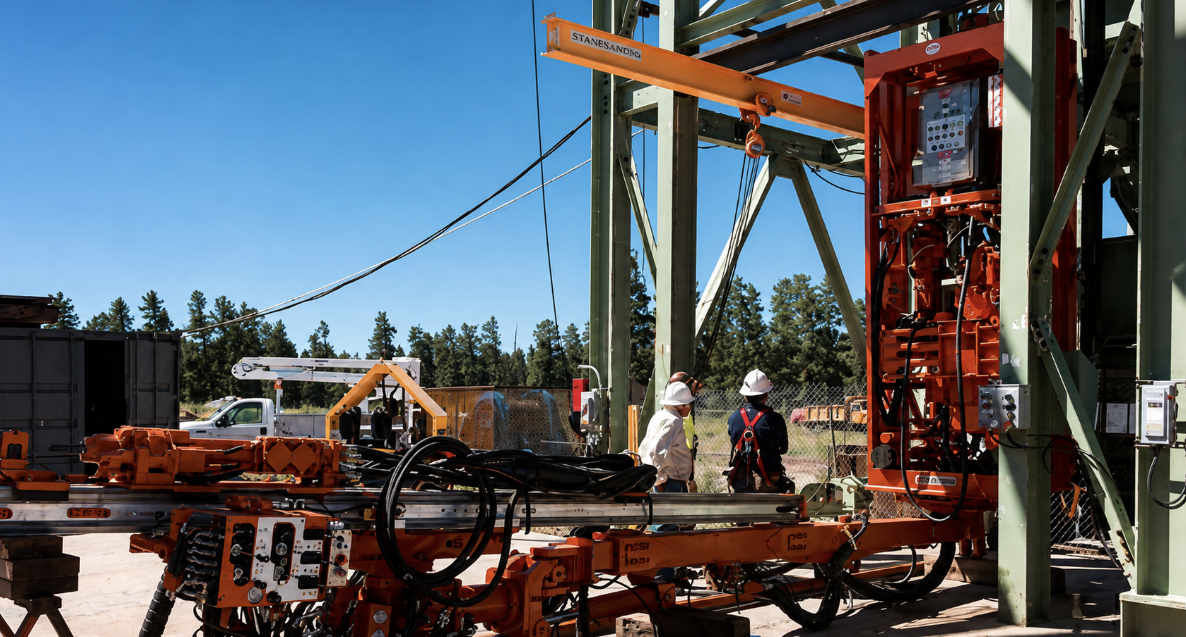
Energy Fuels launches its $104M White Mesa Mill expansion in Utah, advancing a Western mine-to-magnet supply chain for heavy rare earths and uranium.
- Energy Fuels has started commercial-scale construction of its $104 million Phase 1B heavy rare earth separation expansion at the White Mesa Mill in Utah.
- The expansion targets annual production of approximately 20 tonnes of terbium oxide and 120 tonnes of dysprosium oxide by the fourth quarter of 2027.
- A new mixed rare-earth carbonate (MREC) circuit will enable the White Mesa Mill to simultaneously produce separated rare-earth oxides and natural uranium at a commercial scale.
- The Donald Project in Australia is expected to supply 8,500 to 9,500 tonnes of monazite concentrate annually from 2028, subject to a Final Investment Decision in the third quarter of 2026.
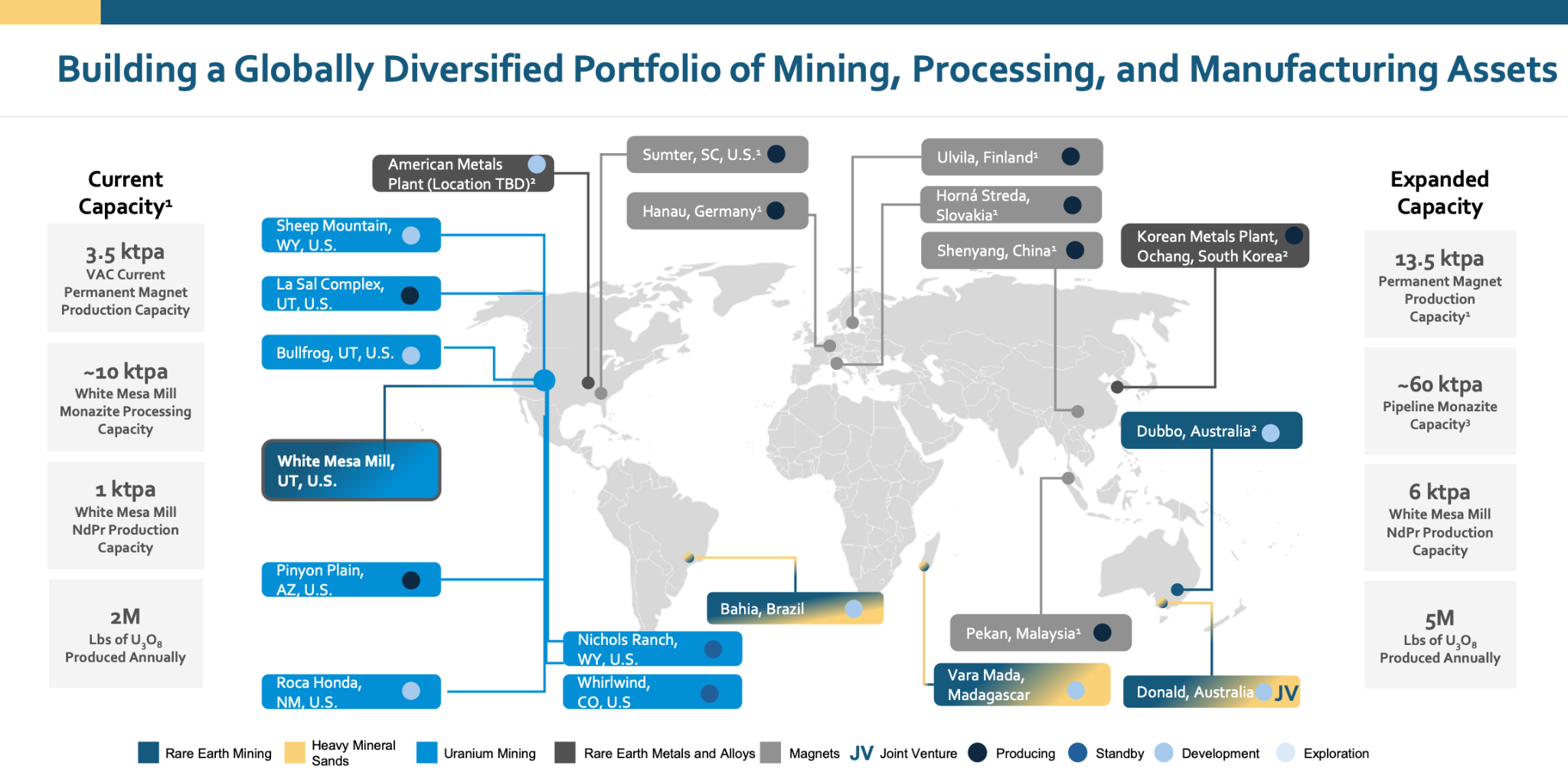
- Energy Fuels is building an integrated mine-to-magnet supply chain through the White Mesa Mill, Australian Strategic Materials' metal-and-alloy plant, and Vacuumschmelze's permanent magnet manufacturing operations.
What Has Happened
Energy Fuels Inc. (NYSE American: UUUU | TSX: EFR) has officially commenced commercial-scale construction on a $104 million heavy rare earth element separation expansion at its White Mesa Mill in Blanding, Utah. The planned Phase 1B expansion will add target commercial separation capacities of approximately 20 tonnes of terbium and 120 tonnes of dysprosium oxides per year by the fourth quarter of 2027 to address critical Western supply chain bottlenecks. An integrated mixed rare-earth carbonate (MREC) circuit will enable processing of diverse carbonate-rich feedstocks, unlocking simultaneous commercial-scale production of separated rare-earth oxides and natural uranium. The capital expenditure (capex) is funded through a non-dilutive capital structure combining a conditional Office of Strategic Capital (OSC) loan commitment, potential government grants, and internal working capital. The Utah facility is designed to refine feedstock from the Donald Project in Australia to supply midstream metalmaking and downstream rare-earth permanent magnet (REPM) manufacturing operations in the US.
Why Terbium & Dysprosium Matter to High-Tech Industries
The strategic focus of the $104 million Phase 1B expansion centres on the separation of heavy rare earth oxides. While light rare earths provide the magnetic strength of neodymium-iron-boron permanent magnets, heavy rare earths such as terbium and dysprosium are essential additives. These heavy elements dramatically increase coercivity, a magnet's resistance to demagnetisation, and enable them to maintain performance under extremely high-temperature conditions.
These technical properties make terbium and dysprosium indispensable for smaller, lighter, and more efficient electric motors utilised in automotive drivetrains, industrial robotics, wind turbines, data centres, and advanced defence systems. The planned expansion is designed to add annual capacities of approximately 20 tonnes of terbium oxide and 120 tonnes of dysprosium oxide. Staggered construction timelines target completion and commissioning of the terbium and dysprosium separation circuits by the end of 2027, followed by samarium, europium, and gadolinium circuits by the end of 2028.
Unlocking Simultaneous Processing via MREC
At the plant level, the technical core of the expansion is the installation of a new mixed rare earth carbonate (MREC) circuit. Historically, processing rare earths and processing conventional uranium required separate facilities or alternating campaigns due to chemical and operational complexities.
The new mixed rare-earth carbonate circuit resolves this operational bottleneck by enabling the White Mesa Mill to process diverse global carbonate-rich feedstocks. More importantly, it enables the mill to produce separated rare earth oxides and natural uranium concentrate simultaneously at commercial scale. This simultaneous processing capability maximises plant utilisation, spreads fixed facility costs across multiple critical material streams, and preserves the mill's position as the leading US producer of natural uranium.
Securing Upstream Feedstock to Limit Execution Risk
Downstream processing facilities are only as viable as their raw material pipelines. To de-risk the $104 million expansion, Energy Fuels has aligned its separation capacity with the Donald Project joint venture in Victoria, Australia, in which the company holds the right to earn up to a 49% interest. Sized specifically to absorb the joint venture's monazite concentrate, the Donald Project is expected to supply 8,500 to 9,500 tonnes of monazite annually beginning in 2028, subject to a Final Investment Decision in the third quarter of 2026. Negotiations for an A$220 million project debt facility with Export Finance Australia & other lenders are currently underway to support the development.
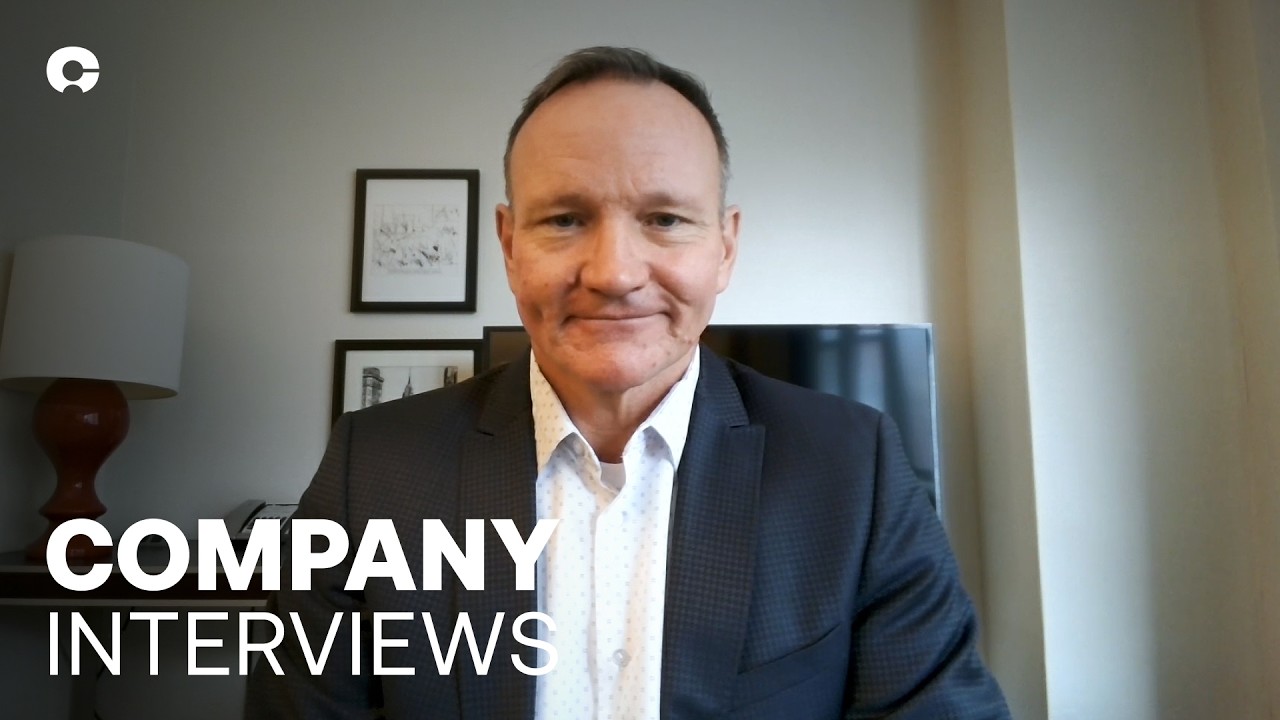
Chief Executive Officer of Energy Fuels, Mark Chalmers, emphasised this crucial upstream linkage:
"Probably the next thing on the rare earth front is to make a final investment decision on the Donald project, which is shovel-ready and that's in Victoria, Australia, and it has a lot of heavies lights and heavies so we hope to be in construction in 26 and that will be a material amount of monzite going to the White Mesa mill."
Capturing Downstream Margins: The Shift to Mine-to-Magnet
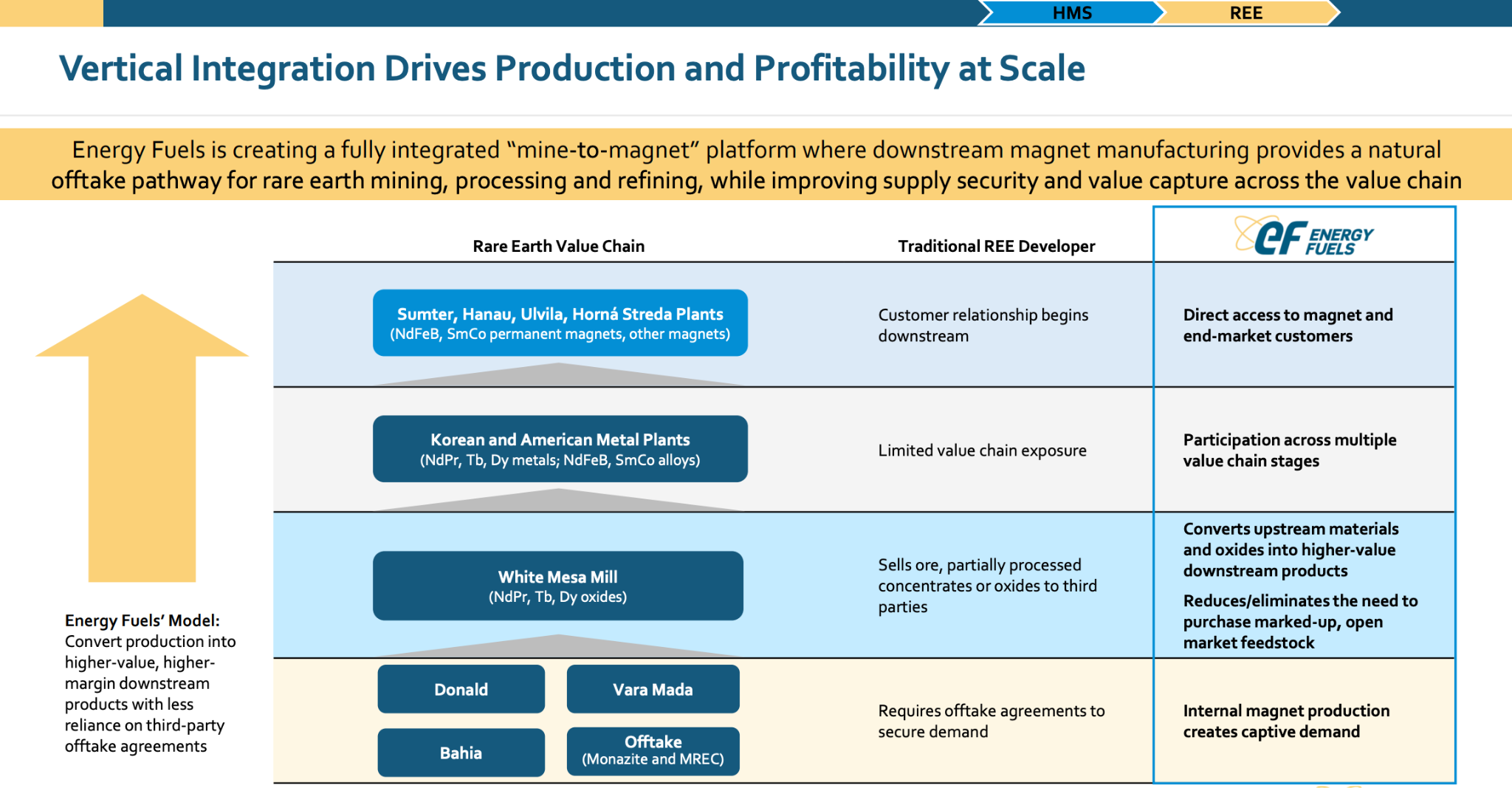
The operational rationale for refining heavy rare earths at White Mesa extends directly to the company's downstream acquisitions. Sales of raw oxides or partially processed concentrates typically yield lower commodity-grade margins. By acquiring midstream and downstream capabilities, Energy Fuels is building a captive demand model that captures margins across the entire value chain.
The planned Utah oxide production will supply roughly 70% of the feedstock required for Australian Strategic Materials' (ASM) South Korean metal-and-alloy plant. These alloys are then planned to feed over 100% of the internal requirement for Vacuumschmelze (VAC), which Energy Fuels has agreed to acquire for a $1.9 billion equity value. VAC’s facility in Sumter, South Carolina, currently featuring a 2,000 tonnes-per-annum permanent magnet capacity, will transform these alloys into finished rare-earth permanent magnets (REPM), allowing Energy Fuels to avoid markups associated with open-market feedstock purchases.
Chalmers highlighted the unique management challenge of this integrated approach:
"The board is really focused on the skill sets to manage a company like this, and there really is no precedent for it. I mean, you typically in the mining business you're in the gold business or copper business or uranium business and here we've got different product streams."
Capital Structure & Long-Term Scale
To fund the $104 million Utah expansion, Energy Fuels is utilising a non-dilutive capital structure. The debt component is planned to be covered under a conditional loan commitment from the US government's Office of Strategic Capital (OSC), supplemented by additional pending grant applications. The equity component will be drawn from the company's robust balance sheet, which held approximately $0.96 billion in working capital as of March 31, 2026.
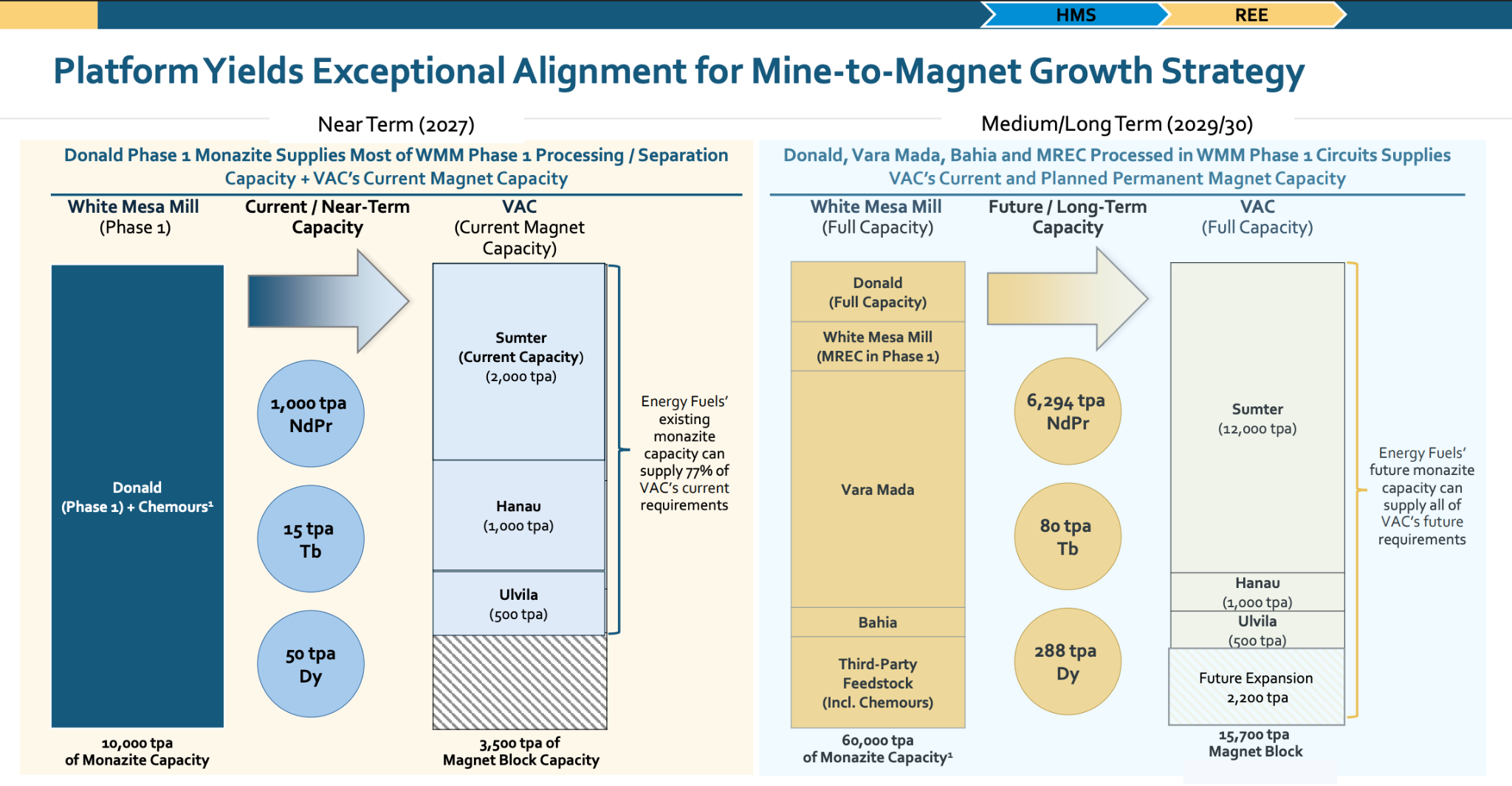
This non-dilutive funding supports a clear path to long-term scale. By 2029, a Phase 2 expansion targets increasing overall mill capacity to process 60,000 tonnes of monazite per annum, expanding output to 6,294 tonnes of neodymium-praseodymium, 288 tonnes of dysprosium, and 80 tonnes of terbium oxides. Backed by expanded feedstock from Donald, Vara Mada in Madagascar, and Bahia in Brazil, this integrated platform is designed to support 15,700 tonnes of finished permanent magnets annually, supplying secure Western materials to up to 6 million electric vehicles or 4 million humanoid robots per year.
What to Watch Next
Investors should first monitor the Final Investment Decision for the Donald Project joint venture in Victoria, Australia, anticipated in the third quarter of 2026, following the completion of negotiations for an A$220 million project debt facility with Export Finance Australia and other lenders. This key decision is expected to be accompanied by the formal closing and integration of the pending acquisitions of Australian Strategic Materials and Vacuumschmelze, which will establish the critical midstream and downstream links of the company's mine-to-magnet platform
Following these near-term developments, the focus will shift to operational construction milestones at the White Mesa Mill in Utah. The completion and commissioning of the terbium and dysprosium separation circuits are targeted for the fourth quarter of 2027, with the remaining circuits for samarium, europium, and gadolinium expected to follow by the end of 2028. Longer term, the trajectory of the 2029 Phase 2 expansion remains a key catalyst, as the company plans to scale overall processing capacity to 60,000 tonnes of monazite concentrate per annum to support the production of 15,700 tonnes of finished permanent magnets annually
FAQs (AI-Generated)
Analyst's Notes





Subscribe to Our Channel








Stay Informed