




The Next Stage of De-Risking: 6 Signs Kasiya Is Entering a New Phase of Development


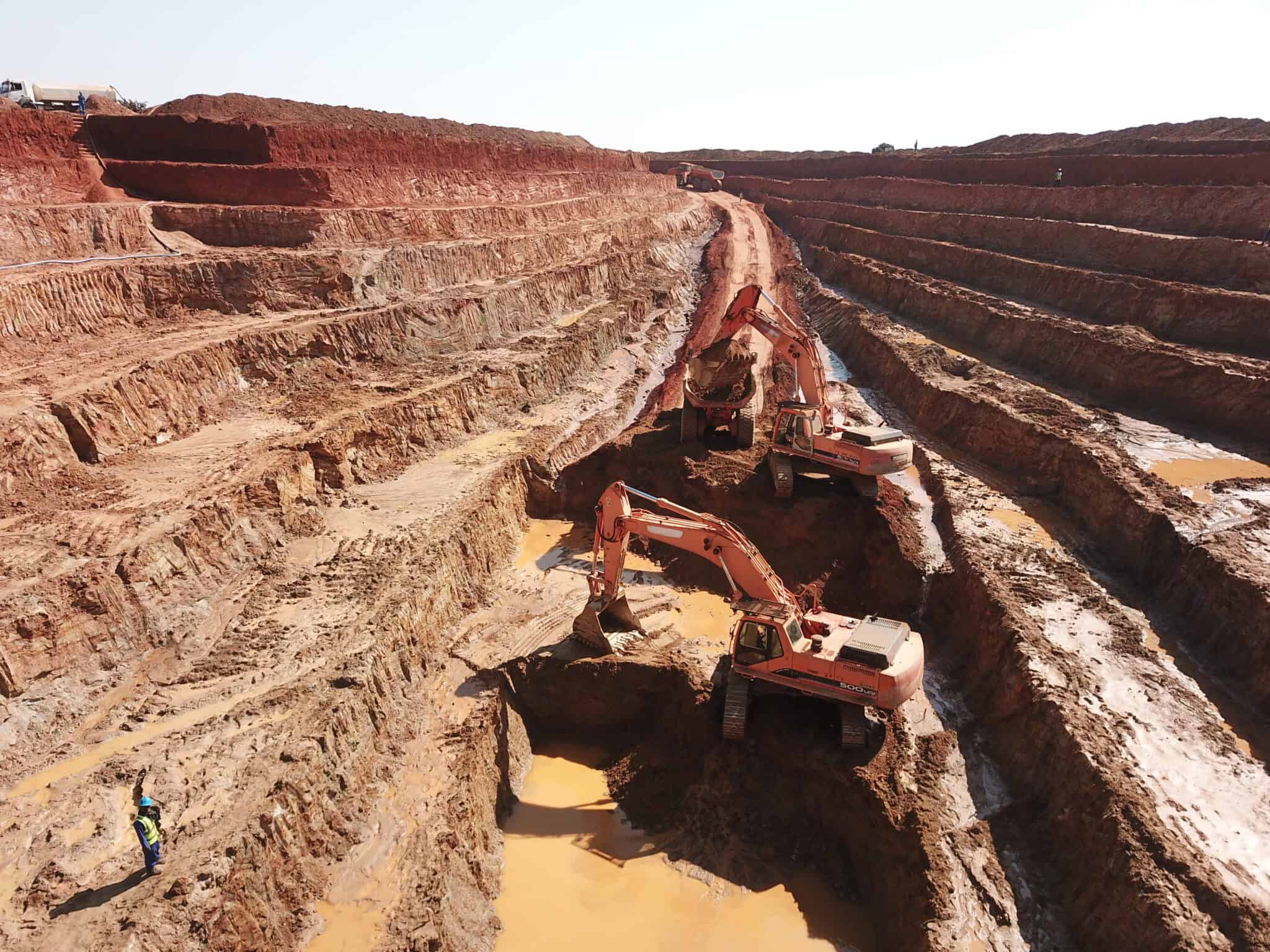
Sovereign Metals enters a new phase of commercial control at Kasiya, with financing, offtake and partnership flexibility strengthening its investment case.
The Shift in Control
Sovereign Metals Limited (ASX: SVM | AIM: SVML | OTCQX: SVMLF) has cleared the technical hurdles at Kasiya. The decisive change now is control: with Rio Tinto stepping back from its operator option, Sovereign negotiates offtake, financing and partnerships on its own terms.
Below are 6 signs marking that shift, and what each means for valuation, risk and timing.
1. Sovereign Now Owns the Commercial Decisions
Sovereign, not Rio Tinto, now decides who Kasiya partners with. Rio Tinto's decision not to exercise its option to become operator, notified July 8, 2026, removes structural overhang on Kasiya's commercial pathway. Both exclusive marketing rights over 40% of annual production and a pre-emptive right over any third-party offer to acquire an interest in the Project have lapsed.
Rio Tinto attributed the decision to its own strategic review of its Iron and Titanium business, part of its shift toward iron ore, copper, aluminium and lithium. It said Kasiya's fundamentals and economics haven't changed. Rio Tinto stays on as a shareholder, holding about 18.2% of Sovereign, with a board nominee right while its stake stays above 15% and a notification right on future equity issues above 10%.
This also widens M&A optionality: any future approach from a strategic acquirer or financing partner no longer needs Rio Tinto's sign-off.
2. Capital Efficiency That Supports Financing, Not Just a Study
A 3.0 times NPV-to-capex ratio is the kind of capital efficiency that gets a project financed, not just permitted. The Kasiya Definitive Feasibility Study (DFS) reports a pre-tax net present value at an 8% discount rate (NPV8%) of US$2.2 billion, against initial capital expenditure to first production of US$727 million.
Steady-state annual earnings before interest, tax, depreciation and amortization (EBITDA) is US$476 million, on total revenue of US$16.2 billion over an initial 25-year mine life. Pre-tax, unlevered free cash flow runs at US$452 million annually, with an internal rate of return (IRR) of 23% pre-tax. Operating cost is US$450 per tonne of product, free on board (FOB) Nacala.
This ratio compares favourably against similar large-scale critical minerals developments, where builds this size often dilute early-stage equity or require heavy project-level debt. The free cash flow scale sets a payback profile worth watching through future financing news.
3. The Resource Category Lenders Actually Require
Ahead of the DFS, Sovereign's updated Mineral Resource Estimate (MRE) lifted total contained rutile to 20.3 million tonnes (Mt) within 2.1 billion tonnes at a 0.96% rutile grade, alongside 20.0 Mt contained graphite at a 0.95% total graphitic carbon (TGC) grade. Measured and Indicated (M&I) contained rutile rose 32% to 16.1 Mt, and Kasiya achieved its first-ever Measured Resource, the highest-confidence JORC Code (2012) classification, covering at least the first 6 years of planned operations.
Project financiers and export-credit agencies typically require Measured and Indicated tonnes, not Inferred, to underwrite a mine plan. With 77% of the total resource base now in the M&I category, Kasiya clears a classification hurdle many development-stage critical minerals projects have not yet reached.
4. Offtake Conversion Is Now Sovereign's Call Alone
The value of Sovereign's offtake relationships depends entirely on whether non-binding intent converts to binding volume. That conversion is now Sovereign's alone to make.
Sovereign has signed non-binding memoranda of understanding (MOUs) with 2 counterparties. Mitsui & Co., Ltd. has agreed to up to 70,000 tonnes per annum of natural rutile concentrate (titanium dioxide (TiO2) greater than 95%) over an initial 4-year supply period from first production, over 50% of Phase 1 rutile output. Traxys North America LLC has agreed to approximately 40,000 tonnes per annum of graphite in Phase 1, rising to up to 80,000 tonnes per annum as the Project expands; Traxys was 1 of only 3 commodity trading houses selected to procure critical minerals for the US Government's US$12 billion Project Vault strategic reserve.
Neither MOU is binding. Sovereign now intends to advance both toward binding agreements, subject to negotiation, no longer constrained by Rio Tinto's prior consent rights. Binding volume commitments from counterparties with the standing of Mitsui and a Project Vault-approved trader carry more financing weight than non-binding intent, and the timing sits entirely with Sovereign.
5. Unpriced Rare-Earth Optionality Outside the Base Case
The rare earth by-product sits outside the US$2.2 billion NPV8% base case, so any confirmed value is additive, not already priced in. Testwork across 4 planned pits in the DFS mine plan, including pits scheduled for Year 1, confirmed monazite concentrate containing dysprosium, terbium and yttrium, heavy rare earth elements the DFS excludes.
The monazite is recovered from the non-conductor tailings stream, material that would otherwise report to waste. The Company says this by-product could be achieved without additional mining or a new primary processing circuit, and without the parallel rare-earth processing plant primary producers require. An independent price forecast from Project Blue Group Limited estimates a 2026 base-case value of US$16,000 per tonne (high case US$19,000 per tonne) for a comparable monazite concentrate, against an April 2026 Shanghai Metals Market benchmark spot price of US$6,142 per tonne for a 54-55% Total Rare Earth Oxide (TREO) grade product.
Managing Director and Chief Executive Officer, Frank Eagar, addressed the maturity of this workstream:
"These results confirm that the monazite-hosted rare earth content first reported in January 2026 is present in pits scheduled for the early years of production at Kasiya."
Investors should treat this as unquantified optionality, not booked value. Confirmation of recoverable grades, deportment and uranium and thorium handling requirements is still in progress, and no monazite offtake or sales agreement has been entered into.
6. Financing Path Runs Directly Through Sovereign
An unencumbered path to negotiate and a bankable resource base are the precise inputs project financiers assess before committing capital. With the Investment Agreement's operatorship, marketing and pre-emption rights lapsed, Sovereign can now progress its financing workstreams directly and on its own terms.
The Company's existing Collaboration Agreement with the International Finance Corporation (IFC), a member of the World Bank Group and an institution in which the US Government is the single largest shareholder, positions Sovereign to pursue a development-financing strategy alongside a globally recognised development-finance partner, drawing on the same Measured & Indicated resource base and DFS underpinning the Project's bankability.
What This Changes for Investors
The 6 signs share one thread: Kasiya has moved from technical de-risking to commercial and structural de-risking. The DFS and resource upgrade proved the project works on paper. The Rio Tinto exit and direct financing control now determine whether that value gets realised on Sovereign's terms.
None of the 6 signs alone closes the gap between potential and delivered value. Three catalysts decide what comes next: binding conversion of the Mitsui and Traxys MOUs, a quantified uplift to the US$2.2 billion NPV8% base case from the monazite characterisation work, and a committed financing package now that Sovereign negotiates directly. Each is the next stage of de-risking beyond what has already been delivered.
Analyst's Notes





Subscribe to Our Channel

.png)

.png)



Stay Informed


