Why ATHA's Technical Workflow Could Be a Lasting Competitive Advantage


ATHA Energy's integrated exploration workflow is improving drill targeting at Angilak, with Lac 50 and Rib results testing a repeatable path to resource growth.
- 3D inversion modelling guided a 4,000-metre step-out at Lac 50 that hit 11 metres of mineralisation, with no other drill hole within 4 kilometres.
- A 2026 hole at Rib returned 37 metres of composite mineralisation, following a 14-kilometre trend where every hole drilled intersected mineralisation.
- Radiometric results are calibrated directly to assay data, backed by a technical team with prior chief geologist experience at Cameco and Cigar Lake.
- Holes that miss mineralisation still feed the structural model, sharpening where the next hole is placed.
- A 20,000-metre program across 3 drill rigs is testing whether this workflow can convert regional targeting into delineation-ready ground by 2027.
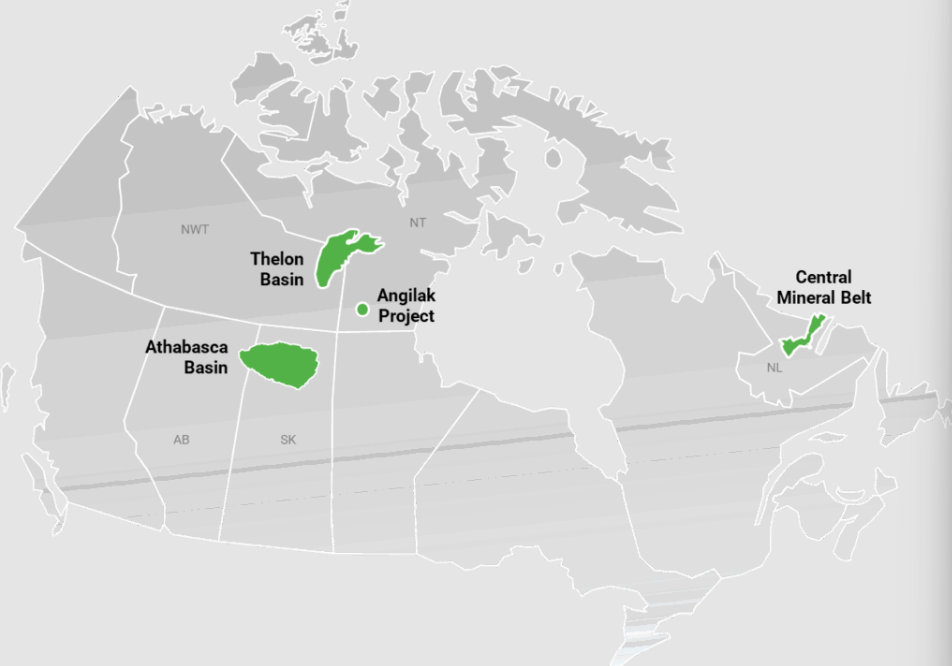
ATHA Energy (TSX.V: SASK | FRA: X5U | OTCQX: SASKF) drilled 4,000 metres away from any known mineralisation at its Lac 50 target in Nunavut, with no offset data to confirm the ground was fertile, and hit 11 metres of mineralisation on the first attempt. That result is the clearest evidence yet for the company's central claim: its technical workflow is the capability the company is counting on to underwrite its own growth. Layered geophysics feeds a structural model, radiometric data is calibrated to assay confidence, and a technical team with direct mine operating experience decides where to test next. Chief Executive Officer and Director of ATHA Energy, Troy Boisjoli, argues that combination gives the company a repeatable capability rather than a string of isolated discoveries. If the workflow holds up, it determines how efficiently the company converts its land position into delineated resources, at Lac 50, at Rib, and wherever the same process is applied next.
Reading the Basin Before Drilling It
Most junior explorers extend a known deposit incrementally, stepping out tens or a few hundred metres at a time and letting each new hole define the next. ATHA's Lac 50 step-out inverted that sequence. The company used 3D inversion modelling of magnetotelluric data to identify a conductive structure extending roughly 21 kilometres along the edge of the basin, well beyond the 5-kilometre corridor previously recognised. It then drilled 4,000 metres off the western edge of the known deposit, directly into that structure. The result: 11 metres of mineralisation, including 7 metres continuous and 1.6 metres considered high grade based on radiometric results, with no other drill hole within 4 kilometres. The intercept matters less on its own than as a test of the model. A structure identified purely from geophysics, drilled blind, came back mineralised within the first fence of holes tested there.
Boisjoli explained the process behind that confidence:
"We deployed the right tools. That's multi-level geophysics, so that's looking at a number of different surveys. It's gravity, it's mag, it's EM overlaid on top of each other. It's geochemistry, it's detailed structural geology work, etc. And you start to stack up all of those factors together, and it gives us a high degree of confidence that this trend was a real trend."
The same 3D inversion model was applied across 14 kilometres at Rib. Every hole tested against it intersected the underlying structure, and mineralisation was present in every hole drilled. The same modelling approach, tested at both Lac 50 and Rib, produced mineralised results at each. That consistency is what the company points to when arguing the exploration risk typically associated with early-stage uranium discovery has been substantially addressed at Angilak.
From Counts Per Second to Assay Confidence
Many explorers wait weeks for laboratory assays before committing to a next hole, which slows a drill program down. ATHA's workflow is built to keep moving without that lag. Its reported intervals, including the 37-metre composite result at Rib spanning 15 zones over a 110-metre interval, are based on calibrated downhole radiometric probe data using a counts per second (CPS) cutoff, not handheld readings. The company lowered the cutoff used to define that interval from 500 CPS to 300 CPS this year, based on assay results from 2024 and 2025 showing that readings above 300 CPS typically correspond to grades above 0.01% uranium oxide.
Boisjoli described the standard the team holds that data to:
"We want to have the best direct line of sight that we can have from radiometric data, counts per second, over to assay results."
That calibration is grounded in operating experience, not modelling alone. Boisjoli previously served as chief geologist at a producing Cameco mine, and Vice President of Exploration Cliff Revering held the same role at Cigar Lake. Both bring direct experience judging which mineralised intervals are large enough, continuous enough and well defined enough to eventually support extraction, a judgment call many junior technical teams have not had the chance to make at an operating mine. Disequilibrium, a factor that can distort radiometric grade estimates in sandstone-hosted roll-front uranium deposits, is not a concern at Angilak given the vein-hosted, basement-associated setting of the mineralisation there. Applied consistently across every released interval, that judgment is what lets the company report radiometric results with the same weight investors would give assays elsewhere.
Discipline in the Misses
Where many exploration updates go quiet on holes that miss, ATHA folds them directly back into the model. Rather than writing off a hole that does not intersect economic mineralisation, the company uses it to refine the structural and alteration picture of the surrounding system, which shapes where the next hole goes. That feedback loop, not any single lucky intercept, is what separates a systematic drill program from a series of independent bets.
Boisjoli explained the philosophy directly:
"One of the biggest pet peeves I have in exploration is when your technical team comes back and says that hole didn't hit mineralisation. It's an investment. We invested money in testing that hole and gathering information from it. And that information outside of mineralisation is as informative to the overall model as hitting mineralisation."
That approach underpins the 20,000-metre drill program ATHA is running in 2026, double the previously indicated 10,000 metres, using 3 drill rigs, 1 at Lac 50 and 2 at Rib. The company was roughly 25% through that program at the time of the interview. The remaining metres in this year's program are the clearest test of whether the workflow scales: continued continuity between the widely spaced holes already drilled would support the plan to move into delineation stage drilling in 2027, while a break in that continuity would be the first sign the model needs revising. Either way, what the rest of this year's drilling shows, not a single headline intercept, will confirm whether ATHA's process functions as the repeatable engine it is positioned to be.
FAQs (AI-Generated)
Analyst's Notes





Subscribe to Our Channel









Stay Informed